Beyond the Lens: 11 Essential Pieces of Desert Safari Camera Gear for Flawless Shots
A desert safari in Dubai is a visual feast a landscape of epic scale painted in hues of gold and amber. For any photographer from the casual smartphone user to the seasoned professional it presents both a breathtaking opportunity and a significant technical challenge. The harsh sun fine sand and extreme dynamic range can test the limits of any equipment. This is where having the right desert safari camera gear becomes not just an advantage but a necessity. It is the crucial element that transforms a potentially good snapshot into a gallery-worthy masterpiece.
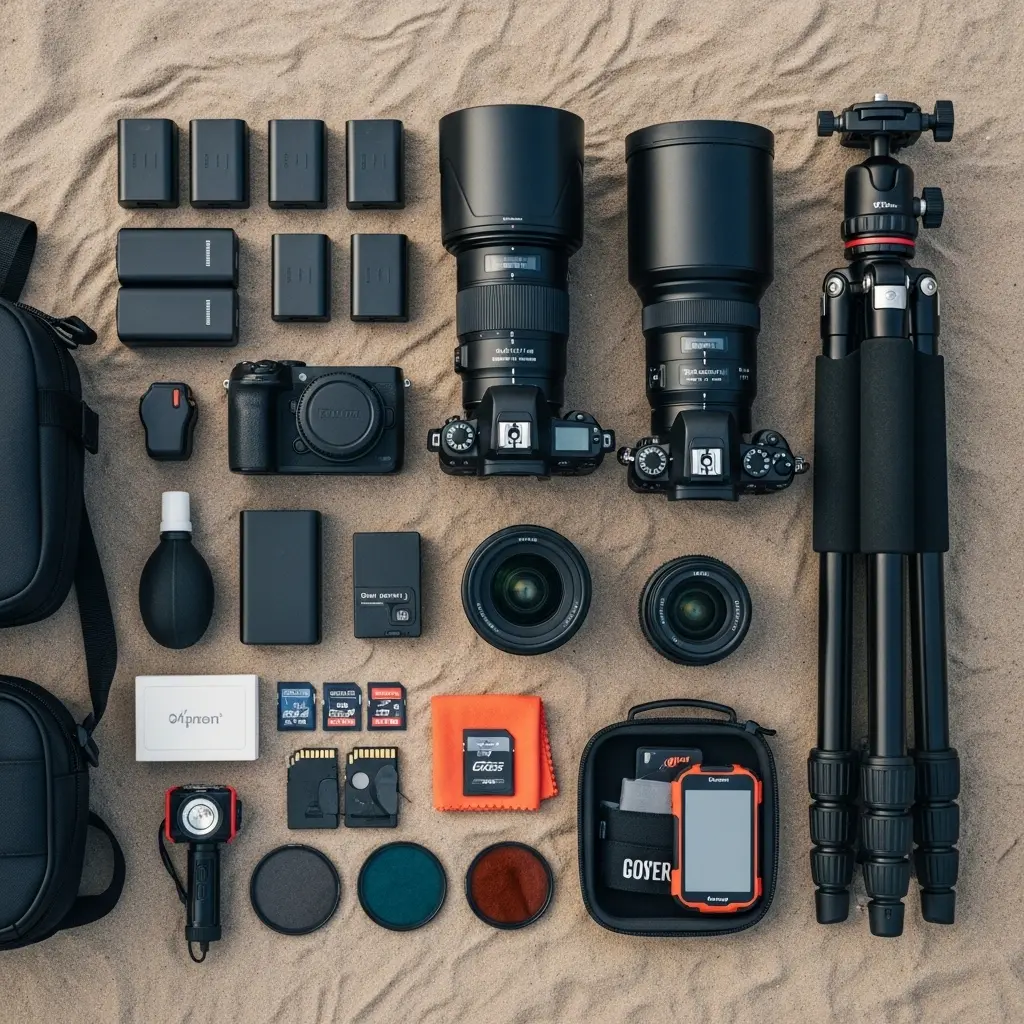
This comprehensive guide will delve into the essential pieces of desert safari camera gear you need to pack. We’ll move beyond a simple list and explore why each item is critical for the unique desert environment. From the camera body and lenses that form the core of your kit to the unsung heroes like filters and cleaning tools we will provide the knowledge you need to assemble the perfect photography arsenal. Preparing your kit thoughtfully will empower you to capture the full majesty of the Arabian desert with confidence and creativity.
The Core of Your Kit: Choosing the Right Camera Body
The camera is the heart of your setup. While modern smartphones are incredibly capable for those serious about photography choosing a dedicated camera body unlocks a new level of quality and control.
The Powerhouse: DSLR Cameras
Digital Single-Lens Reflex (DSLR) cameras have been the workhorses of professional photography for decades. Their primary advantage is the optical viewfinder which allows you to see exactly what the lens sees without any digital lag. This can be preferable in the bright desert sun where a digital screen might be hard to see. DSLRs also typically boast excellent battery life a huge plus when you’re away from charging points for hours. When selecting a DSLR for your desert safari camera gear look for models with good weather sealing to offer some protection against the inevitable dust.
The Modern Marvel: Mirrorless Cameras
Mirrorless cameras are the new standard for many photographers. By removing the mirror mechanism they are generally lighter and more compact than their DSLR counterparts—a welcome feature when you’re trekking over dunes. Their electronic viewfinders (EVFs) show you a real-time preview of your exposure meaning what you see is what you get. Advanced features like in-body image stabilization and sophisticated eye-autofocus are brilliant for capturing sharp portraits of your travel companions or the local Bedouin staff even in challenging light.
The Pocket Rocket: Advanced Compact & Bridge Cameras
For those who want a step up from a smartphone without the complexity of interchangeable lenses an advanced compact or bridge camera is an excellent choice. These cameras often feature high-quality fixed zoom lenses that cover a wide range of focal lengths from wide-angle to telephoto. They offer manual controls and RAW image capture giving you more creative freedom than a phone without the weight and bulk of a full DSLR or mirrorless system. This is a versatile and convenient piece of desert safari camera gear.
The Everyday Champion: Your Smartphone
Never underestimate the power of the phone in your pocket. The latest models from Apple Samsung and Google have incredible computational photography capabilities. Features like HDR (High Dynamic Range) are perfect for handling the extreme contrast between the bright sky and the desert floor. Portrait modes can simulate the beautiful blurry backgrounds of professional lenses. While it may not offer the granular control of a dedicated camera it is an essential tool for capturing video clips and spontaneous moments.
Seeing the World: The Crucial Role of Lenses
If the camera body is the heart the lens is the eye. Your choice of lens will have the most significant impact on the look and feel of your photographs.
The All-Rounder: The Standard Zoom Lens (e.g. 24-70mm)
If you could only take one lens on your desert safari this would be it. A standard zoom lens with a focal range of approximately 24-70mm is incredibly versatile. At the 24mm end you can capture sweeping landscapes of the endless dunes. At the 70mm end you can shoot beautiful portraits and isolate interesting details in the environment. A “fast” version with an f/2.8 aperture is excellent for low-light photography at the camp but a lighter f/4 version is also a fantastic and more budget-friendly option. This is the undisputed champion of desert safari camera gear.
The Expansive View: The Wide-Angle Lens (e.g. 16-35mm)
To truly convey the immense scale and grandeur of the desert a wide-angle lens is indispensable. This type of lens allows you to fit more of the scene into your frame creating a powerful sense of space and emptiness. It’s perfect for exaggerating the leading lines of the dune crests drawing the viewer’s eye into the image. Furthermore a wide-angle lens with a fast aperture (like f/2.8) is the primary tool for astrophotography allowing you to capture the breathtaking starry night sky on an overnight safari.
The Distant Detail: The Telephoto Lens (e.g. 70-200mm)
A telephoto lens brings distant subjects closer. While you may not be on a traditional African wildlife safari a telephoto lens is surprisingly useful in the Dubai desert. It’s essential for capturing shots of the native wildlife like the Arabian Oryx or sand gazelles without disturbing them. Creatively a telephoto lens has a “compressing” effect on landscapes making distant dunes appear larger and stacked closer together which can create a very dramatic and powerful composition. This lens adds a professional touch to your desert safari camera gear.
The Creative Choice: The Prime Lens (e.g. 50mm f/1.8)
A prime lens has a fixed focal length (it doesn’t zoom) but it makes up for this with superior image quality and a very wide aperture. A simple “nifty fifty” 50mm f/1.8 lens is relatively inexpensive and a phenomenal tool for capturing the ambiance of the Bedouin camp after sunset. The wide f/1.8 aperture allows you to shoot in very low light without a flash preserving the warm glow of the lanterns. It also creates a beautifully shallow depth of field making your subject tack-sharp while melting the background into a soft artistic blur.
Stability and Support: The Unsung Heroes
In photography sharpness is everything. The key to achieving critically sharp images especially when the light gets low is stability.
The Tripod: Your Best Friend for Sunsets and Stars
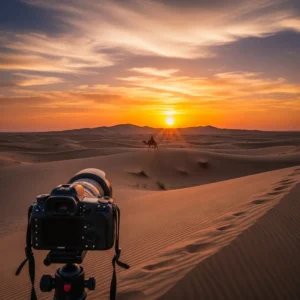
A sturdy tripod is a non-negotiable piece of desert safari camera gear. When the sun dips below the horizon your camera will need to use a slower shutter speed to gather enough light. Any movement of the camera during this time will result in a blurry photo. A tripod holds your camera perfectly still allowing you to use long exposures for silky-smooth sunset skies and tack-sharp images of the Milky Way. Look for a lightweight carbon fiber travel tripod that is easy to carry but sturdy enough to handle some desert wind.
The Monopod: A Lighter Alternative for Action
While a tripod is for static shots a monopod offers support for when you’re on the move. It is a single-legged pole that takes the weight of a heavy camera and telephoto lens providing stability while still allowing you to pan and tilt freely. It’s much quicker to set up and move than a tripod making it a good option for tracking the falconry display or other dynamic cultural performances at the camp.
Mastering the Light: Filters and Modifiers
Filters are like sunglasses for your camera lens. They modify the light entering the camera allowing you to achieve creative effects that are impossible to replicate in post-processing.
The Circular Polarizer (CPL): The Secret to Rich Skies
If you buy only one filter make it a CPL. A circular polarizing filter is a piece of magic for landscape photography. When rotated it reduces glare and reflections. In the desert this means it will cut through the atmospheric haze making the sky a deeper more dramatic shade of blue. It also enhances color saturation making the orange and red tones of the sand appear richer. It is arguably the most impactful single accessory in your desert safari camera gear.
The Neutral Density (ND) Filter: For Creative Control
An ND filter is a piece of dark glass that reduces the amount of light entering the lens without affecting the color. This allows you to use a much slower shutter speed than would otherwise be possible in bright daylight. You can use this to capture the fluid motion of the Tanoura dancer turning their spinning skirt into a colorful blur. It also allows you to use a wide aperture like f/1.8 in bright sun for portraits with a shallow depth of field.
Power and Protection: Guarding Your Investment
The desert is a hostile environment for electronics. Protecting your gear from sand heat and battery drain is paramount.
The Camera Bag: Your Command Center
A good camera bag does more than just hold your gear; it protects it and keeps it organized. A backpack-style bag is often best for distributing weight evenly. Look for one with customizable padded dividers high-quality zippers and some degree of weather resistance. Easy side access can also be a bonus allowing you to grab your camera quickly without having to put the bag down on the sand. A reliable bag is foundational to your desert safari camera gear.
The Battle Against the Elements: Essential Cleaning Kit
Sand is your number one enemy. A single grain on your lens can ruin a photo and sand inside your camera can cause catastrophic damage. Your cleaning kit is vital.
- Rocket Air Blower: This is the most important tool. Use it to blow dust off your lens and camera body before wiping with a cloth.
- Lens Pen/Brush: A soft brush can help dislodge stubborn dust particles.
- Microfiber Cloths: Use these for gently wiping away smudges and fingerprints from your lens.
- Sensor Swabs: For advanced users only changing lenses in a dusty environment can lead to dust on the camera’s sensor. Sensor swabs are a specific tool to clean this delicate component.
The Lifeline: Batteries and Power Banks
Cold weather is known for draining batteries but intense heat does it too. Always bring at least one or two fully charged spare batteries for your camera. A high-capacity power bank is also essential not just for your phone but for charging any USB-powered camera batteries or other accessories you might have. A photography-focused tour like one from https://royaldesertadventures.ae/ will understand the needs of a photographer but it’s always best to be self-sufficient.
Capturing from Above: A Note on Drone Photography
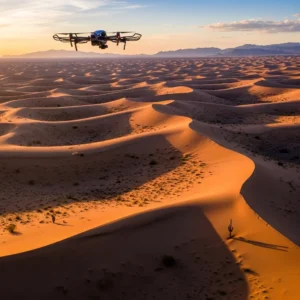
Drones offer an incredible bird’s-eye perspective of the desert landscape. However flying a drone in the UAE is subject to very strict rules and regulations. You must register your drone with the Dubai Civil Aviation Authority (DCAA) and obtain the necessary licenses and permits. Flying is prohibited in many areas. For the vast majority of tourists it is not practical or legal to fly a drone. Always check the very latest regulations before even considering packing one. Exploring tour packages from operators like https://dubaidesertsafarie.com/ or https://hafiztourism.com/ can provide you access to amazing on-the-ground views without the legal complexities of a drone.
Assembling the right desert safari camera gear is the first step toward capturing the incredible beauty of this unique landscape. By choosing your equipment thoughtfully and taking the necessary steps to protect it from the elements you set yourself up for success.
Frequently Asked Questions (FAQs)
1. Is a weather-sealed camera and lens necessary for a desert safari?
While not strictly necessary weather sealing provides a valuable layer of protection and peace of mind. A weather-sealed body and lens have rubber gaskets at key points (like the buttons lens mount and battery door) that help prevent dust and fine sand from getting inside. Given the dusty conditions of a desert safari especially during dune bashing it is a highly recommended feature that can protect your investment.
2. What is a better all-around lens: a 24-70mm f/2.8 or a 24-105mm f/4?
This is a classic trade-off. The 24-70mm f/2.8 is better in low light (at the camp) and can produce a more pleasing background blur for portraits. The 24-105mm f/4 offers more zoom range which can be very useful for getting tighter shots without changing lenses. For most desert safari situations where you’ll be shooting in bright daylight the extra reach of the 24-105mm f/4 often proves more versatile.
3. How do I protect my camera’s sensor from sand when changing lenses?
This is a critical skill. First find a sheltered spot out of the wind like the inside of the 4×4. Turn your camera off (this reduces static charge on the sensor). Point the camera body downwards so the opening is facing the floor. Have your next lens ready and uncapped. Quickly but carefully remove the body cap or current lens and immediately attach the new lens. The less time the sensor is exposed the better.
4. Should I use a UV filter to protect my lens in the desert?
This is a topic of debate among photographers. A high-quality UV or “protector” filter can provide a physical barrier against sand scratches and smudges which is very useful in the desert. However a cheap low-quality filter can degrade image quality add flare and even shatter on impact potentially causing more damage. If you use one invest in a good multi-coated one from a reputable brand.
5. What is the difference between a Circular Polarizer (CPL) and a Neutral Density (ND) filter?
They serve entirely different purposes. A CPL filter is used to control and manipulate reflections and glare. It makes blue skies darker and colors more saturated. An ND filter’s only job is to reduce the total amount of light entering the lens like sunglasses. It doesn’t change the colors but allows you to use wider apertures or slower shutter speeds than the available light would normally permit.
6. How many memory cards should I bring for a single evening safari?
It’s always better to have too many than not enough. For an evening safari a single 64GB or 128GB high-speed card is likely sufficient. However it’s a much safer practice to use several smaller cards (e.g. four 32GB cards). This way if one card corrupts or gets lost you only lose a portion of your photos not the entire day’s shoot. Always bring more than you think you will need.
7. Is a camera with a larger sensor (e.g. Full-Frame) better for desert photography?
A larger full-frame sensor generally offers better performance in low light (less noise at high ISOs) and a wider dynamic range (more detail in the brightest highlights and darkest shadows). This is a significant advantage for capturing the extreme contrast of a desert sunset and for night photography at the camp. While cameras with smaller APS-C sensors are still fantastic a full-frame sensor provides a noticeable edge in image quality.
8. What kind of camera bag is best for a desert safari: a backpack or a sling bag?
A backpack is generally superior for a desert safari. It distributes the weight of your desert safari camera gear across both shoulders making it much more comfortable for walking on the sand dunes. It also typically offers more space and better protection. A sling bag offers quicker access to your camera but can become uncomfortable and strain your shoulder over a long period.
9. How should I clean my camera gear after the safari?
Do not wipe your gear immediately. First use a powerful rocket air blower to blow off all the loose sand and dust from the camera body lens and especially around the zoom and focus rings. Once the abrasive particles are gone you can use a soft brush for stubborn spots and then a slightly damp (with water not chemicals) microfiber cloth to wipe down the body. Clean the lens glass last using a lens pen or a fresh microfiber cloth.
10. Do I need a flash or external light for camp photography?
It’s best to avoid using a direct on-camera flash as it creates harsh unflattering light and destroys the beautiful ambient atmosphere of the camp. Instead rely on a lens with a wide aperture (a “fast” prime lens is perfect) and a camera with good high-ISO performance. This will allow you to capture the warm natural glow of the campfires and lanterns.
11. What is ISO and what setting should I use in the desert?
ISO measures the camera sensor’s sensitivity to light. In bright daylight on the dunes you should use the lowest possible ISO setting (e.g. 100 or 200) for the highest quality image with no grain. As the sun sets and it gets darker you will need to increase the ISO to maintain a fast enough shutter speed. At the camp you may need to go to ISO 1600 3200 or even higher.
12. Should I shoot in JPEG or RAW format?
For anyone with a dedicated camera the answer is always RAW. A JPEG file is a compressed image where the camera has already made decisions about white balance sharpening and color. A RAW file is an uncompressed “digital negative” that contains all the data captured by the sensor. This gives you vastly more flexibility to edit your photos later recovering details from shadows and highlights that would be lost in a JPEG.
13. How do I manage the extreme dynamic range of a desert sunset?
Dynamic range is the difference between the brightest and darkest parts of a scene. A sunset has a very high dynamic range. The best technique is to use a Graduated Neutral Density (GND) filter which is dark on top and clear on the bottom to darken the sky and balance the exposure. Alternatively you can use “exposure bracketing” where the camera takes three photos at different exposures which you can later merge into a single HDR image in software.
14. Is a teleconverter (e.g. 1.4x) a good idea for extending my lens reach?
A teleconverter can be a good lightweight option to extend the reach of your telephoto lens. A 1.4x converter will turn a 70-200mm lens into a 98-280mm lens. However it comes with a trade-off: you will lose one “stop” of light (e.g. an f/2.8 lens becomes an f/4 lens) and there might be a slight reduction in image sharpness. It’s a compromise between reach and quality.
15. What is the best tripod head for landscape photography?
A ball head is the most popular choice for photography. It uses a single control to loosen the ball allowing you to reposition the camera freely and quickly lock it back into place. They are fast lightweight and versatile. A 3-way pan-tilt head offers more precision with separate controls for each axis of movement but is slower to operate and bulkier. For a desert safari a good quality ball head is ideal.
16. How do I prevent my lenses from fogging up?
Lens fog occurs when you move from a cold environment to a warm humid one (e.g. from an air-conditioned 4×4 into the desert). To prevent this allow your gear to acclimatize gradually. Keep your camera bag closed for 15-20 minutes after exiting the vehicle before you take your camera out. This allows the temperature of the gear to equalize with the outside air slowly.
17. What are the most essential non-camera items to pack for a photographer?
Beyond your desert safari camera gear pack a wide-brimmed hat sunscreen and sunglasses for personal protection. A refillable water bottle is crucial to stay hydrated. A headlamp with a red light mode is invaluable for changing camera settings in the dark during an overnight safari without ruining your night vision.
18. Does a lens hood actually do anything?
Yes a lens hood is a very important accessory. Its primary job is to block stray light from hitting the front of your lens which prevents lens flare and increases contrast. Secondly it offers a significant amount of physical protection for your lens against bumps sand and fingerprints. You should always have it attached.
19. My smartphone has multiple lenses. Which one should I use?
Use the main “1x” wide lens for the majority of your shots as it almost always has the best quality sensor. Use the “ultra-wide” lens to exaggerate the scale of the dunes but be aware of the distortion at the edges. The “telephoto” lens is great for getting closer to the action like the falconry display or distant camels.
20. What is the one piece of gear that photographers most regret not bringing?
Besides spare batteries the one piece of gear photographers often regret leaving behind is the tripod. Many people underestimate how quickly the light fades after sunset and they miss out on the opportunity to capture sharp beautiful “blue hour” landscapes and night sky images because they can’t hand-hold their camera steady at slow shutter speeds. Don’t make that mistake; a tripod is essential.