The Best Time for Desert Wildlife: Your Comprehensive Seasonal Safari Guide
The Arabian Desert is a realm of incredible resilience and hidden life. While its stark beauty is undeniable year-round, the visibility and activity of its wild inhabitants are governed by a powerful and ancient rhythm: the changing of the seasons. For the nature enthusiast, timing is everything. Choosing the right moment for your safari can be the difference between a fleeting glimpse and a truly breathtaking encounter with the desert’s magnificent creatures.
So, what is the best time for desert wildlife viewing? The answer is nuanced, depending on what you hope to see. Are you dreaming of large herds of Arabian Oryx grazing in the open, or are you intrigued by the secret nocturnal world of foxes and reptiles? Are you an avid birdwatcher hoping to catch the spectacle of migration?
This definitive seasonal guide will walk you through the desert’s calendar. We will explore how animal behavior shifts dramatically between the cool, active winter and the challenging heat of summer, helping you plan the ultimate wildlife adventure and discover the perfect best time for desert wildlife for you.
Understanding the Desert’s Two-Season Rhythm
The key to successful wildlife spotting is understanding that the desert operates on a simple, two-season cycle: a long, hot summer and a short, mild winter. These seasons dictate the behavior of every living thing.
The Cool, Active Winter (October to April)
This is the prime time, the undisputed best time for desert wildlife viewing for most visitors. The weather is pleasant, with warm sunny days and cool nights. This allows diurnal (day-active) animals to be out and about for much longer periods. Food and water are more plentiful after the sparse winter rains, and the entire ecosystem is more vibrant and visible.
The Hot, Dormant Summer (May to September)
The extreme heat of summer forces a dramatic change in behavior. The desert becomes a world of strategic survival. Most animals shift their activity to the cooler hours of the night (nocturnal) or the brief periods of dawn and dusk (crepuscular). While it’s a more challenging time for viewing, it offers unique opportunities to see the desert’s secretive nocturnal inhabitants.
The Prime Season: A Winter Wildlife Spectacle (October – April)
If your goal is to see the iconic large mammals and a wide variety of birds, the winter months are your best bet. This is the best time for desert wildlife in terms of both quantity and comfort.
Early Winter (October – November): The Great Awakening
As the intense summer heat finally breaks, the desert seems to take a collective breath. Animals that have been conserving energy for months become much more active. This is an excellent period to see reptiles like the large Spiny-tailed Lizard (Dhub) basking in the pleasant morning sun near their burrows. The first migratory birds also begin to arrive from the north.
Mid-Winter (December – February): Peak Activity and Comfort
This is the absolute peak season. The weather is idyllic, and the desert is at its most active.
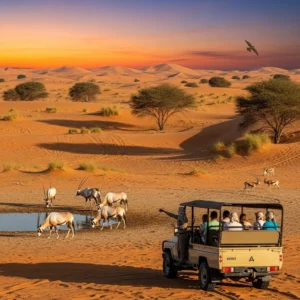
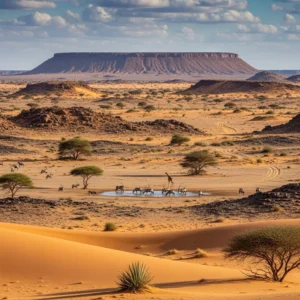
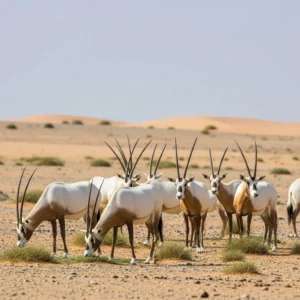
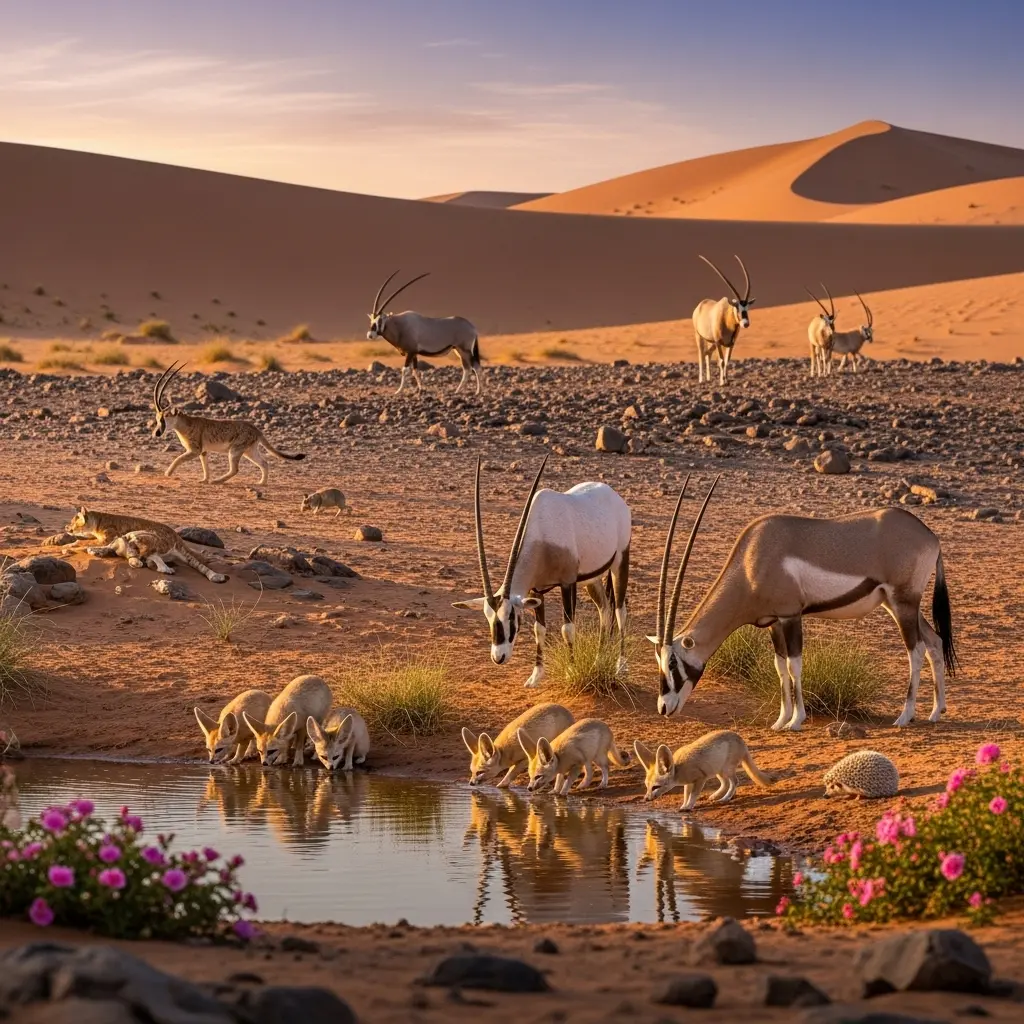
- Mammals: Large herds of Arabian Oryx and gazelles can be seen grazing throughout the day, often with their young.
- Birds: Many resident birds, like the Desert Lark, are in their breeding season, meaning males are actively singing and performing courtship displays. Wintering birds of prey, such as the Steppe Eagle, are also a common sight.
Late Winter & Spring (March – April): A Time of Plenty
This period can be the most rewarding best time for desert wildlife. If the winter has brought rain, the desert can undergo a magical transformation, with a carpet of green grasses and colorful flowers. This abundance of food is a magnet for wildlife. It’s also the peak of the spring bird migration, where you can witness a spectacular diversity of birds in their bright breeding plumage as they journey north.
The Summer Challenge: A World After Dark (May – September)
Wildlife viewing in the summer is a completely different experience, requiring a shift in focus from day to night.
The Great Disappearance
During the scorching daytime, the desert can seem completely devoid of life. Mammals conserve energy by resting in the shade of Ghaf trees or in burrows. The silence can be profound. The only creatures you might see braving the heat are some highly adapted reptiles like the Desert Monitor lizard.
Life After Sunset
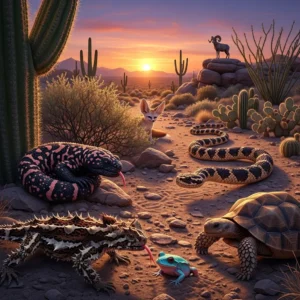
As soon as the sun sets and the temperature drops, the desert awakens. A nocturnal safari during the summer can be incredibly rewarding. This is the best time for desert wildlife of the secretive, nocturnal variety. You have a much higher chance of spotting elusive creatures like the Arabian Red Fox, the Sand Fox, Gordon’s Wildcat, and Brandt’s Hedgehog as they emerge to hunt. It is also the prime time for spotting vipers and scorpions (with an expert guide, of course).
The Spectacle of Migration: A Season Within a Season
For birdwatchers, the best time for desert wildlife is undoubtedly during the great migration periods. The UAE is a crucial stopover point on a major avian highway.
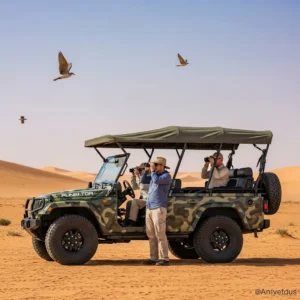
- Autumn Migration (September – November): Millions of birds stream south from their breeding grounds in Europe and Asia to spend the winter in Africa. This is a fantastic time to see a huge variety of species, from eagles and buzzards to colorful European Rollers and Bee-eaters.
- Spring Migration (February – April): The return journey north is equally spectacular. The birds are often in their vibrant breeding plumage, making for stunning photographic opportunities. The Al Qudra Lakes in the Al Marmoom reserve become a major hotspot during these months.
A Month-by-Month Wildlife Calendar
Practical Advice for Your Wildlife Safari
- Book a Nature Tour: To see wildlife, you must book a specialized “nature” or “conservation” safari. These are the only tours that operate in the protected reserves where wildlife thrives. You can look for these options on sites like
https://royaldesertadventures.ae/. - Time of Day is Key: Regardless of the season, the first two hours after sunrise and the last two hours before sunset are always the prime times for animal activity.
- Choose a Reputable Operator: An expert guide is essential. Research your options on platforms like
https://dubaidesertsafarie.com/andhttps://hafiztourism.com/to find operators known for their knowledgeable naturalist guides.
Frequently Asked Questions (FAQs)
1. When is the breeding season for the Arabian Oryx? The Arabian Oryx can breed year-round, but the peak calving season is typically from October to May. This means that if you are visiting during the prime winter season, you have an excellent chance of seeing adorable, sand-colored calves with their mothers.
2. Do desert animals hibernate during the hot summer? They don’t hibernate (which is a state of inactivity during winter), but many enter a similar state called “estivation.” This is a period of prolonged dormancy or inactivity that an animal undergoes in response to heat and drought. Many rodents and reptiles will spend the hottest months deep in their cool, humid burrows, only emerging when conditions improve.
3. What is the best time of year to see baby gazelles? Gazelles in the Arabian Peninsula typically have two birthing peaks. The main one is in the spring (around March/April), and a smaller one can occur in the autumn (around October). A visit during these times on a Desert Conservation Safari offers a high probability of seeing newborn gazelles.
4. Does a full moon affect nocturnal wildlife viewing? Yes, it can. A bright full moon can make some nocturnal animals more cautious and less active, as they are more visible to predators. Conversely, the increased light can make it easier for safari-goers to spot the animals that are active. For secretive animals like the Gordon’s Wildcat, a darker, new moon night is often better for sightings.
5. Is there a “rainy season” in the Dubai desert? The UAE has an arid climate, and rain is a rare and sporadic event. There isn’t a defined “rainy season” like in a tropical climate. However, the majority of the year’s rainfall typically occurs in short, scattered showers during the cooler winter months, between December and March.
6. When is the absolute worst time of year for general wildlife spotting? For general, day-time wildlife viewing, the hottest months of June, July, and August are the most challenging. The intense midday heat forces almost all animals into hiding, and the desert can appear very empty. However, this is the best time for desert wildlife of the nocturnal variety if you are on a specialized night tour.
7. Does the time of day (morning vs. evening) matter more than the time of year? The time of day is always critically important. However, the time of year dictates what you are likely to see at those times. For example, an evening safari in winter will be teeming with mammals and birds. An evening safari in summer will have very little activity until after the sun has fully set, at which point the nocturnal creatures begin to emerge.
8. When can I see the “desert in bloom”? This is a beautiful but unpredictable phenomenon. It depends entirely on there being sufficient and widespread rainfall during the winter months. If the conditions are right, the desert can bloom with a carpet of colorful flowers in the spring, typically from late February to early April. There is no guarantee of seeing it in any given year.
9. What is the best time for desert wildlife photography? The winter months (November to March) are ideal. The “golden hours” around sunrise and sunset last longer, providing beautiful, soft light. The animals are also more active during these hours, and the clearer, less hazy air of winter allows for sharper, more vibrant photographs.
10. How is climate change impacting the best time for desert wildlife? Climate change can disrupt the traditional seasonal patterns. It may lead to longer and hotter summers, which puts more stress on the animals. It can also alter rainfall patterns, affecting the availability of food. For migratory birds, changes in climate in their breeding or wintering grounds can shift the timing of their arrival in the UAE. Conservation reserves are studying these changes closely.
11. Are reptiles more active in the summer? Yes. As cold-blooded (ectothermic) creatures, reptiles rely on external heat to be active. While they will avoid the absolute peak heat of a summer afternoon by sheltering in burrows, the overall warmer temperatures of the summer months mean they are generally more active, especially in the mornings and evenings, making summer a great best time for desert wildlife for reptile enthusiasts.
12. Can I see flamingos in the desert? Yes, which is a surprising highlight for many. The Al Qudra Lakes in the Al Marmoom Desert Conservation Reserve attract a large population of Greater Flamingos, especially during the winter months. A specialized safari to this area is a must for birdwatchers.
13. When do resident birds, like the Desert Lark, build their nests? The primary breeding season for most resident desert birds is in the late winter and spring, from roughly February to May. This is when food is most abundant after the winter rains. During this time, you are more likely to hear birdsong and see territorial displays.
14. Does the season affect a nature safari inside the DDCR? Yes, the experience inside the Dubai Desert Conservation Reserve changes with the seasons. In winter, you will enjoy long, pleasant drives with numerous sightings of large mammals. In summer, the tour will be focused on the very early morning or late evening, and your guide will spend more time pointing out the tracks and signs of the animals that are hiding from the heat.
15. Is there a “best” time that balances good weather and fewer crowds? The shoulder months of November and April are often perfect. The weather is still fantastic for wildlife viewing, but you are outside the peak holiday rush of December, January, and the spring break period. This can offer a slightly quieter and more intimate experience.
16. Do I need to book my safari further in advance during the peak season? Yes, absolutely. During the peak winter season (December to February), the best tours, especially the specialized nature safaris in the DDCR, can get booked up weeks or even months in advance. It is highly recommended to book well ahead of time to secure your place.
17. When is the best time to see the Houbara Bustard? The Houbara Bustard is a resident bird, but it is notoriously shy. The best chances of seeing one are during the cooler winter months when they are more active. A knowledgeable guide in a protected reserve like the DDCR is your best asset for spotting this elusive and culturally significant bird.
18. Does animal behavior change during Ramadan? No, the animals’ behavior does not change. However, the safari timings might be adjusted. Evening safaris during Ramadan are often timed to coincide with Iftar, the breaking of the fast at sunset, and can offer a unique cultural experience alongside the wildlife viewing.
19. When is the best time for a nocturnal safari? A nocturnal safari can be rewarding year-round. However, the summer months can be particularly interesting for spotting reptiles and arachnids, which are most active in the heat. In winter, you might have a better chance of spotting nocturnal mammals like foxes who are active over a longer period in the cool night.
20. So, what is the single best month to visit for wildlife? For the ultimate, all-round wildlife experience, March is arguably the best month. The weather is still beautiful. The resident mammals are active and grazing on fresh growth. The spring bird migration is in full swing, offering spectacular diversity. And the reptiles are very active in the pleasant warmth. It is the month when all the desert’s residents are at their most vibrant. It is truly the best time for desert wildlife.