Traditional Bedouin Lifestyle: Navigating the Magnificent Architecture of Arabian Heritage
Traditional Bedouin Lifestyle protocols have ascended to the pinnacle of logistical engineering as we navigate the high-standard tourism landscape of 2026. While the vast red dunes of the United Arab Emirates provide a timeless allure, the method by which travelers experience the ancient nomadic customs of the desert has undergone a radical metamorphosis. For a tourist looking to capture the soul of the Lahbab sands, understanding the coordination between modern luxury and ancestral heritage is the definitive first step toward a magnifique vacation.
The Arabian desert is an environment of raw power and shifting horizons, yet its heart remains rooted in the simplicity of nomadic existence. In 2026, the transition from urban skyscrapers to the silent majlis of a desert camp is governed by surgical precision in guest logistics. Whether you are sipping saffron-infused coffee or learning the art of falconry, mastering the mechanics of the Traditional Bedouin Lifestyle is the non-negotiable mission for every savvy explorer.
This extensive report dives deep into the technical layers of heritage travel. We explore the nuances of tent architecture, the importance of multilingual guide storytelling, and the professional standards of operators who manage the sands of Lahbab and Al Awir without compromise. Let us navigate the magnificent world of the dunes and uncover the secrets to a perfect Traditional Bedouin Lifestyle strategy.
The Phenomenon of the Desert Welcome Ritual
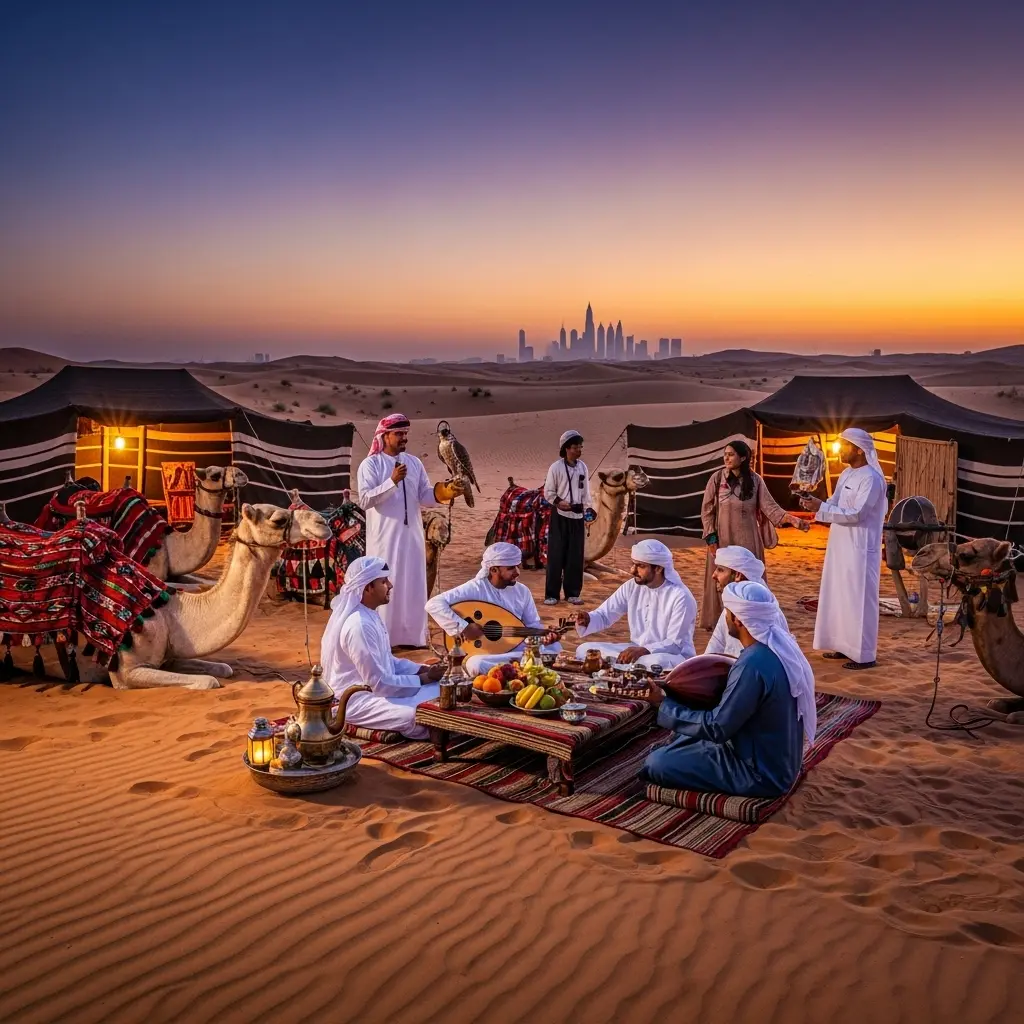
The primary pillar of an authentic Traditional Bedouin Lifestyle experience in 2026 is the welcome ritual. After the high-G forces of the 4×4 dune bash, the body requires a physical and sensory reset. Premium operators facilitate this through a choreographed ceremony that has remained unchanged for centuries. You are greeted with the aromatic scent of burning Bakhoor and the warm pour of Gahwa—traditional Arabic coffee.
This coffee is flavored with crushed cardamom and saffron, served in small cups called Finjan. Accompanied by high-quality dates sourced from local UAE farms, this interaction is a sign of peace and protection. For families, this moment provides the first opportunity to soak in the silence of the dunes before the evening program commences.
Strategic logistics ensure that this welcome is ready the moment your private fleet arrives. Punctuality in this phase is essential to allow guests time for henna painting and traditional dress photography before the peak sunset light. To explore the highest-rated welcome ceremonies and guest care, visit https://htdesertsafari.com/ today.
Strategic Logistics of Nomadic Tent Architecture
Managing a world-class heritage camp in the middle of a sand sea is a technical masterpiece. A successful Traditional Bedouin Lifestyle operation relies on the maintenance of “Bait Al Sha’ar”—the House of Hair. In 2026, these tents are constructed from reinforced natural fibers that facilitate airflow while blocking the fine silica sand of the Lahbab region.
Hygiene and mechanical integrity are monitored under strict UAE RTA and Municipality guidelines. This technical accuracy prevents the overheating of interior spaces during the early evening hours. High-standard camps utilize industrial-grade solar cooling systems to ensure guests remain in a temperature-controlled sanctuary without disturbing the natural desert silence.
For travelers who value physical comfort and mechanical reliability, choosing an operator with a certified heritage site is non-negotiable. You can research the hygiene ratings and culinary standards of the top Dubai providers at https://dubaidesertsafarie.com/ and https://royaldesertadventures.ae/. Excellence in site management is the foundation of a magnifique adventure.
Analyzing the Menu: The Tiers of Bedouin Culinary Arts
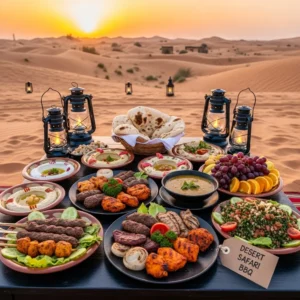
Traditional Bedouin Lifestyle offers a multi-dimensional menu designed to cater to a global audience while preserving ancestral flavors. The centerpiece of the 2026 desert banquet is the “Ouzi”—slow-cooked whole lamb served on a bed of spiced Mandi rice. This dish was historically prepared in underground pits to preserve heat in the shifting dunes.
Accompanying these grills is a vast array of Levantine mezze. Guests can expect fresh Hummus, Moutabal, and Tabbouleh. In 2026, premium menus have expanded to include Gulf prawns and organic salads sourced from local UAE desert farms. The charcoal used for grilling provides a distinctive smoky finish that is impossible to replicate in urban kitchens.
The “Live Stations” are a highlight for families who value transparency. Watching a chef bake fresh “Khubz” bread in a traditional clay oven adds a theatrical element to the dinner. This transparency in cooking is a sign of professional management and high-standard ingredient quality. For a look at the latest heritage menus, visit https://htdesertsafari.com/.
The Role of Multilingual Storytellers in Guest Education
The human element is what transforms a simple car ride into a magnifique Dubai story. Traditional Bedouin Lifestyle accuracy relies heavily on the professionalism of the guides. In 2026, top-tier operators employ specialists who are more than just drivers; they are certified cultural historians.
A professional guide understands that guest education is the key to a successful mission. They utilize multilingual storytelling to explain the transition from the pearl-diving legacy of the coast to the camel-herding history of the dunes. Showing respect through your behavior and following the guide’s safety instructions regarding animal interaction builds a positive rapport.
These professionals are highly trained in both urban navigation and desert survival, ensuring your mission remains productive and risk-free. To check the service ratings of various Dubai operators and their multilingual capabilities, visit https://royaldesertadventures.ae/ and plan your trip with precision.
| Heritage Segment | Cultural Feature | Modern Impact | Logistics Detail |
| Arrival | Gahwa & Dates | Immediate Sensory Reset | Saffron-Infused |
| Clothing | Kandura & Abaya | Digital Media Quality | UV Protective Fabric |
| Shelter | Bait Al Sha’ar | Architectural Comfort | Solar Integrated |
| Lighting | Moroccan Lanterns | Visual Atmosphere | LED Low Heat |
Architectural Harmony: The Desert Majlis Layout
The physical environment of a heritage camp is designed to foster a sense of community. Traditional camps utilize low-seated Majlis areas where families sit on cushions around communal tables. This layout encourages conversation and provides a clear view of the central entertainment stage where the Tanoura and fire shows occur.
In 2026, luxury camps have introduced “Elite Heritage Pods.” These are elevated platforms with proper chairs and back support, offering a more comfortable experience for seniors or those who find floor seating difficult. These areas also feature dedicated table service, eliminating the need to stand in a buffet line.
Lighting plays a critical role in the aesthetic. Hundreds of Moroccan lanterns and LED floor lights create a warm, amber glow that respects the natural darkness of the desert. This balance of light and shadow is essential for professional digital media capture. To see photos of these various seating tiers, visit https://htdesertsafari.com/.
Technical Accuracy in Food Safety and Hygiene
Managing a high-standard kitchen in a remote desert environment is a logistical triumph. For guests on a Traditional Bedouin Lifestyle expedition, the evening BBQ feast is the climax of the day. A successful operation relies on the maintenance of a strict cold chain for all proteins and dairy.
Ingredients are transported from city preparation centers in climate-controlled transit units. Hygiene is monitored by the Dubai Municipality under strict HACCP guidelines. This technical accuracy prevents the growth of pathogens in the arid climate, ensuring that your meal—from the Shish Taouk to the Luqaimat—is of hotel standard.
For travelers who value food safety, choosing an operator with a certified kitchen is non-negotiable. You can research the hygiene ratings and specialized menus of the top Dubai providers at https://dubaidesertsafarie.com/ and https://royaldesertadventures.ae/.
Inclusivity and Accessibility in Heritage Tourism
In 2026, the Dubai safari industry has set new standards for inclusivity. “People of Determination” are treated with priority and care. Premium Traditional Bedouin Lifestyle packages feature permanent ramps and flat carpeted paths that allow for easy movement between the tents and the restrooms.
The heritage experience for seniors is managed with extra caution. Waiters are trained to provide personalized table service, avoiding the need for elderly guests to navigate the sand paths of the buffet area. Providing proper back-support seating during the 60-minute transit and at the majlis is a critical detail that enhances the overall magnifique experience.
When you book, always mention if you have any mobility requirements. A professional operator like https://htdesertsafari.com/ will ensure you are assigned a vehicle and a waiter that meets your specific needs, providing a world-class experience for every member of your party. To find the most inclusive packages, check the listings at https://royaldesertadventures.ae/.
Managing Digital Connectivity in the Deep Dunes
While many visit the dunes to disconnect, the modern reality of 2026 is that a Traditional Bedouin Lifestyle trip is a prime opportunity for content creation. High-speed satellite Wi-Fi is now a standard feature in many permanent luxury camps. This allows guests to share their live “tent-side” photos or falconry reels in real-time.
Premium majlis areas often include solar-powered charging ports integrated into the furniture. This ensures your smartphone battery remains active for the dramatic finale of the night. This tech-forward approach is what differentiates a world-class Dubai service from a standard tour.
However, we recommend embracing a “Digital Detox” for at least the first 20 minutes of the desert meal. The silence of the desert night and the flickering glow of the lanterns offer a sensory richness that a screen cannot capture. For more on tech-integrated safari logistics and digital connectivity ratings, visit https://htdesertsafari.com/.
Wildlife Preservation and Environmental Heritage
Sustainability is a major focus of the Traditional Bedouin Lifestyle sector in 2026. The desert is a fragile ecosystem, and the daily operation of a large kitchen must be managed responsibly. Licensed operators are strictly required to follow “Zero Waste” principles, ensuring all organic waste is processed correctly.
When you are at the camp, you will notice the total absence of single-use plastics. Premium operators utilize biodegradable cutlery and high-quality glassware. This “Leave No Trace” philosophy applies to the tents just as much as the dunes, protecting native species like the Arabian Oryx from consuming human trash.
The desert is a sanctuary of light and life. By dining thoughtfully and behaving respectfully, you contribute to a culture of preservation that protects both the guests and the environment. For more on the environmental protocols of top Dubai operators, consult the reports at https://dubaidesertsafarie.com/ and join the movement toward green tourism.
The Return Journey: Punctuality and Guest Flow
The return to the city is the final phase of the Traditional Bedouin Lifestyle cycle. Around 9:30 PM, the camp staff begin the coordination of the return convoys. This logistical shift requires a high level of organization to ensure every guest finds their original vehicle and driver in the darkness.
The 60-minute drive back to the hotel is usually a quiet, reflective time. Most luxury vehicles are equipped with USB charging ports, allowing you to top up your devices while you review the day’s videos. The transition from the silent desert back to the shimmering lights of the city is a dramatic conclusion.
Your driver will drop you directly at your hotel lobby or a pre-arranged landmark. A small tip of 20-50 AED for the driver is a generous gesture that acknowledges their hard work and safety skills. For help with your full 2026 Dubai itinerary, visit https://htdesertsafari.com/ and talk to their guest experts today.
Traditional Heritage and the Role of the Saluki
No study of the Traditional Bedouin Lifestyle is complete without mentioning the Saluki—the desert hound. In 2026, premium camps feature educational demonstrations of these ancient dogs. Known for their speed and intelligence, Salukis were the primary hunting partners for nomads for millennia.
A professional handler explains the genetic heritage of these animals and their ability to survive the harsh Arabian climate. This interaction provides a magnificent insight into the symbiotic relationship between humans and animals in the desert. Showing respect for the handlers and the dogs builds a magnifique rapport with the camp staff.
These demonstrations are typically held during the late afternoon, providing a beautiful backdrop for photography. To see which camps feature the most authentic animal heritage programs, visit https://htdesertsafari.com/.
Professionalism and Performance Standards in Cultural Shows
The human element of the evening feast extends to the performers on the stage. A Traditional Bedouin Lifestyle expedition is typically synchronized with a sequence of cultural shows. The Tanoura dance, a spiritual whirl with Sufi roots, is the most hypnotic performance in the dunes. The dancer wears a heavy, LED-lit skirt that mimics the movement of the planets.
Belly dancing and high-octane fire shows follow, providing a high-energy finale to the feast. These artists are international professionals who undergo rigorous training to ensure their performance remains respectful and high-standard. The logistics of fire management in a windy desert environment require surgical precision.
Safety is the non-negotiable pillar of these shows. Performers must account for wind speed and direction to ensure the safety of the audience. Trusting a reputable operator ensures you enjoy the thrill with total peace of mind. For more on the entertainment protocols of top Dubai operators, check the reports at https://royaldesertadventures.ae/.
Traditional Activities: Hygiene and Animal Welfare
Participating in traditional activities like camel riding is a highlight, but hygiene is a major technical factor. In 2026, reputable operators ensure that animal zones are separated from food preparation areas to maintain the highest Traditional Bedouin Lifestyle safety levels.
Hand sanitizer and cleaning stations are provided immediately after activities like camel treks or falconry. This ensures guests are refreshed before returning to the majlis for the BBQ buffet. Hygiene and animal welfare are non-negotiable standards for a top-tier operator in the UAE.
Only natural henna paste is used for artistic tattoos at the camp stations, and high-grade shisha charcoals are permitted to ensure the best air quality in the seating area. To compare activity standards and guest comfort ratings, visit https://royaldesertadventures.ae/ and plan your trip with precision.
Preparing Your Gear for the Heritage Cycle
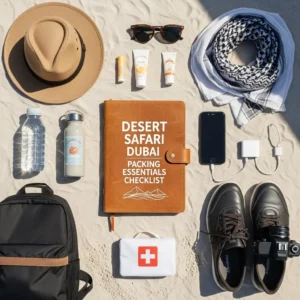
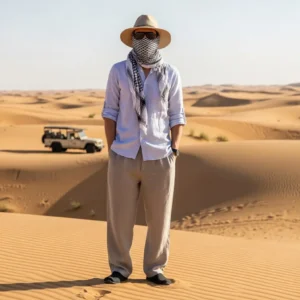
Personal preparation is the final layer of a successful Traditional Bedouin Lifestyle experience. Arriving with the wrong attire can ruin even the most luxury tour. We recommend loose, breathable cotton or linen clothing for the afternoon heat. These fabrics allow air to circulate and keep your body temperature regulated.
However, the desert loses heat rapidly once the sun disappears. Failing to pack a light jacket, a stylish hoodie, or a pashmina for the evening shows is a common mistake. In the winter months, the temperature can drop to a chilly 12 degrees Celsius. Footwear should be secure sneakers; avoid flip-flops as they provide no grip.
Digital gear also requires protection. The fine silica sand is the enemy of professional lenses. Use a UV filter and carry a small pack of wet wipes to clean your hands before touching your camera. For a full checklist of what to wear and bring, visit https://dubaidesertsafarie.com/ and prepare for a magnifique desert story.
Seasonal Variations in Heritage Timing
It is vital to note that the Traditional Bedouin Lifestyle schedule shifts throughout the year to align with the solar cycle. In the winter peak (Dec-Feb), the sun sets as early as 5:30 PM, necessitating an earlier departure from the city. In the summer peak (Jun-Aug), sunset occurs near 7:15 PM, allowing for a later start.
Luxury operators manage these shifts with professional ease, updating their dispatch logs daily. Always check your final confirmation message the evening before your tour for the most accurate timing. This level of attention to detail is what separates a world-class operator from a casual tour provider.
Regardless of the month, the desert remains a place of power and beauty. The evolution of the guest logistics program ensures that there is always something spectacular to witness. For seasonal booking tips and weather updates, visit https://htdesertsafari.com/ and plan your trip with precision.
Site Specifics: Al Awir vs. Lahbab Selection
Choosing the right desert region is a key logistical step in planning your trip. Al Awir is the closest region (45 mins) and offers golden-yellow sand with moderate dune slopes. It is ideal for families seeking a “Classic Arabian” look with easier vehicle access and closer proximity to the city skyline.
Lahbab, known for its high “Red Dunes,” is roughly 60 minutes from Downtown Dubai. The visual reward in Lahbab is significantly higher, with towering ridges that turn deep crimson at sunset. The sand here is finer and deeper, providing the most high-adrenaline dune bashing sessions available in the emirate.
Identifying which region suits your group’s appetite for thrill is essential. For first-time families, Al Awir provides a magnifique introduction. For adventure seekers and media crews, the Lahbab region is the prestigious choice. To compare travel times and scenery photos, visit https://dubaidesertsafarie.com/.
Stargazing and the Mystery of the Dark Sky Value
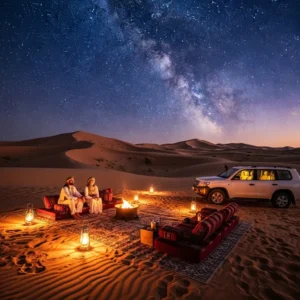
The final act of the night occurs after the fire shows and the dinner conclude. Away from the artificial light pollution of the city center, the desert reveals a celestial map of startling brilliance. In 2026, “lights out” stargazing sessions are a standard feature for high-end Traditional Bedouin Lifestyle packages.
Professional camps provide high-powered telescopes and astronomy guides who explain how the Bedouin navigated the dunes using the stars for centuries. It is a moment of profound silence and reflection that provides a magnifique contrast to the high-energy fire shows that preceded it.
If you are an astrophotography enthusiast, the period immediately after the main feast is your time to utilize your tripod and long-exposure settings. Capturing the glow of the camp fires under the vast canopy of stars results in cinematic visuals that guests rave about. For information on the best nights for stargazing, visit https://htdesertsafari.com/.
Evaluating the Value Gap: Premium vs. Budget Safaris
The price of a desert safari in Dubai ranges from 150 AED to over 1,500 AED per person. When evaluating your Traditional Bedouin Lifestyle options, it is vital to look at the “Value per Hour.” A cheap safari might save you money but often involves hours of transit in crowded buses and basic, low-quality seating.
A premium safari, costing 600-800 AED, often provides double the active desert time by streamlining the logistics and providing a private car. When you factor in the quality of the BBQ feast, the comfort of the vehicle, and the exclusivity of the camp, the value of the premium tier often exceeds that of the budget option.
We recommend setting your priorities before you start the process. If you are a solo traveler seeking social energy, a standard tour is excellent. If you are a couple on a honeymoon or a family celebrating a milestone, the investment in a private vehicle and VIP camp access is highly recommended. Secure your booking at https://htdesertsafari.com/.
Summary of the Flawless Heritage Blueprint
In conclusion, Traditional Bedouin Lifestyle management is a magnifique blend of art, science, and cultural heritage. By choosing the right partners, prioritizing timing precision, and being ready for the environmental shifts, you ensure a journey that is as safe as it is spectacular.
The desert is ready to tell you its story, and the journey often begins with a single cup of Gahwa. Trust the experts to handle your logistics while you focus on the horizon. The golden dunes are calling—your gourmet table under the moon is ready.
As you plan your 2026 Dubai itinerary, remember that the desert is the city’s soul. Experience it with the respect and the culinary passion it deserves. Secure your booking today at https://htdesertsafari.com/ and prepare for an evening of high-standard dining you will never forget.
Technical Accuracy: Safety and Vehicle Maintenance
Safety is a non-negotiable part of the Traditional Bedouin Lifestyle conversation. In 2026, the UAE government enforces strict fire safety and mechanical regulations for all desert camps and fleets. Every permanent structure must be fitted with fire suppression systems and have a certified safety officer on-site.
Drivers are required to hold specialized desert licenses and first-aid certifications. Shortcuts in vehicle maintenance are a catastrophic error for an operator. Check the vehicle photos and specifications on https://royaldesertadventures.ae/ to ensure you are booking with a company that values mechanical excellence.
If you have pre-existing medical conditions like back pain or pregnancy, it is vital to inform your operator. Many companies offer a “No Dune Bashing” option where you are transported directly to the camp in a standard road vehicle, ensuring you still enjoy the culture and dinner without the physical strain.
Analyzing the Economics of Luxury Tiers
Understanding the financial structure of the Traditional Bedouin Lifestyle is essential for making an informed booking. In 2026, the market is divided into “Economy,” “Premium,” and “Elite” tiers. The value gap is often found in the guest-to-staff ratio. An Elite camp may have one waiter for every two tables, ensuring your beverages are constantly topped up without you needing to leave your seat.
While the price difference might be 200 AED, the impact on your comfort and peace of mind is monumental. We recommend looking for packages that include “VIP Table Service” as a default. This feature eliminates the stress of navigating a buffet queue in the sand, allowing you to focus entirely on the entertainment.
Pricing transparency is a hallmark of a world-class operator. Always check for hidden fees like fuel surcharges or VAT. For a clear breakdown of the most valuable luxury safari tiers in Dubai, visit https://htdesertsafari.com/ and secure your 2026 adventure with total financial clarity.
Managing Environmental Footprints at the Camp
True Traditional Bedouin Lifestyle includes a commitment to the preservation of the landscape. In 2026, high-standard camps utilize hybrid power systems—combining solar panels with silent generators—to reduce noise pollution and carbon emissions. This ensures that the silence of the desert remains undisturbed.
Waste management is another technical hurdle. Reputable operators use specialized filtration systems to treat greywater on-site, which is then used to support the few desert-hardy plants around the camp perimeter. This cyclical approach to resources is what defines a modern, responsible tour provider.
By choosing an eco-conscious operator, you are contributing to the longevity of the dunes. Check the sustainability credentials and eco-permits of your chosen provider at https://dubaidesertsafarie.com/. A magnifique trip is one that respects the environment as much as the guest.
Frequently Asked Questions (FAQs)
What exactly is the Traditional Bedouin Lifestyle experience in Dubai?
The Bedouin lifestyle refers to the ancient nomadic way of living in the Arabian desert. In a modern Dubai context, this experience involves visiting a desert camp that replicates traditional desert life through activities like camel trekking, falconry, henna painting, and sitting in goat-hair tents. You will enjoy authentic Arabian hospitality, including Gahwa (coffee) and dates, followed by a heritage-themed BBQ feast under the stars.
Is it safe to visit a desert camp if I have mobility issues?
Yes, in 2026, most permanent luxury desert camps are designed with accessibility in mind. Premium operators like https://htdesertsafari.com/ provide vehicles with boarding assists and rampled access to the Majlis seating areas. We recommend requesting “VIP Seating” to ensure you have a chair with proper back support and dedicated table service, minimizing the need to walk across shifting sands.
What kind of food is served at an authentic Bedouin camp?
A Traditional Bedouin Lifestyle feast typically features “Ouzi” (slow-cooked whole lamb), “Shish Taouk” (grilled chicken), and “Lamb Kofta.” You will also find a variety of mezze like hummus, tabbouleh, and fresh Arabic bread. For dessert, “Umm Ali” (bread pudding) and “Luqaimat” (dumplings with date syrup) are standard. Most reputable operators like https://htdesertsafari.com/ provide vegetarian, vegan, and gluten-free options upon request.
How should I dress for a heritage desert trip in 2026?
We recommend loose, breathable natural fabrics like cotton or linen for the afternoon heat. However, the desert cools rapidly once the sun sets. Always pack a light jacket, a stylish pashmina, or a hoodie for the evening shows. Wear secure sneakers rather than sandals to protect your feet from hot sand and hidden desert insects. Many camps also provide traditional Arabian robes for photography.
What is the significance of the falconry display?
Falconry is a sacred part of the Traditional Bedouin Lifestyle. Historically, Bedouins used falcons to hunt for food in the harsh desert environment. Today, it is a preserved sport and a symbol of national pride in the UAE. During your safari, professional handlers will demonstrate the speed and intelligence of these birds, and you will have the magnifique opportunity to hold a falcon for photographs.
Is medical assistance available at the desert camp?
Yes, all licensed desert camps are required by UAE law to have comprehensive first-aid kits and staff trained in emergency response. Most premium camps also have a nurse or paramedic on-site during operational hours. Vehicles are equipped with GPS tracking and satellite radio to coordinate immediate city transit if a medical issue arises.
What is the “Tanoura” dance performed during dinner?
The Tanoura is a traditional folk dance with Sufi roots. A male performer wears a heavy, multi-layered colorful skirt and spins continuously, representing the movement of the planets and spiritual unity. In 2026, these skirts are often fitted with LED lights for a magnificent visual effect. It is a world-class performance and a highlight of the cultural evening.
Can children participate in all Bedouin activities?
Absolutely. The Traditional Bedouin Lifestyle is very family-oriented. Children will enjoy camel riding, henna painting, and the cultural shows. For the dune bashing portion of the trip, we recommend children be at least 3 years old. Most camps provide dedicated “Kid-Zones” with milder food options like pasta to ensure everyone enjoys the feast.
Is alcohol served at a traditional desert camp?
Most permanent camps have a licensed bar where you can purchase beverages. These areas are typically separated from the main family seating to maintain a respectful cultural atmosphere. However, alcohol is generally not served during religious holidays or specific “dry days” mandated by the government. Always check the local calendar during your Dubai Safari Booking.
How long does a typical evening desert safari last?
A standard evening tour lasts about 6 to 7 hours. You are typically picked up from your hotel between 2:30 PM and 3:30 PM and return by 10:00 PM. This schedule is designed to ensure you reach the dunes for the “Golden Hour” sunset photography and enjoy the full cultural program and BBQ dinner at the camp.
How is food hygiene managed in the desert?
High-standard operators like https://htdesertsafari.com/ adhere to strict HACCP guidelines monitored by the Dubai Municipality. Meats are kept in climate-controlled transit and grilled on-site to safe internal temperatures. Buffet stations are covered and situated in wind-protected zones to prevent sand ingress. Staff also undergo regular health screenings.
Are the henna artists using safe, natural products?
Yes, reputable camps in 2026 use only 100% natural, organic henna paste. Black henna, which can cause skin reactions, is strictly prohibited in Dubai tourism. Natural henna provides a beautiful reddish-brown stain that lasts for about one to two weeks. It is a magnificent way to carry a piece of Arabian heritage with you after your trip.
What happens if it rains during my scheduled safari?
Rain is rare in Dubai, but if it occurs, reputable operators will monitor the conditions carefully. If the weather makes the tour unsafe, they will contact you to reschedule or provide a full refund. Safety is always the primary concern for licensed operators in the UAE.
Do I need a private vehicle for a heritage experience?
While shared transport is efficient, a private SUV is the prestigious choice for 2026. It allows your family to customize the pickup time, skip other hotel stops, and gives the driver the freedom to choose secluded ridges for your sunset photography. It provides a sanctuary of privacy that significantly enhances the magnifique nature of the trip.
What is Arabic coffee (Gahwa) flavored with?
Gahwa is traditionally brewed with light-roasted coffee beans and flavored with crushed green cardamom. In premium camps, it is also infused with saffron and cloves, providing a complex and aromatic taste. It is always served with fresh dates, as the sweetness of the fruit balances the bitterness of the coffee.
How far from the city center is the desert camp located?
Most safari desert reserves are located about 45 to 60 kilometers from the center of Dubai. This results in a travel time of roughly one hour each way, depending on traffic and the specific region (like Al Awir or Lahbab). High-end operators use real-time GPS tracking to find the most efficient and smooth routes.
Is there Wi-Fi available at the camp to share photos?
Yes, in 2026, most permanent luxury camps and premium 4×4 vehicles are equipped with high-speed satellite Wi-Fi. While the signal can be weak in certain deep-dune zones, it is typically sufficient for social media uploads and communication with your hotel. Check with your operator for their specific tech amenities.
Do I need to tip the guide or the camp staff?
Tipping is not mandatory in Dubai but is widely appreciated for exceptional service. A tip of 20 to 50 AED for your driver or waiter is a kind and generous gesture if you feel they enhanced your experience and ensured your family’s comfort throughout the evening.
Why choose https://htdesertsafari.com/ for my heritage booking?
They work with the most reliable and highly-rated operators in the city who specialize in authentic heritage guest logistics. Their focus on vehicle maintenance, facility hygiene, and professional service ensures that your desert adventure is both spectacular and worry-free. For more info, check https://dubaidesertsafarie.com/ and https://royaldesertadventures.ae/.
Can I watch the food being cooked at the camp layout?
Yes, most high-quality camps have open BBQ stations and live cooking areas where you can watch the chefs grill the meats and bake fresh bread. This transparency is a hallmark of a high-standard facility and adds to the authentic atmosphere of the evening. It also ensures you see the hygiene standards firsthand.
Traditional Bedouin Lifestyle insights reveal that the desert is a place of deep connection and beauty. By choosing the right partners and focusing on the details, you ensure an experience that is as safe as it is unforgettable. The dunes are waiting—your adventure is ready to be unveiled.
Would you like me to help you create a specific cultural itinerary for your 2026 trip to Dubai?