Safari Photography Options: 21 Ultimate Secrets to Capturing the Most Stunning Desert Shots Now
The Dubai desert is a photographer’s dream. The light, the dunes, the cultural elements—everything converges.
However, capturing truly Stunning Desert Shots requires more than a standard tour. It demands specialization.
This is why understanding and choosing the right Safari Photography Options is crucial for visual success.
This extensive guide reveals 21 ultimate secrets. We detail the best packages, gear, and techniques.
Mastering these secrets ensures your photos transcend the typical tourist snapshot.
You will capture truly professional, Capturing Desert Moments that last a lifetime.
1. The Core Secret: Differentiating Photography Packages
Not all safaris are created equal when it comes to visual content. You must target tours built around image creation.
H3: The Standard Package vs. The Dedicated Photo Safari
Standard safaris offer great views but do not prioritize photo stops or optimal lighting.
Dedicated Safari Photography Options are structured entirely around light.
They ensure precise timing for the “golden hour” and “blue hour.“
This dedicated approach is essential for Stunning Desert Shots.
H3: The Professional Desert Photography Add-On
Many high-quality operators offer a Professional Desert Photography service as an upgrade.
This includes a dedicated photographer who travels with your group.
They handle the technical aspects, allowing you to focus on the experience.
This service guarantees superior, magazine-worthy results.
H4: Private Photo Shoots
For the highest quality, book a private safari. This allows total control over the itinerary and lighting.
This bespoke service, often provided by https://royaldesertadventures.ae/, is the ultimate choice for personalized Safari Photography Options.
2. Light Mastery: Golden Hour Safari Techniques
The quality of light in the desert is the single most important factor in Stunning Desert Shots.
H3: Perfect Timing for Golden Hour Safari
The “golden hour” occurs roughly one hour before sunset. This is when the light is warm, soft, and long.
Tours must be scheduled to place the photographer on the highest dune crest during this window.
Booking the right timing is the primary secret of any successful Golden Hour Safari.
H3: The Blue Hour Magic
The “blue hour” immediately follows sunset. The sky deepens to a rich indigo, providing a dramatic backdrop.
This is the perfect time for silhouette photos of camel caravans or the camp setup.
A comprehensive Safari Photography Options package factors in both hours.
H4: Midday Limitations
Midday desert sun is harsh, creating strong shadows and bleached highlights.
Avoid noon tours if Professional Desert Photography is your goal.
3. Gear Essentials: DSLR Rental Dubai and Equipment Hacks
Even with the best timing, without the right gear, your Stunning Desert Shots will fall short.
H3: The Necessity of a DSLR or Mirrorless
Mobile phone cameras are convenient but lack the dynamic range needed for the desert’s extreme contrast.
A DSLR Rental Dubai service allows visitors to use professional-grade equipment without traveling with it.
Professional results require professional tools.
H3: Must-Have Accessories
A tripod is essential for low-light shots during the blue hour and for achieving sharp focus.
A polarizing filter deepens the blue sky and reduces haze, significantly enhancing your Safari Photography Options.
Always bring extra batteries; the desert cold or heat can drain them faster than normal.
H4: Protecting Your Equipment
Sand is the enemy of camera equipment. Always keep a dust cover and change lenses quickly.
Choose a tour that ensures the 4×4 cabin is relatively dust-free.
4. Compositional Secrets: Capturing Desert Moments
Great photos are composed, not just captured. Learning a few tricks elevates your Capturing Desert Moments.
H3: The Rule of Thirds on Dunes
Place the horizon on the upper or lower third of the frame, not in the middle.
Use the sweeping lines of the dunes as leading lines to draw the viewer’s eye into the image.
The vastness of the desert makes the rule of thirds critically important.
H3: Including Human Elements
A lone figure, a camel, or a traditional falconer adds scale and narrative to the photo.
These elements turn a landscape into a story, enhancing your Safari Photography Options.
Look for opportunities to frame a subject against the expansive sky.
H4: Silhouette Power
During the sunset (golden hour), position your subject between the camera and the sun.
This creates powerful, dramatic silhouettes, a signature of Stunning Desert Shots.
The clean desert horizon makes this technique highly effective.
5. Vetting Operators: Top Rated Photo Tour Providers
Only specialized and Top Rated Tour Operator services can deliver on the promise of high-quality Safari Photography Options.
H3: Asking the Right Questions
Ask the operator: “What specific photo stops are guaranteed?” and “How much time is allocated to the sunset spot?“
Vague answers are a warning sign. Specificity indicates a dedicated Best Photography Tours provider.
Check operator reviews on https://dubaidesertsafarie.com/ and https://hafiztourism.com/ for “photography” feedback.
H3: Guide Expertise
The driver should also be an experienced desert guide, knowing the best vantage points on the dunes.
Their local knowledge is priceless for maximizing your Golden Hour Safari.
A good guide is a silent partner in your visual success.
H4: Vehicle Placement
The best Safari Photography Options ensure your vehicle is parked strategically, away from the clutter of other tours.
Crowded photo spots ruin the feeling of solitude and vastness.
6. The Photo Package Value: Investment Justification
Professional photo packages represent an investment. Understanding the value justifies the cost.
H3: Quality Assurance
A dedicated photo package guarantees high-resolution, professionally edited images.
The cost includes the photographer’s time, gear, and post-production.
This is a premium service that ensures your Photo Package Value.
H3: Candid vs. Posed
A professional photographer is skilled at capturing candid, emotional moments during the dune bashing or cultural shows.
These genuine Capturing Desert Moments are impossible to replicate yourself while experiencing the thrill.
This justifies the added cost of Professional Desert Photography.
H4: Time Saving
Hiring a photographer frees you from constantly managing a camera.
You can fully immerse yourself in the Best Dubai Experience knowing the visuals are handled.
7. Cultural Shots: Beyond the Dunes
The cultural camp offers diverse opportunities for unique Safari Photography Options.
H3: Traditional Elements
Focus on the details: the intricate henna designs, the elaborate traditional costumes, and the coffee preparation.
These close-up shots add texture and narrative depth to your portfolio.
They enhance the overall story of your Stunning Desert Shots.
H3: Action and Movement
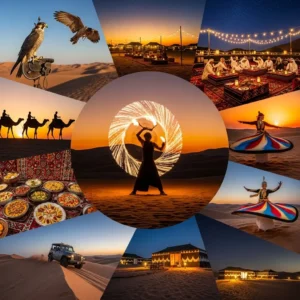
Capture the blur and motion of the Tanoura and Belly dancers using a slower shutter speed (1/60th or 1/30th of a second).
This requires a tripod and a steady hand but results in dynamic, artistic images.
This technique is a hallmark of skilled Professional Desert Photography.
H4: The Camp Fire
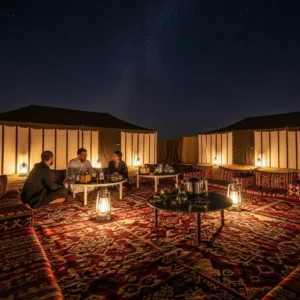
The campfire or a single lantern provides excellent low-light, warm-toned portrait opportunities.
Use the light source as the main element to define the atmosphere.
8. Specialized Gear: Drone and Aerial Safari Photo Tips
Aerial perspectives offer a unique, grand scale to your Safari Photography Options.
H3: Drone Regulations
Ensure your operator follows strict local regulations regarding drone usage. Permits are mandatory.
Only book Best Photography Tours that explicitly include licensed drone footage.
Illegal drone usage can lead to significant penalties.
H3: The Scale Effect
Drone shots perfectly capture the immense scale of the dunes and the tiny 4x4s.
This is the ultimate perspective for showcasing the vastness of the desert landscape.
Aerial images offer a powerful form of Capturing Desert Moments.
H4: High-Zoom Lens Necessity
For wildlife (Arabian Oryx, gazelles) often seen in conservation areas, a high-zoom telephoto lens is essential.
This ensures sharp detail without disturbing the animals.
9. Post-Production Secrets: Enhancing Stunning Desert Shots
The magic of Stunning Desert Shots is often finalized in the editing room.
H3: Color Grading
The desert palette is warm. Enhance the saturation of the reds and oranges for the golden hour shots.
Cool the blues and purples in the blue hour photos for maximum drama.
Consistent color grading provides a professional, cohesive look to your Safari Photography Options.
H3: Contrast and Sharpness
Boost the contrast slightly to give the sand dunes a sharp, textured appearance.
Use a light hand with sharpening to avoid an artificial look.
These small adjustments make a huge difference in Professional Desert Photography.
H4: Noise Reduction
Low-light photos taken at the camp often suffer from digital noise (graininess).
Use noise reduction software judiciously to clean up the image without losing detail.
10. Ultimate Checklist: Seamless Photo Safari Planning
A seamless photo safari requires a methodical approach to preparation.
| Preparation Step | Focus | Rationale |
| Charge All Batteries | Camera, Phone, Drone | Desert climate drains power quickly. |
| Memory Cards | Empty & Backup | Essential for Capturing Desert Moments. |
| Lenses | Wide & Telephoto | Wide for dunes, telephoto for wildlife/camp details. |
| Attire | Layers, Closed Shoes | Comfort and protection from sand/cold. |
| Cleaning Kit | Brush & Microfiber | Sand protection is non-negotiable. |
| Punctuality | Be Ready Early | Critical for catching the precious light. |
Following this checklist ensures your Seamless Safari Planning leads to visual success.
11. Specialized Safaris: Best Photography Tours for Wildlife
For Best Photography Tours, consider specialized heritage safaris that focus on the Dubai Desert Conservation Reserve.
H3: Wildlife Focus
These tours prioritize spotting the protected Arabian Oryx and other native fauna.
They occur earlier in the morning or late afternoon when animals are most active.
This niche provides a unique collection of Stunning Desert Shots.
H3: Vintage Vehicle Appeal
Often, these tours use vintage Land Rovers, which themselves are a fantastic photography subject.
The vintage aesthetic contrasts beautifully with the modern desert landscape.
This choice offers unique Safari Photography Options.
H4: Silence and Patience
Wildlife photography requires quiet and patience. Choose a tour that respects this need.
The best guides know exactly where to position the vehicle for minimal disturbance.
12. The Power of Perspective: Safari Photography Options Angles
Changing your perspective transforms an ordinary scene into a remarkable Capturing Desert Moments photo.
H3: Getting Low
Kneel or lie down to shoot. This makes the dunes appear much taller and more dramatic.
It also highlights the textures in the sand closest to the lens.
Low-angle shots define high-impact Professional Desert Photography.
H3: The Leading Edge
Shoot directly into the sun (backlighting) to create a sharp line along the edge of the dune.
This edge acts as a powerful compositional element.
This technique is most effective during a successful Golden Hour Safari.
H4: High Vantage Points
Utilize the 4×4 roof or a high dune crest to gain elevation.
This allows you to capture the sweeping scale of the desert and the caravan below.
13. Budgeting for Value: Photo Package Value Assessment
Determine the true worth of the photo package before you pay for it.
H3: Output Volume
Compare the number of final, edited images promised by different Safari Photography Options.
A package offering unlimited high-resolution files offers better Photo Package Value than one that limits you to five.
Quality and quantity both factor into the investment decision.
H3: Delivery Speed
Ask about the guaranteed delivery timeline for the edited photos.
Reputable companies ensure delivery within 48-72 hours. Delays are a sign of poor post-production logistics.
Timely delivery is a sign of a strong Top Rated Tour Operator.
H4: Print Rights
Ensure your package includes full, high-resolution usage and printing rights for personal use.
This guarantees maximum Photo Package Value from your visual assets.
14. Weather Effects: Capturing Desert Moments in All Conditions
The desert offers dramatic photos even when the weather is not perfect sunshine.
H3: Overcast Drama
An overcast sky provides soft, diffused light, perfect for highly detailed portraits without harsh shadows.
This even light is fantastic for capturing the texture of the sand and the intricacy of cultural elements.
Unexpected conditions offer unique Capturing Desert Moments.
H3: The Sandstorm’s Edge
Light sand movement can add incredible atmosphere and a dramatic filter to your shots.
However, be extremely careful to protect your equipment from the flying grit.
The moodiness enhances the visual appeal of the Iconic Desert Thrill.
H4: Rain Rarity
If it rains (a rare event), the damp sand often takes on a beautiful, deep orange color.
These rare conditions offer truly unique Safari Photography Options.
15. Focusing Techniques: Sharp Stunning Desert Shots
Sharp focus is the difference between a great photo and an average one.
H3: Hyperfocal Distance
For vast landscape shots, use the hyperfocal distance setting on your lens.
This technique maximizes the depth of field, ensuring everything from the near foreground to the distant horizon is sharp.
This is a professional hack for guaranteed Stunning Desert Shots.
H3: Manual Focus Precision
For low-light shots (blue hour, camp scenes), switch to manual focus.
Autofocus systems can struggle in the dark, leading to blurry images.
Precision is key to successful Professional Desert Photography.
H4: Focus Stacking
For ultra-sharp landscapes, take multiple photos, each focused on a different point (near, middle, far).
Combine them later in editing software for ultimate sharpness across the entire frame.
16. Storytelling Through Sequence: Best Photography Tours Strategy
A series of photos tells a better story than a single image.
H3: Sequence Planning
Plan a visual sequence: The 4×4 journey, the thrill of dune bashing, the serene camel ride, the sunset, and the vibrant camp.
This sequence provides a complete narrative of the Best Photography Tours.
This is the storytelling secret of a Top Rated Tour Operator.
H3: Wide, Medium, Tight
Use the “wide, medium, tight” principle for every scene.
Shoot a wide landscape, a medium shot of the activity (e.g., sandboarding), and a tight close-up (e.g., the henna design).
This variety enhances the overall appeal of your Safari Photography Options.
H4: Thematic Consistency
Maintain a consistent theme—such as the contrast between speed and tranquility—throughout your photo set.
17. The Human Element: Capturing Emotion and Connection
People drive engagement in photos. Focus on genuine interactions.
H3: Candid Expressions
Capture the genuine thrill on faces during dune bashing or the quiet contemplation during sunset.
Emotional honesty is the most effective element for Capturing Desert Moments.
A good photographer anticipates these moments before they happen.
H3: Guided Portraits
Allow the professional photographer to guide your poses at the dunes. They know what works best with the light and backdrop.
The best Safari Photography Options include a short portrait session.
These guided shots often become the signature image of the trip.
H4: Interacting with Locals
Capture the friendly interaction with the camp staff, the falconer, or the camel owner.
These interactions add a layer of cultural warmth to your Professional Desert Photography.
18. Advanced Timing: Golden Hour Safari Execution
Execution of the Golden Hour Safari must be flawless; a difference of 15 minutes can ruin the light.
H3: Pre-Sunset Positioning
Ensure the driver starts positioning the vehicle 30 minutes before the official sunset time.
This allows ample time to walk up to the dune crest and set up equipment.
A rushed setup compromises the quality of your Stunning Desert Shots.
H3: Continuous Shooting Mode
Use the continuous shooting mode on your camera to capture multiple frames of the sunset or the dune bashing.
This increases the likelihood of capturing the perfect, fleeting moment.
This is a key hack for maximizing the Golden Hour Safari.
H4: Light Metering
Use spot metering on the brightest part of the sky, just beside the sun.
This will correctly expose the rich colors of the sunset, allowing the foreground to fall into a desirable silhouette.
19. The Final Polish: Seamless Safari Planning for Prints
Planning for the final output (printing or online sharing) starts during the booking process.
H3: High-Resolution Priority
Ensure your Safari Photography Options package guarantees images in the highest possible resolution (300 DPI or higher).
Low-resolution files are unsuitable for large-format printing.
Always prioritize high-res for maximum Photo Package Value.
H3: Print Consultation
Some luxury operators offer a post-safari print consultation, guiding you to the best print mediums (canvas, metallic).
This level of service transforms the digital file into a physical piece of art.
Check services offered by https://royaldesertadventures.ae/ for this added value.
H4: Social Media Optimization
If sharing online is the priority, ensure the photographer provides a set of photos optimized for social media aspect ratios and file sizes.
This detail is important for the quick, hassle-free sharing of your Capturing Desert Moments.
20. Essential Tables: Photography Gear Comparison
| Gear Type | Pros for Desert | Cons for Desert |
| DSLR/Mirrorless | Excellent low-light, high-resolution, interchangeable lenses. | Heavy, sensitive to sand, requires frequent lens cleaning. |
| High-End Smartphone | Convenient, easy to share, good dynamic range (latest models). | Poor low-light performance, limited zoom, less control over depth of field. |
| Drone | Unmatched aerial perspective, captures scale brilliantly. | Strict regulations, battery life limited, high sand risk. |
| Tripod | Necessary for sharp low-light/sunset shots, long exposures. | Bulky, slows down shooting, takes up space in the 4×4. |
This comparison aids in making informed decisions about Safari Photography Options gear.
21. Review Checklist: Best Photography Tours Final Vetting
Before committing, use this final checklist to vet your chosen Best Photography Tours operator.
-
Does the package specify the duration of the photo stops?
-
Is the photographer certified and does the package include editing?
-
Are DSLR Rental Dubai services available if needed?
-
Is the fleet modern and well-maintained for safety (check https://dubaidesertsafarie.com/)?
-
Does the operator have positive reviews specifically mentioning photo quality (check https://hafiztourism.com/)?
-
Is the price fully transparent with no hidden fees?
-
Are high-resolution files and usage rights included for the best Photo Package Value?
-
Is the tour scheduled precisely for the Golden Hour Safari?
A clear “Yes” to these questions guarantees you’ve secured the Best Photography Tours.
FAQs: Safari Photography Options and Professional Desert Photography
1. What specific time window is defined as the “golden hour” for optimal Professional Desert Photography during an evening safari?
The “golden hour” for optimal Professional Desert Photography is typically the 45 to 60 minutes immediately preceding the official sunset time. During this window, the sun is low on the horizon, casting warm, long shadows and creating the intense, saturated gold and orange colors that are highly sought after for Stunning Desert Shots. A reliable Safari Photography Options tour operator will ensure the vehicle is positioned on the highest dune crest during this brief, critical window.
2. How does the choice of lens (wide-angle vs. telephoto) significantly impact the visual outcome of my Safari Photography Options?
The choice of lens dramatically impacts the visual outcome. Wide-angle lenses (16-35mm) are essential for capturing the vast scale of the dunes and the sweeping desert landscape, emphasizing the sense of isolation. Telephoto lenses (70-200mm or higher) are crucial for compressing the distance between the subject and the background (e.g., making the sunset appear huge) and for capturing candid portraits or close-ups of wildlife and camp details, maximizing your Safari Photography Options.
3. Is it worth paying extra for a dedicated Professional Desert Photography package, or can I achieve similar results with my smartphone?
It is strongly recommended to pay for a dedicated Professional Desert Photography package if high-quality results are the priority. While modern smartphones are capable, they cannot match the dynamic range, low-light performance, and manual control of a professional DSLR or mirrorless camera. The package also includes expert compositional guidance and professional post-production editing, guaranteeing superior, print-worthy Stunning Desert Shots.
4. How do I protect my personal camera equipment (DSLR, lenses) from the pervasive sand and dust during the high-speed dune bashing?
To protect personal equipment, never change lenses during or immediately after dune bashing, as sand is pervasive. Keep the camera secured in a weather-sealed bag or a dust-proof plastic cover until you are stopped at the photo spot. Use a soft brush or blower (not your shirt or cloth) to remove visible sand particles before putting the gear away. This is critical for any Safari Photography Options trip.
5. What specific techniques should I use to achieve the dramatic silhouette photos often seen in Golden Hour Safari marketing materials?
To achieve the dramatic silhouette photos on a Golden Hour Safari, position your subject (a person, a camel, or a 4×4) directly between your camera and the sun. Meter the light based on the brightest part of the sky (or the sun itself) to ensure the subject is severely underexposed. This renders the subject as a solid, dark shape, maximizing the visual impact of your Capturing Desert Moments.
6. What should be included in the photographer’s commitment to ensure the package provides true Photo Package Value?
A true Photo Package Value commitment must include 1. Guaranteed Minimum Number of High-Resolution, Edited Photos. 2. Full Printing and Personal Usage Rights (no watermarks). 3. A Defined Delivery Timeline (e.g., 48-72 hours). 4. A Pre-determined Set of Photo Stops at the best dune locations. Without these assurances, the package may not justify the investment.
7. What are the legal implications and safety concerns associated with using a drone for aerial shots on a desert safari, and what Safari Photography Options must I look for?
Legal implications are strict: Drones require a permit and registration from the UAE Civil Aviation Authority. Safety concerns involve crowded airspace and the risk of injury or sand damage. Only book Safari Photography Options that explicitly include licensed drone usage by a certified pilot, as unauthorized use can lead to confiscation and fines. This is a must for unique, high-quality Stunning Desert Shots.
8. How can a Top Rated Tour Operator like https://hafiztourism.com/ or https://dubaidesertsafarie.com/ be verified as providing the Best Photography Tours?
You can verify a Top Rated Tour Operator by checking customer reviews specifically mentioning the quality of the photos, the driver’s knowledge of photo spots, and the allocation of time at the sunset location on platforms like https://hafiztourism.com/ and https://dubaidesertsafarie.com/. A true provider of Best Photography Tours will have consistent, high-quality photo evidence from past clients.
9. What is “focus stacking,” and how is this advanced technique used by professionals to create ultra-sharp Stunning Desert Shots?
Focus stacking is an advanced technique where a photographer takes multiple images of the same scene, focusing on a different plane in each shot (e.g., foreground, middle ground, background). These images are then merged in editing software to create a single image where everything from the nearest sand to the distant horizon is perfectly sharp. This is a hallmark of highly detailed Professional Desert Photography.
10. When considering DSLR Rental Dubai, what is the recommended lens to maximize both landscape and portrait photography during the safari?
When looking at DSLR Rental Dubai options, the recommended all-purpose lens is a 24-70mm f/2.8 zoom lens. This lens covers the wide-angle needed for sweeping desert landscapes (24mm) and the short telephoto required for beautiful portraits with blurred backgrounds (70mm at f/2.8), offering maximum versatility for a range of Safari Photography Options.
11. How should I handle the drastic contrast between bright desert light and the dark interiors of the camp tents for achieving balanced Capturing Desert Moments?
To handle the contrast, you should use HDR (High Dynamic Range) shooting mode or Exposure Bracketing. Take three photos (one normal, one underexposed, one overexposed) and merge them in editing software. This technique captures detail in both the bright outside and the shadowy tent interiors, ensuring balanced and realistic Capturing Desert Moments.
12. What is the most effective way to use the sweeping lines of the dunes as “leading lines” to enhance the composition of a Stunning Desert Shots?
The most effective way is to position yourself low to the ground and place the nearest dune line in the bottom corner of your frame. The dune should then curve or sweep diagonally toward your main subject (e.g., a person, a camel, or the sunset) on the horizon. This guides the viewer’s eye directly through the image, making the composition dynamic and professional.
13. Are there specific Safari Photography Options that include post-production consultation or guided editing advice for achieving a consistent style?
Yes, higher-end and luxury Safari Photography Options, often found through bespoke operators like https://royaldesertadventures.ae/, sometimes include a post-production consultation. This service helps clients understand color grading, contrast, and sharpening techniques, ensuring their final set of photos has a cohesive, professional look and feel.
14. What common mistake do amateur photographers make during the Golden Hour Safari that ruins their sunset photos?
The most common mistake during the Golden Hour Safari is failing to expose for the sky, which results in a blown-out (too bright, white) sunset. Solution: Meter for the brightest area of the sky or use exposure compensation to intentionally underexpose the scene slightly. You can always brighten the shadows later, but blown-out highlights are impossible to recover.
15. How do Best Photography Tours operators handle group size to ensure every participant gets adequate time for unique, uncluttered photos?
Best Photography Tours operators strictly limit group sizes, often to 10-15 participants maximum, to ensure every person has enough time and space to set up their shots without clutter. They also utilize multiple, spread-out photo stops rather than parking all vehicles in one spot, ensuring unique and uncluttered Stunning Desert Shots for everyone.
16. Why is a polarizing filter highly recommended for any form of Professional Desert Photography?
A polarizing filter is highly recommended because it reduces atmospheric haze and glare from the sand, deepens the blue of the sky, and saturates the colors of the dunes. This is crucial in the bright, high-contrast desert environment and immediately enhances the rich tones and textures, minimizing the need for heavy editing later.
17. When should I utilize the long exposure technique (slow shutter speed) for capturing movement and energy in the cultural camp shows?
You should utilize long exposure (e.g., 1/30th to 1/60th of a second on a tripod) when capturing the Tanoura or fire dancer performances. This technique allows the moving elements (the skirt, the fire, the spinning arms) to blur slightly, creating streaks of motion and energy that emphasize the dynamism of the performance while keeping the rest of the scene acceptably sharp.
18. How can a Seamless Safari Planning process ensure that the photographer captures candid, authentic reactions instead of forced, posed moments?
Seamless Safari Planning contributes to candid shots by ensuring the experience is stress-free and well-paced. When travelers are relaxed and enjoying the moment, the professional photographer can discreetly capture genuine laughter during dune bashing, quiet awe during sunset, or focused enjoyment during cultural activities, resulting in truly authentic Capturing Desert Moments.
19. What is the value of including high-resolution action shots (dune bashing) in a final Photo Package Value package, and how are they captured safely?
High-resolution action shots are vital because they capture the Iconic Desert Thrill and the dynamic energy of the trip. They are captured safely by the photographer shooting from a designated, safe vantage point outside the vehicle, using a telephoto lens, or by shooting from a stabilized seat within the 4×4. Their inclusion significantly boosts the Photo Package Value as they are difficult for the average traveler to capture themselves.
20. Beyond the golden hour, what is the best strategy for utilizing artificial light (lanterns, fire) at the camp for stunning portraits?
The best strategy is to use artificial light as the primary, directional light source. Place the subject near the lantern or fire and use the light to illuminate only one side of their face (side lighting), creating deep shadows and high contrast. This technique adds drama, highlights texture, and provides a classic, atmospheric look for portraits captured late in the evening.