Preserving Bedouin Traditions: How Desert Safaris Keep a Rich Heritage Alive
In the dazzling landscape of the United Arab Emirates, a nation synonymous with futuristic vision and rapid modernization, a profound commitment to its past beats strong. Amidst the world’s tallest buildings and most ambitious projects, a crucial question arises: how does a nation so focused on the future ensure its ancient traditions do not fade into memory? A significant part of the answer lies in the golden dunes, within the immersive experience of the desert safari.
The modern desert safari is far more than an adventure tour; it has evolved into a vital platform for cultural preservation. It acts as a living museum, moving history from behind glass cases and into the realm of tangible, sensory experience. The safari plays a crucial, active role in Preserving Bedouin Traditions, ensuring that the skills, values, and arts of the desert dwellers remain vibrant and relevant in the 21st century.
This is the story of how a tourist experience became an unlikely guardian of a nation’s soul. We will explore the powerful ways in which the desert safari provides a sustainable future for the ancient heritage of the Emirates, from creating economic value for traditional skills to educating a global audience on the importance of this rich culture.
1. Creating Economic Value for Intangible Heritage
The most powerful force in Preserving Bedouin Traditions is to give them a purpose and value in the modern economy. The desert safari has created a sustainable ecosystem where ancient skills are not just remembered but are practiced as a proud profession.
This “intangible heritage”—the skills, knowledge, and expressions of a culture—cannot be stored in a museum. It lives in people. The desert safari provides direct employment to a wide range of cultural practitioners. Professional falconers, traditional chefs, henna artists, and performers of the Ayyala dance are all supported by the tourism industry. This economic incentive encourages younger generations to learn these traditional skills from their elders, ensuring they are passed on rather than forgotten.
2. The Safari Camp: A Modern Majlis for Global Guests
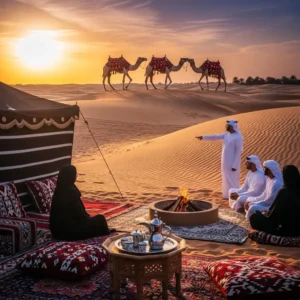
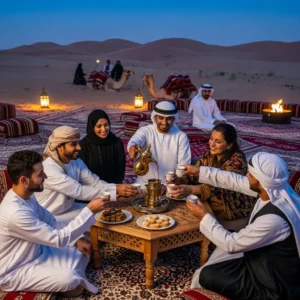
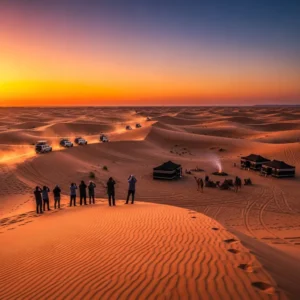
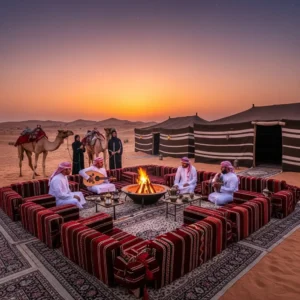
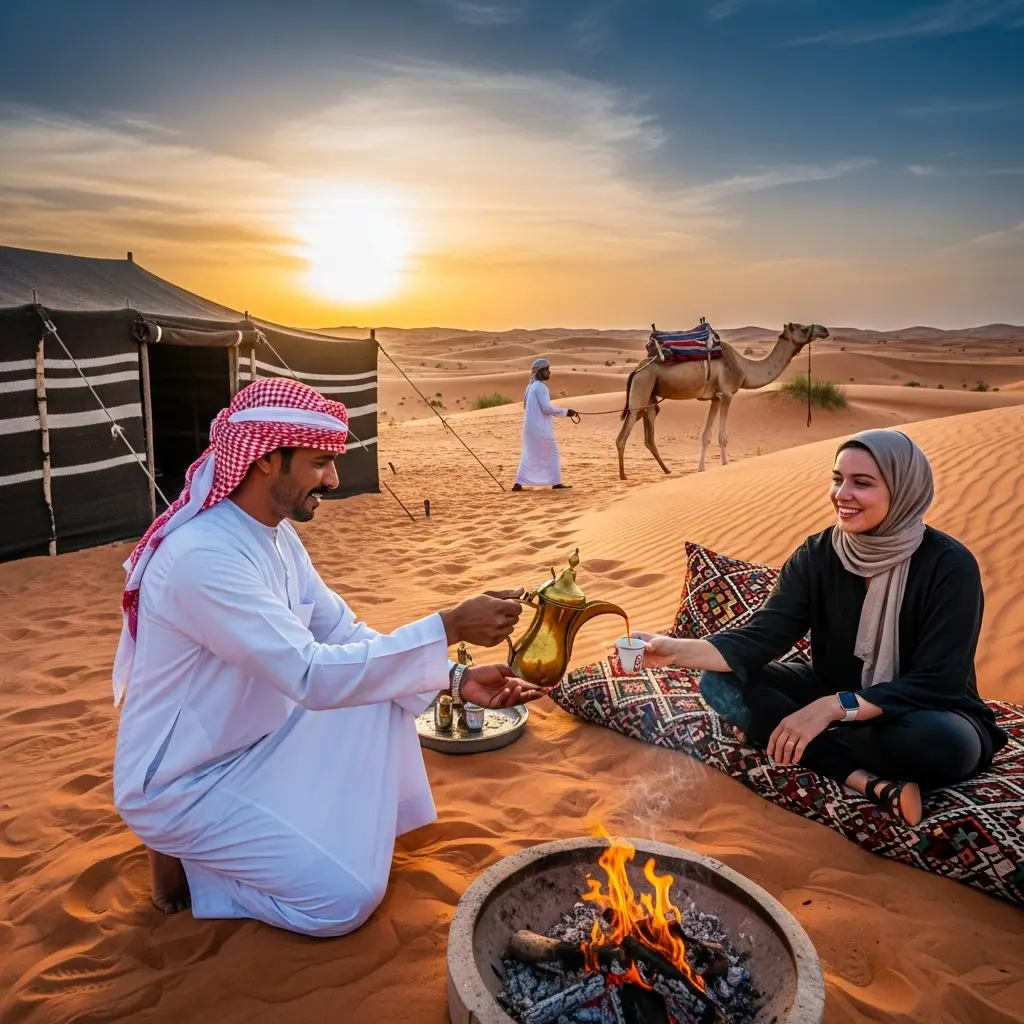
The safari camp itself is a modern re-imagination of the majlis, the traditional Bedouin gathering place that was the center of social and cultural life. In doing so, it actively practices and perpetuates the most important of all Bedouin values: hospitality.
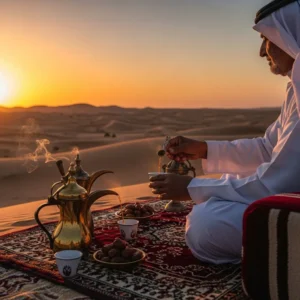
The ritual of welcoming guests with Gahwa (Arabic coffee) and dates is performed thousands of times every evening across the deserts of the UAE. This constant repetition is a powerful act of preservation. The safari provides a stage where the sacred traditions of Hafawah (hospitality) and Karam (generosity) are not just talked about but are actively demonstrated to a global audience, keeping the core of the culture alive and well.
3. A Living Stage for Traditional Performing Arts
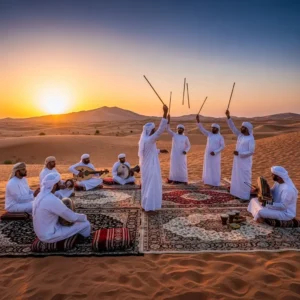
For any performing art to survive, it needs a stage and an audience. The desert safari provides both. It has become one of the most important venues for showcasing traditional Emirati Music and Dance.
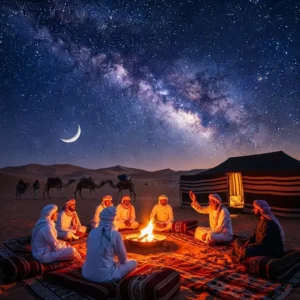
Performance troupes that specialize in the Al Ayyala “stick dance” have a regular, paid platform to display their art, maintaining the tradition’s high standards and visibility. The safari experience also keeps the oral traditions alive. The safari guide often takes on the role of a modern Al-Rawi (storyteller), sharing tales, poems, and cultural knowledge with their guests. This act of sharing is fundamental to Preserving Bedouin Traditions.
4. Keeping Heritage Sports and Animal Husbandry Alive
The desert safari plays a key role in maintaining the relevance of the two most important animals in Bedouin culture: the falcon and the camel.
Falconry’s Future
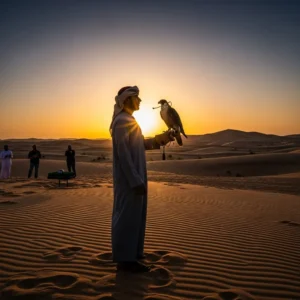
The falconry demonstration on a heritage safari does more than entertain; it educates guests on the nobility and history of this UNESCO-recognized sport. This creates appreciation and support for the wider ecosystem of conservation, including the world-class falcon hospitals and captive-breeding programs that the UAE is famous for. It provides a dignified profession for skilled falconers, ensuring their ancient knowledge is valued.
A Continued Role for the Camel
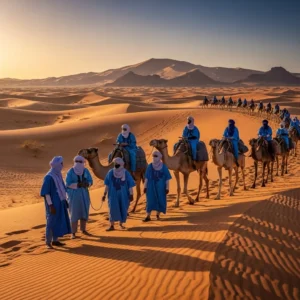
In a world of 4x4s, the camel no longer has its historical role in transport. However, the safari’s camel rides and the wider heritage sport of camel racing give these “ships of the desert” a new and vital purpose. This ensures that the traditional knowledge of camel breeding, handling, and care—a skill honed over thousands of years—is not lost to time.
5. An Interactive Classroom for the World
Perhaps the most significant role of the safari in Preserving Bedouin Traditions is its educational power. It transforms cultural learning from a passive to an active experience.
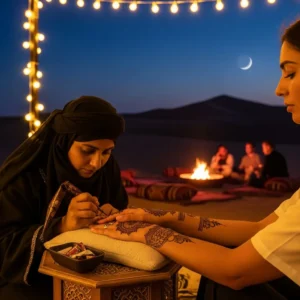
Guests don’t just read about Bedouin food; they taste authentic dishes prepared with traditional recipes. They don’t just see a picture of henna; they feel the cool paste on their skin and watch the design darken over days. They don’t just look at a photo of a camel; they experience its unique gait and appreciate its gentle nature. This multi-sensory, interactive approach makes the heritage memorable and fosters a deep, personal appreciation for the culture among millions of visitors from around the world.
6. Fostering National Pride
The desert safari is not just for international tourists. It is also a popular activity for residents and citizens of the UAE. For the younger generation of Emiratis, who have grown up in a hyper-modern environment, the safari can be a powerful and accessible connection to the world of their grandparents and great-grandparents.
It provides a proud and dignified showcase of their national identity. Seeing international visitors show such keen interest and appreciation for their culture can reinforce the value of their heritage in their own eyes. This internal validation is a crucial, though often overlooked, aspect of Preserving Bedouin Traditions.
7. The Challenge of Authenticity and the Rise of Heritage Safaris
It is important to acknowledge that the desert safari is a curated experience. A key challenge is balancing authenticity with the demands of commercial tourism. Some budget safaris may over-simplify traditions or include non-Emirati elements like belly dancing for entertainment value.
However, in response to a growing demand for more meaningful experiences, there has been a significant rise in dedicated “heritage safaris.” These premium tours, such as some offered by operators like https://royaldesertadventures.ae/, make a conscious effort to provide a more accurate and educational experience. They often take place in conservation reserves, feature local Emirati guides, and focus exclusively on authentic traditions. Researching on platforms like https://dubaidesertsafarie.com/ and https://hafiztourism.com/ can help travelers find these more culturally-focused options.
Preservation in Practice: How the Safari Bridges Past and Present
Frequently Asked Questions (FAQs)
1. How do desert safaris contribute financially to cultural preservation? They contribute by creating a sustainable economy around heritage. A significant portion of the revenue from an Emirati Heritage Safari goes towards paying the salaries of local guides, performers, artists, and falconers. This direct financial incentive encourages people to maintain and pass on these traditional skills, making cultural preservation a viable livelihood rather than just a hobby.
2. Are the safari guides trained in Emirati history and culture? Yes, all licensed safari guides and marshals in Dubai must undergo a rigorous training and certification process from the Dubai Department of Economy and Tourism. This training includes not only off-road driving and first aid but also comprehensive modules on the history, culture, and heritage of the UAE. They are trained to be cultural ambassadors.
3. Is there a risk that the traditions shown on a safari become “fossilized” or just a performance? This is a valid concern in cultural tourism worldwide, often referred to as “staged authenticity.” However, many traditions, especially performing arts like Al Ayyala, are living traditions that are also performed in non-tourist settings like weddings and national day celebrations. The safari acts as one more venue that helps keep the art form practiced and alive. The key to Preserving Bedouin Traditions is practice, and the safari provides a daily opportunity for it.
4. What is the Dubai Desert Conservation Reserve (DDCR) and what is its role? The DDCR is a large, protected area of the desert set aside for the conservation of the natural desert habitat and its wildlife. Many premium heritage safaris operate within the DDCR. Its role is crucial as it preserves the authentic environment in which the Bedouin culture thrived. By protecting the native flora and fauna, it provides a pristine and authentic backdrop for an Emirati Heritage Safari.
5. How does the UAE government support the preservation of its heritage? The UAE government is deeply committed to preserving its heritage. It has established numerous cultural foundations, museums, and heritage villages. It also provides significant support for heritage sports like camel racing and falconry and sponsors major cultural festivals and poetry competitions. The government’s strong top-down support creates a wider ecosystem of preservation in which the desert safari plays a vital role.
6. Is the Bedouin dialect and Nabati poetry being preserved? Yes, very actively. Nabati poetry is celebrated as a high art form in the UAE. There are hugely popular, televised competitions like “Million’s Poet” that have revitalized interest in the art form among younger generations. This national pride in the vernacular poetry is a cornerstone of Preserving Bedouin Traditions.
7. How can a tourist ensure they are choosing an ethical and authentic safari? Research is key. Look for operators that specifically market themselves as “heritage” or “cultural” safaris. Read reviews on independent platforms to see what past guests say about the cultural content. Operators that are allowed to enter the DDCR are often a good choice, as they must adhere to strict environmental and cultural standards.
8. What is the most significant tradition a visitor learns about on a safari? While all are important, the most profound is often the tradition of hospitality (Hafawah). The experience of being welcomed so graciously and generously often leaves a lasting impression on visitors. It’s a powerful and positive insight into the core values of Emirati and Bedouin culture.
9. Can visitors interact with local Emiratis on a safari? While the majority of staff in the tourism industry are expatriates, heritage safaris make a special effort to include Emiratis. You may have an Emirati guide, or you will certainly see Emirati performers and falconers. These interactions, however brief, are a wonderful and direct way to connect with the local culture.
10. How accurate is the depiction of a Bedouin camp? The safari camp is a romanticized and modernized re-creation, not a historically precise replica. It includes modern conveniences like flushing toilets and extensive lighting. However, the core elements—the majlis-style seating, the open fire, the traditional foods, and the focus on entertainment—are all based on authentic aspects of a traditional Bedouin encampment.
11. Does the safari experience teach visitors about the traditional family structure? The safari itself does not delve deeply into social structures. However, a knowledgeable guide can answer questions about the traditional Bedouin family, which was the central unit of society. They can explain the importance of the tribe, the respected role of the elders, and the strong family bonds that remain a key feature of modern Emirati society.
12. What role did women play in preserving Bedouin traditions? Women were the primary custodians of many traditions. They were the masters of crafts like Al-Sadu weaving (a UNESCO-recognized heritage craft), the keepers of family genealogies, and had their own rich traditions of poetry and storytelling related to domestic and community life. Preserving Bedouin Traditions is as much about honoring their contribution as the men’s.
13. Are there any museums I can visit to learn more after my safari? Yes, Dubai has several excellent museums. The Al Shindagha Museum, located in the historic heart of the city, offers a fantastic deep dive into Emirati history and culture. The Etihad Museum focuses on the modern history of the nation’s founding. A visit to these after your safari can provide a deeper context for the traditions you experienced.
14. Does the safari touch upon the importance of pearl diving? While the safari is desert-focused, a good guide will often explain the “two pillars” of the old Emirati economy: pearl diving at sea and the Bedouin life in the desert. They might explain how the two communities would trade dates and camel milk for fish and pearls, showing how the different aspects of the heritage were interconnected.
15. How has rapid development affected the ability to preserve these traditions? Rapid development presents both challenges and opportunities. The challenge is the risk of losing traditions as lifestyles change. The opportunity, however, is that the wealth generated from development has allowed the UAE to invest heavily in cultural preservation initiatives, from world-class museums to heritage festivals and the support of cultural tourism, like the Emirati Heritage Safari.
16. What is the most authentic part of the heritage safari? While the entire experience is curated, the most authentic elements are often the intangible ones: the genuine warmth of the hospitality, the legitimate skill of the falconer or the Yowla dancer, and the timeless taste of the Arabic coffee. These are not replicas; they are real skills and values being practiced in a modern context.
17. Do the safari experiences change over time? Yes, the safari industry is constantly evolving. As more travelers seek authentic experiences, many operators are shifting away from more generic entertainment and are investing more in providing high-quality, authentic cultural content. The trend is moving towards a deeper and more respectful engagement with the local heritage.
18. What is ‘Al-Sadu’ weaving? Al-Sadu is a traditional form of weaving practiced by Bedouin women to produce the beautiful, geometrically patterned textiles used for tents, camel saddles, and cushions. The craft uses wool from sheep, goats, and camels. This craft is also recognized by UNESCO and is a beautiful example of the artistic skills that were essential for desert life.
19. Can I visit a real heritage village? Yes, besides the safari camp, there are several heritage villages in the UAE. The Dubai Heritage Village in the Al Fahidi Historical Neighbourhood and the Abu Dhabi Heritage Village offer a glimpse into the traditional architecture and lifestyles of both the desert and the sea. They are excellent complements to an Emirati Heritage Safari.
20. Why is the desert safari the best way to experience this heritage? The desert safari is the best introductory experience because it is immersive and multi-sensory. Instead of just reading about the culture, you see it, taste it, hear it, and feel it. It brings the heritage to life in its original, breathtaking setting—the Arabian Desert. It’s an engaging, entertaining, and deeply memorable journey that makes Preserving Bedouin Traditions a living, breathing reality for visitors from all over the world.