Is Desert Safari Safe: Uncovering the Truth About Desert Adventure Risks
The question, Is Desert Safari Safe, is paramount for every traveler. The desert environment presents unique challenges.
The high-octane nature of activities like dune bashing adds an element of risk.
However, the short answer is a resounding Yes. When booked through a reputable operator, the experience is highly secure.
This security is achieved through rigorous regulation and strict adherence to protocol.
This guide provides a complete safety breakdown, addressing common concerns about Desert Safari Risks.
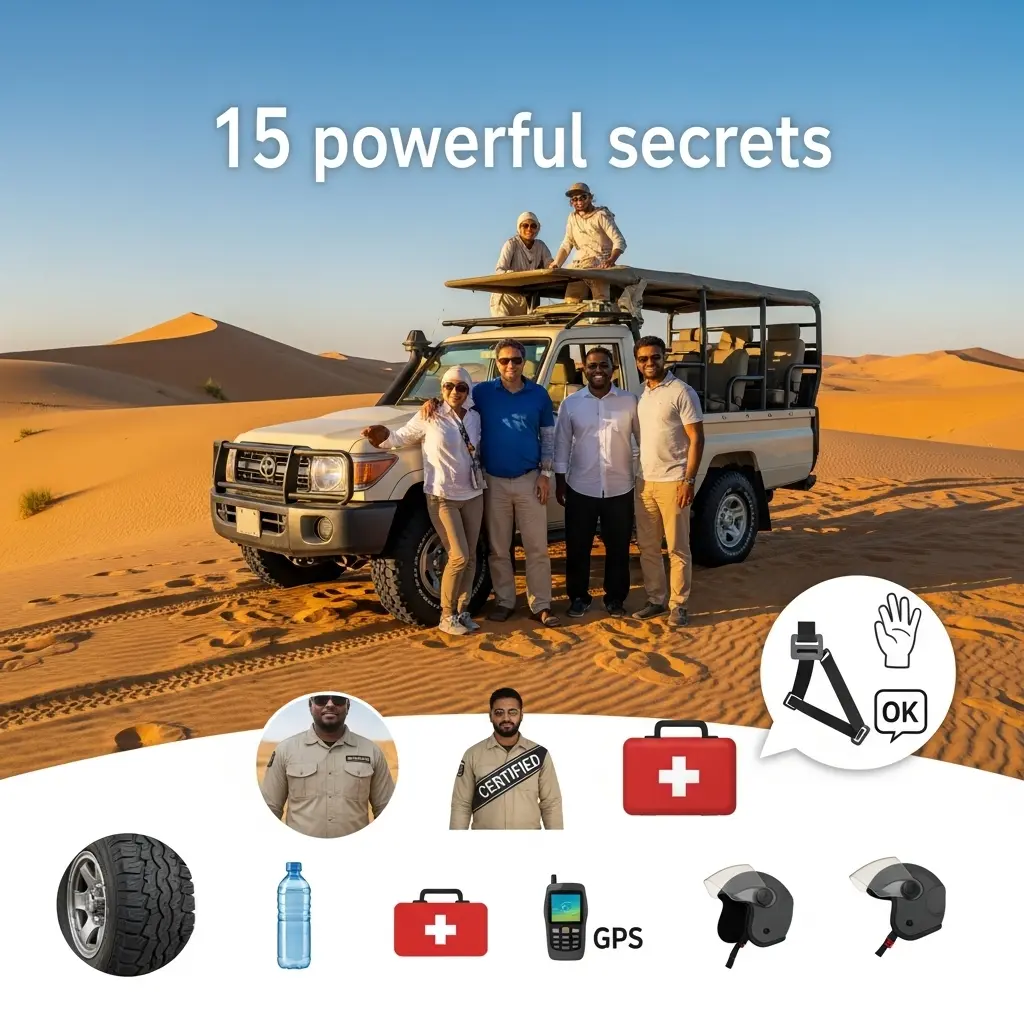
1. The Foundation: Vehicle Safety Dubai Standards
The safety of the Desert Safari Ride begins with the vehicle itself.
Modern standards for Vehicle Safety Dubai are extremely high.
Mandatory Vehicle Modifications
All 4×4 vehicles used for dune bashing must be specifically modified.
Mandatory features include internal roll cages, providing crucial structural support.
These modifications protect passengers in the highly unlikely event of a rollover.
This required enhancement is the bedrock of Desert Safari Safety.
Regular Maintenance
Vehicles undergo rigorous, daily safety checks before every trip.
This includes mandatory inspection of the braking system, suspension, and tires.
The commitment to maintenance reduces mechanical failure, minimizing Desert Safari Risks.
Advanced Technology
Vehicles are equipped with GPS tracking systems and two-way radios.
This ensures constant communication with the central base camp.
This technology is vital for the Desert Emergency Plan.
2. The Pilot: Driver Training Standards and Expertise
The driver’s skill and certification are the most important elements of the safety equation.
A professional driver is the key to a Secure Safari Experience.
Certified Driver Training Standards
All dune bashing drivers must be licensed and certified by local tourism authorities.
They undergo specialized, intense training in off-road desert driving.
This training covers vehicle recovery, navigation, and safe dune traversal.
These Driver Training Standards are non-negotiable requirements for operators.
Focus on Passenger Safety Protocol
Drivers are trained to prioritize Passenger Safety Protocol above thrill.
They adjust the intensity of the dune bashing based on passenger comfort and safety conditions.
Trusting your highly trained driver is the best way to determine Is Desert Safari Safe.
3. Dune Bashing Safety: Passenger Safety Protocol
Passengers must understand their role in maintaining Desert Safari Safety.
Compliance with rules is crucial during the high-speed segment.
Seatbelt Requirement
Seatbelts must be worn and kept securely fastened throughout the entire dune bashing session.
This single rule is the most effective element of Passenger Safety Protocol.
Passengers must remain seated and keep all limbs inside the vehicle.
Avoiding Distractions
Passengers must avoid distracting the driver during the off-road segment.
The driver requires full concentration to navigate the shifting sands safely.
This cooperation is essential for a Safe Desert Adventure.
Health Exclusion
Individuals with existing back, neck, or heart conditions should opt out of dune bashing.
This Desert Safari Risks mitigation is essential for personal safety.
4. Environmental Challenges: Desert Safari Risks and Mitigation
The desert environment itself presents unique Desert Safari Risks.
Being prepared for heat and sand is vital for a Secure Safari Experience.
Heat and Dehydration
Heat exhaustion is the most common health risk.
Constant, proactive hydration is required throughout the afternoon and evening.
Reputable operators ensure ample chilled water is provided.
This is a key component of the overall Desert Safari Safety strategy.
Sand and Wildlife
Fine sand can damage electronics and irritate eyes. Goggles are highly recommended.
Guides are trained to ensure guests remain safely within designated areas.
This prevents unwanted encounters with rare desert wildlife or insects.
5. Emergency Preparedness: Desert Emergency Plan
Every reliable operator operates under a strict Desert Emergency Plan.
This ensures rapid response to any unforeseen circumstances.
Communication and Tracking
All convoys are monitored via GPS tracking and maintain constant radio contact.
In the event of a breakdown, a replacement vehicle and certified recovery team are dispatched immediately.
This system guarantees support for a Secure Safari Experience.
Safari First Aid and Guide Training
Guides carry fully stocked Safari First Aid kits and are trained in basic trauma response.
They know the nearest medical facilities and the fastest route out of the desert.
This readiness ensures the Desert Emergency Plan is executable at all times.
6. Health Restrictions: When Is Desert Safari Safe for Me?
Understanding personal limitations is the first step in assessing Is Desert Safari Safe.
Pregnancy and Injury
As mentioned, pregnant women and those with spinal injuries should strictly avoid dune bashing.
Operators offer Safe Desert Adventure alternatives, like a slow transfer to the camp.
This modification ensures safety without excluding the entire experience.
Motion Sickness
Travelers prone to motion sickness should take preventative medication beforehand.
Requesting a front seat in the 4×4 often helps alleviate symptoms.
This individual action significantly improves the Passenger Safety Protocol.
7. Vetting Operators: Guaranteeing a Secure Safari Experience
The best way to achieve a Guaranteed Safety Safari is through meticulous operator selection.
Reviewing Operator Standards
Check reviews on verified external platforms like https://dubaidesertsafarie.com/.
Look for comments that specifically praise the guide’s attention to safety and professionalism.
A commitment to high standards confirms a Secure Safari Experience.
Certification Check
Confirm that the company operates under all necessary tourism licenses and certifications.
This ensures they comply with mandatory Driver Training Standards.
This vetting process is central to answering the question, Is Desert Safari Safe.
8. The Role of Safety Briefings in Passenger Safety Protocol
A detailed safety briefing is mandatory and must be taken seriously by passengers.
Mandatory Pre-Ride Instructions
The guide explains the dune bashing process and the Passenger Safety Protocol.
They demonstrate how and when to securely fasten seatbelts.
They clarify the rules regarding keeping windows closed during the high-speed segment.
This information is vital for managing Desert Safari Risks.
Post-Briefing Questions
Guests should use this time to ask any questions they have about the Desert Safari Safety.
If something is unclear, clarify it with your guide before the vehicle leaves the paved road.
9. Dune Bashing Safety: Technical Vehicle Standards
Beyond roll cages, specific technical standards ensure Dune Bashing Safety.
Tire Deflation
The controlled deflation of tires is an essential technical requirement.
This allows the vehicle to increase traction and minimize the chance of sinking.
The guide performs this crucial check before every Safe Desert Adventure.
Vehicle Recovery Gear
Every convoy must carry essential recovery gear, including shovels, tow ropes, and air compressors.
This ensures that the Desert Emergency Plan includes quick recovery from being stuck.
Reliable equipment ensures consistent Desert Safari Safety.
10. Driver Training Standards: Advanced Navigation Skills
Driver Training Standards go far beyond standard driving licenses.
Off-Road Certification
Drivers must complete specialized off-road certification courses focusing on sand dynamics.
They learn how to read the shifting dunes and predict safe paths.
This technical expertise makes the Desert Safari Ride secure.
Emergency Response Training
Guides are trained in quick decision-making under duress.
They know how to stabilize the situation and communicate effectively during an emergency.
This advanced training supports the Desert Emergency Plan.
11. Safe Desert Adventure: Activity Specific Safety
Safety protocols extend to all camp activities, ensuring a completely Safe Desert Adventure.
Camel Ride Safety
Camel handlers supervise all mounting and dismounting procedures.
Guests must hold on firmly, as the camel’s standing motion can be jarring.
The short ride is conducted slowly and carefully.
Sandboarding Safety
Participants are instructed on how to fall safely (leaning backward is discouraged).
Equipment is checked for defects before use.
Always sandboard on designated, cleared slopes.
12. Guaranteed Safety Safari: The Role of Internal Links
For the highest level of assurance, travelers can utilize specialized resources.
The internal link to https://royaldesertadventures.ae/ points to luxury operators.
These premium providers offer an even higher level of Guaranteed Safety Safari.
This includes private vehicles, customized gentle routes, and dedicated personnel.
This investment minimizes every potential risk.
13. Safety for Special Groups: Elderly and Children
Special attention is given to vulnerable groups for maximum Desert Safari Safety.
Children
Children must meet minimum age/height requirements for dune bashing.
They must be constantly supervised at the camp, especially near fires and the dune crests.
This active supervision is a key part of Passenger Safety Protocol.
Elderly
Seniors should be seated comfortably and given easy access to restrooms.
A gentle ride option is usually mandatory for any senior traveler.
This necessary care ensures the Safe Desert Adventure is enjoyable for all ages.
14. The Desert Emergency Plan: Full Protocol Breakdown
The Desert Emergency Plan covers all contingencies for a Secure Safari Experience.
| Emergency Type | Guide Action | Priority Protocol |
| Vehicle Breakdown | Immediately contact convoy/base. Secure scene. | Immediate dispatch of recovery 4×4. |
| Medical Incident | Administer Safari First Aid. Request base to contact emergency services (ambulance/rescue). | Rapid evacuation to the nearest medical facility. |
| Sandstorm | Stop vehicle, turn off engine, ensure all doors/windows are sealed. | Wait for clear communication; follow convoy lead. |
| Getting Stuck | Attempt recovery with sand ladders/tow rope. | Do not over-rev the engine; signal convoy leader. |
15. The Final Verdict: Is Desert Safari Safe
The final verdict on Is Desert Safari Safe is based on regulatory commitment.
When you choose a professional, licensed operator, the answer is unequivocally yes.
The inherent risks of the desert are managed by trained guides and certified equipment.
Your compliance with the simple rules guarantees a Secure Safari Experience.
The preparation effort ensures your Desert Safari Safety.
Frequently Asked Questions (FAQs) – Long Answers
1. Who should absolutely avoid the dune bashing activity, and what is the safest alternative offered on a Desert Safari Ride?
Individuals who should strictly avoid the dune bashing activity include pregnant women, people with pre-existing spinal conditions (back/neck injuries), and anyone who has had recent major surgery. The intense, jarring impact and G-forces of the activity pose a severe health risk. The safest alternative offered is the “Gentle Ride” or direct transfer option. This allows the traveler to bypass the high-impact segment of the Desert Safari Ride and travel smoothly to the camp, ensuring a Secure Safari Experience with minimal Desert Safari Risks.
2. What mandatory safety equipment must be present in every 4×4 vehicle used for the Safe Dune Bashing experience?
For Safe Dune Bashing, every 4×4 vehicle must be equipped with several mandatory safety features enforced by Vehicle Safety Dubai regulations. These include: 1. Internal Roll Cages: Providing structural support in a rollover. 2. Certified Seatbelts: For all passengers. 3. First Aid Kit: Fully stocked for immediate Safari First Aid. 4. Communication Gear: Two-way radio or satellite communication to maintain contact with the base camp. 5. Vehicle Recovery Gear: Shovels and tow ropes for getting unstuck.
3. How does the driver’s training and certification (Driver Training Standards) directly impact the likelihood of a safe Desert Safari Ride?
The driver’s adherence to Driver Training Standards is the most critical factor influencing the safety of the Desert Safari Ride. Certified drivers possess specialized knowledge of off-road dynamics, knowing how to read the shifting sand dunes and control the vehicle during high-speed slides. This advanced training significantly reduces the likelihood of accidents, rollovers, or getting stuck in hazardous areas. Their expertise transforms a potentially dangerous terrain into a controlled, exhilarating experience, providing a Guaranteed Safety Safari.
4. What are the key health hazards associated with the extreme environment, and what are the essential Desert Travel Health precautions?
The key health hazards are heat exhaustion, sunstroke, and rapid dehydration. Essential Desert Travel Health precautions include proactive hydration (drinking water frequently before and throughout the trip), wearing protective clothing (hat, sunglasses, high-SPF sunscreen) to minimize UV exposure, and avoiding alcohol and caffeine before the safari. Travelers should also be aware of the symptoms of heat stress (dizziness, nausea) and inform their guide immediately if they feel unwell.
5. What is the proper Passenger Safety Protocol for children regarding dune bashing, and what age restrictions are typically enforced?
The proper Passenger Safety Protocol for children demands strict adherence to age restrictions and supervision. Most operators enforce a minimum age of 3 years old for dune bashing due to the jarring motion. Children must be seated correctly, wear a seatbelt at all times, and be under constant supervision. If a child is restless or very young, the guide must be notified to offer a smoother, gentler path, ensuring the Desert Safari Safety and comfort of the child.
6. How does the operator’s adherence to the Desert Emergency Plan ensure a fast response in case of a breakdown or medical incident?
The operator’s adherence to the Desert Emergency Plan ensures a fast response through established communication and logistics. Protocol: All vehicles are GPS tracked and communicate via radio. In case of an emergency, the base camp immediately verifies the location and deploys a dedicated recovery vehicle and a medical response team. This systematic approach, backed by specialized resources, bypasses the unreliable public communication often found in remote areas, guaranteeing a swift response for a Secure Safari Experience.
7. What are the signs of a non-reputable operator, and how does booking with them increase the Desert Safari Risks?
Signs of a non-reputable operator include extremely low pricing, vague answers regarding vehicle age or insurance, and lack of certification disclosure. Booking with them increases Desert Safari Risks because they cut costs by using older, poorly maintained vehicles (higher breakdown risk), employing uncertified drivers (higher accident risk), and potentially lacking essential recovery gear or a proper Desert Emergency Plan. These compromises directly jeopardize Desert Safari Safety.
8. What Desert Safety Precautions should be taken regarding personal items and electronics due to the risk of fine desert sand?
Desert Safety Precautions for personal items require vigilance. Electronics: Cameras and phones must be sealed in zip-lock bags or dustproof casings when not in use. Never change lenses in the open desert air. Valuables: Keep wallets and essential ID securely on your person at all times, rather than leaving them unattended at the communal camp table. The fine sand is abrasive and can damage gear quickly, while unattended items are vulnerable to loss.
9. Why is the pre-ride safety briefing mandatory, and what are the key instructions given to the passenger regarding their Passenger Safety Protocol?
The pre-ride safety briefing is mandatory because the Desert Safari Ride involves controlled, high-impact maneuvers that require passenger compliance. Key instructions given to the passenger include: 1. Seatbelts Must Remain Fastened: The primary Passenger Safety Protocol. 2. Do Not Distract the Driver: Crucial for Desert Safari Safety. 3. Keep Limbs Inside: Avoid leaning out of the window or sunroof. 4. Motion Sickness Warning: Instructions on what to do if they feel unwell.
10. How can a traveler use external links like https://dubaidesertsafarie.com/ to confirm the safety history and standards of a potential tour operator?
A traveler can use external links like https://dubaidesertsafarie.com/ to confirm the safety history by reading verified customer reviews. Look for frequent, positive comments specifically mentioning the driver’s professionalism, the cleanliness and quality of the vehicles, and adherence to safety rules. A high volume of positive reviews regarding these operational factors is a strong indicator that the operator maintains the necessary high standards for a Guaranteed Safety Safari.
11. What are the key technical standards that must be checked regarding the vehicle’s tires to ensure Safe Dune Bashing?
The key technical standards regarding the vehicle’s tires for Safe Dune Bashing involve pressure and condition. 1. Controlled Deflation: The tires must be partially deflated (reduced pressure) by the driver before hitting the sand, which increases the contact patch for traction and stability. 2. Condition: The tires must be in excellent condition, free of major cracks or wear, and suitable for off-road use. These two technical factors are paramount for preventing the vehicle from sinking or rolling, ensuring Desert Safari Safety.
12. What role does advanced driver training (Driver Training Standards) play in managing the Desert Safari Risks associated with shifting sand dynamics?
Advanced driver training (meeting Driver Training Standards) plays a crucial role in managing Desert Safari Risks by equipping the guide with expertise in sand dynamics. Trained drivers know how to read the constantly shifting sand (like the crests and slip faces) and use the vehicle’s momentum and weight distribution to their advantage. They are trained to predict when the sand will give way, allowing them to take corrective action instantly. This mastery is the main defense against rollovers or severe stuck situations.
13. How does the Desert Emergency Plan address the risk of a vehicle rolling over, and what immediate actions must passengers take?
The Desert Emergency Plan addresses the risk of rollover through mandatory safety equipment and post-incident protocol. Prevention: Roll cages are mandatory. Action: Passengers must immediately remain fully restrained in their seatbelts (the primary safety defense). Once the vehicle is stabilized, they must await the guide’s instruction. The guide will check for injuries, stabilize the scene, and immediately radio the base for support and Safari First Aid dispatch.
14. How can booking a personalized tour through https://royaldesertadventures.ae/ enhance Desert Safari Safety for travelers with specific accessibility needs?
Booking a personalized tour through https://royaldesertadventures.ae/ enhances Desert Safari Safety for travelers with specific accessibility needs by providing custom control. They can request a specialized vehicle (easier entry/exit), ensure a fully gentle, non-dune-bashing route, and arrange for a dedicated support person. This individualized attention and control over the itinerary significantly reduces the logistical and physical Desert Safari Risks associated with standard group tours, ensuring a highly Secure Safari Experience.
15. What are the key items that must be included in the vehicle’s Safari First Aid kit, and why is guide training in basic first aid critical?
The vehicle’s Safari First Aid kit must include key items for immediate trauma and heat treatment: sterile dressings, bandages, antiseptic solutions, rehydration salts, thermal blankets (for heat stroke or shock), and common pain relievers. Guide training in basic first aid is critical because they are the first responders in a remote location. Their ability to quickly assess injuries, stabilize the patient, and administer basic life support until professional medical help arrives is paramount to executing the Desert Emergency Plan effectively and saving lives.