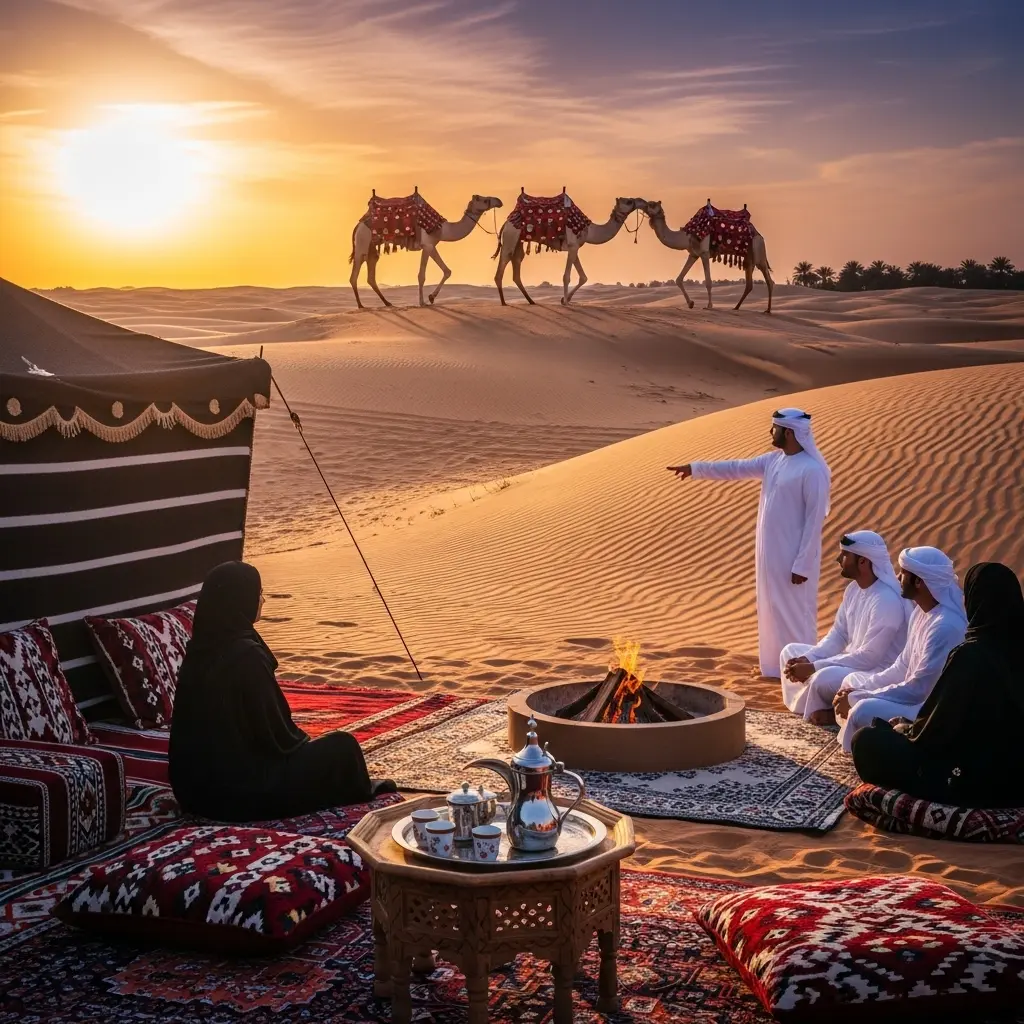
An Emirati Heritage Safari: A Journey into the Soul of the Nation
Beyond the gleaming facades and futuristic ambitions of Dubai lies a deep and resonant soul, one that was forged in the timeless sands of the Arabian Desert. To truly understand the UAE, one must look past the modern marvels and into the heart of its culture. The most immersive and unforgettable way to do this is by embarking on an Emirati Heritage Safari, an experience that serves as a captivating window into the nation’s past.
This is not just a simple excursion; it is a curated journey that peels back the layers of time, revealing the Bedouin values, traditions, and skills that form the bedrock of Emirati identity today. A true Emirati Heritage Safari connects you to the land and its people in a way that no city tour ever could. It’s where the spirit of the desert comes alive through stories, flavors, arts, and the legendary hospitality of its people.
From the moment you are welcomed with coffee and dates to the final strains of traditional music under a starlit sky, every element is a piece of a larger cultural puzzle. Let’s explore the seven powerful ways a desert safari opens a window into the rich and enduring heritage of the Emirates.
1. The Land Itself: The Desert as a Teacher
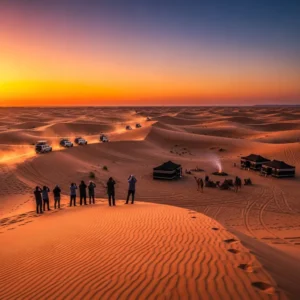
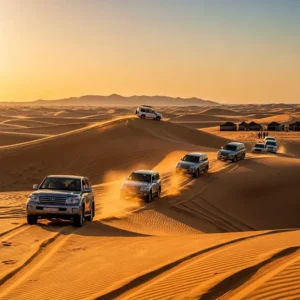
The story of Emirati heritage begins with the desert. This vast, challenging, and beautiful landscape is the crucible in which the Bedouin character was formed. An Emirati Heritage Safari first connects you to the land itself, demonstrating how this environment shaped a culture of resilience, resourcefulness, and profound respect for nature. The thrilling dune bashing ride, for instance, is not just an adventure; it’s a modern display of the incredible skill and knowledge required to navigate a terrain that is both treacherous and breathtakingly beautiful.
2. Hafawah: The Sacred Tradition of Hospitality
The most powerful lesson in an Emirati Heritage Safari is the experience of Hafawah, or Emirati hospitality. This tradition is a cornerstone of the culture, born from the desert code of survival where offering aid to a traveler was a sacred duty.
The Rituals of Welcome
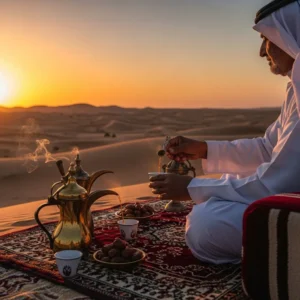
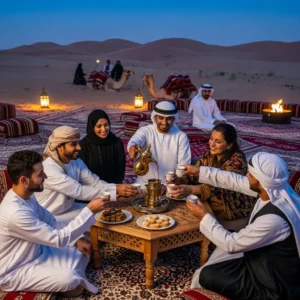
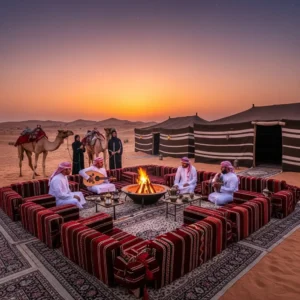
Your first encounter with this tradition is the welcome at the camp. You will be greeted with fragrant Arabic coffee (Gahwa) and sweet dates. This is not just a snack; it’s a ceremony of welcome and respect that has been practiced for centuries. Understanding the etiquette—accepting with your right hand, shaking the small cup to refuse a refill—is to participate in this beautiful living tradition.
The Generosity of the Feast
The lavish BBQ dinner served at the camp is a modern expression of Karam, or generosity. In Bedouin culture, a host’s honor was measured by their ability to provide for their guests. The abundance and variety of food on offer is a direct reflection of this value, a way of honoring each guest by sharing the very best of what they have.
3. The Noble Art of Falconry
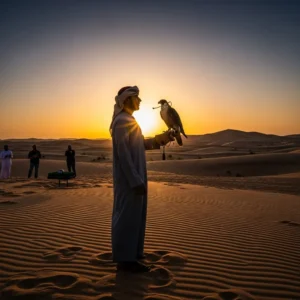
Few symbols represent the prestige and spirit of the desert more powerfully than the falcon. An Emirati Heritage Safari that includes a falconry demonstration provides a window into a noble pursuit that is deeply intertwined with Bedouin history.
Originally a vital method for hunting and supplementing the desert diet, falconry evolved into a revered heritage sport. The demonstration showcases the breathtaking speed and agility of these majestic birds of prey, but more importantly, it reveals the deep, trust-based bond between the falconer and his bird. Witnessing this partnership is to understand a tradition of patience, respect for nature, and nobility.
4. The Ship of the Desert: The Centrality of the Camel
The camel is the unsung hero of Arabian history. This remarkable animal made life, trade, and civilization possible in the desert. The gentle camel ride offered on an Emirati Heritage Safari is a tangible connection to this incredible legacy.
A Legacy of Survival and Trade
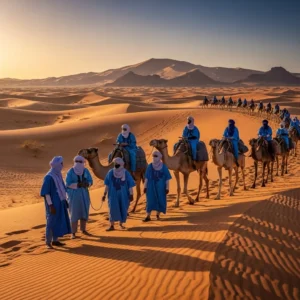
For the Bedouins, the camel was the source of everything: transportation, milk, meat, and wool. It was the measure of a family’s wealth and their key to survival. The Emirati Heritage Safari allows you to experience the traditional, rhythmic pace of a camel caravan, connecting you to the ancient traders of the Incense Route who crossed these same deserts centuries ago.
5. The Rhythms of the People: Music and Oral Traditions
Before modern entertainment, the desert nights were filled with poetry, music, and stories. The entertainment at a safari camp is a vibrant window into these rich oral traditions.
Music, Dance, and Poetry
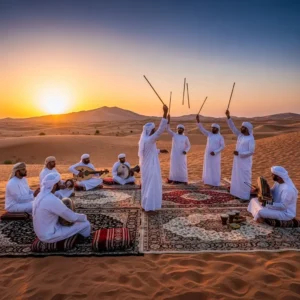
You will witness performances like Al Ayyala, the traditional “stick dance” where rows of men chant and move in unison, re-enacting tales of unity and victory. You will see the individual skill of a Yowla dancer and the mesmerizing spin of the Tanoura. These performances are the living, breathing expressions of the region’s soul. Many gatherings are also a chance to learn about the Bedouin tradition of storytelling, where a guide might share a local fable or a piece of wisdom passed down through generations.
6. A Taste of History: The Flavors of Arabia
The cuisine served during an Emirati Heritage Safari is a delicious journey into the region’s culinary past. The flavors and ingredients tell a story of trade, resourcefulness, and celebration.
The dinner buffet is an opportunity to taste authentic dishes that have been enjoyed for centuries. You can sample slow-cooked lamb or goat (Ouzi), various grilled kebabs, and aromatic rice dishes infused with spices like saffron, cardamom, and turmeric that arrived in the region via ancient trade routes. Sweets like Luqaimat (sweet fried dumplings) offer a taste of celebratory food. Every bite is a connection to the flavors that have defined the peninsula’s kitchens for generations.
7. The Art of Adornment and Appearance
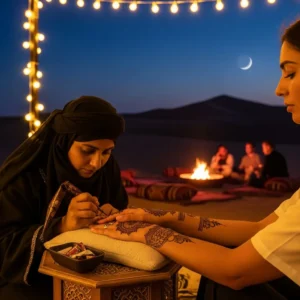
The visual culture of the Emirates is another fascinating window into its heritage. A desert safari offers glimpses into the traditional aesthetics of the region through henna art and traditional clothing.
The intricate art of henna painting, a temporary body art made from the henna plant, is a tradition associated with joy, beauty, and celebration, particularly for weddings. Getting a simple design at the camp connects you to this beautiful, ancient practice. Furthermore, the opportunity to try on traditional attire like the men’s Kandura and the women’s Abaya provides insight into the values of elegance, modesty, and cultural identity.
To get the most authentic cultural experience, it is always wise to choose a tour operator that specializes in heritage. A platform like https://royaldesertadventures.ae/ can be a good starting point, while comparing reviews on https://dubaidesertsafarie.com/ and https://hafiztourism.com/ can help you find operators praised for their cultural content.
The Elements of an Emirati Heritage Safari
This table summarizes how the safari experience connects you to the deep-rooted traditions of the UAE.
Frequently Asked Questions (FAQs)
1. What is the main difference between a regular safari and an Emirati Heritage Safari? A regular desert safari focuses primarily on adventure and entertainment—the thrill of dune bashing, a big buffet, and the dance shows. An Emirati Heritage Safari places a much stronger emphasis on cultural authenticity. It may include more in-depth cultural activities like a falconry show, a visit to a Bedouin-style village, a demonstration of traditional cooking, and more detailed explanations of the traditions from the guide.
2. What does the word “Bedouin” actually mean? The word “Bedouin” comes from the Arabic word badawiyin (بدويين), which means “desert dwellers.” It refers to the nomadic Arab tribes who historically inhabited the deserts of the Middle East and North Africa. Their entire culture, from their social structure to their traditions of hospitality, was shaped by the demands of their nomadic lifestyle.
3. Is the food served on a desert safari genuinely authentic? Yes, the food served at a quality Emirati Heritage Safari is a very good representation of popular and authentic regional cuisine. While it’s served in a modern buffet style, the dishes themselves, such as grilled kebabs, Ouzi (slow-cooked lamb), Hummus, Tabbouleh, and Luqaimat, are all staples of the traditional Emirati and wider Middle Eastern diet.
4. How is UNESCO involved in preserving Emirati heritage? UNESCO has recognized several elements of Emirati culture as part of the Intangible Cultural Heritage of Humanity. This is a prestigious designation that highlights traditions that are vital to the world’s cultural diversity. Recognized traditions that you can experience or learn about on an Emirati Heritage Safari include falconry, the majlis, and Gahwa (Arabic coffee), showcasing their global importance.
5. What is the national animal of the UAE, and can I see it on a safari? The national animal of the UAE is the Arabian Oryx. This beautiful, long-horned antelope was hunted to near extinction in the wild but was saved by a pioneering conservation program initiated by the late Sheikh Zayed. Today, you are most likely to see them in protected reserves. Some premium safaris, particularly those operating within the Dubai Desert Conservation Reserve, offer a wildlife drive where you have an excellent chance of spotting them.
6. Are the cultural performances on a safari respectful to the original traditions? Yes, reputable tour operators present these cultural performances with great respect. The artists are professionals who are experts in their art form. Dances like Al Ayyala are performed by dedicated heritage groups. While the context is entertainment for tourists, the performances themselves are authentic and serve as a proud showcase of the region’s artistic traditions.
7. What is the most important value in Bedouin and Emirati culture? While there are many important values, the concept of hospitality (Hafawah) combined with generosity (Karam) is arguably the most central. The honor and reputation of an individual, family, or tribe are deeply connected to how they treat their guests. This principle remains a powerful force in modern Emirati society.
8. What is the proper etiquette to follow when visiting a desert camp? The etiquette is generally relaxed and welcoming to international visitors. However, it’s always good to be respectful. Dress modestly, especially in the common areas. It is polite to accept the initial offering of coffee and dates. Always use your right hand when giving or receiving items. Finally, ask for permission before taking close-up photos of other guests or staff.
9. How does going on an Emirati Heritage Safari support the local culture? By choosing an authentic Emirati Heritage Safari, you are creating a commercial demand for the preservation of these traditions. Your patronage supports the professional artists, storytellers, and craftspeople who are the keepers of this heritage. It provides them with a platform and a livelihood, ensuring that these ancient skills and stories are not lost but are celebrated and passed on to future generations.
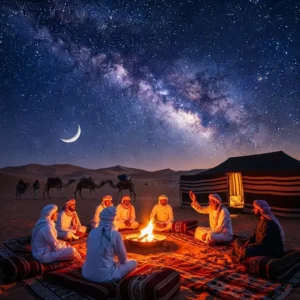
10. Can I learn about Bedouin astronomy and stargazing on a safari? This is often a feature of overnight or more specialized heritage safaris. Away from the city lights, the desert sky is incredibly clear. A knowledgeable guide will often point out major constellations like Orion, the North Star (Polaris), and explain how the Bedouins used these stars for navigation for centuries. It’s a fascinating glimpse into the practical science of the desert.
11. What is the significance of the incense called ‘Bukhoor’? Bukhoor is a type of scented incense, usually made from agarwood chips soaked in fragrant oils. Burning bukhoor is a key part of Emirati hospitality. It is often passed around to guests after a meal in a special burner called a mabkhara. This is a gesture of honor, a way to perfume the guest’s clothes and hair as a final act of welcome before they depart.
12. What are the traditional clothes I might see or get to wear? On an Emirati Heritage Safari, you’ll have the chance to try on traditional attire. For men, this is the Kandura (also known as a dishdasha), a long, white, ankle-length robe. For women, it is the Abaya, a loose-fitting, elegant black cloak worn over their clothes, often accompanied by a headscarf called a shayla.
13. Are the adventure activities like dune bashing a modern invention? While the use of 4×4 vehicles is modern, the spirit of adventure and the need to master the desert terrain are not. The Bedouins were renowned for their driving skills with their camels and their deep knowledge of the dunes. The modern sport of “dune bashing” can be seen as a high-tech evolution of this ancient relationship with the sand, a thrilling testament to the enduring challenge and allure of the desert landscape.
14. What is a “majlis” and is it still a part of modern Emirati life? The majlis is the traditional “sitting place” or council where guests are received and community matters are discussed. It is still a vital part of modern Emirati life. Most homes have a dedicated majlis for receiving guests, and the tradition continues in business and government, where leaders hold open majlises to listen to the concerns of the people. It remains a powerful symbol of community and dialogue.
15. Is the henna offered at the safari culturally significant? Yes, henna is an ancient art form with deep roots in the region, symbolizing beauty, joy, and celebration. It has been used for thousands of years for festive occasions, especially weddings and Eid. The simple design offered at the camp is a direct link to this beautiful tradition of adornment.
16. What kind of stories are part of the Bedouin oral tradition? The oral tradition is rich and varied, including epic poems about heroic warriors, cautionary tales about supernatural Jinn, clever fables featuring desert animals, and the chanting of poetry (Al-Taghrooda) during travel. These stories were the primary way of passing down history, morals, and cultural identity.
17. Why was the falcon so important to the Bedouins? The falcon was a vital partner for survival. In the resource-scarce desert, the Bedouins used their highly trained falcons to hunt prey like hares and birds, which provided a crucial source of meat for their families. This practical partnership evolved into a deep cultural symbol of courage, nobility, and the Bedouin’s mastery of their environment.
18. Does the desert landscape itself have cultural significance? Absolutely. The desert is not seen as an empty wasteland but as a place of profound beauty, spirituality, and challenge. It is the central character in countless poems and stories. The ability to not just survive but thrive in the desert is the very definition of the traditional Bedouin identity, and this deep respect for the land is a core part of Emirati heritage.
19. Is an Emirati Heritage Safari suitable for children? Yes, an Emirati Heritage Safari is an excellent experience for children. It is a fantastic, interactive history lesson. They can engage with the culture in a fun and memorable way—riding a camel, getting a henna tattoo, watching the falconry show, and seeing the traditional dances. It’s an educational adventure that brings the culture of the UAE to life for them.
20. What is the single most important takeaway from an Emirati Heritage Safari? The most important takeaway is the understanding that modern Dubai’s incredible success is built upon a deep and resilient cultural foundation. The safari experience reveals that the values forged in the desert—hospitality, community, resourcefulness, and a respect for nature—are not just relics of the past but are living principles that continue to shape the identity and spirit of the Emirates today.
#EmiratiHeritageSafari, #UAECulture, #EmiratiHeritage, #DesertSafari, #VisitDubai, #MyDubai, #Bedouin, #Hafawah, #Falconry, #CamelRiding, #ArabicCoffee, #Henna, #Ayyala, #CulturalTourism, #AuthenticTravel, #TravelDeeper, #Wanderlust, #ExploreCulture, #ThingsToDoInDubai, #DubaiAdventure, #HeritageTour, #History, #Tradition, #DesertLife, #Storytelling, #Majlis, #Generosity, #TravelGuide, #UNESCO, #IntangibleHeritage, #SouloftheDesert, #DubaiTrip, #VisitUAE, #ArabianAdventure, #CulturalImmersion, #BedouinLife, #LocalCulture, #SeeTheWorld, #TravelInspiration, #BucketList