
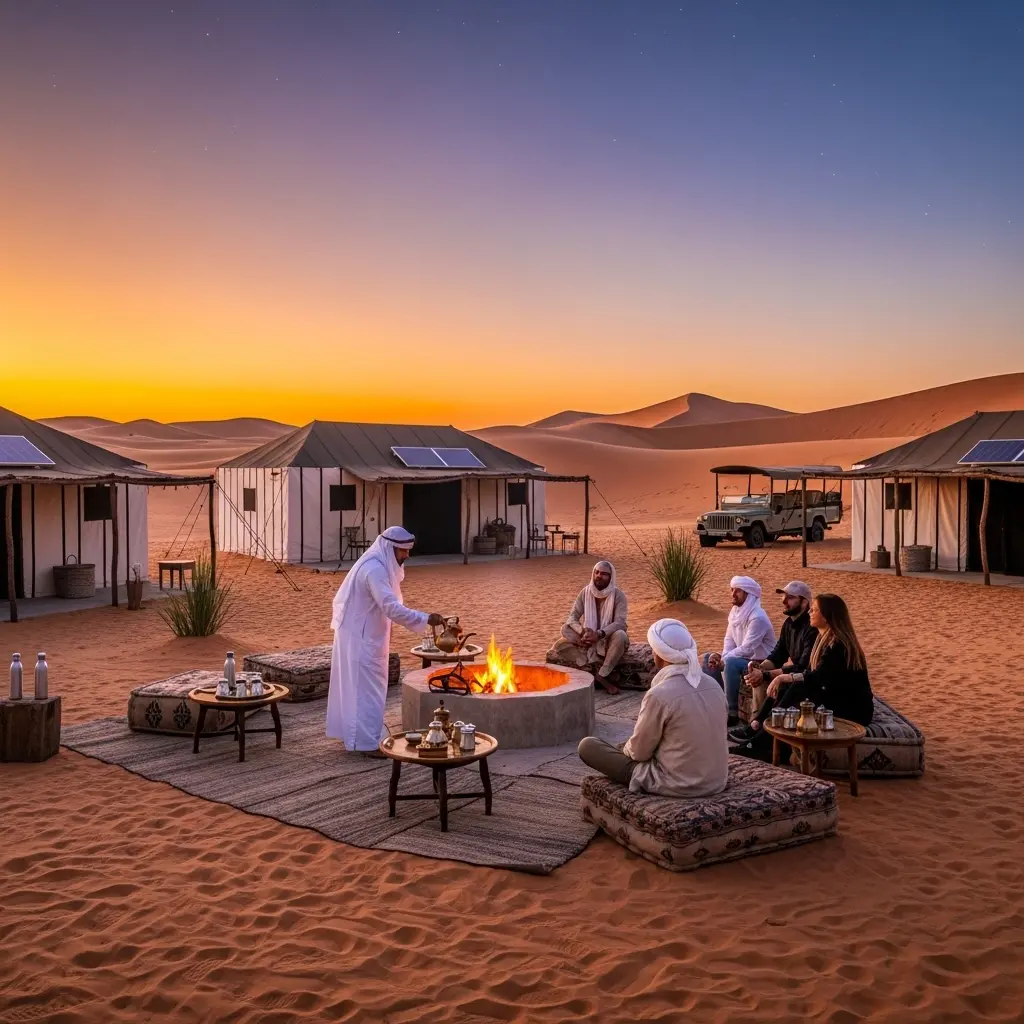
The Eco-Friendly Desert Camp: A Blueprint for a Greener Safari
When we imagine a desert safari camp, we picture an oasis of light, comfort, and hospitality under the vast, starry sky. But have you ever wondered about the hidden footprint of creating such an oasis in one of the world’s most fragile environments? The consumption of power, the use of water, and the creation of waste are significant challenges. The solution is the rise of the Eco-Friendly Desert Camp, a revolutionary model that proves luxury and sustainability can go hand in hand.
An Eco-Friendly Desert Camp is the operational heart of a truly sustainable desert safari. It is an establishment designed not to conquer the desert, but to co-exist with it harmoniously. It utilizes innovative technology and thoughtful design to provide an unforgettable guest experience while minimizing its impact on the precious desert ecosystem.
This guide takes you behind the scenes. We will explore the philosophy, the technology, and the practices that make a desert camp truly sustainable. From solar panels gleaming in the sun to sophisticated water recycling systems hidden from view, discover the revolutionary features that are shaping the future of desert tourism.
The Guiding Philosophy: More Than Just Being “Green”
The concept of an Eco-Friendly Desert Camp is built on a philosophy that goes much deeper than just using recycled napkins.
The “Leave No Trace” Principle
This is the golden rule. A sustainable camp operates with the ultimate goal of leaving the desert environment exactly as it was found. This principle informs every decision, from the initial construction of the camp to its daily operations and eventual decommissioning. It is a profound commitment to respecting the natural landscape.
Harmony, Not Intrusion
A sustainable camp is designed to blend in with its surroundings, not dominate them. The architecture often uses natural colors and materials, and the layout is planned to minimize the disruption to the land. The goal is to create a sense of being a guest in the desert’s home, rather than a conqueror of it.
Luxury Through Smart Design
Eco-friendliness does not mean sacrificing comfort. A modern Eco-Friendly Desert Camp provides all the amenities guests expect—comfortable seating, clean bathrooms, delicious food—but delivers them through intelligent, sustainable systems. The luxury comes from the experience of enjoying the pristine, silent desert in the knowledge that you are not harming it.
Powering the Oasis: Sustainable Energy Solutions
Generating electricity in a remote desert location is a major challenge. An Eco-Friendly Desert Camp turns this challenge into an opportunity by harnessing the desert’s most abundant resource: the sun.
Harnessing Solar Power
The backbone of the camp’s energy supply is a system of photovoltaic (PV) solar panels. These panels silently convert sunlight into clean electricity throughout the day. This energy is used to power the camp’s lighting, kitchen equipment, water pumps, and other facilities. Any excess energy is stored in large battery banks to provide power through the night.
A Focus on Energy Efficiency
Alongside generation, a key strategy is the reduction of consumption. This is achieved through the exclusive use of high-efficiency LED lighting, which uses a fraction of the power of traditional bulbs. Furthermore, kitchen and refrigeration appliances are chosen for their low energy consumption ratings, ensuring that the electricity generated by the solar panels is used as efficiently as possible.
Precious Drops: Radical Water Conservation
Water is the most precious resource in the desert. An Eco-Friendly Desert Camp is designed around a radical approach to water conservation and management.
Responsible Sourcing and Use
Water is either brought in from sustainable sources or, in some advanced camps, sourced from an underground well. Guests are gently educated on the importance of mindful water use. The facilities are fitted with water-saving technologies like low-flow faucets and toilets to minimize consumption at the source.
Advanced Wastewater Treatment
This is one of the most innovative features. The camp will have its own on-site wastewater treatment plant. This system separates “greywater” (from sinks and showers) from “blackwater” (from toilets). The greywater is then treated and recycled for uses such as irrigating native plants around the camp or for dust control. The blackwater is treated to a high standard before being safely disposed of in accordance with environmental regulations.
Building Green: Sustainable Construction
The very structure of an Eco-Friendly Desert Camp is a testament to its philosophy.
The camp is often built on raised platforms or uses non-permanent foundations to minimize the impact on the ground beneath. The materials used prioritize sustainability. This can include locally sourced, fast-growing wood, recycled materials, and traditional building materials like barasti (woven palm fronds), which are natural, biodegradable, and have a deep cultural significance.
A Circular Economy: The Goal of Zero Waste
A conventional camp can generate a significant amount of waste. An Eco-Friendly Desert Camp tackles this head-on with a comprehensive zero-waste strategy.
Eliminating Single-Use Plastics
This is the first and most visible step. Plastic water bottles are replaced with filtered water stations and reusable glasses or bottles for guests. Plastic cutlery and straws are eliminated in favor of reusable or biodegradable alternatives.
Comprehensive Recycling and Composting
A robust system for waste segregation is put in place. All glass, plastic, metal, and paper are collected and sent to recycling facilities. All organic food waste from the kitchen and guest plates is composted on-site. This compost is then used as a nutrient-rich soil enhancer for native plant restoration projects around the camp.
The Guest Experience in an Eco-Camp
Choosing a Sustainable Desert Safari with an eco-camp provides a qualitatively different and often more rewarding experience.
The focus is on the authentic beauty of the natural environment. With minimal light pollution, the stargazing is infinitely better. The quiet of the evening is not disturbed by the noise of diesel generators. The experience is often more educational, with guides who are proud to explain the camp’s sustainable features. You can find such premium, responsible experiences by researching operators like https://royaldesertadventures.ae/, and comparing their environmental credentials on platforms like https://dubaidesertsafarie.com/ and https://hafiztourism.com/.
Features of a True Eco-Friendly Desert Camp
Frequently Asked Questions (FAQs)
1. How does a desert camp’s solar power system work at night? The solar panels generate a large amount of electricity during the day. This electricity is used to power the camp, and any surplus energy is used to charge a large bank of high-capacity batteries. When the sun goes down, the camp automatically switches over to run on this stored battery power, providing clean and silent electricity throughout the night.
2. What is “greywater,” and is it safe to reuse? Greywater is the relatively clean wastewater from sinks, showers, and laundry. It does not contain sewage. An Eco-Friendly Desert Camp will have an on-site treatment system that filters and sterilizes this greywater. Once treated, it is perfectly safe to be reused for non-potable purposes, such as watering the native plants around the camp or for dust suppression on the camp’s pathways.
3. Are the bathroom facilities in an eco-camp modern and clean? Yes, absolutely. An eco-camp does not mean compromising on hygiene or comfort. The bathrooms are typically modern and spotlessly clean, featuring flushing toilets and sinks with running water. The “eco” part refers to the smart technology behind the scenes, such as the use of low-flow fixtures and the advanced wastewater treatment systems.
4. Do eco-camps have air conditioning? This varies. Some luxury eco-lodges may have highly energy-efficient, solar-powered air conditioning units in their overnight rooms. However, in the common areas of an evening safari camp, the focus is on passive cooling techniques. This includes clever design to maximize airflow, shaded verandas, and misting fans, which use less energy. The camps are also used in the evening when the desert temperature naturally drops.
5. How do you build a structure in a conservation area without damaging the land? The key is a low-impact design. An Eco-Friendly Desert Camp is often built on raised wooden platforms or uses other non-permanent foundations. This means there is no need for pouring a large concrete slab, which would permanently scar the land. This approach allows the native flora and the natural contours of the land to remain undisturbed beneath the structure.
6. What is the biggest environmental challenge for a desert camp? The two biggest challenges are water and waste. Sourcing water sustainably and managing wastewater responsibly in an arid environment requires significant investment in technology. Likewise, managing the waste generated by hundreds of guests and a full kitchen service in a remote location, with the goal of sending zero waste to landfill, is a major logistical and operational challenge.
7. Does the food taste different if it is sustainably sourced? The food often tastes better! Sustainable sourcing means prioritizing local and seasonal produce. This means the ingredients are fresher and have more flavor than ingredients that have been transported over long distances. An Eco-Friendly Desert Camp often takes great pride in the quality and freshness of its food.
8. Is an Eco-Friendly Desert Camp more expensive than a regular camp? Typically, yes. A safari experience that includes a genuine eco-camp is often a premium product. The initial investment in solar power, water treatment plants, and sustainable materials is high. Furthermore, these camps are often located in exclusive conservation areas that charge a fee. The higher price reflects a higher quality, more responsible, and more exclusive experience.
9. What does “light pollution” have to do with sustainability? Light pollution is a major environmental issue. The excessive and misdirected artificial light from cities and poorly designed facilities can disrupt the natural nocturnal cycles of wildlife, affecting their breeding and feeding patterns. A sustainable camp uses shielded, downward-facing lights to minimize sky glow, preserving the natural darkness of the desert for both the animals and for spectacular stargazing.
10. As a guest, how can I be more eco-friendly during my safari? You can play a big part! Be mindful of your water and electricity consumption at the camp. Bring a reusable water bottle. Ensure you put any trash in the correct segregated bins provided. Respect the wildlife by keeping your distance, and stay on the designated paths during any walks.
11. What is the difference between an “eco-lodge” and an “eco-camp”? An eco-lodge typically refers to a more permanent, solid structure with individual rooms or cabins for overnight stays. An Eco-Friendly Desert Camp, in the context of an evening safari, usually refers to the communal facility with a kitchen, bathrooms, and a large majlis area for dinner and entertainment. Many operators use the terms interchangeably.
12. What are “Barasti” structures? Barasti is the traditional building material made from woven palm fronds. It is a perfect sustainable material for the desert as it is locally sourced, renewable, and provides excellent ventilation. Many eco-camps use barasti for roofing and walls to create an authentic and naturally cool environment.
13. Do eco-camps have Wi-Fi? This depends on the camp’s philosophy. Some luxury eco-lodges do offer Wi-Fi. However, many deliberately choose not to, encouraging guests to disconnect from the digital world and connect more deeply with the natural surroundings and the people they are with.
14. How is the camp’s carbon footprint measured and managed? A dedicated Eco-Friendly Desert Camp will often conduct a “Life Cycle Assessment” to measure its total carbon footprint, from construction materials to daily energy and transport use. They manage this by maximizing renewable energy, reducing consumption, and minimizing transport logistics. Some may go a step further and offset their remaining, unavoidable emissions by investing in certified carbon offset projects.
15. Is all the food served at an eco-camp vegetarian? No, the menu at an eco-camp is typically the same delicious BBQ buffet as a traditional camp, complete with grilled meats. The “sustainable” part of the food comes from the sourcing—prioritizing local suppliers to reduce “food miles”—and from the comprehensive management of food waste through composting or donation programs.
16. What happens to the camp during the very hot summer months? Some camps may close for a short period for maintenance during the hottest part of the summer when tourist numbers are lower. Others remain open but operate on a reduced schedule, focusing primarily on the cooler evening hours. The durable, sustainable construction is designed to withstand the harsh summer conditions.
17. Are the cleaning products used at the camp also eco-friendly? Yes, a truly committed Eco-Friendly Desert Camp will extend its philosophy to every detail. This includes using biodegradable and non-toxic cleaning products to ensure that no harmful chemicals are introduced into the fragile desert soil or water systems.
18. How does an eco-camp enhance the cultural experience? An eco-camp enhances the cultural experience by providing a more authentic and respectful setting. The focus on the natural environment—the quiet, the dark sky—is much closer to the traditional Bedouin experience. These camps also often attract guides who are more passionate about education and sharing the deeper aspects of their culture.
19. Can I visit an eco-camp just for the day without a full safari? This is generally not possible. The camps are located deep in the desert or within protected reserves and are not accessible to the public. Access is exclusively for guests who have booked a full safari package with a licensed tour operator.
20. Why is choosing an Eco-Friendly Desert Camp the future of desert tourism? It is the future because it is a “win-win-win” model. It provides a high-quality, authentic experience for the traveler. It creates a sustainable business model for the operator that also protects their primary asset—the desert itself. And most importantly, it ensures that the stunning natural and cultural heritage of the Arabian Desert is preserved for all future generations to enjoy.