Desert Safari Henna: A Beautiful Tradition Under the Stars
Amidst the exhilarating energy of a Dubai desert safari camp—with the echoes of dune bashing still fresh and the aroma of the BBQ dinner beginning to waft through the air—lies a tranquil corner dedicated to one of the world’s most ancient and beautiful forms of body art. The Desert Safari Henna experience is a quintessential part of the cultural immersion, offering a moment of calm creativity and a tangible connection to a tradition that has graced the hands of desert dwellers for millennia.
Getting a henna design is far more than just receiving a temporary tattoo; it’s an interaction with a living piece of history. It’s a chance to adorn your skin with the same intricate patterns that have signified joy, celebration, and beauty in this region for centuries. As a professional artist deftly applies the cool, fragrant paste, you are participating in a timeless ritual.
But what is the story behind this captivating art form? What do the beautiful symbols mean, and how can you ensure your Desert Safari Henna design becomes a long-lasting and beautiful memento of your Arabian adventure? This comprehensive guide will explore everything you need to know about this enchanting experience, from the history of the henna plant to the secrets of achieving the perfect, deep-red stain.
The Ancient Origins of Henna
Before it becomes the intricate design on your hand during a Desert Safari Henna night, henna begins its journey as a simple plant. The art form’s history is as rich and deep as the color of its stain.
The Henna Plant: Lawsonia inermis
Henna is a natural dye derived from the leaves of the Lawsonia inermis shrub. This plant thrives in the hot, arid climates of North Africa, the Middle East, and South Asia. For thousands of years, cultures in these regions have harvested the leaves, dried them in the sun, and ground them into a fine, greenish-khaki powder. When this powder is mixed with a liquid like water, lemon juice, or strong tea, it forms a paste that can be used to dye skin, hair, and fabrics.
A History Spanning Millennia
The use of henna for body art dates back over 5,000 years. Ancient Egyptians used it to stain the fingers and toes of pharaohs before mummification. It is mentioned in historical texts from Mesopotamia to the Roman Empire. Its primary appeal in hot climates was its natural cooling property, making it a form of early, practical air conditioning when applied to the hands and feet.
Henna’s Journey to Arabia
In the Arabian Peninsula, henna became deeply ingrained in the culture of the Bedouin tribes. For these nomadic people, henna was a versatile and cherished resource. It was used in celebrations, particularly weddings, to adorn the bride with elaborate designs symbolizing joy and beauty. It was also used for its medicinal properties and as a simple way to bring color and beauty into the harsh desert landscape, making the Desert Safari Henna a truly authentic cultural echo.
The Language of Henna: Styles and Symbolism
The simple floral design you receive during your Desert Safari Henna experience is part of a complex global language of art. Different cultures have developed unique and recognizable styles of henna application.
The Arabic Henna Style
This is the style you are most likely to encounter in Dubai. Arabic henna is characterized by its bold, free-flowing patterns. The designs often feature large floral motifs, leaves, and flowing vines. Unlike other styles, Arabic henna typically does not cover the entire hand but rather trails elegantly up the fingers, across the back of the hand, and sometimes onto the arm. The use of negative space is a key feature, making the patterns stand out beautifully against the skin.
The Indian Mehndi Style
Indian henna, or Mehndi, is known for its incredible intricacy and detail. The designs are made up of very fine lines, covering the entire surface of the hands and feet. Patterns often include paisleys, peacocks, and mandalas. It is common in bridal Mehndi to hide the groom’s initials within the complex design for him to find on the wedding night.
The North African Geometric Style
In Morocco and other parts of North Africa, henna designs are often more geometric and abstract. They feature patterns of dots, lines, diamonds, and squares. The symbolism is strong, with many designs intended to provide protection from the evil eye and bring good fortune.
Common Symbols and Their Meanings
- Flowers and Buds: Represent joy, happiness, and new beginnings.
- Vines and Leaves: Symbolize longevity, perseverance, and vitality.
- Birds: Signify freedom and the connection between heaven and earth.
- Mandalas: A circular, geometric pattern representing the universe and a sense of wholeness.
The Step-by-Step Desert Safari Henna Experience
For many visitors, the Desert Safari Henna is their first time experiencing this art form. Knowing what to expect makes the process even more enjoyable.
Finding the Artist’s Corner
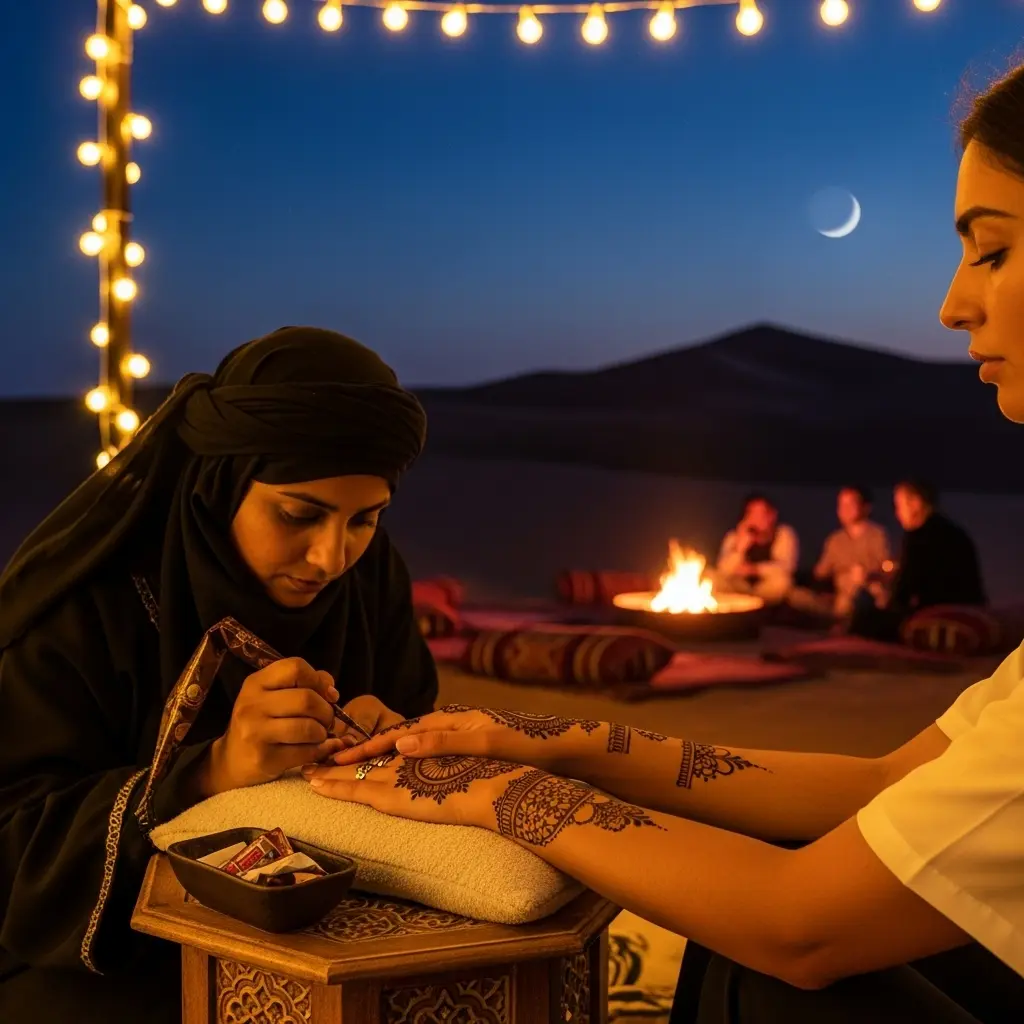
At the desert camp, there will be a designated area, often a small tent or a majlis-style seating arrangement, where one or more henna artists are stationed. It is usually included as a complimentary activity in most safari packages, such as those offered on https://royaldesertadventures.ae/. You simply take a seat and wait your turn.
The Application Process
The artist will use a small, cone-shaped applicator filled with henna paste. They work with incredible speed and precision, creating a beautiful design on the back of your hand or your palm in just a few minutes. The paste feels cool and soothing on the skin. The initial color of the paste will be a dark greenish-brown.
The Importance of Drying
Once the design is complete, the most crucial phase begins: drying. You must be very careful not to smudge the wet paste. It will take about 20-30 minutes for the henna to dry to the touch. During this time, keep your hand flat and avoid touching anything.
Aftercare for a Lasting Stain
The artist will give you simple instructions. The key to a good stain is to leave the dried paste on your skin for as long as possible—a minimum of 4 to 6 hours is recommended, but overnight is even better. Do not wash it off with water. Once you are ready, simply gently scrape the crumbly paste off.
The initial stain will be a bright orange color. Do not be disappointed! The magic of the Desert Safari Henna happens over the next 24 to 48 hours as the dye oxidizes. The stain will gradually darken into a deep, rich reddish-brown.
Natural Henna vs. Dangerous “Black Henna”
Safety is a paramount concern, and it’s vital to understand the difference between natural, safe henna and a dangerous chemical imposter.
The Beauty of Natural Henna
The henna used in any reputable Desert Safari Henna stall is 100% natural. It is made from the henna plant powder, mixed with natural liquids like lemon juice and essential oils like eucalyptus or tea tree. The color of the final stain from natural henna will always be in the range of orange to deep mahogany or brown. It will never be black.
The Dangers of “Black Henna”
You may have heard of or seen “black henna.” This is not henna at all. It is a dangerous concoction that contains a high concentration of a black chemical hair dye called paraphenylenediamine (PPD). PPD is not approved for direct application to the skin and can cause severe allergic reactions, chemical burns, blistering, and permanent scarring.
A crucial takeaway is to always be vigilant. If a henna artist offers you a paste that is jet black and promises a black stain, refuse it immediately. Trustworthy tour operators and their associated camps, which you can find by researching on portals like https://dubaidesertsafarie.com/ and https://hafiztourism.com/, have strict policies to use only safe, natural henna for their guests.
A Lasting Memento of Your Arabian Night
The Desert Safari Henna is more than just an activity; it’s an integral part of the safari’s cultural fabric and a perfect souvenir.
A Moment of Tranquility
The experience provides a wonderful moment of calm. In between the high-speed thrills of the dunes and the lively entertainment of the evening, sitting down to have your henna done is a peaceful and personal experience. It allows you to slow down, appreciate a delicate art form, and have a quiet interaction with a local artist.
A Souvenir on Your Skin
Unlike a typical souvenir that you might put on a shelf, your henna design is a part of you. For the next one to two weeks, every time you look at your hand, you will be reminded of the magical night you spent in the Arabian Desert. It’s a beautiful, personal, and ever-present memento of your travels.
Comparative Henna Styles
To better appreciate the art, here is a breakdown of the key characteristics of the major henna styles.
Frequently Asked Questions (FAQs)
1. Is the henna painting included in the desert safari price? Yes, for most standard evening desert safari packages, a small, simple henna design for ladies and children is included in the price. This is typically a small floral or vine pattern on the back of the hand. If you want a more elaborate design, or a design covering both hands, you can request this from the artist for a small additional fee.
2. How long will my Desert Safari Henna tattoo last? A natural henna stain typically lasts between one and three weeks. The longevity depends on several factors: how long you left the paste on, the quality of the henna, your skin type, and how you care for it. The stain fades gradually as your skin naturally exfoliates.
3. How is the natural henna paste actually made? The process is simple but crucial for a good result. High-quality henna powder is sifted to remove any impurities. It is then mixed with an acidic liquid, such as lemon juice or strong black tea, which helps release the dye molecules. Sugar is often added to help the paste stick to the skin and remain moist. Finally, essential oils like eucalyptus, tea tree, or lavender are added, which not only provide a pleasant fragrance but also contain terpenes that help darken the stain.
4. Why does the henna stain get darker after the paste is removed? This is the magic of henna chemistry! The dye molecule in henna, lawsone, binds with the keratin in the top layer of your skin. When you first remove the paste, the stain is a bright orange. This stain then darkens over the next 24 to 48 hours through a process called oxidation, as the dye molecules are exposed to air and the heat from your body. The final color will be a rich, reddish-brown.
5. Is it safe for children to get henna tattoos? Yes, 100% natural and pure henna is completely safe for children. It is a plant-based dye with no harmful chemicals. However, it is critically important to ensure that only natural brown henna is used. Children are particularly susceptible to the dangerous PPD in “black henna,” so their safety is another reason to always choose a reputable tour operator for your Desert Safari Henna experience.
6. Can I choose my own design at the safari camp? The complimentary design offered is usually a small, simple pattern that the artist can do quickly. Most artists will have a small board with a few standard designs you can choose from. If you have a specific, more complex design in mind, you can show a picture to the artist, and they can usually replicate it for you for an additional charge, time permitting.
7. What is the cultural significance of henna at weddings? In many Middle Eastern and South Asian cultures, henna is a central part of wedding celebrations. The “Henna Night” or “Mehndi Night” is a major pre-wedding event where the bride, her female friends, and family members have their hands and feet adorned with intricate designs. The henna symbolizes joy, beauty, spiritual awakening, and the offering of good fortune for the marriage.
8. How can I tell if the paste is natural henna or dangerous “black henna”? There are a few key giveaways. Natural henna paste is never black; it is always a shade of greenish-brown or dark khaki. It also has a distinct earthy, plant-like smell, often mixed with the fragrance of essential oils. “Black henna” is a jet-black, shiny paste that often has a strong chemical or hair-dye smell. Finally, a true henna artist will tell you the stain will be orange at first and will darken over two days. An artist using PPD will promise an instant black stain.
9. What is the best way to make my henna tattoo last longer? To maximize the life of your Desert Safari Henna, avoid contact with water for the first 12-24 hours after removing the paste. When you do shower, try to protect the design by applying a thin layer of a natural oil like coconut oil or olive oil, which will create a temporary waterproof barrier. Avoid scrubbing the area, and pat it dry gently.
10. Does henna have any health benefits? Historically, henna has been used for various health purposes. The henna plant has natural cooling properties, so applying the paste to the hands and feet can help to slightly lower body temperature, which is why it was popular in hot climates. It is also believed to have anti-inflammatory and antiseptic properties.
11. Can men get henna tattoos during the safari? While traditionally henna is an art form for women, men are certainly welcome to get a design if they wish. Men usually opt for smaller, more masculine or geometric designs on their arm or shoulder rather than the traditional floral patterns on their hands.
12. Why is my henna stain lighter than my friend’s? The final color of the stain can vary from person to person. Factors include individual body chemistry and temperature (warmer bodies can yield darker stains). The location of the design also matters. Henna stains darkest on the thickest skin, which is why designs on the palms of the hands and soles of the feet produce the deepest color.
13. Does white or colored “henna” exist? No. True henna only stains in shades of red and brown. Products marketed as “white henna” or colored “henna” are not henna at all. They are cosmetic-grade body adhesives and glitters that sit on top of the skin and do not stain it. They are a temporary, henna-style body art but do not involve the henna plant.
14. What should I do if the wet henna paste smudges? If you accidentally smudge the design while it’s still wet, don’t panic. You can try to gently scrape away the smudged part with a toothpick or the edge of a fingernail. Avoid using water as it will spread the stain. If a small smudge dries, it will likely be unnoticeable once the full design darkens and sets.
15. Does the artist use a stencil for the designs? No, a professional henna artist at a Desert Safari Henna camp works entirely freehand. They have years of practice and can create intricate, symmetrical designs directly on the skin using their cone applicator. Their speed and artistic skill are a captivating part of the experience to watch.
16. Can I be allergic to natural henna? A true allergy to the henna plant itself is extremely rare. However, people can be sensitive to the essential oils that are sometimes mixed into the paste, such as citrus or lavender. If you have very sensitive skin or known allergies to essential oils, it is best to ask the artist for a small patch test first.
17. What is the best way to remove a fading henna stain? A henna stain cannot be washed off, as it is inside the top layers of your skin. It will fade away as your skin naturally exfoliates. To speed up the process, you can gently exfoliate the area with a body scrub. Soaking in a warm bath and frequent washing with soap and water will also help the stain fade faster.
18. Where on my body can I get the henna design? At the safari camp, the standard complimentary design is almost always placed on the back of the hand or the palm. This is because these are traditional and highly visible locations. If you are paying for a more elaborate design, you could request it on your ankle, arm, or shoulder, and the artist will likely be happy to accommodate you.
19. Is henna mentioned in any religious texts? Yes, henna has a long history of use across many cultures and religions. It is mentioned in various historical and religious texts for its use in celebrations and rituals. In Islam, it is a part of traditional wedding celebrations and is used during Eid festivities, symbolizing joy and beauty.
20. Why is the Desert Safari Henna experience so memorable? The experience is memorable because it beautifully combines multiple elements. It’s a moment of personal interaction with a local artist, a peaceful break from the other high-energy activities, an education in an ancient art form, and a chance to receive a beautiful, personal souvenir. It’s a simple, gentle activity that adds a deep layer of cultural richness and personal meaning to the overall desert safari adventure.