Desert Safari BBQ: Decoding the Full Arabian Menu Guide
The evening desert safari culminates in one essential activity: the Desert Safari BBQ.
This isn’t just a simple meal. It is the culinary centerpiece of the entire desert experience.
The Arabian BBQ Dinner offers a chance to taste authentic regional flavors.
It combines traditional Desert Safari Dining with a festive atmosphere under the stars.
This comprehensive guide reveals the full Desert Safari Menu and essential tips for an enjoyable feast.
1. The Desert Safari BBQ: A Cultural Food Experience
The Desert Safari BBQ is a reflection of Bedouin Hospitality and generosity.
In traditional times, hosting a guest with abundance was paramount.
The vast spread of food symbolizes wealth and welcome in Traditional Arabian Food.
This act of sharing defines the Cultural Food Experience at the camp.
What to Expect
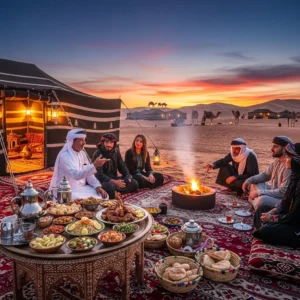
The meal is typically served buffet-style, allowing guests to sample various dishes.
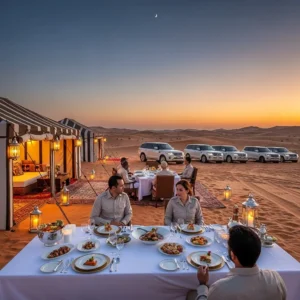
The setup itself is festive, with tables and low seating around the main cooking area.
The aroma of grilling meats fills the air, setting the stage for the Arabian BBQ Dinner.
2. Appetizers and Starters: The Full Desert Menu Prelude
The first course of the Full Desert Menu sets the scene with fresh, vibrant flavors.
These cold dishes provide a refreshing contrast to the hot desert climate.
Famous Cold Mezze
The essential Desert Safari Menu always includes famous cold mezze.
Hummus (chickpea dip) and Moutabal (smoked eggplant dip) are must-haves.
These dips are served with fresh, warm Khubz (pita bread) or Arabic flatbread.
These foundational starters define Traditional Arabian Food.
Salads and Greens
Expect vibrant salads designed to aid digestion and hydration.
Tabbouleh (parsley, tomato, and bulgur salad) and Fattoush (mixed greens with toasted bread pieces) are common.
These fresh components are crucial for a balanced Desert Safari BBQ.
3. The Main Course: Grilling Meats and Traditional Arabian Food
The centerpiece of the Desert Safari BBQ is always the charcoal-grilled meats.
This is where the authentic Arabian BBQ Dinner flavor comes through.
The Kebab Selection
A variety of kebabs are offered, cooked over open flames.
Expect Shish Taouk (marinated chicken cubes) and Lamb Kofta (spiced ground lamb).
The smoky flavor of the grill is key to the BBQ Dinner Guide.
These dishes are fundamental Traditional Arabian Food staples.
Meat Curries and Stews
Non-grilled items often include slow-cooked stews or curries.
Lamb or Chicken Curry is common, served to complement the dry grilled meats.
These hearty dishes ensure a filling Full Desert Menu.
4. Side Dishes and Accompaniments: Desert Safari Dining Staples
The supporting dishes are essential for a complete Desert Safari Dining experience.
Rice Varieties
Plain steamed rice and Biryani or Kabsa rice (flavored with spices and sometimes vegetables) are standard.
The fragrant, long-grain rice absorbs the rich flavors of the stews.
This is a central component of the Desert Safari Menu.
Regional Breads
Freshly baked Arabic bread, sometimes baked in a portable oven at the camp, is served throughout.
This bread is perfect for scooping up the Hummus and stews.
Enjoying this simple staple enhances the Cultural Food Experience.
5. Dessert Dishes: Safar Dessert Dishes and Sweet Treats
The final course provides the perfect sweet ending to the Arabian BBQ Dinner.
These are known as the Safar Dessert Dishes.
Traditional Arabic Sweets
A selection of small, traditional sweets is always offered.
Baklava (layers of phyllo pastry with nuts and honey) is the most popular choice.
Other common sweets include Basbousa (semolina cake) or small honey cakes.
These are essential Safar Dessert Dishes.
Western Options
Many Desert Safari Dining buffets also include fruit salad, or a simple chocolate cake.
This ensures all international guests find a familiar sweet treat.
This diverse spread rounds out the Full Desert Menu.
6. Beverages and Drinks: The Hydration Station
Hydration is crucial in the desert. The Desert Safari BBQ provides ample drinks.
Non-Alcoholic Drinks
Unlimited water and soft drinks are included in virtually all Desert Safari Packages.
Sweet, flavorful Arabic tea and coffee (Gahwa) are served, especially after dinner.
These non-alcoholic options are key to staying comfortable during the Cultural Food Experience.
Alcohol Policy
Alcohol is typically not included in the base price of the Desert Safari BBQ.
It may be available for purchase at a separate bar for an extra fee.
7. Food Safety and Hygiene: Best Desert Safari Food Practices
Hygiene is paramount when dining outdoors. Best Desert Safari Food relies on safety measures.
Trusted Operators
Book only with reputable operators who maintain high food safety standards.
Companies like https://dubaidesertsafarie.com/ and https://hafiztourism.com/ are known for quality control.
This ensures a safe and enjoyable Desert Safari Dining experience.
Buffet Management
The best camps use covered buffet stations and monitor food temperatures closely.
Staff should wear gloves and ensure prompt replenishment of dishes.
This prevents common BBQ Dinner Guide hygiene issues.
8. Customization: Vegetarian and Vegan Options
The Desert Safari Menu must be inclusive of all dietary needs.
Vegetarian Selection
All buffets offer a robust vegetarian selection.
This includes falafel, hummus, salads, potato wedges, and vegetarian pasta.
These dishes ensure the Full Desert Menu caters to non-meat eaters.
Vegan and Allergy Needs
For strict vegan or severe allergy needs, pre-communication is essential.
Contact your operator well in advance to ensure the chef can prepare a specialized meal.
This thoughtful service is a mark of quality Best Desert Safari Food.
9. Luxury Desert Safari BBQ: Gourmet Dining Guide
High-end safaris transform the Desert Safari BBQ into gourmet dining.
A La Carte Service
The buffet is replaced with A la Carte service. Guests order their main course from a dedicated menu.
This allows for better presentation and higher quality ingredients.
This defines the luxury Desert Safari Dining experience.
Premium Ingredients
Expect specialized grilled items like lobster, fresh fish, or high-grade beef.
The Arabian BBQ Dinner becomes a true fine-dining event under the stars.
Explore these premium Cultural Food Experience upgrades at https://royaldesertadventures.ae/.
10. The Dessert Tradition: Safar Dessert Dishes Significance
The Safar Dessert Dishes are not merely sweet; they carry cultural weight.
They represent the generosity and warmth of the Bedouin hosts.
Sharing sweet foods is a communal and celebratory tradition.
This makes the dessert a meaningful conclusion to the Desert Safari BBQ.
11. Full Desert Menu: Understanding the Shawarma Station
Many camps feature a live Shawarma station as part of the Full Desert Menu.
This popular element adds interactive fun to the BBQ Dinner Guide.
Live Preparation
Thin slices of marinated meat (chicken or lamb) are carved directly from a vertical rotisserie.
The meat is wrapped in bread with sauces and vegetables.
This live action enhances the Desert Safari Dining atmosphere.
It is a delicious, fresh addition to the Traditional Arabian Food.
12. Traditional Arabian Food: The Role of Spices
Spices are the soul of Traditional Arabian Food served at the camp.
Spices like Cumin, Cardamom, Turmeric, and Za’atar are used heavily.
They provide the distinctive warmth and aroma that permeates the Desert Safari BBQ.
The blending of these spices is an ancient, honored art form.
13. Cultural Food Experience: Dining Etiquette Tips
Knowing a few Cultural Food Experience etiquette rules ensures respectful dining.
Right Hand Rule
Do use your right hand when handling food or passing dishes.
This is a fundamental rule of Arabian BBQ Dinner etiquette.
Avoid eating or passing items with your left hand.
Communal Respect
While dining, be mindful of others in the buffet queue.
Do not heap your plate excessively, taking only what you can finish.
14. Best Desert Safari Food: Local Fruit and Freshness
The Best Desert Safari Food relies on fresh, quality ingredients.
Fresh local fruit, such as melons, dates, and citrus, are usually available.
These offer a natural, light palate cleanser after the heavy meats.
Freshness is a reliable indicator of a quality Desert Safari Dining provider.
15. BBQ Dinner Guide: Post-Meal Drinks and Socializing
After the main meal, the BBQ Dinner Guide advises on post-meal socializing.
The tea and coffee ritual marks the transition to the entertainment phase.
Guests gather around the stage or shisha area for relaxation.
This communal, post-meal time is a cherished part of the Cultural Food Experience.
16. Comparing Desert Safari Menu Tiers
The contrast in Desert Safari Menu tiers is significant.
| Tier | Main Meat Offering | Dessert Focus | Service Style |
| Budget | Chicken/Lamb Skewers | Simple Fruit & Cake | Shared Communal Buffet |
| Standard | Full Lamb/Chicken Carving Station | Traditional Arabic Sweets (Baklava) | Staffed Buffet Line |
| Luxury | Fish/Seafood/Specialty Beef | Individual Plated Desserts | Private A la Carte/Table Service |
17. Health and Safety: Avoiding Desert Safari BBQ Risks
Even the Desert Safari BBQ carries health risks if hygiene is poor.
Check that the food is kept at appropriate temperatures (hot items hot, cold items cold).
Always use hand sanitizer before eating.
Trust your judgment; if food looks suspicious, avoid it.
18. Safar Dessert Dishes: The Role of Dates
Dates are the original Safar Dessert Dishes and a symbol of the desert.
They are offered at the start and the end of the meal.
Dates provide natural sweetness and energy, honoring the Bedouin tradition.
They are a simple, perfect finish to the Full Desert Menu.
19. Traditional Arabian Food: The Importance of Rice
Rice forms the staple base of many Traditional Arabian Food dishes.
It provides substance and complements the intensely spiced meats.
The simple pairing is a testament to the efficient use of ingredients in the region.
20. Final Thoughts on Your Desert Safari BBQ
The Desert Safari BBQ is a true feast for the senses. It is a vital part of the Cultural Food Experience.
By knowing what to expect on the Full Desert Menu, you can fully immerse yourself in the flavors and traditions.
Enjoy the taste of the Arabian Desert under the stars.
Frequently Asked Questions (FAQs) – Long Answers
1. Is the meat served at the Desert Safari BBQ guaranteed to be Halal, and are there always clear labeling for all dishes?
Yes, the meat served at the Desert Safari BBQ is virtually always guaranteed to be Halal. As the UAE is a Muslim country, all commercial meat sold and served in restaurants and safari camps adheres strictly to Halal preparation standards. However, clear labeling for all dishes is a crucial component of Best Desert Safari Food practice. Reputable operators, committed to Desert Safari Dining quality, often label vegetarian dishes, common allergens, and the type of meat (chicken, lamb, beef) to ensure transparency for all guests.
2. How do reputable operators maintain food safety and keep hot food hot during the long serving time of the Arabian BBQ Dinner in the desert?
Reputable operators maintain food safety during the long serving time of the Arabian BBQ Dinner by adhering to strict temperature control protocols. Hot food is kept hot by using chafing dishes with heating elements (sternos or electric warmers) and is continuously monitored. The BBQ Dinner Guide is often separated from the main buffet, with meats grilled and served in small batches to ensure maximum freshness and temperature. Cold food (salads, mezze) is kept cool using iced trays or refrigerated serving dishes, preventing any potential Cultural Food Experience contamination.
3. What are the common vegetarian and vegan options available on the Desert Safari Menu, and must these be pre-ordered?
Common vegetarian options available on the Desert Safari Menu include a robust selection of salads (Tabbouleh, Fattoush), cold mezze like Hummus and Moutabal, vegetarian rice dishes, and simple sides like potato wedges or vegetable curries. For strict vegan options and for guests with severe allergies, pre-ordering is highly recommended. While salads and some dips are naturally vegan, pre-ordering ensures a dedicated, untouched dish is prepared, avoiding any cross-contamination on the buffet line, guaranteeing a safer Desert Safari BBQ.
4. What are the key differences in food quality and service between a standard Desert Safari Dining experience and a luxury a la carte option?
The key differences in a Desert Safari Dining experience between standard and luxury options are significant. Standard: Offers a shared, mass-produced buffet with adequate but basic quality meats and a self-service line. Luxury (A la Carte): Provides individual table service, often featuring a multi-course gourmet meal with premium ingredients (e.g., specialized cuts of lamb, fresh seafood), and often includes table-side grilling or plating. Service is personalized with dedicated waiters, enhancing the overall Best Desert Safari Food experience.
5. Is alcohol included in the price of the Desert Safari BBQ, and what is the typical policy regarding consumption at the Traditional Desert Camp?
Alcohol is typically not included in the base price of the Desert Safari BBQ or any standard package. The policy regarding consumption is strict: alcohol is only available for purchase at a separate, licensed bar area within the camp (if offered). Visitors are not allowed to bring their own alcohol (BYOB). Consumption must be done responsibly and discreetly within the designated area, as public intoxication violates Cultural Food Experience norms and is illegal outside of licensed venues in the UAE.
6. How do the Safar Dessert Dishes reflect Traditional Arabian Food, and what is the significance of offering sweets at the end of the meal?
The Safar Dessert Dishes reflect Traditional Arabian Food through their use of nuts, honey, syrup, and filo pastry (e.g., Baklava). The significance of offering sweets at the end of the meal is deeply cultural, symbolizing the host’s generosity and the sweet, successful end of the social gathering. Sharing sweets is a communal way to celebrate and show Bedouin Hospitality, ensuring the guest leaves with a positive final taste of the Cultural Food Experience and the generous spirit of the desert hosts.
7. What are the common signs of a low-quality Desert Safari Menu and potentially poor food hygiene that tourists should watch out for?
Common signs of a low-quality Desert Safari Menu and poor food hygiene include: 1. Uncovered Food: Buffet dishes left uncovered, exposing them to dust, sand, or insects. 2. Lukewarm Food: Hot items are not kept adequately heated in chafing dishes. 3. Poor Staff Hygiene: Servers handling food without gloves. 4. Limited Variety: A menu consisting almost entirely of simple, cheap starches. 5. Vague Labeling: Lack of clear labeling for meat types or common allergens. These red flags indicate potential Desert Safari BBQ risks.
8. What are the common local spices used in the Traditional Arabian Food served at the BBQ, and why are they important?
The common local spices used in the Traditional Arabian Food served at the Desert Safari BBQ are essential for flavor and aroma. These include Cumin (for meat), Coriander, Cardamom (often used in rice and coffee), Turmeric (for color and flavor), and Za’atar (a blend of herbs and sesame, often used on bread). These spices are important because they are historically integral to Arabian BBQ Dinner cuisine, providing the distinctive, warm, and fragrant profile that distinguishes it from other world cuisines.
9. How can a large family with children ensure the Desert Safari Dining experience includes child-friendly options and reduces the risk of long waits?
A large family can ensure a smoother Desert Safari Dining experience by pre-booking a tour with guaranteed reserved seating (often a VIP upgrade). This minimizes the risk of long waits for a table. To ensure child-friendly options, they should choose operators known for family catering, as their Desert Safari Menu typically includes simple items like potato wedges, plain pasta, and simple grilled chicken alongside the traditional Arabian BBQ Dinner items. Communication with the host upon arrival can also secure first access to the buffet.
10. Does the Full Desert Menu include options for guests with severe nut allergies, and what steps should they take before booking?
While the Full Desert Menu strives for variety, guests with severe nut allergies must take proactive steps, as nuts (especially pistachios and almonds) are common in Safar Dessert Dishes and some main courses. Step 1: Contact the operator directly before booking to confirm their allergy management procedures. Step 2: Choose a reputable operator who can provide a separately prepared, sealed meal to eliminate the risk of cross-contamination from the buffet line. Relying solely on buffet labels is too risky for severe allergies.
11. What unique, specialized dining options are available through exclusive providers (e.g., https://royaldesertadventures.ae/) beyond the typical camp buffet?
Exclusive providers (e.g., https://royaldesertadventures.ae/) offer unique dining options beyond the typical camp buffet. These include: 1. Private Dune Dining: An exclusive, fully serviced meal set up on a secluded dune crest. 2. Gourmet Chef Experiences: A private chef prepares an a la carte, high-end meal (e.g., fresh seafood or premium Wagyu beef). 3. Heritage Dining: Meals served in a traditional setting using historic recipes and methods. These options transform the Desert Safari BBQ into a customized fine-dining event.
12. What specific role does the live Shawarma station or live cooking station play in enhancing the Cultural Food Experience at the camp?
The live Shawarma or cooking station plays a specific role in enhancing the Cultural Food Experience by adding an element of freshness, interactivity, and authenticity. Freshness: Guests see the food being prepared and served immediately. Interactivity: It is often a communal hub where guests can watch the preparation technique. Authenticity: Shawarma is an iconic regional street food. This live preparation station adds excitement and a unique sensory experience to the BBQ Dinner Guide, moving beyond the static buffet setup.
13. How does the quality of the coffee (Gahwa) and tea served post-meal reflect the quality and authenticity of the Traditional Arabian Food experience?
The quality and ritual surrounding the coffee (Gahwa) and tea served post-meal are crucial indicators of the authenticity and quality of the Traditional Arabian Food experience. Gahwa (Arabic coffee) is traditionally lightly brewed and spiced with cardamom. Its careful serving in small cups symbolizes Bedouin Hospitality. High-quality camps serve aromatic, fresh coffee and tea with authentic ritual. Poor camps may use instant, flavorless coffee, signaling a lack of commitment to genuine Cultural Food Experience detail.
14. Besides the typical Arabic sweets, are there any traditional Safar Dessert Dishes that are savory or involve regional fruits?
Yes, besides the typical syrup-drenched Arabic sweets, other Safar Dessert Dishes often involve regional fruits or savory-sweet combinations. Fresh local fruits like dates, melon, and citrus slices are always offered for a lighter option. More traditional Full Desert Menu options might include a dessert like Umm Ali (a rich, sweet bread pudding often flavored with nuts and cream) or simple date-based sweets that rely on the natural sugar of the fruit rather than excessive syrup, reflecting the historical practicality of Traditional Arabian Food.
15. What are the common environmental and waste management policies related to food waste at a responsible Desert Safari BBQ camp?
Responsible Desert Safari BBQ camps adhere to strict environmental and waste management policies related to food waste. These policies usually include: 1. Mandatory Removal: All food waste, cooking oil, and packaging are carefully collected and removed from the desert site for proper disposal in the city. 2. No Dumping: Waste is never buried or left in the desert, upholding the “Leave No Trace” principle. 3. Recycling: Separation bins are provided for recycling non-organic waste (plastic, aluminum). This commitment ensures the Desert Safari Dining does not harm the fragile ecosystem.