Dubai Desert Safari Guide 25 Expert Tips for Incredible Vacation Moments
Planning a trip to the UAE is exciting. There is one activity that stands out above the rest. It is the adventure into the golden sands. This Dubai Desert Safari Guide is designed to help you navigate every aspect of the experience.
Many first-time travelers feel overwhelmed. There are so many companies and options. You might not know what to wear or what to expect.
That is why we created this guide. It covers everything you need to know. We want you to be prepared.
The desert is beautiful but unforgiving. You need the right information to enjoy it safely.
We will cover dune bashing details. We will discuss food and entertainment. We will also talk about safety and pricing.
This guide is your roadmap to a flawless experience. Let us dive into the magic of the Arabian desert.
Why You Must Experience the Desert
Dubai is known for skyscrapers. The Burj Khalifa is iconic. The malls are massive.
However, the soul of the city lies in the desert. The vast expanse of sand offers peace. It offers a contrast to the busy city life.
A Dubai Desert Safari Guide always highlights the scenery. The sunset over the dunes is breathtaking. The colors change from gold to red.
It is a photographer’s paradise. You can capture stunning silhouettes. The landscape is unlike anywhere else.
Beyond the views, there is the thrill. The activities pump adrenaline. It is a mix of nature and excitement.
You also get a taste of culture. The Bedouin history is rich here. You learn how people lived before the modern era.
It is an immersive experience. It engages all your senses. You feel the heat and the sand. You smell the BBQ and the shisha.
Choosing the Right Time of Day
Timing is everything. The desert climate varies greatly. Your experience depends on when you go.
Morning Safaris
Morning is great for early risers. The weather is cooler. The sun is not yet at its peak.
This is perfect for high-energy activities. You can enjoy sandboarding. You can try quad biking.
A Dubai Desert Safari Guide often recommends this for those with tight schedules. It usually lasts about 4 hours. You are back by lunch.
The lighting is bright and crisp. It is good for action shots. The dunes look majestic in the morning light.
Evening Safaris
This is the most popular choice. It offers the complete package. You get the sunset views.
The temperature drops in the evening. It becomes very pleasant. The atmosphere changes as the stars come out.
You get to enjoy the camp activities. The dinner and shows happen at night. It is a full 6 to 7-hour experience.
Most tourists prefer this option. It captures the true essence of the safari.
Overnight Safaris
This is for the adventurous souls. You sleep under the stars. It is a magical experience.
You get everything in the evening safari. Then, everyone leaves. You stay back in the silence of the desert.
You wake up to the sunrise. The desert is calm and quiet. The breakfast is fresh and delicious.
Refer to https://htdesertsafari.com/ for booking options that suit your schedule. They offer flexible timings for all travelers.
Understanding the Dune Bashing Experience
Dune bashing is the main event. It is a rollercoaster ride on sand. It happens in a 4×4 Land Cruiser.
The drivers are professionals. They are licensed and trained. They know how to navigate the soft sand.
They deflate the tires before entering the desert. This gives the car more grip. It prevents the vehicle from sinking.
The car slides and drifts. It climbs steep dunes. It rushes down the slopes.
It can be intense. Your stomach might drop. It is thrilling for most people.
Safety is a priority here. The cars have roll cages. Seatbelts are mandatory for everyone.
If you have motion sickness, be careful. Take medication beforehand. Do not eat a heavy meal before the ride.
This Dubai Desert Safari Guide suggests telling your driver if you are scared. They can slow down. They want you to have fun, not be terrified.
Essential Packing List for the Desert
Packing correctly is crucial. The environment is harsh. You need to be comfortable.
Clothing
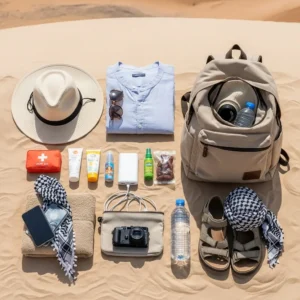
Wear loose and breathable fabrics. Cotton and linen are best. They let your skin breathe.
Avoid tight jeans. They get uncomfortable in the heat. They restrict movement.
Choose light colors. White, beige, and pastels reflect the sun. Dark colors absorb heat.
Bring a light jacket. The desert gets cold at night. This is especially true in winter months.
Footwear
Sandals or flip-flops are okay for the camp. However, they slip off on dunes.
Sneakers or trainers are better. They protect your feet. The sand can be very hot.
Do not wear expensive shoes. The sand gets everywhere. It can damage delicate materials.
Accessories
Sunglasses are a must. The glare is strong. It can hurt your eyes.
Wear a hat or a scarf. It protects your head from the sun. It also keeps hair out of your face in the wind.
Sunscreen is non-negotiable. Apply it generously. Reapply if you are sweating.
The Cultural Experience at the Camp
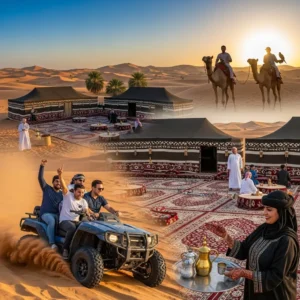
After the drive, you go to the camp. It is styled like a Bedouin village. It feels authentic and welcoming.
You are greeted with Arabic coffee. It is called Gahwa. You also get fresh dates.
This is a sign of hospitality. It is a tradition in the UAE. You should accept it politely.
There is usually a designated seating area. You sit on low cushions and carpets. It is a communal atmosphere.
You can try Shisha smoking. It is a flavored water pipe. It is relaxing to smoke while watching the shows.
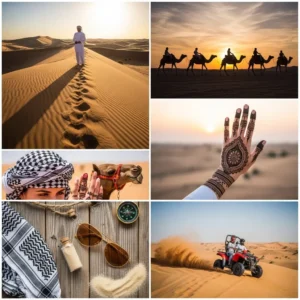
Henna painting is available for ladies. Artists draw beautiful designs on your hands. It is a temporary tattoo.
You can also take photos in traditional dress. They provide Kanduras and Abayas. It makes for a great souvenir photo.
Food and Dining Expectations
The food is a highlight. It is usually a buffet dinner. It features BBQ meats and local dishes.
You will find hummus and salads. There is flatbread and rice. The grilled chicken and lamb are delicious.
Vegetarians are also catered for. There are plenty of vegetable curries. The salads are fresh and varied.
Desserts include local sweets. Luqaimat are fried dough balls with date syrup. They are a must-try.
Soft drinks and water are usually free. Alcohol is often an extra charge. Some camps do not serve alcohol at all.
Check the menu if you have allergies. The staff can guide you.
For a premium dining experience, check out https://royaldesertadventures.ae/. They are known for high-quality food and service.
Entertainment and Live Shows
The evening is filled with performances. It keeps the energy high.
Belly dancing is the most famous. The dancer performs to Arabic music. It is skillful and mesmerizing.
Tanoura dance is another staple. A male dancer spins continuously. His skirt lights up in the dark.
It is a Sufi tradition. It represents the rotation of the world. It is spiritual and artistic.
Fire shows are also common. Performers do tricks with fire. It is exciting to watch.
This Dubai Desert Safari Guide advises you to sit near the stage. You get the best view. The performers often interact with the audience.
Camel Riding and Sandboarding
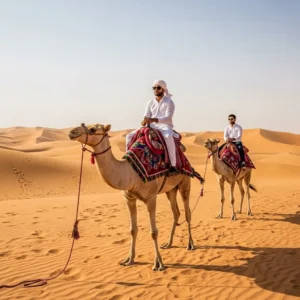
Camel riding is iconic. It is a slow and bumpy ride. It gives you a high vantage point.
The ride is usually short. It is meant for a photo opportunity. The camels are generally well-treated.
Be gentle with the animals. Do not make loud noises. Follow the handler’s instructions.
Sandboarding is for the active ones. It is like snowboarding but on sand. You strap a board to your feet.
You slide down the dunes. It is harder than it looks. Balancing on sand is tricky.
You will fall a few times. The sand is soft, so it does not hurt. It is great exercise walking back up.
Quad Biking and Buggy Rentals
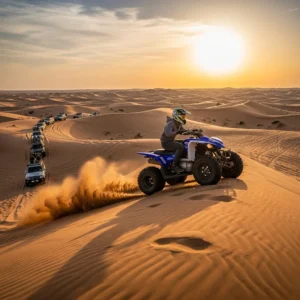
Quad biking is an optional extra. It is not always included in the ticket. You pay extra for it.
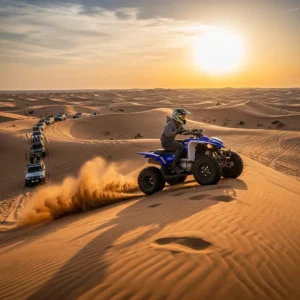
You drive your own bike. You get a designated area. It allows you to go fast.
Safety gear is provided. You get a helmet and goggles. Listen to the safety briefing.
Dune buggies are more powerful. They have roll cages. They can go deeper into the desert.
These activities are thrilling. They give you control. You feel the power of the engine.
If you enjoy driving, do this. It complements the Dubai Desert Safari Guide experience perfectly.
For reliable bike rentals and tours, visit https://dubaidesertsafarie.com/. They have well-maintained fleets.
Safety Tips for First-Timers
Safety is paramount. The desert is a wild place. You must be careful.
Stay hydrated. Drink water even if you are not thirsty. Dehydration happens fast.
Listen to your guide. They know the terrain. Do not wander off alone.
Keep your phone charged. You need it for photos. You might need it for emergencies.
If you have back problems, skip dune bashing. The jerks can aggravate injuries. Ask to go directly to the camp.
Pregnant women should also avoid dune bashing. It is too risky. Most companies will not allow it.
Photography Tips for the Desert
The lighting changes fast. Sunset is the golden hour. It lasts only a few minutes.
Get your camera ready early. clean your lens. Dust can ruin your photos.
Capture the shadows on the dunes. They create depth. The contrast is beautiful.
Use the burst mode for jumping shots. It ensures you get the perfect mid-air moment.
Ask your guide to take photos. They know the best angles. They do this every day.
This Dubai Desert Safari Guide suggests bringing a power bank. Your battery will drain fast. You will take hundreds of photos.
Navigating Scams and Low-Quality Tours
Not all tours are the same. Some are very cheap. They cut corners on quality.
Avoid extremely low prices. You get what you pay for. The food might be cold. The camp might be crowded.
Check reviews carefully. Look for recent feedback. See if people mention hidden costs.
Some drivers drive recklessly. This is dangerous. Reputable companies monitor their drivers.
Do not buy souvenirs from aggressive sellers. You can find better prices in the city. Be firm when saying no.
Stick to trusted providers. We recommend https://htdesertsafari.com/ for transparent pricing.
The Importance of Travel Insurance
Always have travel insurance. It covers accidents. It covers lost items.
Medical care in Dubai is excellent. It is also expensive. Insurance gives you peace of mind.
Make sure your policy covers adventure sports. Dune bashing is an adventure activity. Some basic policies exclude it.
Read the fine print. Know who to call. Keep a copy of your policy on your phone.
Seasonal Weather Considerations
Dubai has two main seasons. Summer and Winter.
Summer is from May to September. It is extremely hot. Temperatures exceed 40 degrees Celsius.
Outdoor activities are tough. Evening safaris are still possible. However, it stays humid at night.
Winter is from October to April. The weather is perfect. It is pleasant during the day.
It gets chilly at night. You definitely need a jacket. This is the peak tourist season.
A Dubai Desert Safari Guide recommends booking early in winter. Slots fill up fast. Prices can be higher.
Wildlife in the Desert
The desert is not dead. It is full of life. You just need to look closely.
You might see Arabian Oryx. They are white antelopes. They are the national animal.
Gazelles are also common. They are fast and shy. You might spot them in the distance.
Lizards and geckos are everywhere. They hide under the sand. They come out to hunt insects.
Falcons are part of the culture. You will see them at the camp. You can hold one for a photo.
Respect the wildlife. Do not feed them. Do not chase them.
Group vs Private Tours
You have two choices for the car. Shared or private.
Shared cars are cheaper. You share with strangers. It can be fun to meet new people.
However, you have less control. You have to wait for others. You cannot choose the music.
Private cars offer luxury. You have the car to yourself. You can customize the itinerary.
You can stop whenever you want. You can choose the dune bashing intensity. It is perfect for families.
If you can afford it, go private. This Dubai Desert Safari Guide highly recommends it for comfort.
Consider booking a private option through https://royaldesertadventures.ae/. They specialize in exclusive experiences.
Understanding the Costs
Prices vary widely. A budget safari costs around 100 AED. A luxury one can be 500 AED or more.
Budget tours use large buses for transfer. The camp is crowded. The food is basic.
Mid-range tours use 4×4 pickup. The camp is nicer. The food is better quality.
Luxury tours offer table service. The drinks are premium. The crowd is limited.
Decide your budget. Do not go for the cheapest option. It often leads to disappointment.
Hidden costs can add up. Quad bikes are extra. Alcohol is extra. VIP seating is extra.
Booking Process and Tips
Book in advance. Do not wait until the last minute. You might not get a seat.
Online booking is best. You get a confirmation. You can read all the details.
Read the cancellation policy. Plans change. You want a refund if you cannot go.
Confirm the pickup time. Be ready in the lobby. The drivers have a schedule.
If you use https://dubaidesertsafarie.com/, the process is smooth. Their customer support is helpful.
What to Expect at the Camp Washrooms
This is a common concern. The camps are in the middle of nowhere.
Most camps have permanent toilets. They are clean and maintained. They have running water.
They are separate for men and women. There are attendants to keep them clean.
However, on budget tours, standards vary. This is another reason to avoid the cheapest options.
Bring hand sanitizer. It is always good to have. Bring some tissues just in case.
Alcohol Rules in the Desert
Dubai has strict alcohol laws. However, tourist camps have licenses.
You can buy beer and wine. It is not included in the ticket price. It is usually expensive.
During religious holidays, no alcohol is served. This includes Ramadan.
Check the calendar before you book. If a drink is important to you, avoid these dates.
Do not bring your own alcohol. It is illegal to drink in public. You can get in trouble.
Kids and the Desert Safari
Kids love the sand. It is a giant playground for them.
Dune bashing can be rough for small kids. Use a car seat. Or skip the bashing.
The camp activities are kid-friendly. They love the camel ride. They enjoy the shows.
The food has kid-friendly options. Fries and nuggets are often available.
Keep an eye on them. The desert is open. They can wander off easily.
This Dubai Desert Safari Guide reminds you to keep them hydrated. They play hard and forget to drink.
The Return Journey
After the dinner, the lights go out. The stars are visible. It is a peaceful moment.
The drive back is quiet. Everyone is tired. It takes about an hour to reach the city.
The driver will drop you at your hotel. Check the car before you leave. Do not leave your phone or bag.
Tip your driver. They work hard. A small tip is appreciated.
Sustainable Tourism in the Desert
We must protect the desert. Leave no trace.
Do not throw trash on the sand. Bring it back with you. Plastic harms the animals.
Respect the local culture. Dress modestly. Ask before taking photos of people.
Choose eco-friendly companies. Some camps use solar power. Some recycle their waste.
We want the desert to remain beautiful. Future generations should see it too.
Comparisons with Other Activities
How does this compare to a city tour? It is completely different.
A city tour is passive. You look at buildings. You walk in malls.
The safari is active. You participate. You feel the nature.
It is a break from the concrete jungle. It connects you with the earth.
If you have limited time, prioritize the safari. It is unique to this region. You can see malls anywhere.
Final Thoughts on Preparation
Read this Dubai Desert Safari Guide again. Make a checklist.
Charge your devices. Pack your bag the night before.
Get a good night’s sleep. It is a long day. You need energy.
Approach it with an open mind. Try new things. Taste the local food.
It will be a highlight of your trip. The memories will last a lifetime.
Why Reviews Matter
Always check reviews. They tell the real story.
Look for comments on the food. Look for comments on the drivers.
If a company has many bad reviews, avoid it. There are plenty of good ones.
Trust the experiences of others. They have been there. They know what to expect.
Use the recommended links in this guide. We have vetted them. https://htdesertsafari.com/ is a solid choice.
Conclusion
A trip to Dubai is incomplete without the desert. It is the heart of the UAE.
From the thrill of the dunes to the peace of the camp, it offers everything. It is a journey of discovery.
You learn about the culture. You challenge yourself. You relax under the stars.
Follow the tips in this Dubai Desert Safari Guide. You will be safe. You will be comfortable.
Book with trusted companies like https://royaldesertadventures.ae/ and https://dubaidesertsafarie.com/. They ensure quality and safety.
Go out there and explore. The sands are waiting for you. Enjoy every moment of your adventure.
FAQs
1. What is the best time of year to go for a desert safari in Dubai? The best time to visit for a desert safari is during the winter months, specifically from October to April. During this period, the weather in Dubai is pleasant and mild, with daytime temperatures ranging from 20°C to 30°C. This makes outdoor activities like dune bashing and camel riding very enjoyable. The summer months, from May to September, can be extremely hot with temperatures soaring above 40°C, which can make the afternoon safari uncomfortable for some. However, evening safaris are still popular in summer as the temperature drops slightly after sunset.
2. Is dune bashing safe for children and elderly people? Dune bashing is a high-intensity activity that involves sudden drops, sharp turns, and bumpy rides. It is generally not recommended for children under 3 years old, pregnant women, or elderly people with back or heart problems. Most reputable tour operators offer an option to skip the dune bashing and go directly to the campsite. If you are traveling with young kids or seniors, it is highly advisable to book a private car so the driver can adjust the speed or drive directly to the camp to ensure their comfort and safety.
3. What should I wear for a desert safari? Comfort is key when choosing your outfit. Wear loose-fitting, breathable clothing made of cotton or linen. For men, shorts or light trousers with a t-shirt are fine. For women, it is best to wear knee-length skirts, trousers, or jeans with a modest top. Avoid short skirts as they can be uncomfortable when sitting on traditional floor cushions or riding a camel. Bring a light jacket or shawl if you are visiting in the winter, as the desert temperature can drop significantly at night. Closed shoes or sneakers are better than sandals to protect your feet from hot sand.
4. Can I book a desert safari if I am pregnant? It is strongly advised that pregnant women do not participate in the dune bashing portion of the safari due to the violent jerks and bumps. However, this does not mean you have to miss out on the experience entirely. You can book a package that excludes dune bashing. The driver can take you directly to the desert camp via a smooth route. Once at the camp, you can enjoy the dinner, shows, and Henna painting. Always inform the tour operator about your condition beforehand so they can make the necessary arrangements.
5. What is included in a standard BBQ dinner menu? The BBQ dinner at a desert safari is usually a buffet style feast catering to both vegetarians and non-vegetarians. You can expect a variety of starters like falafel, shawarma, and salads including hummus, fattoush, and tabbouleh. The main course typically features grilled meats like chicken tikka, lamb chops, and seekh kebabs. There are also rice dishes, vegetable curries, and lentils. Dessert often includes fresh fruits and traditional sweets like Luqaimat or Umm Ali. Water and soft drinks are generally unlimited, while alcohol is chargeable.
6. Are there bathrooms available at the desert camp? Yes, all licensed and reputable desert safari camps have proper restroom facilities. These are separate for men and women and are maintained regularly by the camp staff. They are equipped with running water, toilets, and sinks. While they may not be as luxurious as hotel restrooms, they are functional and clean. It is always a good idea to carry a small bottle of hand sanitizer and some tissues with you for personal hygiene, especially if you are on a budget tour where facilities might be basic.
7. How long does the entire desert safari experience last? A standard evening desert safari usually lasts about 6 to 7 hours. Pickups generally start around 2:30 PM to 3:30 PM depending on your location and the season. You will arrive at the desert for dune bashing, followed by the camp activities and dinner. Drop-offs back to your hotel are usually between 9:00 PM and 10:00 PM. Morning safaris are shorter, lasting about 4 hours, usually from 8:00 AM to 12:00 PM. Overnight safaris last about 16 to 18 hours, returning the next morning after breakfast.
8. Is it possible to do a desert safari without dune bashing? Yes, absolutely. Many people prefer a calmer experience or have health issues that prevent them from doing the dune bash. When booking, you should look for “Dinner Only” packages or request a “Direct to Camp” transfer. In this scenario, a driver will pick you up and drive you on normal roads to the entrance of the camp, bypassing the dunes. You will still get to enjoy the sunset views, camel riding, entertainment, and dinner without the rollercoaster ride in the 4×4.
9. Can I bring my own camera and tripod? Yes, you are encouraged to bring your camera. The desert offers some of the most spectacular photography opportunities, especially during the sunset. A tripod can be very useful for low-light shots in the evening or for capturing the starry sky during an overnight safari. However, be mindful of the sand. It can easily get into the lens mechanism and damage your gear. Bring a protective bag and a cleaning kit. Also, always ask for permission before taking photos of local Emirati people, especially women, as a sign of respect.
10. What is the difference between a shared and a private safari? In a shared safari, you will be seated in a 4×4 vehicle with other tourists (usually up to 6 or 7 people per car). You have to adhere to a fixed schedule and wait for pick-ups and drop-offs of other passengers. In a private safari, you book the entire vehicle for yourself and your group. This gives you privacy, flexibility with timings, and the ability to customize the experience. You can ask the driver to stop for photos whenever you want or adjust the intensity of the dune bashing. Private tours are more expensive but offer a superior experience.
11. Is alcohol served during the desert safari? Alcohol is served at most desert camps, but it is usually not included in the standard ticket price. There is a separate bar where you can purchase beer, wine, and spirits. However, there are strict exceptions. No alcohol is served during Islamic religious holidays and the holy month of Ramadan. Furthermore, some specific “family-only” or “dry” camps do not serve alcohol at all. If having a drink is important to you, check with the tour operator before booking to confirm the availability and the specific dates.
12. What happens if the weather is bad on the day of my safari? Bad weather in the desert usually means sandstorms or rare heavy rain. If the weather conditions are deemed unsafe by the authorities or the tour operator, the safari will be cancelled. In such cases, reputable companies will offer you the choice to reschedule for a different date or receive a full refund. Light rain or wind usually does not stop the tour, but a sandstorm reduces visibility significantly, making dune bashing dangerous. Always keep your phone on on the day of the tour for updates from the company.
13. Do I need to tip the driver and camp staff? Tipping is not mandatory in Dubai, but it is highly appreciated and part of the service culture. If you enjoyed the dune bashing and the overall service, it is a nice gesture to tip your driver. A common amount is between 20 to 50 AED depending on the group size and level of satisfaction. You can also tip the Camp staff, Henna artists, or waiters if they provided good service. It is a small way to show gratitude for their hard work in the challenging desert heat.
14. Can I drive the 4×4 vehicle myself in the desert? No, you cannot drive the Land Cruiser or the main safari vehicle yourself. The dune bashing requires special driving licenses and extensive training to navigate the soft shifting sands safely. However, you can drive a quad bike or a dune buggy. These are separate activities where you rent a smaller vehicle and drive it yourself in a designated area under the supervision of a guide. This is the only way to experience driving in the desert personally.
15. Is the desert safari suitable for vegetarians and vegans? Yes, the buffet dinner always includes vegetarian options. Standard items include salads, hummus, moutabal, vegetable curries, dal (lentils), rice, and bread. Vegan options are also naturally available within these choices (like hummus, salads, and rice). However, if you have strict dietary requirements or allergies, it is safer to inform the tour operator in advance. They can double-check the ingredients or sometimes prepare a special meal for you to ensure you have enough to eat.
16. How much money should I carry with me? Since you have likely paid for the tour online, you only need cash for extras. Carry some Dirhams (AED) for things like souvenirs, alcohol, fresh juice, tips, or professional photos. Quad biking is usually paid in cash if not pre-booked, which can cost anywhere from 100 to 300 AED. A budget of 200 to 500 AED per person in cash should be more than enough to cover any impulsive purchases or additional activities at the camp.
17. What kind of shoes are best for sandboarding? For sandboarding, you can actually go barefoot, which is what most people prefer as it gives you a better feel for the board and the sand. However, if the sand is extremely hot (in summer mornings), you might want to wear socks. Heavy shoes or sneakers can make it harder to strap into the board bindings. Generally, wear sneakers to the desert to protect your feet from heat and thorns, but be prepared to take them off for the sandboarding activity itself.
18. Are there charging points for phones at the camp? Most modern desert camps have a charging station, but they can be crowded or slow. There are no charging points in the desert during the drive or dune bashing. Given that you will be using your phone constantly for photos and videos, the battery will drain very quickly. It is highly recommended to bring a fully charged high-capacity power bank. This ensures you do not run out of battery just as the belly dancer starts her show or when the stars come out.
19. How do I avoid getting motion sickness during dune bashing? Motion sickness is common during dune bashing. To minimize it, avoid eating a heavy meal 2 to 3 hours before the pickup. Eat something light. If you are prone to motion sickness, take an over-the-counter pill (like Dramamine) about an hour before the trip starts. Sit in the front seat of the car if possible, as it is more stable than the back row. Look at the horizon rather than inside the car. If you feel unwell, tell the driver immediately; they can stop or slow down.
20. What is the cancellation policy for most companies? Cancellation policies vary by company, so always read the terms before booking. Generally, most companies offer a full refund if you cancel at least 24 hours in advance. Cancellations made within 24 hours often incur a 50% or 100% charge. If you simply do not show up (no-show), you will lose the entire fee. For group bookings or private cars, the policies might be stricter. Always keep the contact number of the booking agent handy in case of last-minute emergencies.