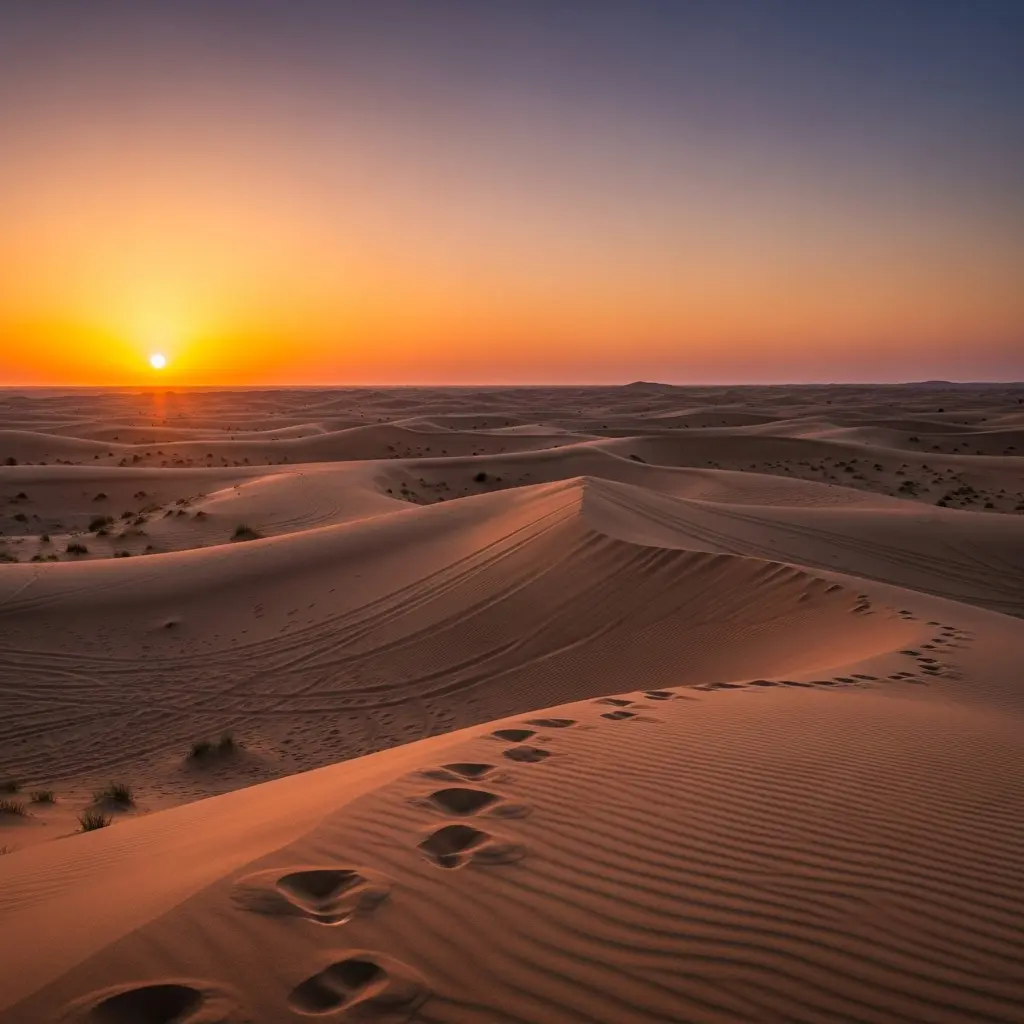
Best Times Dubai Desert: 17 Powerful Secrets to Mastering Sunrise and Sunset
The Dubai Desert offers two moments of unparalleled beauty: the soft awakening of dawn and the dramatic close of sunset.
Knowing the Best Times Dubai Desert for these events is crucial. It dictates your comfort, your experience, and your photographic success.
The entire schedule of any safari tour is built around these fleeting windows of perfect light.
This guide reveals 17 powerful secrets. We break down the Sunrise Sunset Timing and climate factors.
Mastering this knowledge ensures you choose the Optimal Safari Time for your trip.
1. The Core Secret: Desert Photography Schedule vs. Comfort
The ideal time for photography and the ideal time for maximum comfort are often different. This is a primary challenge.
H3: Photographic Ideal
The Desert Photography Schedule focuses entirely on the “Golden Hour” light.
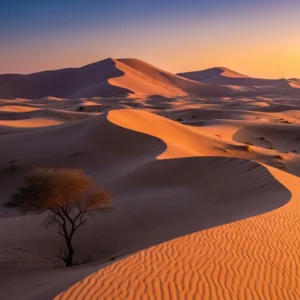
This light is soft, warm, and perfect for accentuating the dune textures.
It occurs when the sun is low on the horizon, either rising or setting.
H3: Comfort Ideal
The comfort ideal focuses on avoiding the midday heat and the cold night chill.
The Best Times Dubai Desert for comfortable activity are mid-morning and mid-to-late afternoon.
This balance between aesthetics and well-being defines the Optimal Safari Time.
H4: The Perfect Overlap
The only time that satisfies both photography and comfort is the short window of the Golden Hour itself.
This intersection is the Optimal Safari Timing target.
2. Sunrise Sunset Timing: Decoding the Golden Hour
Understanding the exact moments of the “Golden Hour” is crucial for scheduling the perfect Sunrise Sunset Timing.
H3: Sunrise Sunset Timing Definition
The Golden Hour is the period of soft, warm light immediately following sunrise and preceding sunset.
During this time, the sun is low, diffusing the light through more atmosphere.
This creates the long shadows that define the beauty of the Best Times Dubai Desert.
H4: Why Punctuality is Paramount
Missing the scheduled sunrise or sunset by just 10 minutes means missing the peak light.
The colors change rapidly, and the best light is fleeting.
Reliable operators prioritize punctuality for the Desert Photography Schedule.
3. Sunrise Adventure: The Best Morning Option
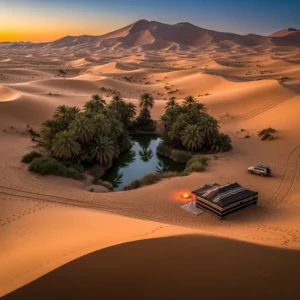
The morning safari is the ultimate choice for experiencing the earliest Best Times Dubai Desert.
H3: Pristine Dunes and Sharp Shadows
The sunrise adventure guarantees untouched sand dunes. The wind has not yet marred the surface with tracks.
The light casts long, sharp shadows, perfect for Desert Photography Schedule contrast.
This makes the Sunrise Sunset Timing the best time for clean landscape shots.
H3: Cooler Desert Hours Advantage
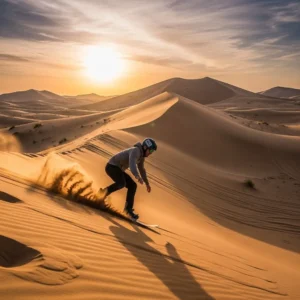
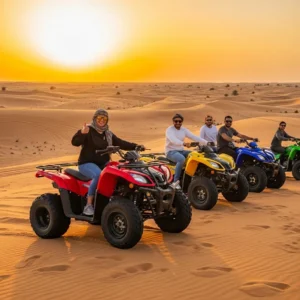
Morning tours operate during the Cooler Desert Hours. This makes activities like dune bashing and sandboarding more enjoyable.
The reduced heat minimizes dehydration risk and fatigue.
This is a major comfort advantage over the afternoon heat.
H4: Booking Strategy
Book the earliest possible slot for the Best Times Dubai Desert to ensure you are on the dune crest before the sun appears.
The drive out must be done in the dark to hit the sunrise window.
4. Sunset Adventure: The Ultimate Evening Experience
The sunset experience is the most popular choice for the Best Times Dubai Desert.
H3: The Dramatic Sky
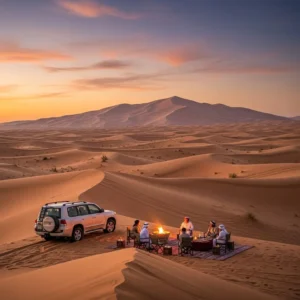
The sunset provides a more dramatic and colorful sky than the sunrise. Dust and particles in the atmosphere enhance the reds and oranges.
This intense color provides a stunning backdrop for Golden Hour Dubai photography.
It is the peak time for social and cultural activity.
H3: Transition to Culture
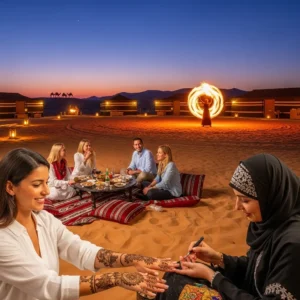
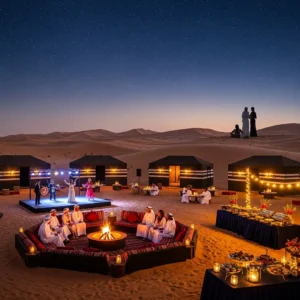
The sunset viewing naturally transitions into the dinner and cultural shows.
This sequence of events maximizes the Optimal Safari Time by blending adventure with relaxation.
This makes the evening adventure the classic choice for a full experience.
5. Climate Factor: Desert Climate Guide and Seasonal Influence
The time of year dramatically affects the Desert Climate Guide and the feasibility of your trip.
H3: Winter (Nov–Mar) Comfort Zone
The winter months are the Optimal Safari Time for maximum comfort.
Daytime temperatures are mild, and the cool evenings are perfect for outdoor dining.
This period ensures the best experience for all Desert Photography Schedule activities.
H4: Summer Heat Warning
Avoid the high summer months (June–August). The Desert Climate Guide warns of extreme heat exceeding 40°C.
Shooting time is severely restricted to a very small window just before sunset.
This heat makes the experience uncomfortable and potentially dangerous.
6. Photography Excellence: Ideal Photography Light
Achieving Ideal Photography Light requires understanding specific desert conditions.
H3: Soft Light for Portraits
The soft, diffused light of Golden Hour Dubai is perfect for portraits. It minimizes harsh facial shadows.
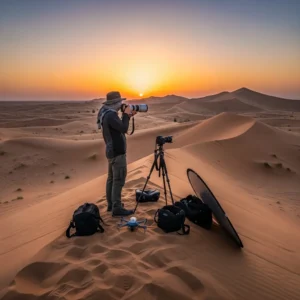
Position your subject with the sun behind them, using a reflector or fill flash to illuminate the face.
This technique is essential for professional Desert Photography.
H4: High Contrast Silhouettes
Use the bright, low sun of the Sunrise Sunset Timing to create high-contrast silhouettes of camels or figures on the dune crest.
Expose for the sky, forcing the subject into a dark shape. This is an iconic shot.
7. Time Management: Optimal Safari Timing and Transfers
Logistics are critical for ensuring you utilize the Optimal Safari Timing.
H3: Private Transfer Advantage
Book a private 4×4 transfer to eliminate time wasted on multiple hotel pickups.
A private transfer ensures you reach the desert perimeter faster, maximizing your time in the Best Times Dubai Desert.
This control is crucial for hitting the narrow photographic windows.
H4: Return Schedule
The evening safari returns late (10:00 PM–10:30 PM). Plan the following day accordingly.
The morning safari offers a fast return (9:00 AM), providing better Time Management for the rest of your trip.
8. Vetting Punctuality: Best Time to Book Trip
The reliability of your operator is directly linked to the success of your Sunrise Sunset Timing.
H3: Punctuality Check
When you choose the Best Time to Book Trip, check reviews specifically for punctuality.
A top-rated operator ensures the driver is on time to guarantee the Golden Hour Dubai experience.
Check external resources like https://dubaidesertsafarie.com/ for consistent positive timing feedback.
H4: Guide Communication
The guide must maintain communication with the base to manage the Optimal Safari Time.
Their coordination ensures the convoy hits the dune crest exactly when required.
9. Safety and Comfort: Cooler Desert Hours Precautions
The Cooler Desert Hours are not without their risks. Preparedness is still necessary.
H3: Wind and Dust Protection
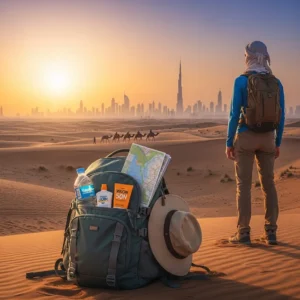
Even in the cool air, wind can kick up sand. Pack a scarf or bandana to cover your face.
Goggles are recommended for sandboarding to protect the eyes.
This ensures comfort during your Desert Photography Schedule.
H4: Staying Warm
The cool air after sunset requires warm layers. Always include a jacket or sweater in your Safari Packing List.
The Cooler Desert Hours can lead to a significant chill at the camp.
10. Photography Focus: Desert Photography Schedule
The Desert Photography Schedule dictates the success of your visual memories.
H3: Focus on Action
Use the high speed of the dune bashing to capture dynamic action shots. A fast shutter speed is mandatory.
The Sunrise Sunset Timing provides the perfect light for these shots.
H4: Landscape Vistas
Capture the vast, sweeping views of the dunes using a wide-angle lens.
Position your subjects to emphasize the immense scale of the desert.
11. Finalizing the Plan: Best Time to Book Trip
The best final decision comes from balancing your budget with your comfort tolerance.
If you hate heat, the Best Time to Book Trip is always winter.
If you hate crowds, the early morning is your Best Times Dubai Desert option.
12. Strategic Booking: Luxury and Customization
For the ultimate experience, premium booking ensures flawless execution of the Desert Photography Schedule.
Providers like https://royaldesertadventures.ae/ offer customized tours focused on maximizing the golden hour light.
This investment is often made to guarantee the perfect Sunrise Sunset Timing.
Desert Weather & Timing Comparison
| Time Slot | Light Quality | Temp/Comfort (Winter) | Activity Focus | Photographic Output |
| Sunrise (5 AM – 8 AM) | Crisp, sharp shadows, cool | Very comfortable | Thrill, Action, Cooler Desert Hours | Clean landscapes, intense texture |
| Midday (11 AM – 3 PM) | Flat, harsh, overhead | Uncomfortably hot | Avoid activities | Washout, poor contrast |
| Sunset (4 PM – 7 PM) | Warm, golden, dramatic | Very comfortable | Culture, Dining, Golden Hour Dubai | Silhouettes, rich color saturation |
Frequently Asked Questions (FAQs) – Long Answers
1. Why is the Golden Hour Dubai considered the absolute Best Times Dubai Desert for photography, and what are the specific photo benefits?
The Golden Hour Dubai is considered the absolute Best Times Dubai Desert for photography because the low angle of the sun provides soft, warm, and highly directional light. Photo Benefits: 1. Texture: The long shadows reveal the intricate ripples and curves of the sand dunes. 2. Color: The light is rich with golden and orange tones, creating stunning saturation. 3. Portraits: The soft light minimizes harsh facial shadows, making it ideal for flattering Desert Photography. This fleeting window is essential for professional results.
2. How does booking an early morning safari (Sunrise Sunset Timing) provide a superior experience for landscape photography compared to the evening?
Booking a morning safari provides a superior experience for landscape photography because the Sunrise Sunset Timing yields cleaner, untouched dunes. The early morning wind often erases vehicle tracks from the previous day. Photographers get pristine, unblemished sandscapes with sharp, long shadows. Although the evening colors are more intense, the morning offers a superior Best Times Dubai Desert canvas with greater serenity and fewer people, making the Desert Photography Schedule easier to manage.
3. What are the key disadvantages of traveling during the high-heat shoulder months (April/October) when trying to find the Optimal Safari Time?
The key disadvantages of traveling during the shoulder months are the significant increase in heat and reduced activity windows. While prices may be lower, the high temperatures compromise comfort, making the initial afternoon hours uncomfortable. The Optimal Safari Time for activities is compressed, increasing the risk of fatigue. Travelers must strictly adhere to Safety Protocols and hydration requirements, making the experience physically more demanding than traveling during winter.
4. How does the Desert Climate Guide explain the sharp temperature fluctuations, and why must travelers always pack warm layers for the Cooler Desert Hours?
The Desert Climate Guide explains the sharp temperature fluctuations by citing the desert’s low humidity. The dry air retains very little heat after the sun sets. As soon as the sun dips, heat radiates rapidly into space, causing the temperature to drop by up to 15°C within a few hours. Travelers must pack warm layers for the Cooler Desert Hours to prevent discomfort or chills while seated for dinner and the Arabian Night Shows, which occur well after sunset.
5. What specific precautions are necessary regarding the Sunrise Sunset Timing to avoid missing the best light due to delays in transfer and vehicle preparation?
Specific precautions necessary to avoid missing the best light require meticulous planning and punctuality. 1. Booking: Choose a reliable operator with a proven record of timely pickups. 2. Communication: Reconfirm the pickup time the day before. 3. Preparation: Be ready 15 minutes before the scheduled time. 4. Vehicle Stop: The guide must quickly manage the tire deflation at the desert perimeter. Any unnecessary delay risks missing the short, critical window of the Golden Hour Dubai.
6. How can travelers use the external link https://dubaidesertsafarie.com/ to vet an operator’s reliability in adhering to the Desert Photography Schedule?
Travelers can use the external link https://dubaidesertsafarie.com/ to vet an operator’s reliability by searching customer reviews for specific keywords related to timing. Look for phrases like “guide was punctual,” “we hit the sunset exactly on time,” or, conversely, “we missed the sunset due to a late pickup.” Consistent positive feedback on timing and reliability confirms the operator’s ability to execute the strict Desert Photography Schedule flawlessly.
7. What are the advantages of booking a private 4×4 transfer versus a shared transfer, especially when prioritizing the Optimal Safari Timing for photography?
Booking a private 4×4 transfer offers significant advantages when prioritizing Optimal Safari Timing. Advantages: 1. Time Savings: It eliminates the long, multi-stop pickup and drop-off loops of a shared transfer, saving up to an hour of travel time. 2. Flexibility: You control the schedule and can ask the driver to stop at specific scenic points. 3. Guaranteed Punctuality: The vehicle’s focus is entirely on getting you to the Golden Hour Dubai viewing spot exactly on time.
8. What are the key Desert Photography Schedule differences for capturing the unique movement shots of dune bashing versus the peaceful Camel Ride?
The key Desert Photography Schedule differences lie in the required shutter speed. Dune Bashing: Requires a very fast shutter speed (1/1000th or higher) to freeze the action and the spray of sand. Camel Ride: Offers flexibility. You can use a fast shutter speed to freeze the animals, or a slightly slower shutter speed (1/125th to 1/60th) combined with the panning technique to blur the background and emphasize the rhythmic motion of the animal.
9. How does the Best Time to Book Trip strategy change for families traveling with young children, compared to solo travelers seeking adventure?
The Best Time to Book Trip strategy for families with young children prioritizes comfort and safety over low price. Families should strongly prioritize the peak comfort months (Nov–Mar). Solo travelers, however, can choose the hotter shoulder season for lower prices and higher flexibility, as they are better able to manage the heat. Families should avoid the summer months entirely.
10. How can a photographer utilize the soft light of the Cooler Desert Hours (morning/late afternoon) to enhance portrait photography?
A photographer can utilize the soft light of the Cooler Desert Hours to enhance portrait photography because the low sun angle minimizes harsh shadows. Technique: Position the subject with the sun either slightly behind them (using it as a hair light or rim light) or to the side. The diffused light avoids the deep, unflattering shadows under the eyes and nose caused by midday sun, resulting in warmer, more professional, and softer portraiture.
11. What role does the external link https://hafiztourism.com/ play in helping travelers verify the quality of their Desert Photography Schedule package?
The external link https://hafiztourism.com/ plays a critical role in verifying the quality of the Desert Photography Schedule package by providing third-party service feedback. Travelers should check reviews to see if past customers found the guide knowledgeable about photography and whether the operator provided sufficient time at the sunset spot (a key complaint if time is rushed). This verified feedback helps ensure the package delivers on its photographic promise.
12. How does the Desert Climate Guide advise managing the extreme UV radiation reflected off the sand, which increases the risk of sunburn and eye damage?
The Desert Climate Guide advises mitigating UV radiation by using a multi-layered defense. 1. Skin: Apply high-SPF, broad-spectrum sunscreen diligently and reapply it at the camp. 2. Attire: Wear light, loose-fitting clothing that covers the arms and legs (provides better UV defense than bare skin). 3. Eyes: Wear high-quality, UV-rated sunglasses, as the sand reflects radiation from below, increasing the risk of eye damage.
13. What is the difference between the Cooler Desert Hours light and the intense midday light, in terms of color temperature and visual contrast?
The difference is significant: Cooler Desert Hours light (morning/late afternoon) is warm (high Kelvin), soft, and creates high contrast between shadows and light. Midday Light: Is cool (low Kelvin), harsh, and flat. This overhead light minimizes shadows and washes out colors, resulting in poor visual contrast and making it the least desirable time for Desert Photography Schedule activities.
14. What unique Desert Photography Schedule advantages are offered by https://royaldesertadventures.ae/ for clients willing to pay for a luxury, customized tour?
Luxury tours from https://royaldesertadventures.ae/ offer unique Desert Photography Schedule advantages, including exclusive location access and flexibility. Advantages: The ability to secure a private, uncrowded dune crest for the sunset. Flexibility: The guide works around the client’s needs, allowing for longer photo stops and potentially combining morning and evening sessions for full coverage of the Sunrise Sunset Timing lights, guaranteeing flawless execution.
15. What are the key Desert Photography Schedule differences for capturing the unique movement shots of dune bashing versus the peaceful Camel Ride?
The key Desert Photography Schedule differences are found in the required camera speed. Dune Bashing: Requires a very fast shutter speed (1/1000th of a second or higher) to completely freeze the action and the vehicle’s movement. Camel Ride: Allows for a slower shutter speed (e.g., 1/125th to 1/60th) to introduce a slight, intentional motion blur in the background, conveying the peaceful, rhythmic movement of the animal against the Best Times Dubai Desert backdrop.