Table of Contents
ToggleDesert Wildlife Spotting: A Guide to Finding Oryx and Gazelles in the Dubai Desert
The Arabian Desert is often perceived as a vast, empty expanse of sand, a beautiful but barren landscape. However, this perception could not be further from the truth. The desert is a vibrant and resilient ecosystem, home to a fascinating array of wildlife that has perfectly adapted to its harsh conditions. For discerning travelers, the most rewarding experience is not the roar of the engines, but the quiet thrill of Desert Wildlife Spotting.
At the heart of this experience are two of the region’s most iconic and elegant creatures: the majestic Arabian Oryx and the graceful gazelle. Seeing these animals in their natural habitat is a truly special moment, connecting you to the wild, untamed soul of Arabia. This is a different kind of safari, one that swaps high-octane thrills for patient observation and a deep appreciation for nature.
This comprehensive guide will delve into the world of these magnificent animals. We’ll explore their incredible biology, their cultural significance, the astonishing story of their survival against all odds, and, most importantly, provide you with the essential tips you need to maximize your chances of a memorable encounter on your next desert adventure.
The Arabian Oryx: A Legend Reborn
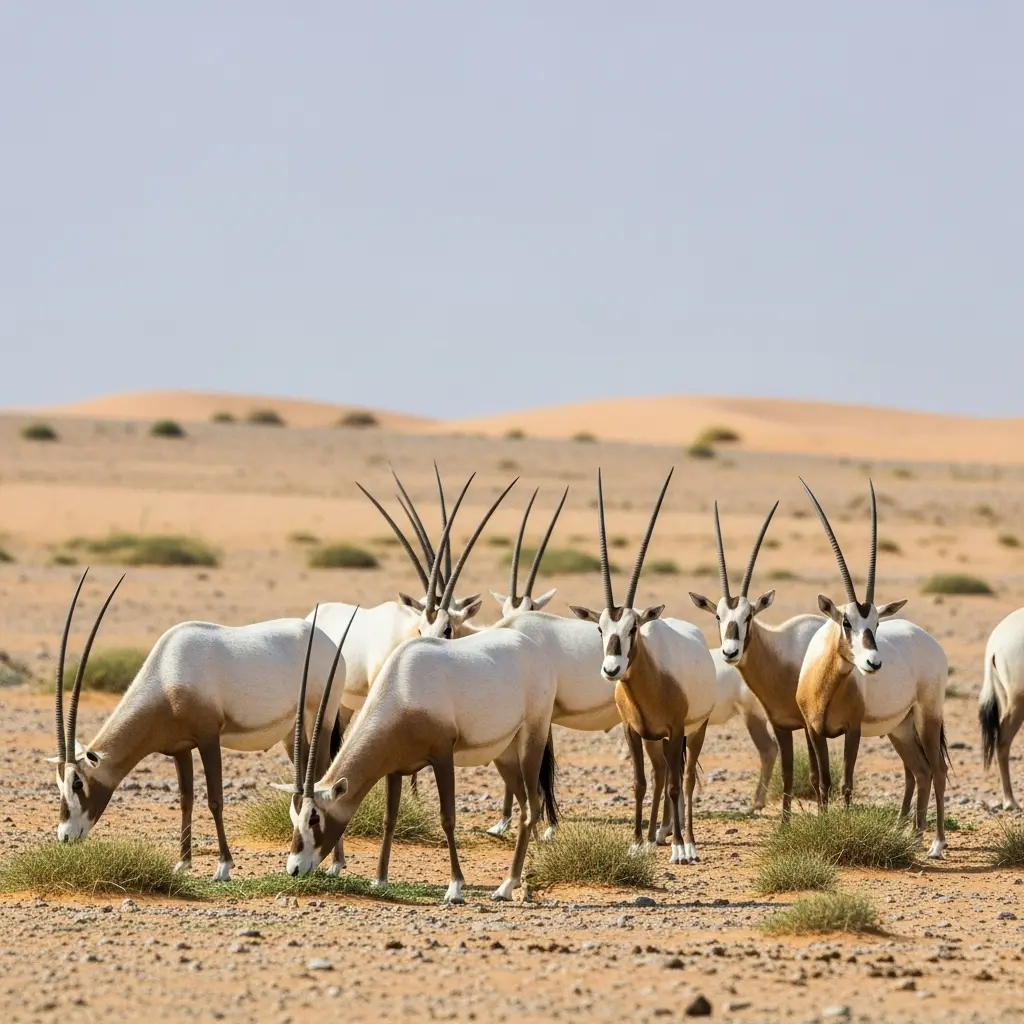
The Arabian Oryx (Oryx leucoryx) is a true icon of the desert and the national animal of the UAE. With its stunningly white coat and long, straight horns, it is a breathtaking sight against the golden dunes. Successful Desert Wildlife Spotting often hinges on understanding this remarkable creature.
A Masterclass in Desert Adaptation
The Oryx is perfectly engineered for desert life. Its bright white coat reflects the harsh desert sun, helping it stay cool. It has wide, splayed hooves that act like snowshoes, preventing it from sinking into the soft sand. Most incredibly, it has a remarkable ability to survive without drinking free-standing water for long periods, obtaining the moisture it needs from the plants and tubers it eats.
The Myth of the Unicorn
One of the most fascinating aspects of the Arabian Oryx is its potential link to the legend of the unicorn. From a side profile, the Oryx’s two long, slender horns can appear as one, especially from a distance. It is believed by many historians that ancient travelers’ tales of a white, horse-like creature with a single horn seen in the remote Arabian deserts could have been the origin of the unicorn myth that spread through Europe.
A Global Conservation Triumph
The story of the Arabian Oryx is also one of the world’s most dramatic and successful conservation tales. By the early 1970s, due to excessive hunting, the Oryx was declared extinct in the wild. This tragedy spurred a pioneering global conservation effort known as “Operation Oryx.”
The late Sheikh Zayed bin Sultan Al Nahyan, the founder of the UAE, was instrumental in this mission. He arranged for the last remaining handful of wild Oryx to be captured to form a “world herd.” This herd was bred in captivity, primarily at the Phoenix Zoo in the USA. Decades later, their descendants were successfully reintroduced into protected reserves in the Arabian Peninsula. The thriving populations you can see today are a direct result of this incredible foresight and a testament to the UAE’s commitment to conservation.
The Graceful Gazelles of the Peninsula
Sharing the desert landscape with the Oryx are the equally beautiful but more delicate gazelles. A key part of successful Desert Wildlife Spotting is learning to distinguish between the different species.
The Arabian Sand Gazelle (Reem)
The Sand Gazelle, known locally as Reem, is a pale, sand-colored gazelle that is perfectly camouflaged in the dune environment. It is known for its incredible speed and agility, which are its primary defenses against predators. Both males and females have slender, elegant horns. They are often seen in small herds and are a common, though always delightful, sight in protected reserves.
The Arabian Mountain Gazelle
As its name suggests, the Arabian Mountain Gazelle typically prefers the gravel plains and foothills of the mountains. It has a distinctly darker, brownish coat compared to the Sand Gazelle. Typically, only the males of this species have prominent horns. While less common on a typical dune safari, they can sometimes be spotted in the transitional zones between the dunes and the mountains.
A Symbol of Beauty in Arabic Culture
The gazelle holds a special place in Arabic poetry and literature. It is the ultimate symbol of feminine grace, beauty, and elegance. For centuries, poets have compared the eyes of their beloved to the large, dark, and soulful eyes of a gazelle, a testament to the deep cultural appreciation for this graceful creature.
Your Guide to a Successful Wildlife Safari
Spotting these magnificent animals requires a different approach than a standard desert safari. Here are the essential tips for a successful Desert Wildlife Spotting adventure.
1. Choose the Right Kind of Safari
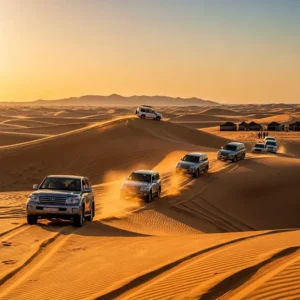
This is the most critical rule. You will not see an Oryx or gazelle on a high-speed dune bashing safari. Those tours take place in areas designated for recreational driving, where the noise and activity scare away any wildlife. You must book a specific “nature safari,” “conservation drive,” or “wildlife tour.” These tours are conducted at a slow, respectful pace with the primary goal of observation.
2. Go to a Protected Reserve
The only place to reliably see these animals is within a large, protected nature reserve. The premier location in Dubai is the Dubai Desert Conservation Reserve (DDCR). This vast, fenced-off area is dedicated to preserving the natural desert ecosystem. Access is restricted, and only a handful of licensed tour operators are permitted to conduct nature drives within its borders. An operator like https://royaldesertadventures.ae/ may offer specialized tours to such locations, and you can use platforms like https://dubaidesertsafarie.com/ and https://hafiztourism.com/ to find and compare these specific tour types.
3. Pick the Best Time of Day
Desert animals are most active during the cooler parts of the day. The best times for Desert Wildlife Spotting are in the very early morning, right after sunrise, or in the late afternoon, in the hours leading up to sunset. During the midday heat, animals rest in the shade and are much harder to find.
4. Bring the Right Equipment
While you can see animals with the naked eye, the right gear will significantly enhance your experience.
- Binoculars: A good pair of binoculars is essential for getting clear, close-up views without disturbing the animals.
- Camera with a Zoom Lens: If you want to take good photos, a camera with a telephoto or zoom lens is a must. A smartphone camera will struggle to capture clear images from a distance.
5. Listen to Your Guide
Your safari guide on a nature tour is a trained expert. They know the terrain, the animals’ habits, and the best places to look for them. Listen to them carefully. They will spot animals that you would easily miss and will provide fascinating information about their behavior and biology. Their knowledge is your greatest asset for a successful Desert Wildlife Spotting trip.
6. Follow Wildlife Viewing Etiquette
Responsible tourism is key to protecting these animals.
- Stay in the Vehicle: Unless your guide says it is safe, always remain inside the vehicle. This is for your safety and to avoid scaring the animals.
- Keep Your Voice Down: Loud noises will startle the wildlife and cause them to flee. Speak in a quiet, hushed tone.
- Never Feed the Animals: Feeding wild animals is dangerous for them and for you. It disrupts their natural diet and can make them lose their fear of humans, which can be harmful in the long run.
7. Be Patient
Desert Wildlife Spotting is not a zoo. The animals are wild and roam freely over a vast area. Sightings are never guaranteed. The thrill is in the search and the unpredictability. Be patient, keep your eyes peeled, and enjoy the beauty of the desert landscape. The reward of a sighting is all the sweeter for the effort.
8. Learn About the Animals Before You Go
Reading a guide like this one before your trip can make the experience much more rewarding. When you know a little about the animals you are looking for—their names, their conservation story, and their behaviors—you will have a much deeper appreciation for them when you finally see them in person.
Comparing the Icons of the Desert
| Feature | Arabian Oryx | Arabian Sand Gazelle (Reem) |
| Color | Strikingly white coat with dark markings on the face and legs. | Pale, sandy-tan coat for camouflage. |
| Size | Large and stocky, weighing up to 100 kg (220 lbs). | Small and slender, weighing around 20-25 kg (44-55 lbs). |
| Horns | Long, straight, and slender horns, present on both males and females. | Shorter, elegantly curved horns, present on both males and females. |
| Social Structure | Lives in mixed herds of 10-20 individuals. | Often found in smaller family groups or herds. |
| Best Viewing Location | Dubai Desert Conservation Reserve (DDCR). | Dubai Desert Conservation Reserve (DDCR). |
| Conservation Status | Formerly “Extinct in the Wild,” now listed as “Vulnerable” due to successful reintroduction. | Listed as “Vulnerable.” |
| Key Characteristic | A symbol of survival and a major conservation success story. | A symbol of grace, beauty, and speed. |
Frequently Asked Questions (FAQs)
1. What is the conservation status of the Arabian Oryx today? Thanks to the incredible success of “Operation Oryx” and ongoing conservation efforts, the Arabian Oryx has been upgraded from “Extinct in the Wild” to “Vulnerable” on the IUCN Red List. This is a rare and significant achievement in the world of conservation and a source of great national pride for the UAE.
2. What predators do Oryx and gazelles have in the desert? Historically, the primary predator of Oryx and gazelles was the Arabian wolf. While wolves are now extremely rare in the UAE, other potential predators include the Arabian leopard (also critically endangered and found only in mountainous regions) and the striped hyena. For young or weak animals, smaller predators like the caracal or desert fox could also pose a threat.
3. Why can’t I see wildlife on a regular dune bashing safari? Standard desert safaris are designed for adventure and entertainment. They take place in designated desert areas where vehicles can be driven at high speeds over the dunes. The high level of noise, activity, and traffic in these areas naturally scares away any large wildlife. Successful Desert Wildlife Spotting requires the quiet, slow, and respectful approach of a dedicated nature safari in a protected area.
4. Can I see other animals in the DDCR besides Oryx and gazelles? Yes, while Oryx and gazelles are the stars, the DDCR is home to a variety of other desert creatures. With a keen eye and a good guide, you might spot the Arabian red fox, the desert monitor lizard, and a host of bird species, including the desert eagle-owl. The reserve is a complete and thriving ecosystem.
5. What is the best camera and lens for desert wildlife photography? The ideal setup is a DSLR or mirrorless camera with a telephoto or zoom lens. A lens with a focal length of at least 200mm or 300mm is recommended to get frame-filling shots of the animals from a respectful distance. A fast shutter speed is also helpful to capture sharp images, as the animals can move quickly.
6. Do the safari vehicles in the DDCR disturb the animals? The tour operators licensed to work in the DDCR must follow very strict rules. The guides are trained to keep a safe and respectful distance from the animals. The vehicles stay on designated tracks and approach wildlife slowly and cautiously. Over time, the animals have become habituated to the presence of these few vehicles and no longer see them as a threat, allowing for excellent viewing opportunities.
7. How did Sheikh Zayed become so involved in Oryx conservation? Sheikh Zayed bin Sultan Al Nahyan was a passionate conservationist long before it became a global movement. As a young man who grew up with the Bedouins, he had a deep love and respect for the desert and its wildlife. He witnessed firsthand how modern hunting was decimating the Oryx population and was determined not to let this iconic animal disappear forever. His personal drive and vision were the primary forces behind Operation Oryx.
8. What is the difference between horns and antlers? Oryx and gazelles have horns, not antlers. Horns are a permanent part of the animal’s skull, consisting of a bony core covered by a sheath of keratin (the same material as your fingernails). They grow continuously throughout the animal’s life and are never shed. Antlers, which are found on animals like deer, are made entirely of bone and are shed and regrown every year.
9. How do these animals survive the extreme summer heat? They are most active during the cooler hours of dawn and dusk and rest in the shade during the peak heat of the day. The Arabian Oryx has a remarkable internal cooling system; a network of blood vessels at the base of its brain, called the carotid rete, is cooled by the air it breathes, protecting this vital organ from overheating.
10. What does the name “Gazelle” mean in Arabic? The English word “gazelle” comes directly from the Arabic word ghazal (غزال). In Arabic, ghazal is also a form of love poetry, and the word has become synonymous with beauty, grace, and the beloved. This linguistic link shows the deep cultural admiration for the animal’s elegance.
11. Is a nature safari suitable for children? A nature safari can be a wonderful and highly educational experience for children who have an interest in animals and nature. However, it is a quiet and patient activity. If your children require high-energy stimulation, a traditional safari might be a better fit. For budding naturalists, though, it can be the adventure of a lifetime.
12. How large is the Dubai Desert Conservation Reserve? The DDCR is a vast protected area, covering 225 square kilometers, which is approximately 5% of Dubai’s total land area. It is the first national park to be officially declared in the UAE.
13. What is the best season for Desert Wildlife Spotting? The cooler winter months, from October to April, are the best time. The animals are more active for longer periods during the day, and the pleasant weather makes for a more comfortable viewing experience for guests.
14. Do Oryx and gazelles live together in the same herds? No, they are different species and do not intermingle in the same social groups. They do, however, share the same habitat and can often be seen grazing in the same general area, co-existing peacefully.
15. How did the Oryx get its long, straight horns? The horns are a key tool for defense against predators and for sparring with other Oryx to establish dominance and mating rights. Both males and females possess them. Their impressive length and sharp points make them a formidable weapon.
16. What is the “Reem” that is often mentioned in local culture? Al Reem (الريم) is the Arabic name for the Arabian Sand Gazelle. The name is widely used in poems, songs, and is also a popular girl’s name in the region, once again highlighting the cultural association between the gazelle and feminine beauty.
17. Can I go on a self-drive safari in the DDCR? No, public access to the DDCR is strictly prohibited to protect the fragile ecosystem. The only way to experience the reserve’s wildlife is by booking a tour with one of the few officially approved and licensed tour operators.
18. Do the animals have enough food and water in the reserve? Yes, the DDCR is a carefully managed ecosystem. While the animals primarily forage on native desert grasses and plants, the reserve management ensures that there are supplemental feeding and watering stations placed strategically throughout the area. This ensures the health and stability of the population, particularly during the hottest and driest months of the year.
19. Why is the Oryx’s coat so white? The Oryx’s brilliant white coat is a critical adaptation for survival in the intense desert sun. White is the most reflective color, so the coat reflects the majority of the sun’s heat away from the animal’s body, helping it to stay cool and conserve precious water that would otherwise be lost through sweating.
20. What is the most rewarding part of a Desert Wildlife Spotting safari? The most rewarding part is the profound sense of connection to the natural heritage of the UAE. Seeing the Arabian Oryx, an animal that was literally brought back from extinction, roaming free and wild is a powerful and moving experience. It is a story of hope and a testament to the nation’s deep commitment to preserving its natural treasures for the world to see.