The Ultimate Guide to UAE Sustainable Tourism Trends: A Journey with Purpose
In the heart of the Arabian Peninsula, a powerful and inspiring transformation is taking place. Beyond the famous skylines and luxurious malls, a new story is unfolding. This is your ultimate guide to the UAE Sustainable Tourism Trends, a deep dive into the visionary eco-projects, conservation reserves, and heritage initiatives that are reshaping the nation into a world-class destination for the conscious traveler.
This in-depth exploration will take you on a journey beyond the superficial and into the very soul of the Emirates. We will discover a country that is deeply committed to preserving its precious natural landscapes and celebrating its rich cultural heritage. This is a comprehensive look at the UAE Sustainable Tourism Trends, designed to help you plan the perfect, enriching, and responsible adventure for 2025.
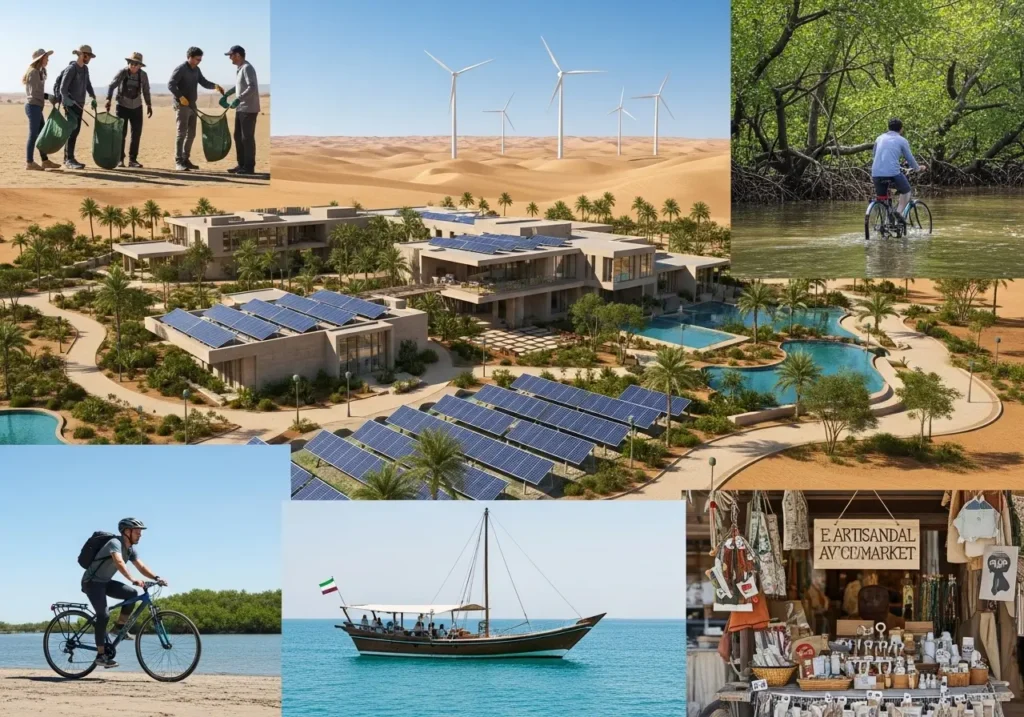
We will explore the vast, protected wilderness of the Dubai Desert Conservation Reserve, paddle through the ancient mangrove forests of Sharjah’s East Coast, and unwind in luxurious eco-retreats that operate in perfect harmony with their surroundings.
Prepare to be captivated by a side of the UAE that is wild, authentic, and wonderfully serene. This guide will provide you with all the knowledge you need to be a part of the UAE Sustainable Tourism Trends, proving that a vacation here can be as meaningful and restorative as it is magnificent.
The National Vision: The UAE’s Commitment to a Green Future
The incredible rise of the UAE Sustainable Tourism Trends is not an accident. It is the result of a deliberate, long-term, and visionary strategy that is embedded at the very highest levels of the nation’s government.
The “Net Zero by 2050” Strategy
The UAE was the first country in the Middle East to launch a “Net Zero by 2050” strategic initiative. This is a national drive to achieve net-zero emissions, and it is guiding a massive investment in renewable energy, conservation, and sustainable development across all sectors, including tourism.
The Three Pillars of Sustainable Tourism
True sustainable tourism is built on three interconnected pillars, all of which are central to the UAE Sustainable Tourism Trends.
- Environmental Conservation: Actively protecting the natural landscapes, wildlife, and ecosystems.
- Cultural Preservation: Honoring, preserving, and celebrating the local heritage, traditions, and history.
- Economic Sustainability: Ensuring that tourism brings tangible and sustainable economic benefits to the local communities.
Trend 1: The Rise of the Luxury Eco-Retreat
One of the most exciting UAE Sustainable Tourism Trends is the emergence of world-class, luxury eco-retreats. These are destinations that offer five-star comfort and service while adhering to the highest standards of environmental responsibility.
The Sharjah Collection by Mysk: A Case Study in Excellence
Sharjah, the UAE’s cultural capital, has become a global leader in this field with its magnificent “Sharjah Collection by Mysk.”
- Kingfisher Retreat (Kalba): This is a breathtaking coastal sanctuary on Sharjah’s East Coast. Guests stay in luxurious, private-pool tented villas and can explore the adjacent, protected Al Qurm Mangrove Reserve by kayak. The retreat operates on strict sustainable principles, with a focus on protecting the vital mangrove ecosystem.
- Mysk Al Faya Retreat (Mleiha): This is the ultimate wellness escape. It is an exclusive, five-room boutique hotel that has been masterfully converted from a 1960s clinic and grocery store. It features a private, world-class spa and is a haven for a “digital detox.”
- Mysk Al Badayer Retreat: Located in the deep crimson dunes of the Al Badayer desert, this retreat is designed like a traditional Arabian fortress and offers a luxurious and adventurous desert escape.
Dubai’s Desert Sanctuaries
- Al Maha, a Luxury Collection Desert Resort & Spa: This is the pinnacle of conservation-led luxury. Located within the protected Dubai Desert Conservation Reserve, this exclusive, all-suite resort plays a direct role in the conservation of the Arabian Oryx. The guest experiences are all focused on respectful wildlife observation. A stay at Al Maha is one of the most profound Sustainable Stays in Dubai.
Trend 2: The Expansion of Conservation Tourism
A key part of the UAE Sustainable Tourism Trends is the development of large-scale conservation projects that also serve as incredible, low-impact tourist destinations.
Dubai’s Magnificent Desert Reserves
- The Dubai Desert Conservation Reserve (DDCR): The DDCR is the UAE’s first national park, a massive, 225-square-kilometer sanctuary for the desert’s native wildlife. Access is strictly limited to a few, select tour operators that conduct gentle, educational wildlife drives in vintage Land Rovers, not high-speed dune bashing.
- The Al Marmoom Desert Conservation Reserve: This is another massive, unfenced nature reserve that is home to the magnificent Al Qudra Lakes. This man-made desert oasis is a haven for over 170 species of birds and is a wonderful place to spot free-roaming Arabian Oryx and gazelles. It is also famous for its world-class, 86-kilometer cycle track.
Abu Dhabi’s Natural Jewels
- Jubail Mangrove Park: This beautiful and highly accessible park allows visitors to walk on a long, winding boardwalk that takes you directly through the heart of a natural mangrove forest. It is a fantastic and educational eco-attraction.
- Sir Bani Yas Island: This is a truly unique destination. It is a protected nature reserve on a private island that is home to thousands of free-roaming animals, including the Arabian Oryx, giraffes, and cheetahs. A stay at one of the island’s Anantara resorts allows you to combine a wildlife safari with a luxury beach vacation.
Sharjah’s Unique Ecosystems
- Wasit Wetland Centre: This vast wetland is so ecologically important that it has been designated as a Ramsar Site of International Importance. It is a vital stopover for over 60 species of migratory birds, and the state-of-the-art visitor center allows for observation without disturbance.
Trend 3: The Celebration of Authentic Cultural Heritage
The UAE Sustainable Tourism Trends are not just about the environment; they are also about the careful and loving preservation of the nation’s rich cultural heritage.
The Heart of Sharjah: A Living Museum
The Heart of Sharjah is one of the largest and most ambitious heritage restoration projects in the entire region. It is a massive, multi-decade project to meticulously restore the entire old town of Sharjah. A walk through its car-free, shaded alleyways, with their traditional, coral-stone houses and barjeel wind towers, is a journey back in time.
The Al Fahidi Historical Neighbourhood (Dubai)
This is the beautifully preserved heart of Old Dubai. A walking tour here will take you through a labyrinth of narrow alleyways, past restored courtyard houses that are now home to art galleries and charming cafes. It is a wonderful and authentic glimpse into the city’s pre-oil past.
Qasr Al Hosn (Abu Dhabi)
This is the oldest and most historically significant building in Abu Dhabi. It started as a single watchtower in the 18th century and grew into a formidable fort that was the home of the ruling family. Today, it is a magnificent museum that tells the story of the nation’s birth.
The Urban Green Movement: Nature in the Heart of the City
The UAE Sustainable Tourism Trends also include a focus on bringing nature and sustainability into the heart of the urban environment.
The Green Planet (Dubai)
This magnificent, four-story biodome in City Walk is a living, indoor tropical rainforest. It is a fantastic educational eco-project, home to over 3,000 species of plants and animals, and it serves to educate visitors about the importance of the world’s most fragile ecosystems.
Al Noor Island (Sharjah)
Located in the Khalid Lagoon in the heart of Sharjah city, Al Noor Island is a unique destination that masterfully blends nature, art, and technology. The highlight is the magnificent Butterfly House, which is home to hundreds of free-flying, exotic butterflies.
Integrating Your Sustainable Journey with a Classic UAE Experience
A journey to experience the world of Sharjah and Dubai Green Tourism is the perfect way to discover a more authentic and meaningful side of the UAE. To complement this serene and enriching escape with the classic, thrilling adventure that the region is famous for, you can arrange a spectacular evening desert safari.
Even if you are staying at a magnificent eco-resort, the classic evening safari offers a different kind of experience, with its focus on the high-energy thrill of dune bashing and the vibrant cultural entertainment at a traditional Bedouin-style camp. For a premium adventure, you can book a tour with a company like https://royaldesertadventures.ae/, where you can enjoy an exhilarating 4×4 dune bashing ride as the sun sets over the golden sands.
To craft a complete and seamless itinerary, it is wise to work with experienced local tour operators. Reputable companies such as https://dubaidesertsafarie.com/ offer a comprehensive range of desert adventures. For planning diverse excursions across the Emirates, https://hafiztourism.com/ is another excellent and trusted partner that can help you organize your perfect trip.
Frequently Asked Questions (FAQs)
- What does “sustainable tourism” actually mean? Sustainable Tourism in the UAE is a holistic approach to travel. It is about visiting a place in a way that is respectful of and beneficial to the local environment, culture, and economy. It means choosing experiences that have a low environmental impact, that support the preservation of local heritage, and that contribute positively to the livelihoods of the local community.
- Which emirate is the best for an eco-tourism trip? Both Dubai and Sharjah offer world-class and unique experiences. Sharjah has a strong focus on creating a network of boutique, interconnected eco-destinations that blend nature with culture and heritage, such as in Kalba and Mleiha. Dubai excels in large-scale conservation projects like the magnificent Dubai Desert Conservation Reserve (DDCR). The best itinerary would include the highlights of both.
- What is the Dubai Desert Conservation Reserve (DDCR)? The DDCR is the UAE’s first and largest national park, a massive, 225-square-kilometer protected area of the desert. A safari here is a unique, low-impact experience that focuses on the respectful observation of native wildlife, including the magnificent Arabian Oryx.
- What is the Kalba Mangrove Reserve in Sharjah? The Al Qurm Nature Reserve in Kalba is one of the most important and ancient mangrove forests in the region. It is a vital and protected coastal ecosystem and a haven for a huge variety of rare bird and marine life. A guided kayaking tour through the reserve is a must-do eco-adventure.
- Are the eco-retreats in the UAE very basic? No, not at all. The leading Sustainable Stays in Dubai and Sharjah are the pinnacle of five-star eco-luxury. They offer opulent accommodations (like private-pool tented villas), gourmet dining, and world-class amenities, all while adhering to the highest standards of sustainability.
- What is the Mleiha Archaeological Centre? Mleiha is one of the most important archaeological sites in the region and a UNESCO World Heritage Site nominee. The Mleiha Archaeological Centre is a fantastic, modern museum that serves as the gateway to the area’s incredible history, where you can then take guided, low-impact tours to see ancient forts and fossil sites.
- How do these green projects help the local wildlife? These projects are vital for the local wildlife. The conservation reserves, like the DDCR and the Wasit Wetland Centre, provide large, protected, and pristine habitats where native and migratory species can thrive without human interference. They are also centers for successful breeding and reintroduction programs.
- What is the best time of year to enjoy these eco-tourism projects? The best time is during the UAE’s beautiful and mild winter season, which runs from late October to April. The weather during these months is perfect for all the outdoor and nature-based activities, such as hiking, kayaking, and wildlife safaris.
- Are these destinations suitable for families with children? Yes, many of them are fantastic for families. A visit to the Dubai Safari Park, The Green Planet, or the Wasit Wetland Centre are all incredibly educational and engaging experiences for children. A gentle, heritage-style wildlife drive in the DDCR is also a huge hit with families.
- How does choosing a sustainable tour help the local community and the environment? Choosing an official tour operator within a protected area like the DDCR directly contributes to the conservation of that area, as a portion of your fee goes to funding the reserve. These projects also create high-quality jobs for local people in more rural areas and promote a wider culture of environmental respect. This is the heart of Sharjah and Dubai Green Tourism.
- What is “glamping”? “Glamping” is a portmanteau of “glamorous camping.” The experience at a retreat like the Kingfisher Retreat is the pinnacle of glamping. You stay in a massive, permanent tented villa that is, for all intents and purposes, a five-star hotel room, complete with a real bed, an en-suite bathroom, air conditioning, and even a private plunge pool.
- What is a “Ramsar Site”? A Ramsar Site is a wetland that has been designated as being of international importance under an environmental treaty. The Wasit Wetland Centre in Sharjah is a Ramsar site, which recognizes its crucial role as a habitat for migratory water birds.
- Can I visit these conservation reserves on my own? No, public access to the core areas of the protected reserves like the DDCR and the Kalba Mangrove Reserve is not permitted. The only way to enter and experience these pristine environments is by booking a guided tour with one of the few, officially approved tour operators.
- What is the most unique eco-tourism activity I can do in the UAE? While there are many incredible options, a guided kayaking tour through the ancient Al Qurm mangrove forest in Kalba is a truly unique and magical experience. The sense of peace and the opportunity to see such a rare and vital ecosystem, where the mountains meet the sea, is unforgettable.
- What is the single most important thing to know about green tourism in the UAE? The most important thing to know is that it is a genuine, deep, and long-term commitment. The Sharjah and Dubai Green Tourism projects are not just a marketing trend; they are world-class, scientifically managed, and visionary initiatives that are playing a crucial role in preserving the UAE’s precious natural and cultural heritage for generations to come.
The Unforgettable Journey of Conscious Travel
This guide to UAE Sustainable Tourism Trends reveals a country that is a true paradise for the conscious traveler. It is a destination that offers a profound and authentic journey into the stunning and diverse natural and cultural landscapes of the Emirates.
A visit to one of these magnificent sustainable destinations is more than just a vacation; it is a journey of discovery and a chance to travel with a purpose. It is an opportunity to disconnect from the noise of the world and reconnect with the profound beauty of nature, leaving a positive impact long after you have returned home.