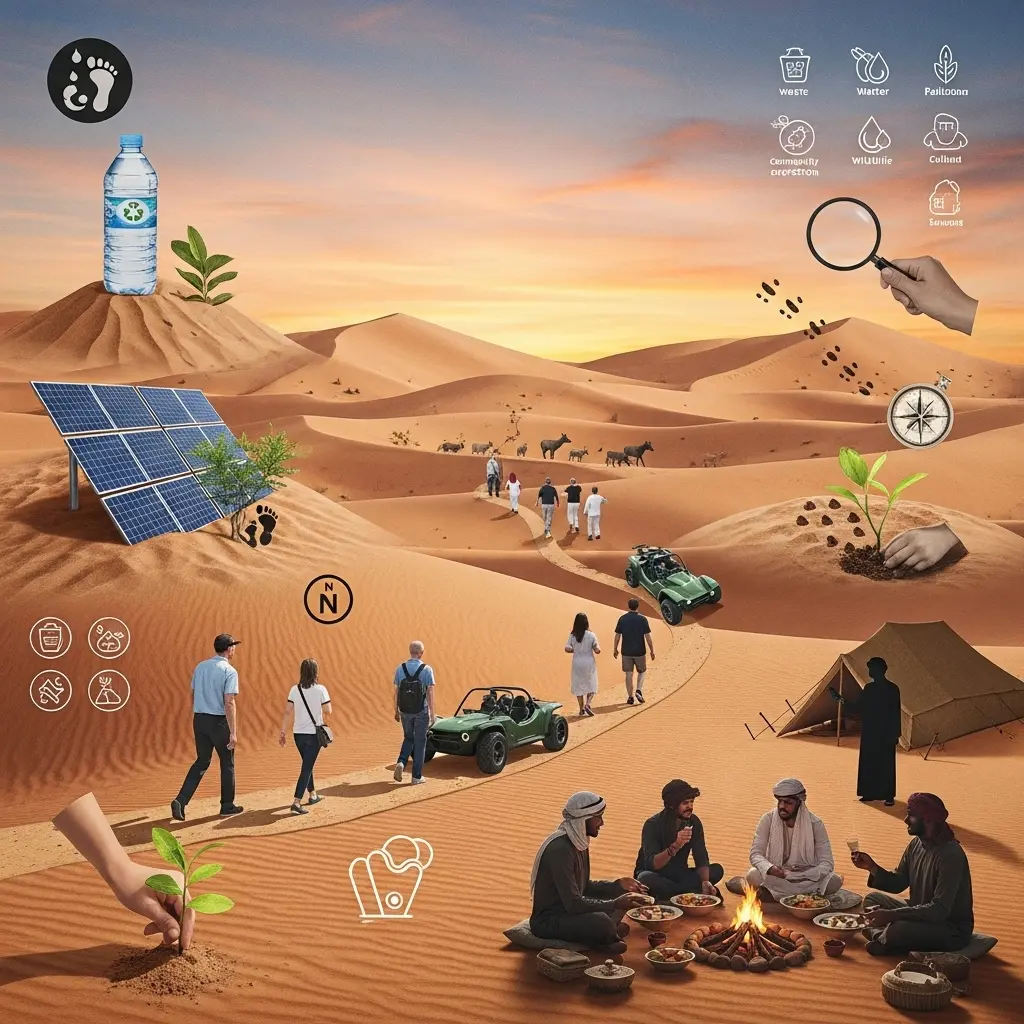
Eco-Friendly Desert Safari: 19 Powerful Secrets to Booking a Sustainable Tour
The modern traveler is seeking authenticity and thrill, but not at the expense of the planet. Sustainability is the new frontier of luxury tourism.
The Eco-Friendly Desert Safari is rapidly becoming the most significant trend in the UAE’s travel industry. It redefines adventure.
It moves away from high-impact activities toward respectful, low-footprint exploration. This ensures the preservation of the stunning desert ecology.
This extensive guide provides 19 powerful secrets. We detail how to identify a genuine Eco-Friendly Desert Safari and avoid “greenwashing.”
Understanding these Ethical Safari Practices ensures your adventure is both profound and responsible.
1. The Core Shift: Why Eco-Friendly Desert Safari is Trending
The demand for responsible travel is driving innovation among safari operators. This is the new reality for a high-quality tour.
H3: Conscience-Driven Travel
Tourists actively seek tours that support Desert Conservation UAE. They want to ensure their trip does no harm.
The transparency of an Eco-Friendly Desert Safari provides peace of mind.
This ethical focus is highly valued by modern global travelers.
H3: Quality Over Volume
A Sustainable Desert Tour inherently involves smaller group sizes. This minimizes the impact on the environment.
Fewer people per group translates to a higher quality experience and personalized service.
This balance of ethics and service defines the Best Sustainable Safari.
H4: Tranquility and Nature Focus
Eco-Friendly Desert Safari packages prioritize quiet viewing and nature observation. This appeals to travelers seeking solitude.
The emphasis shifts from the loud, aggressive dune bash to the silent beauty of the desert.
2. Vetting Process: Ethical Safari Practices and Certification
Identifying a genuine Sustainable Desert Tour requires checking for concrete evidence of ethical conduct.
H3: Certification and Transparency
Look for third-party accreditation or certification in sustainable tourism. This validates the operator’s claims.
A reputable provider will openly share their Ethical Safari Practices regarding waste and conservation.
Avoid operators who use vague environmental language without verifiable commitment.
H3: Energy and Vehicle Standards
Inquire about the vehicle fleet. The most committed Eco-Friendly Desert Safari operators use newer, more fuel-efficient or hybrid 4x4s.
Some even use electric buggies for camp transfers to reduce emissions and noise.
This investment in clean technology is a hallmark of Green Tourism Dubai.
H4: Water Management
The desert requires extreme water vigilance. A sustainable tour details how they manage water usage.
This may include using water-efficient systems at the camp and avoiding waste.
3. Activity Redesign: Low Impact Safari and Heritage
The activity list for an Eco-Friendly Desert Safari is curated to minimize ground disturbance.
H3: Low Impact Safari Transportation
The aggressive, high-speed dune bashing is often replaced by a gentle, scenic heritage drive.
These Low Impact Safari tours use classic vehicles (like vintage Land Rovers) or non-motorized transport.
The focus is on the history of the land, not the spectacle of speed.
H3: Wildlife Eco Tour Focus
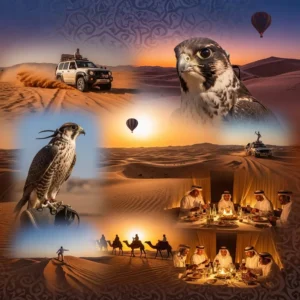
The itinerary prioritizes Wildlife Eco Tour sightings in protected zones.
Guides are trained in ecology. They maintain strict distance protocols from the Arabian Oryx and gazelles.
This quiet observation enhances the Sustainable Desert Tour.
H4: Camel Trekking
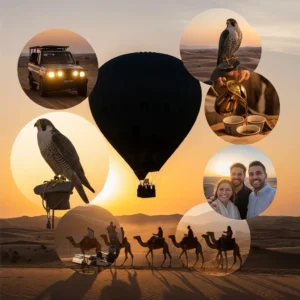
A traditional Camel Trek is often included as a non-motorized transport option.
It offers an authentic, low-impact way to traverse the dunes, adhering to Ethical Safari Practices.
The focus is on the cultural significance of the animal, not merely a photo-op.
4. Camp Standards: Green Tourism Dubai and Zero Waste
A sustainable camp adheres to stringent environmental guidelines.
H3: Zero-Waste Commitment
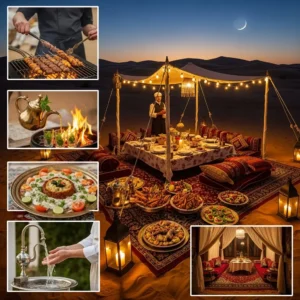
A crucial aspect of Green Tourism Dubai is waste management. The camp must commit to “Leave No Trace.”
All trash, including food scraps and grey water, must be meticulously collected and removed from the desert.
No waste should ever be buried or burned on-site.
H3: Sustainable Infrastructure
The best Eco-Friendly Desert Safari camps use renewable energy. Solar panels power lighting and refrigeration.
This eliminates the noise and pollution of gasoline generators.
The facilities themselves are often modular and easily dismantled.
H4: Food Sourcing
Food for a Sustainable Desert Tour should, where possible, be locally sourced.
This reduces the carbon footprint associated with long-distance transportation.
This responsible choice elevates the Green Tourism Dubai experience.
5. Future of Safari Tourism: Innovation and Responsibility
The Future of Safari Tourism is defined by the integration of technology with conservation.
H3: Carbon Neutral Safari Goals
The ultimate aim of the Future of Safari Tourism is to offer a Carbon Neutral Safari.
Operators offset the emissions generated by transfers and activities through tree planting or renewable energy investments.
This commitment demonstrates the highest level of Ethical Safari Practices.
H3: Educational Technology
The Future of Safari Tourism includes using technology for learning. Guides may use tablets to showcase historical maps or AR apps for constellation identification.
This enhances the cultural value of the Sustainable Desert Tour.
H4: Advanced Tracking
GPS tracking is used to ensure all vehicles remain on designated, approved trails.
This prevents accidental intrusion into sensitive Desert Conservation UAE zones.
6. Booking Secrets: Best Sustainable Safari Vetting
Vetting is crucial to ensure you book a genuinely sustainable trip, not just a marketing gimmick.
H3: Price vs. Ethics
A low-cost tour cannot be truly sustainable. The Best Sustainable Safari requires investment in quality vehicles and expert guides.
Be suspicious of extremely cheap deals advertised as “eco.” Sustainability has a cost.
This is the most important of all Ethical Safari Practices.
H3: Review Verification
Check external reviews on platforms like https://dubaidesertsafarie.com/ and https://hafiztourism.com/. Look for specific mention of the low noise and respectful pace.
Customer feedback confirms whether the operator delivered a true Low Impact Safari.
H4: Direct Communication
Call the operator and ask specific questions: “How do you dispose of grey water?” The answer reveals their true commitment to Desert Conservation UAE.
7. Global Benchmarking: Desert Conservation UAE
The DDCR (Dubai Desert Conservation Reserve) sets the benchmark for Desert Conservation UAE.
H3: DDCR Access
Tours with approved access to the DDCR adhere to the highest Low Impact Safari standards.
This guarantees a focus on wildlife and responsible travel.
https://royaldesertadventures.ae/ often provides these high-end, exclusive conservation drives.
H4: Funding Conservation
Choosing an operator that contributes directly to Desert Conservation UAE helps fund research and anti-poaching initiatives.
This provides a direct, positive financial impact from your trip.
8. Finalizing the Choice: Eco-Friendly Desert Safari
The Eco-Friendly Desert Safari is the future of travel. It ensures you create memories without compromising the environment.
Choose an operator committed to authentic, sustainable practices.
9. Safety and Health: Ethical Safari Practices
Ethical practices are inherently safer. They prioritize the guest’s long-term health and the environment’s well-being.
10. The Legacy: Sustainable Desert Tour
Your choice of a Sustainable Desert Tour leaves a positive legacy.
You contribute to the preservation of the stunning Arabian Desert landscape.
Sustainable Activity Comparison Table
| Activity | Environmental Impact | Value Proposition | Low Impact Safari Status |
| Dune Bashing (Aggressive) | High (Noise, Erosion) | Thrill/Action | Not Low Impact |
| Gentle Heritage Drive | Low (Minimal Erosion) | Culture, Scenic Views | Low Impact Safari |
| Camel Trekking | Lowest (Natural) | Authenticity, Quiet Observation | Low Impact Safari |
| Wildlife Watching | Low (Passive Viewing) | Ecology, Education | Low Impact Safari |
| BBQ Dinner | Moderate (Waste Management Challenge) | Culinary/Social | Sustainable if Zero-Waste |
Frequently Asked Questions (FAQs) – Eco-Friendly Desert Safari
1. How can a traveler distinguish a genuinely Sustainable Desert Tour from one that is merely “greenwashing” its basic services?
A traveler distinguishes a genuine Sustainable Desert Tour by looking for verifiable policies and certifications. Genuine Indicators: The tour explicitly details its waste removal policy (nothing left behind/buried). It uses reusable dishware instead of single-use plastic. It conducts activities in DDCR-approved zones and focuses on quiet observation. Greenwashing: Vague claims about “loving the desert” without specific waste or vehicle policies.
2. What specific actions does a Low Impact Safari take during the activity (e.g., dune driving) to ensure minimal environmental damage?
A Low Impact Safari minimizes environmental damage by restricting speed and activity zones. Actions: They replace high-speed, aggressive dune bashing with gentle, scenic heritage drives using older, classic vehicles (like vintage Land Rovers). All driving is confined to pre-approved, non-sensitive trails, reducing sand erosion and protecting the fragile burrows of Desert Conservation UAE wildlife.
3. How can a traveler verify that their chosen Eco-Friendly Desert Safari operator contributes financially to Desert Conservation UAE efforts?
A traveler can verify financial contribution by asking the operator directly about their partnerships. Verification: Ask if the tour fee includes a mandatory conservation levy or if the company is an official partner with the Dubai Desert Conservation Reserve (DDCR). Reputable Eco-Friendly Desert Safari operators will often display this partnership proudly on their website or marketing materials.
4. What types of specialized vehicles or transport methods are used for a Low Impact Safari compared to the traditional high-speed 4×4?
Low Impact Safari operators use specialized transport methods to reduce footprint. Vehicles: They favor vintage Land Rovers (used for slower, controlled heritage drives), hybrid 4x4s for efficiency, and occasionally electric buggies for camp transfers. The most traditional low-impact method is the extended Camel Trek, which is non-motorized and relies on the camel’s natural movement.
5. What specific cultural experiences are integrated into a Sustainable Desert Tour to promote heritage over mass tourism?
A Sustainable Desert Tour integrates cultural experiences by prioritizing authenticity and intimacy. Experiences: They focus on traditional Bedouin storytelling, smaller live music performances (e.g., Oud playing), and traditional cooking demonstrations over large, high-energy stage shows. This intimate setting facilitates a genuine exchange of Local Desert Knowledge, aligning with Ethical Safari Practices.
6. How do Green Tourism Dubai camps manage energy and water consumption efficiently in the arid desert environment?
Green Tourism Dubai camps manage resources efficiently through renewable energy and strict conservation. Energy: They utilize solar panels to power lighting and refrigeration, reducing reliance on polluting diesel generators. Water: They use water-efficient fixtures (low-flow toilets/sinks) and may implement grey water recycling systems for plant irrigation (where approved), conserving the desert’s most precious resource.
7. How can booking an Eco-Friendly Desert Safari benefit wildlife viewing, and what is the protocol for observing the Arabian Oryx?
Booking an Eco-Friendly Desert Safari benefits wildlife viewing by prioritizing quiet, slow observation. Benefit: The slower, silent speed of the heritage vehicles does not frighten the wildlife, significantly increasing the chances of seeing Rare Desert Animals like the Arabian Oryx. Protocol: Guides ensure vehicles remain a respectful distance away, and engines are turned off. Guests must remain silent and inside the vehicle, adhering to Safe Wildlife Viewing practices.
8. What are the key indicators on external reviews that a company delivers genuine Ethical Safari Practices and not just false advertising?
Key indicators of genuine Ethical Safari Practices on external reviews include specific mentions of low noise levels, reusable dishware/cutlery, and small group sizes. Red Flags: Consistent complaints about excessive speed in wildlife areas, visible trash, or the use of single-use plastic at the camp. Positive comments often praise the guide’s ecological knowledge and the respectful treatment of the camels.
9. How does the concept of a Carbon Neutral Safari work, and what steps does the operator take to achieve this goal?
The Carbon Neutral Safari concept works by measuring and offsetting the carbon emissions generated by the tour. Steps: The operator calculates the emissions from vehicle use, transfers, and energy consumption at the camp. They then purchase carbon offsets (e.g., investing in certified reforestation projects or renewable energy initiatives) equivalent to the total carbon produced, effectively making the safari’s footprint net-zero.
10. What is the Future of Safari Tourism regarding wellness, and what kind of activities might be included in a sustainable wellness package?
The Future of Safari Tourism is embracing wellness and digital detox. Activities: Sustainable wellness packages focus on tranquil, low-impact activities such as sunrise yoga or guided meditation sessions on the dunes. They often include healthy, organic meals and intentionally limit Wi-Fi access, encouraging guests to disconnect from technology and connect with the natural environment.
11. Why is the average cost of a verified Best Sustainable Safari often higher than a typical budget tour, and what justifies the difference?
The average cost of a verified Best Sustainable Safari is higher because sustainability requires investment in superior resources. Justification: The cost covers the use of newer, high-efficiency vehicles, specialized ecological guides, meticulous waste management and removal, and sometimes contributions to conservation funds. The price difference buys ethical assurance, better safety standards, and a more intimate, uncrowded experience, justifying the Extra Cost Safari.
12. How does the Eco-Friendly Desert Safari manage waste disposal to ensure zero impact on the fragile desert sands?
The Eco-Friendly Desert Safari manages waste disposal through a strict “pack it in, pack it out” policy. Management: All solid waste (plastic, glass, paper) and organic food scraps are meticulously collected in dedicated, sealed containers. Crucially: Grey water (used sink water) is collected and properly disposed of in the city, never dumped, ensuring absolutely no trace is left in the fragile desert ecosystem.
13. What educational opportunities are emphasized during a Sustainable Desert Tour to increase visitor awareness of the local environment?
Educational Opportunities during a Sustainable Desert Tour emphasize awareness of the local environment and its history. Focus: Guides are trained to point out unique Desert Flora (e.g., Ghaf trees) and explain their importance to the ecosystem. They detail the Desert Animal Adaptations for survival and educate guests on the difference between a natural dune and an eroded one, transforming the experience into an ecological lesson.
14. How can I use external resources (like https://dubaidesertsafarie.com/) to confirm that the Eco-Friendly Desert Safari I am booking is not simply a bus tour?
You must check the vehicle type and activity list. Verification: Use external resources to ensure the package explicitly lists a 4×4 vehicle transfer (Land Cruiser/Range Rover) for the safari portion and guarantees off-road driving. An “eco-friendly” label does not mean the tour is only a passive bus transfer. A reliable operator ensures the vehicle can safely access the deep, scenic parts of the desert, adhering to Low Impact Safari standards.
15. When comparing Ethical Safari Practices, how does the treatment and handling of camels in a sustainable camp differ from a mass-market camp?
In a sustainable camp, Ethical Safari Practices related to camels are strictly enforced. Difference: Camels are given more frequent breaks, have clean grazing areas, and are not overworked. The riding time is short and supervised. Mass Market: Camels may be used continuously for long periods, leading to fatigue. Sustainable operators treat the camels with respect, recognizing their status as a cultural symbol, not just a tourism prop, which is a key part of Wildlife Conservation UAE efforts.