The Ultimate Guide to Dubai Nature Preservation Tours: A Journey into the Wild
In the heart of a city renowned for its breathtaking ambition and futuristic skyline, a vast, pristine, and protected natural world is thriving. This is your ultimate guide to the world of Dubai Nature Preservation Tours, a deep dive into the incredible conservation reserves and wildlife sanctuaries that offer a more authentic, meaningful, and sustainable way to experience the soul of the desert.
This in-depth exploration will take you on a journey beyond the standard tourist trail and into the heart of Dubai’s commitment to protecting its precious natural heritage. This is a comprehensive look at the Dubai Nature Preservation Tours experience, designed to help you plan the perfect, enriching, and responsible adventure for 2025.
We will explore the magnificent Dubai Desert Conservation Reserve, home to the iconic Arabian Oryx, and discover the sprawling wetlands of the Al Marmoom Reserve. We will uncover the secrets of the city’s urban flamingo sanctuary and learn how tourism can be a powerful force for good.
Prepare to be captivated by a side of Dubai that is wild, serene, and deeply inspiring. This guide to Dubai Nature Preservation Tours is your key to unlocking a world of unforgettable wildlife encounters and a profound connection with the timeless beauty of the Arabian desert.
The Philosophy of Preservation: Dubai’s Commitment to its Natural Heritage
The incredible Dubai Nature Preservation Tours are the result of a long-term, visionary strategy to protect and celebrate the emirate’s unique desert ecosystem.
A Visionary Approach to Conservation
Dubai has made a powerful and internationally recognized commitment to conservation. This is most evident in the establishment of massive, protected areas of land that act as safe havens for the region’s native flora and fauna. These are not just parks; they are scientifically managed reserves dedicated to research, breeding, and reintroduction programs for endangered species.
The “Balanced Tourism” Model: A Force for Good
A key part of this strategy is the brilliant “balanced tourism” model. This is a philosophy where a small, carefully controlled, and low-impact form of tourism is permitted within the reserves.
The revenue generated from these select, high-quality tour operators is then funneled directly back into the funding of the conservation and research efforts that protect the entire reserve. This means that when you choose one of the official Dubai Nature Preservation Tours, you are not just a visitor; you are an active and vital contributor to the preservation of this incredible environment.
What Makes a Tour a “Preservation Tour”?
- Low Impact: The tours are designed to have a minimal impact on the fragile desert ecosystem. This often means using designated tracks and avoiding high-speed, destructive dune bashing.
- Educational: The tours are led by highly trained and knowledgeable conservation guides who provide fascinating insights into the wildlife, the ecosystem, and the culture of the desert.
- Support for Conservation: The tour operators pay a significant fee to the reserve, which directly funds its conservation work.
The Crown Jewel: A Deep Dive into the Dubai Desert Conservation Reserve (DDCR)
The undisputed crown jewel of Dubai Nature Preservation Tours is the magnificent Dubai Desert Conservation Reserve (DDCR).
The History and Significance of the DDCR
The DDCR is the UAE’s first official national park. It is a massive, 225-square-kilometer sanctuary that represents about 5% of Dubai’s total land area. It is a protected area that is dedicated to preserving the pristine desert ecosystem and its native wildlife.
The Wildlife of the DDCR in Detail
The reserve is a thriving habitat for a spectacular array of native Arabian wildlife.
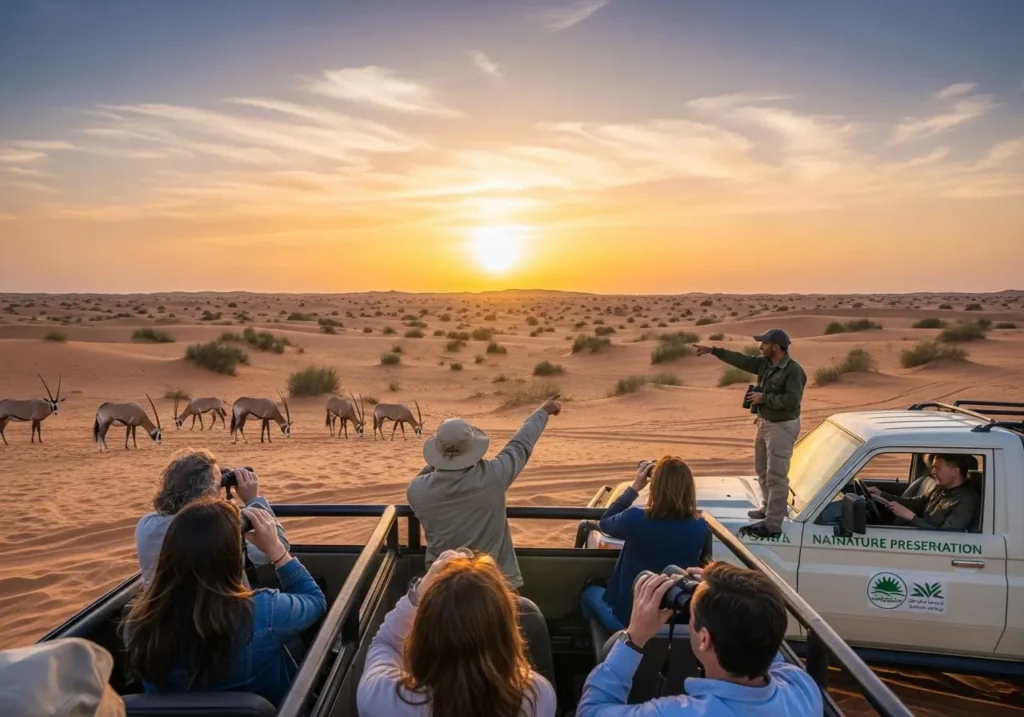
- The Arabian Oryx: A Conservation Triumph: The star of the show is the majestic, white Arabian Oryx. This beautiful antelope with long, straight horns was once extinct in the wild. The DDCR has been at the forefront of one of the world’s most successful reintroduction programs, and today, a healthy and growing population of several hundred Oryx roams freely within the reserve. Seeing a herd of these magnificent animals is a truly moving and unforgettable sight.
- The Gazelles: You are almost guaranteed to see herds of both the graceful Arabian Gazelle and the larger Sand Gazelle.
- The Gordon’s Wildcat: Keep your eyes peeled for this elusive and beautiful native cat, a true desert hunter.
- Other Inhabitants: The reserve is also home to the Arabian Red Fox, a variety of desert reptiles, and over 170 species of birds.
The Ethical Safari Experience: A Journey, Not a Race
The safaris conducted within the DDCR are fundamentally different from standard desert safaris.
- The Heritage Wildlife Drive: The signature experience is a gentle, educational wildlife drive. The tours are often conducted in classic, open-top 1950s Land Rovers, which is a wonderfully nostalgic and photogenic experience. The drive is slow and respectful, with the focus entirely on spotting and observing the animals in their natural habitat. There is no dune bashing allowed within the reserve.
- The Role of the Conservation Guide: Your guide is not just a driver; they are a highly trained conservation expert who will share their deep knowledge of the desert’s flora, fauna, and the reserve’s vital conservation work. This is a key part of the Dubai Nature Preservation Tours experience.
The Sustainable Luxury of Al Maha Resort
Located within the heart of the reserve is the Al Maha, a Luxury Collection Desert Resort & Spa. This is the pinnacle of conservation-led luxury, a world-class eco-resort where a significant portion of the revenue is funneled back into the reserve’s conservation work.
The Sprawling Oasis: The Al Marmoom Desert Conservation Reserve
The Al Marmoom Desert Conservation Reserve is another massive, unfenced nature reserve that offers a different, more recreational style of eco-tourism.
The Scale and Accessibility
This is the largest unfenced nature reserve in the country, and it is very easily accessible from the city, making it a popular destination for residents and tourists alike.
The Al Qudra Lakes: A Man-Made Marvel
At the heart of the reserve lies the magnificent Al Qudra Lakes. This sprawling, man-made desert oasis is a haven for an incredible amount of wildlife.
- A Birder’s Paradise: The lakes have attracted over 170 species of birds, including migratory species. You can see swans, geese, ducks, and even magnificent flamingos wading in the shallow waters.
- The Iconic Love Lake: The most famous part of the complex is the beautiful, intertwined, heart-shaped Love Lake.
Low-Impact Activities for Nature Lovers
The Al Marmoom Reserve is famous for its fantastic, low-impact recreational activities.
- The Al Qudra Cycle Track: A world-class, 86-kilometer paved cycle track that winds its way through the beautiful, golden sand dunes.
- Wildlife Spotting and Photography: The reserve is a fantastic place to self-drive (on the designated tracks) and spot the free-roaming Arabian Oryx and gazelles.
The Urban Sanctuaries: Finding Nature within the City
The Dubai Nature Preservation Tours are not just limited to the deep desert. The city is also home to some incredible and important urban nature reserves.
Ras Al Khor Wildlife Sanctuary: The Flamingo Phenomenon
This is an incredible urban wetland, located at the head of the Dubai Creek.
- The Flamingos: It is most famous for the thousands of magnificent, pink Greater Flamingos that congregate here during the winter months, all against the stunning backdrop of the Downtown Dubai skyline.
- A Ramsar Site: The sanctuary is a protected area of international importance under the Ramsar Convention, recognizing its vital role as a habitat for migratory water birds.
The Green Planet: An Indoor Rainforest
This magnificent, four-story biodome in City Walk is a living, indoor tropical rainforest.
- An Educational Eco-Project: It is a fantastic educational tool that is home to over 3,000 species of plants and animals. It is a key part of Dubai’s urban Dubai Nature Preservation Tours, teaching visitors, and especially children, about the importance of the world’s most fragile ecosystems.
Integrating Your Conservation Tour with a Classic Adventure
A journey on one of the Dubai Nature Preservation Tours is a perfect way to discover a more authentic and meaningful side of the emirate. To complement this serene and enriching escape with the classic, thrilling adventure that the region is famous for, you can arrange a spectacular evening desert safari.
Even if you have enjoyed a gentle wildlife drive in the DDCR, the classic evening safari offers a different kind of experience, with its focus on the high-energy thrill of dune bashing and the vibrant cultural entertainment at a traditional Bedouin-style camp. For a premium adventure, you can book a tour with a company like https://royaldesertadventures.ae/, where you can enjoy an exhilarating 4×4 dune bashing ride as the sun sets over the golden sands.
To craft a complete and seamless itinerary that combines the best of the UAE’s attractions, it is wise to work with experienced local tour operators. Reputable companies such as https://dubaidesertsafarie.com/ offer a comprehensive range of desert adventures. For planning diverse excursions across the Emirates, https://hafiztourism.com/ is another excellent and trusted partner that can help you organize your perfect trip.
Frequently Asked Questions (FAQs)
- What is the main difference between a “nature preservation tour” and a standard desert safari? The main difference is the philosophy and the focus. A standard desert safari is primarily a high-energy entertainment and thrill-based experience with dune bashing. The Dubai Nature Preservation Tours, especially those in the DDCR, are more serene, educational, and eco-conscious experiences that focus on the respectful observation of native wildlife in a protected, pristine environment, with no high-speed dune bashing.
- What is the Dubai Desert Conservation Reserve (DDCR)? The DDCR is the UAE’s first and largest national park, a massive, 225-square-kilometer protected area of the desert. It is dedicated to preserving the natural landscape and protecting the native Arabian wildlife. It is the gold standard of conservation in the region.
- Can I visit the DDCR on my own? No, public access to the Dubai Desert Conservation Reserve is not permitted. The only way to enter and experience the reserve is by booking a guided tour with one of the few, officially approved tour operators who have been granted permission to operate within its boundaries.
- Am I guaranteed to see the Arabian Oryx in the DDCR? While no wildlife sighting can ever be 100% guaranteed as the animals are wild and roam freely across a vast area, the chances of seeing the Arabian Oryx and gazelles on a guided tour within the DDCR are extremely high. The conservation guides are experts at tracking the animals and know their common grazing and resting spots.
- What is a “heritage wildlife drive”? A heritage wildlife drive is a gentle, scenic drive along designated sandy tracks within the reserve. The focus is on slowing down and looking for animals. It is often conducted in classic, open-top 1950s Land Rovers for a more authentic and photogenic experience. It is the signature experience of the Dubai Nature Preservation Tours.
- What is the Al Marmoom Desert Conservation Reserve? Al Marmoom is another massive, unfenced nature reserve that is home to the magnificent Al Qudra Lakes. It is more of a recreational eco-tourism destination, famous for its world-class cycle track and its accessible wildlife spotting and camping opportunities.
- Can I go to Al Qudra Lakes on my own? Yes, unlike the DDCR, the Al Qudra Lakes area within the Al Marmoom Reserve is open to the public, and you can visit with your own car. A 4×4 is recommended if you plan to go off the main, sandy tracks.
- What is the Ras Al Khor Wildlife Sanctuary? This is an incredible urban wetland sanctuary, located right in the heart of Dubai at the head of the Creek. It is a protected Ramsar Site and is most famous for the thousands of magnificent, pink Greater Flamingos that congregate here during the winter months.
- Are the flamingos at Ras Al Khor there all year round? While there is a small, resident population of flamingos that can be seen year-round, the truly spectacular, massive flocks are migratory and are present during the cooler winter months, typically from October to April.
- How does visiting a preservation tour help the environment? The Dubai Nature Preservation Tours operate on a “balanced tourism” model. A portion of the fee you pay to the licensed tour operator goes directly towards funding the reserve’s extensive conservation, research, and reintroduction programs. Your visit is a direct and vital contribution to protecting the UAE’s natural heritage.
- Are these tours suitable for families with children? Yes, the gentle nature of the wildlife drives and the educational focus of these tours make them a fantastic and very safe experience for families with children. It is a wonderful and engaging way for them to learn about the desert’s native animals and the importance of conservation.
- What is the best time of year to go on a nature preservation tour? The best time is during the UAE’s beautiful and mild winter season, which runs from late October to April. The weather during these months is perfect for wildlife viewing, as the animals are generally more active throughout the day.
- What should I wear for a conservation-focused safari? It is best to wear lightweight, comfortable, and modest clothing in neutral, earthy tones to blend in with the environment. It is essential to bring a warm jacket or fleece for the evenings and early mornings, as the desert can get very cold. Comfortable, closed-toe walking shoes are a must.
- What is the most unique animal I can see on these tours? The most unique and symbolic animal is the Arabian Oryx. Seeing this magnificent, graceful, and once-extinct-in-the-wild creature thriving in its natural, protected habitat is a truly moving and unforgettable sight and is the highlight of any of the Dubai Nature Preservation Tours.
- What is the single most important thing to remember when going on a nature preservation tour? The single most important thing to remember is to be a respectful and responsible guest in the animals’ home. This means listening to your conservation guide, not making loud noises, not leaving any litter, and never, ever attempting to feed the wild animals. Your role is to observe and appreciate, not to interfere.
The Unforgettable Wild Heart of Dubai
This guide to Dubai Nature Preservation Tours reveals a side of the emirate that is wild, serene, and deeply inspiring. It is a world that moves beyond the urban spectacle and connects you with the authentic, natural soul of the Arabian desert.
A journey into these magnificent conservation reserves is more than just a tour; it is a chance to be a part of a visionary conservation story. It is an experience that will leave you with a profound sense of awe for the beauty and resilience of the desert and a deep appreciation for Dubai’s unwavering commitment to protecting its precious natural heritage.