Dubai Desert Myths: Uncovering Shocking Safari Misconceptions
The desert safari is one of the world’s most iconic travel experiences. Yet, it is surrounded by persistent myths and misconceptions.
These Dubai Desert Myths can often lead to poor preparation or missed opportunities.
Understanding the difference between fiction and fact is essential for a great trip.
This guide reveals 12 powerful secrets and numerous Desert Safari Misconceptions.
We aim to unveil the Desert Safari Facts and the absolute Desert Safari Reality.
1. The Myth of Danger: Safety Myths Busted
The number one question from tourists is always about safety.
Myth 1: Dune Bashing is Extremely Dangerous
The Myth: The vehicle is out of control and rollovers are common.
The Fact: Dune Bashing is a highly regulated activity in Dubai.
Drivers are licensed, certified experts trained to maintain control at all times.
Vehicles must be equipped with mandatory roll cages and safety harnesses.
This stringent protocol ensures the Truth About Dune Bashing is safe.
Myth 2: You Might Get Lost in the Desert
The Myth: Vehicles drive randomly and often lose their way in the vast, unmarked sands.
The Fact: Safaris operate in convoys, following designated routes.
All vehicles are equipped with GPS tracking and radio communication with a central base.
This organizational structure mitigates all navigational Desert Safari Risks.
2. The Myth of the Wild: Desert Wildlife and Environment
Many Dubai Desert Myths involve the environment and the animals.
Myth 3: Scorpions and Snakes are Everywhere
The Myth: The desert floor is crawling with dangerous creatures ready to attack.
The Fact: While wildlife exists, it is largely nocturnal and avoids areas of human activity.
The camp areas are regularly inspected and kept clean.
Wearing closed shoes and staying within the designated areas provides adequate protection.
This confirms the Desert Safari Reality is secure.
Myth 4: The Sand is Too Hot to Touch at Night
The Myth: The sand retains heat and remains dangerously hot even after sunset.
The Fact: Due to the desert’s low humidity, the sand loses heat quickly once the sun is down.
By the time the camp dinner begins, the sand is typically cool and comfortable.
The exception is the peak afternoon sun, where sand can be scorching.
3. The Myth of Cost: Desert Safari Facts on Pricing
Misconceptions about cost lead many travelers to overpay or underspend unwisely.
Myth 5: A Good Safari Must Cost a Fortune
The Myth: Only the most expensive tours are worth booking.
The Fact: Excellent Desert Safari Facts show that mid-range or Value Desert Safari packages offer high quality.
These tours provide reliable safety and great cultural exposure without the luxury price tag.
Using Safari Price Comparison tools is key to finding value.
Myth 6: The Cheapest Safari is a Good Deal
The Myth: Booking the lowest possible price is a travel hack.
The Fact: The Cheap Desert Safari often compromises vehicle maintenance, driver training, and food hygiene.
This small savings increases the likelihood of a bad experience.
A reliable Best Desert Safari operator should always be prioritized.
4. The Myth of the Camel: Common Safari Myths
The perception of the camel often differs from the Desert Safari Reality.
Myth 7: Camels are Angry and Spitting Animals
The Myth: Camels are ill-tempered, aggressive, and frequently spit at tourists.
The Fact: Camels used for tourist rides are generally docile, trained, and accustomed to human interaction.
They are calm creatures. The spitting is usually a defense mechanism only seen when they feel threatened.
Respectful behavior guarantees a peaceful Camel Ride Photography session.
Myth 8: The Camel Ride is a Long Desert Trek
The Myth: The standard camel ride lasts for hours and takes you deep into the dunes.
The Fact: The standard camel ride included in most packages is a short, 5 to 10-minute photo opportunity near the camp.
Longer treks require booking a specialized package through services like https://royaldesertadventures.ae/.
5. The Myth of Culture: Authentic Desert Experience
Many Dubai Desert Myths downplay the authenticity of the cultural shows.
Myth 9: The Camp Shows are Just Cheesy Tourist Traps
The Myth: The performances lack authenticity and are purely for international audiences.
The Fact: While amplified for entertainment, the Tanoura Dance and the Belly Dance have deep regional and historical roots.
The Bedouin Hospitality ritual, Gahwa, and traditional cuisine are genuine cultural practices.
The experience is a respectful tribute to Arabian Desert Culture.
Myth 10: The BBQ Dinner is Not Authentic
The Myth: The food is bland and only caters to Western palates.
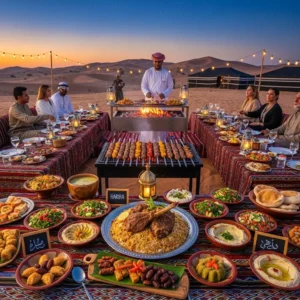
The Fact: The Desert Safari BBQ is a genuine culinary centerpiece.
It includes Traditional Arabian Food staples like hummus, fattoush, and authentic spiced grilled meats.
The food reflects the Bedouin tradition of generosity and feast.
6. The Myth of Weather: Seasonal Desert Risks
Misunderstanding the climate is one of the costliest Desert Safari Misconceptions.
Myth 11: The Desert is Always Hot, Even at Night
The Myth: You do not need a jacket because the desert is perpetually warm.
The Fact: Due to low humidity, the desert loses heat rapidly after sunset.
Temperatures can drop sharply, making the evening uncomfortably cold without layers.
This oversight is a key cause of Desert Safari Blunders.
Myth 12: Rain Never Happens in the Dubai Desert
The Myth: The desert is 100% dry; rain is an impossibility.
The Fact: While rare, rain does occur, primarily in the winter months.
Heavy rain can cause localized flash flooding in dry riverbeds (wadis).
Operators monitor forecasts and have contingency plans for safety.
7. Fact Check: The Truth About Dune Bashing
The Truth About Dune Bashing confirms its safety while acknowledging the thrill.
It is a controlled, high-skill activity requiring specific rules.
Certified Vehicle Safety
Vehicles must meet stringent government safety requirements.
The low tire pressure and safety cages are non-negotiable features.
This robust framework ensures Safety Myths Busted.
Driver Expertise
Drivers are not amateurs; they are professionals certified for the terrain.
They follow established tracks and communicate constantly with the convoy.
Their skill is the ultimate guarantor of the Desert Safari Safety.
8. Fact Check: Dubai Desert Facts on Geology and Size
The sheer scale and composition of the desert are often misunderstood.
Myth 13: The Sand is All the Same Color
The Myth: All desert sand looks alike—pale yellow and fine.
The Fact: Dubai Desert Facts reveal rich geological variation.
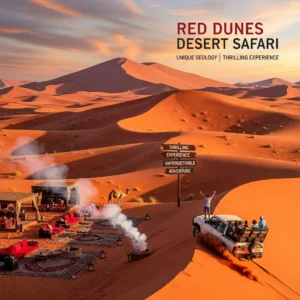
The famous inland dunes of Al Lahbab are a distinctive, deep red color.
This coloration comes from a high concentration of iron oxide.
Myth 14: The Desert is Small and Easy to Navigate
The Myth: The desert is a small sandbox surrounding the city.
The Fact: The Arabian Desert is immense, covering huge swathes of the peninsula.
It is easy to get lost without a professional guide and GPS technology.
The size mandates the strict convoy rules and Desert Emergency Plan.
9. Fact Check: Desert Safari Reality for Tourists
The expectations of the trip should align with the actual service provided.
Myth 15: All-Inclusive Means Everything is Included
The Myth: The package price covers every single expense and optional activity.
The Fact: “All-inclusive” usually covers the core itinerary and standard drinks.
Optional activities (quad biking) and alcoholic beverages are almost always extra charges.
Always clarify inclusions to avoid a nasty surprise.
Fact: Value Varies by Operator
The quality of the Desert Safari Reality varies significantly by operator.
Vetting operators through resources like https://hafiztourism.com/ is essential.
Paying slightly more for a reputable company guarantees better value and safety.
10. Practical Advice: Avoid Desert Safari Misconceptions
Being informed is the best way to ensure an exceptional trip.
Booking Transparency
Insist on a final, all-inclusive price before booking. Avoid hidden taxes and fees.
Book directly or through a verified agent to secure the best Desert Safari Deals.
This simple step ensures you Avoid Desert Safari Misconceptions about cost.
Cultural Awareness
Dress modestly, especially for the camp portion of the evening.
Engage politely with the hosts and performers to enhance the Authentic Desert Experience.
11. Safety Myths Busted: Vehicle Recovery and Protocol
Understanding emergency protocol helps to effectively manage fear.
The system in place guarantees help for Safety Myths Busted.
Stuck Vehicle Protocol
Getting stuck in soft sand is a common inconvenience, not a disaster.
Drivers carry shovels, sand ladders, and recovery straps.
The convoy system ensures a nearby vehicle can always assist with a pull-out.
Recovery is a quick, coordinated effort.
Medical Assistance
Guides are trained in basic first aid.
All serious medical situations are handled by immediately calling for external medical rescue.
The Desert Emergency Plan relies on established communication links.
12. Planning for the Authentic Desert Experience
A successful safari requires embracing both the adventure and the tradition.
The Authentic Desert Experience is a blend of the ancient and the modern.
The desert provides the natural stage; the guides provide the cultural key.
Ensure your package focuses on cultural depth and genuine hospitality.
13. Understanding the Truth About Dune Bashing Intensity
The Truth About Dune Bashing is that the intensity is subjective.
The ride is exhilarating, but the driver controls the degree of aggression.
If you prefer a gentler ride, communicate this to your guide before starting.
The driver will gladly adjust the route and speed for maximum comfort.
This personalization ensures the Desert Safari Safety of every guest.
14. Dubai Desert Facts: The Role of Dune Buggies
The rise of dune buggies has added another layer to the Desert Safari Facts.
Buggy riding is a self-drive activity, separate from the main 4×4 tour.
It offers a high-adrenaline thrill with the added protection of a full roll cage.
This activity is a great choice for those seeking control and intense Off-Road Excitement.
15. The Final Verdict: Desert Safari Reality
The Desert Safari Reality is that this is a meticulously organized, safe, and profoundly rewarding trip.
By debunking these pervasive Dubai Desert Myths, you prepare for a perfect adventure.
Choose quality, travel prepared, and embrace the magic of the Arabian Desert.
16. Luxury Experiences and Desert Safari Misconceptions
Many Desert Safari Misconceptions exist about the rigidity of the luxury market.
Luxury operators, accessible through https://royaldesertadventures.ae/, offer extreme flexibility.
They can tailor the itinerary, dining, and activities to your exact preferences.
This level of customization disproves the myth that all safaris are rushed and impersonal.
17. Practical Tips for Avoiding Safari Price Comparison Mistakes
The best Safari Price Comparison strategy is to compare value packages.
Avoid extremes: the very cheapest are risky, and the most expensive may include unnecessary markups.
The sweet spot is finding a quality, standard package that guarantees all core inclusions.
18. Desert Emergency Plan: Communication Protocols
The Desert Emergency Plan relies heavily on communication protocols.
All vehicles are linked to a central base. This chain ensures rapid coordination.
The guide is the crucial communication link between the remote location and city services.
This robust system addresses and minimizes all inherent Desert Safari Risks.
Frequently Asked Questions (FAQs) – Long Answers
1. What is the fundamental Truth About Dune Bashing safety, and what mandatory vehicle features ensure passenger security?
The fundamental Truth About Dune Bashing is that it is a safe, controlled adventure due to strict regulation and vehicle engineering. Mandatory Features: Vehicles (usually 4×4 Land Cruisers) must have internal roll cages to protect the passenger compartment in case of a rollover and certified seatbelts for every passenger. Safety: Drivers must be specifically licensed for off-road driving. The passenger’s role is to comply with the simple Passenger Safety Protocol of remaining seated and buckled up throughout the ride.
2. How does the Desert Emergency Plan address a medical emergency, and what immediate resources are available to the guide?
The Desert Emergency Plan ensures a fast response to a medical emergency by prioritizing communication and rapid evacuation. Resources: The guide is equipped with a radio/satellite phone and a fully stocked Safari First Aid kit. Protocol: The guide immediately administers basic first aid and contacts the base camp, providing the GPS location. The base camp then coordinates with specialized desert rescue services or air ambulance services for rapid evacuation to the nearest city hospital, minimizing the danger posed by Desert Safari Risks.
3. Is the standard camel ride a major time commitment, and what Desert Safari Misconceptions exist about its duration?
The standard camel ride is generally not a major time commitment and is often subject to Desert Safari Misconceptions about its duration. The Myth: That the ride is a long trek across the dunes. The Reality: The ride included in most basic packages is a very short 5 to 10-minute photo opportunity around the perimeter of the camp. Longer treks (30–60 minutes) are available but require booking a specific, dedicated package, usually at a higher Desert Safari Price.
4. How can tourists differentiate between an Authentic Desert Experience and a simple tourist-trap camp based on the cultural activities offered?
Tourists can differentiate by observing the cultural activities. An Authentic Desert Experience focuses on substance and quality: 1. Bedouin Hospitality (genuine Gahwa and storytelling). 2. Traditional Shows (skilled performers of Tanoura, not amateurs). A simple tourist trap focuses on volume and spectacle (loud music, massive crowds, and basic, unhygienic food preparation). Vetting the operator through independent Safari Booking Secrets is the best way to avoid a superficial experience.
5. What are the common Safety Myths Busted regarding the extreme desert heat, and what essential gear should tourists never forget?
The common Safety Myths Busted related to heat is the idea that the heat is only dangerous in the middle of the day. The truth is that dehydration is a constant risk. Essential Gear: Tourists must never forget high-SPF sunscreen, a wide-brimmed hat, and UV-protective sunglasses. More importantly, they must carry a substantial water bottle and actively drink water throughout the afternoon to mitigate the severe Desert Safari Risks associated with fluid loss.
6. How does the Driver Training Standards requirement ensure better vehicle recovery and a faster resolution if the 4×4 gets stuck in soft sand?
The Driver Training Standards ensure better vehicle recovery because drivers are certified not only to drive but also to manage vehicle failure. They are trained in sand dynamics, knowing how to quickly assess why the vehicle is stuck. They carry essential tools (sand ladders, shovels) and know the proper technique for recovery without damaging the vehicle. This expertise means the resolution is fast, coordinated via the radio, and minimizes delays for the entire convoy, ensuring compliance with the Desert Emergency Plan.
7. What are the key indicators on external review platforms (e.g., https://dubaidesertsafarie.com/) that suggest an operator has poor Desert Safari Safety standards?
Key indicators on external review platforms that suggest an operator has poor Desert Safari Safety standards include frequent complaints about the age or cleanliness of the vehicle, consistent reports of reckless driving, and negative feedback on food poisoning or poor hygiene at the camp. Any review mentioning a driver using a personal cell phone during the dune bashing, or not enforcing seatbelts, is a major red flag indicating a severe violation of Passenger Safety Protocol.
8. What are the most common Desert Safari Misconceptions regarding the “all-inclusive” price structure, and what is usually excluded?
The most common Desert Safari Misconceptions regarding the “all-inclusive” price structure is the belief that it covers every single potential expense. Fact: “All-inclusive” generally covers the core activities, standard buffet, and soft drinks/water. Exclusions: Items typically excluded are: Quad Biking/Dune Buggy Rides (optional high-cost add-ons), Alcoholic Beverages (sold separately at the bar), and sometimes tipping/gratuities. Tourists should always clarify the Desert Safari Price on these specific items.
9. How does the concept of Safari First Aid extend beyond basic bandages to address specific environmental injuries encountered in the desert?
The concept of Safari First Aid extends beyond basic bandages to address specific environmental injuries encountered in the desert. This includes having rehydration salts and thermal blankets (for heatstroke/shock), splints for potential bone injuries from a fall, and antiseptic washes specifically for sand-contaminated wounds. Guides should be trained to manage heat-related illnesses immediately. This specialized Desert Emergency Plan ensures the initial response is tailored to the unique conditions of the desert.
10. What role does the Passenger Safety Protocol play in helping to avoid motion sickness during the high-impact Desert Safari Ride?
The Passenger Safety Protocol plays a crucial role in avoiding motion sickness during the high-impact Desert Safari Ride by directing behavior. Passengers are advised to look out the front window toward the horizon, which helps stabilize the inner ear and reduces the confusing visual stimuli. They are also instructed to remain still and avoid excessive head movement. For those prone to sickness, sitting in the front passenger seat (if available) is a key protocol request that aids stability.
11. What is the distinction between a true Desert Safari Ride and a simple “desert dinner” experience often sold by low-cost vendors?
The distinction between a true Desert Safari Ride and a simple “desert dinner” is the presence of Dune Bashing. A true Desert Safari Ride involves a lengthy, high-impact, off-road segment where the vehicle actively traverses large dunes. A simple “desert dinner” experience, often sold cheaply, involves a smooth transfer on paved roads or flat tracks directly to the camp, completely skipping the high-adrenaline dune bashing. Tourists must verify the inclusion of “dune bashing” to ensure they receive the authentic Full Safari Experience.
12. How does the Vehicle Safety Dubai standard protect passengers from the fine desert sand during the high-speed Desert Safari Ride?
The Vehicle Safety Dubai standard protects passengers from the fine desert sand during the high-speed Desert Safari Ride by mandating that windows remain fully closed and that all vehicle seals (doors and windows) are maintained in excellent condition. This prevents the abrasive, fine sand particles from entering the cabin during the intense driving, ensuring the safety of the respiratory system and eyes. Passengers must comply with the rule to keep windows up to maintain this protective barrier.
13. What is the significance of the Safari First Aid training for guides in dealing with sand-related injuries, which are common in the desert?
The significance of Safari First Aid training for guides in dealing with sand-related injuries is critical because sand is abrasive and easily contaminates wounds. Guides are trained to clean and treat abrasions carefully, knowing that sand can cause deep irritation or infection if not removed properly. They know how to handle eye irritation caused by windblown sand and apply appropriate dressings to prevent contamination, ensuring that the Desert Safari Safety of the wound site is prioritized.
14. How can a tourist verify the Driver Training Standards and experience of their guide before the Desert Safari Ride begins?
A tourist can verify the Driver Training Standards and experience of their guide before the Desert Safari Ride begins by politely engaging them in conversation. Ask the guide how long they have been driving in the desert and if they hold the official tourism certification for off-road driving. A professional, highly-trained driver will be proud to share their experience and knowledge of Desert Safari Safety, providing confidence in the Secure Safari Experience.
15. What are the key Desert Safari Risks associated with independent exploration (walking alone) around the dunes, and why should tourists stick with the group?
The key Desert Safari Risks associated with independent exploration (walking alone) around the dunes are disorientation and danger from unexpected drops. The seemingly endless, shifting terrain offers no landmarks, making it incredibly easy to get lost, especially as evening falls. Furthermore, the wind creates sharp drop-offs (slip faces) that are invisible from the top and can lead to severe injury. Tourists must stick with the group and only walk on the dunes under the direct guidance of the safari marshal, adhering to strict Desert Safari Safety rules.