Dubai Cultural Tour: 10 Authentic Experiences You Won’t Find in a Guidebook
A Dubai cultural tour is an invitation to look beyond the shimmering glass and steel of the skyline and discover the true, beating heart of the city. While Dubai is globally celebrated for its futuristic ambition, its soul is deeply rooted in a rich tapestry of Arabian heritage, Bedouin traditions, and Islamic customs. To truly understand Dubai is to explore this vibrant cultural landscape.
This journey goes beyond simple sightseeing. It’s about engaging with the stories, flavors, and traditions that have shaped this incredible emirate. The key to unlocking this deeper, more authentic experience is a local guide. They transform a simple visit into a meaningful connection, revealing a side of the city that many tourists miss. This guide will explore the essential elements of a genuine Dubai cultural tour, highlighting the experiences that reveal the city’s authentic character.
Beyond Sightseeing: Why a Local Guide is Your Key to Authentic Dubai
Choosing a tour with a local guide is the single most important decision you can make when seeking an authentic experience. They are the bridge between the visitor and the destination, offering insights that cannot be found in any book or online search.
From Tourist to Traveler: The Local Perspective
A local guide helps you transition from a passive tourist to an engaged traveler. They provide a perspective that is personal and deeply informed by lived experience. They know the city’s rhythms, its hidden corners, and the stories that animate its streets. This is the core of a meaningful Dubai cultural tour.
Unlocking Stories and Hidden Meanings
Every landmark, alleyway, and dish in Dubai has a story. A local guide is a master storyteller, capable of explaining the significance of the wind towers in Al Fahidi, the symbolism behind the Jumeirah Mosque’s architecture, or the historical importance of the bustling Creek.
Navigating Cultural Nuances and Etiquette
Understanding local customs and etiquette is crucial for a respectful and enriching visit. A local guide can offer gentle guidance on everything from the appropriate dress code for a mosque visit to the polite way to accept Arabic coffee and dates. This insight ensures your interactions are positive and culturally sensitive.
Access to Hidden Gems and Local Favorites
The best experiences are often found off the beaten path. A local guide can lead you to a family-run restaurant serving the best machboos, a small art gallery in Al Quoz, or a quiet courtyard in the souks. This insider access is what makes a Dubai cultural tour truly unforgettable.
The Heart of Your Dubai Cultural Tour: Old Dubai and Al Fahidi
The story of Dubai begins here, in the historic districts nestled along the banks of the Creek. A deep dive into this area is the foundation of any authentic Dubai cultural tour.
Al Fahidi Historical Neighbourhood: A Walk Through Time
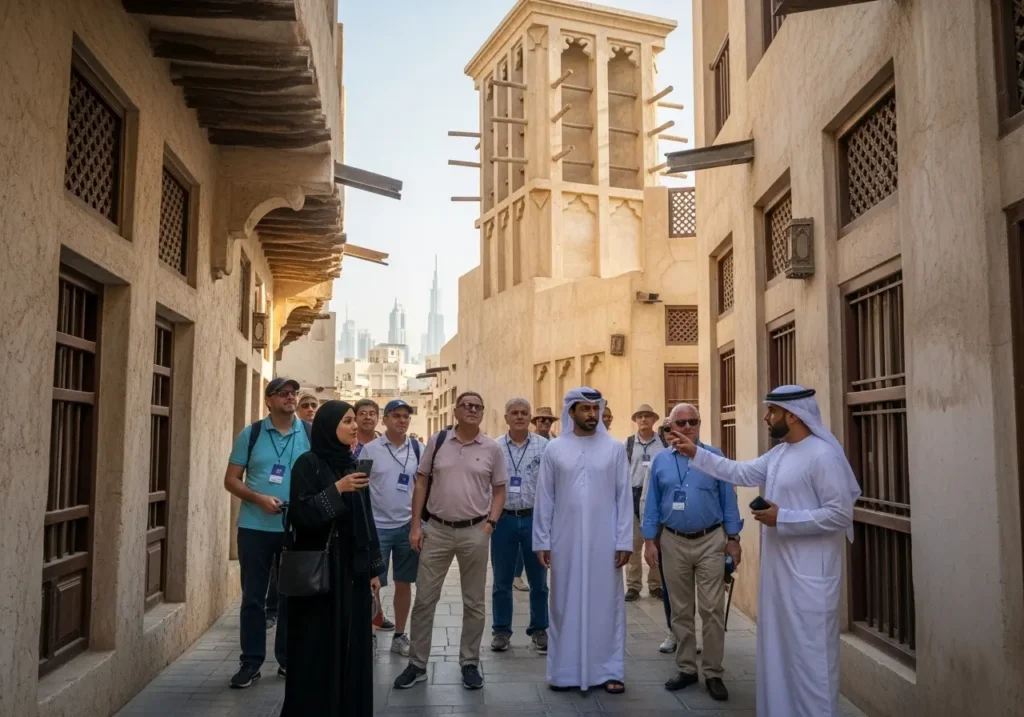
Stepping into the Al Fahidi Historical Neighbourhood (formerly Bastakiya) is like stepping back in time. The narrow, shaded alleyways, known as sikkas, are designed to create a cooling breeze, offering respite from the desert sun.
The area is defined by its traditional courtyard houses, built from coral, gypsum, and palm wood. Look up to see the iconic barjeel, or wind towers, an ingenious early form of air conditioning that funneled air down into the homes. A local guide can explain the architectural genius behind these structures.
The Sheikh Mohammed Centre for Cultural Understanding (SMCCU)
Located in a beautifully restored wind tower house in Al Fahidi, the SMCCU is an essential stop on any Dubai cultural tour. Operating under the motto “Open Doors, Open Minds,” this non-profit organization offers a unique opportunity for cultural exchange.
Here, you can participate in a traditional Emirati breakfast, lunch, or dinner. During these sessions, you are seated on Bedouin-style carpets and cushions and encouraged to ask your Emirati hosts any questions you have about their culture, religion, and daily life. It is an invaluable experience for breaking down stereotypes and fostering genuine understanding.
Crossing the Creek: The Enduring Legacy of the Abra
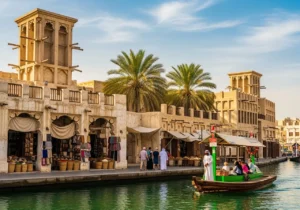
The Dubai Creek is the city’s historical artery, and the most authentic way to cross it is on an abra, a traditional wooden water taxi. This short, one-dirham journey is a quintessential Dubai experience.
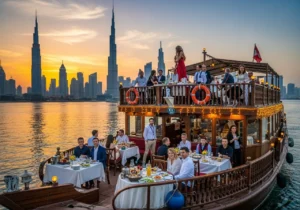
As you glide across the water, you’ll see the contrast between the historic dhows being loaded with goods and the modern city skyline in the distance. A local guide on your Dubai cultural tour can point out the key landmarks along the waterway and explain its role in the city’s rise as a trading hub.
The Vibrant Souks: Commerce as Culture
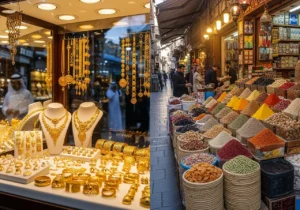
The Gold, Spice, and Textile Souks are more than just markets; they are a vibrant cultural experience. A local guide can help you navigate the bustling alleyways and engage with the vendors.
In the Spice Souk, they can identify exotic ingredients and explain their use in local cuisine. In the Gold Souk, they can explain the pricing system and point out unique examples of Arabian craftsmanship. This guided interaction makes the souks a highlight of any Dubai cultural tour.
Uncovering History at Al Shindagha and the Museums
The Al Shindagha district, located at the mouth of the Creek, is another key heritage area. It is home to the Al Shindagha Museum, which brilliantly tells the “Story of the Creek.” Nearby is the Etihad Museum, which chronicles the founding of the UAE. A Dubai cultural tour often includes these sites to provide a complete historical narrative.
Savoring the Emirates: A Culinary Exploration
Food is a universal language, and exploring Emirati cuisine is a delicious and essential part of any Dubai cultural tour. The experience is as much about hospitality as it is about the flavors themselves.
More Than a Meal: The Importance of Emirati Hospitality
Emirati culture places a profound emphasis on hospitality. The offering of food and drink is a gesture of welcome and generosity. A local guide can help facilitate these experiences, perhaps by taking you to a traditional restaurant where you can see this hospitality in action.
Must-Try Emirati Dishes
A culinary Dubai cultural tour should introduce you to the staples of the local diet. Be sure to try:
- Machboos: A flavourful rice dish cooked with meat (usually chicken, lamb, or fish) and a blend of aromatic spices.
- Luqaimat: Sweet, deep-fried dumplings, drizzled with date syrup. They are crispy on the outside and soft on the inside.
- Balaleet: A unique Emirati breakfast dish of sweetened vermicelli noodles topped with a thin omelet.
- Harees: A savory porridge-like dish of wheat and meat, slow-cooked for hours until it reaches a smooth consistency.
The Ritual of Arabic Coffee (Gahwa) and Dates
The serving of Arabic coffee, or gahwa, is a central part of Emirati hospitality and a key cultural ritual. The coffee is lightly roasted, infused with cardamom and saffron, and served in small, handleless cups called finjans. It is always served alongside fresh dates. A local guide can explain the etiquette associated with accepting and drinking gahwa.
Food Tours with Local Guides: From Street Food to Souk Tastings
One of the best ways to explore the culinary scene is on a dedicated food tour. A local guide can lead you through the vibrant streets of Deira or Bur Dubai, stopping at hidden gems to sample everything from savory shawarmas to sweet knafeh. This is a highly recommended component of an immersive Dubai cultural tour.
Exploring Contemporary Soul on Your Dubai Cultural Tour
A Dubai cultural tour is not just about the past. The city has a thriving contemporary arts and culture scene that reflects its modern, cosmopolitan identity.
The Majestic Jumeirah Mosque: A Lesson in Islamic Architecture and Faith
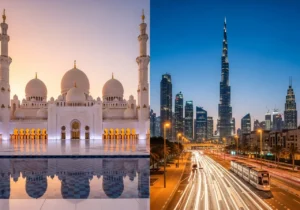
The Jumeirah Mosque is one of the most beautiful in Dubai and a landmark of Islamic architecture. Crucially, it is one of the few mosques in the city that welcomes non-Muslim visitors.
The mosque runs a program called “Open Doors, Open Minds,” which includes guided tours that explain the architecture, rituals, and core tenets of the Islamic faith. It’s an enlightening experience that fosters interfaith understanding and is an important stop on a Dubai cultural tour.
Alserkal Avenue: The Hub of Contemporary Art
Located in the industrial district of Al Quoz, Alserkal Avenue has been transformed from a series of warehouses into the epicenter of Dubai’s contemporary art scene.
This vibrant creative district is home to numerous art galleries, design studios, community spaces, and concept cafes. A local guide with an interest in the arts can introduce you to emerging artists and explain the themes and trends shaping the regional art world.
The Etihad Museum: The Story of a Nation
Situated next to the historic Union House, where the treaty establishing the UAE was signed in 1971, the Etihad Museum is dedicated to telling the story of the nation’s founding. Through interactive exhibits and historical artifacts, it offers a fascinating look at the country’s journey. This adds a modern historical layer to your Dubai cultural tour.
How to Find the Right Dubai Cultural Tour for You
With a growing interest in authentic experiences, many operators now offer specialized cultural tours. Here’s how to choose the best one.
Types of Cultural Tours: From Walking Tours to Immersive Workshops
A walking tour of Old Dubai is the classic Dubai cultural tour. However, you can also find more specialized options, like culinary tours, art tours of Alserkal Avenue, or even workshops where you can try your hand at Arabic calligraphy or perfume making.
Private vs. Small Group Tours: The Pros and Cons for a Cultural Deep Dive
For a deep cultural dive, a small-group or private tour is highly recommended. A small group allows for more interaction with the guide. A private Dubai cultural tour offers the ultimate in flexibility, allowing you to tailor the itinerary completely to your interests and spend as much time as you like at each stop. For a variety of specialized tour packages, travelers can explore options from reputable companies like those at https://www.hafiztourism.com/.
Cultural Tour Type Comparison
The Enduring Spirit of the Desert
No Dubai cultural tour would be complete without acknowledging the desert, the cradle of Emirati culture. The spirit of the Bedouin, the nomadic people of the desert, is a foundational element of the nation’s identity.
Beyond Dune Bashing: The Cultural Significance of the Desert
While modern desert safaris often focus on thrilling activities, a cultural experience will focus on heritage. It’s about understanding how the Bedouin survived and thrived in this harsh environment, and learning about their values of hospitality, resilience, and community.
Falconry, Camels, and Bedouin Hospitality
A heritage desert experience will introduce you to important cultural elements like falconry, which has been practiced for centuries for hunting. You will learn about the central role of the camel, not just as a mode of transport but as a source of food and material. The experience often culminates in a traditional meal in a Bedouin-style camp under the stars. Many authentic cultural experiences are found in these heritage desert camps. For high-quality desert safari and cultural experiences, you can visit https://www.royaldesertadventures.ae/. To see how desert experiences can be combined with city tours, travelers can look at comprehensive packages on https://www.dubaidesertsafarie.com/.
Discover the True Soul of Dubai
A Dubai cultural tour offers a journey that is infinitely more rewarding than just visiting the famous sights. It is an exploration of identity, a connection to a rich heritage, and an appreciation for the human stories that have built this extraordinary city.
By choosing to explore with a local guide, you open the door to a more authentic, nuanced, and memorable Dubai. You will leave not just with photos of incredible buildings, but with a genuine understanding of the city’s soul and the warm spirit of its people.
Frequently Asked Questions (FAQs)
1. What is the main difference between a standard city tour and a Dubai cultural tour?
A standard city tour typically focuses on modern landmarks and photo opportunities, showcasing Dubai’s impressive architecture and luxurious attractions. A Dubai cultural tour, on the other hand, prioritizes depth and authenticity. It delves into the city’s history, heritage, and traditions, with a focus on immersive experiences like visiting the Al Fahidi Historical Neighbourhood, participating in a cultural meal, and exploring the souks with a focus on their history and significance, often led by a local guide who shares personal stories and insights.
2. What should I wear for a Dubai cultural tour especially for mosque visits?
For a Dubai cultural tour, it is recommended to wear modest, respectful clothing. Lightweight, loose-fitting attire that covers your shoulders and knees is ideal for both men and women. For mosque visits, such as to the Jumeirah Mosque, the dress code is stricter. Women will be required to cover their hair with a headscarf (shayla) and ensure their arms and legs are fully covered. Men should wear long trousers. Comfortable walking shoes are essential for any tour.
3. Is a cultural tour suitable for families with young children?
Yes, a Dubai cultural tour can be a wonderful and educational experience for families. Many elements are highly engaging for children, such as the abra ride across the Creek, the vibrant colors and smells of the Spice Souk, and the interactive exhibits at museums. A private cultural tour is an excellent option for families, as the guide can tailor the pace and content to keep the children interested and engaged throughout the day.
4. What is the Sheikh Mohammed Centre for Cultural Understanding (SMCCU)?
The SMCCU is a non-profit organization located in the Al Fahidi Historical Neighbourhood. Its mission is to foster understanding and break down cultural barriers between visitors and Emirati culture. They host heritage tours and cultural meals where guests can enjoy traditional food while engaging in an open Q&A session with an Emirati host. It is considered one of the most authentic and valuable stops on any Dubai cultural tour.
5. Are food and drinks included in a typical Dubai cultural tour?
This varies depending on the tour package. Some cultural tours, especially those focused on cuisine, will include various food tastings, snacks, and drinks like Arabic coffee. Other general heritage tours may include bottled water but not a full meal. Packages that include a cultural lunch at the SMCCU are also available. It is important to read the tour’s list of inclusions carefully when booking to know what to expect.
6. What is the best time of year to take a walking cultural tour in Old Dubai?
The best time of year for a walking-focused Dubai cultural tour is during the winter months, from November to March. The weather during this period is pleasant, with mild temperatures and plenty of sunshine, making it ideal for exploring the outdoor areas of Old Dubai on foot. The summer months (June to August) are extremely hot and humid, which can make extensive walking uncomfortable.
7. Do I need to speak Arabic to interact with locals?
No, you do not need to speak Arabic. English is very widely spoken in Dubai, especially in all tourist areas and among the younger generation. However, learning a few basic Arabic phrases, such as “Shukran” (Thank you) and “Marhaba” (Hello), is a wonderful gesture of respect and is always appreciated by locals. A local guide on your Dubai cultural tour can help you with pronunciation and other useful phrases.
8. What is the etiquette for visiting a mosque in Dubai?
When visiting a mosque like the Jumeirah Mosque, respectful behavior is key. In addition to the modest dress code, visitors should remove their shoes before entering the prayer hall. It’s important to speak in a quiet, hushed tone and avoid running or loud conversations. During prayer times, be mindful not to walk in front of people who are praying. Following these simple rules ensures a respectful visit.
9. Are photography and videography allowed at all cultural sites?
For the most part, photography for personal use is allowed at cultural sites. However, it is considered impolite to take pictures of people, especially local women, without asking for their permission first. Some museums or galleries may have restrictions on flash photography. A good guide on your Dubai cultural tour will advise you on the specific etiquette for each location.
10. Can a Dubai cultural tour be customized to my specific interests like art or food?
Yes, absolutely. One of the greatest advantages of booking a private Dubai cultural tour is the ability to customize it. Whether your passion is contemporary art, culinary history, architecture, or photography, you can work with a tour operator to create a bespoke itinerary that focuses on your specific interests, ensuring a deeply personal and rewarding experience.
11. How does a local guide enhance the experience in the souks?
In the souks, a local guide is invaluable. They can help you navigate the bustling, maze-like alleyways, distinguish high-quality goods from tourist trinkets, and share stories about the history of trade in the area. They can also provide a comfortable introduction to the art of friendly bargaining, giving you the confidence to interact with vendors and get a fair price for your souvenirs.
12. What is Emirati hospitality like and how can I experience it?
Emirati hospitality is warm, generous, and deeply ingrained in the culture. It is centered around welcoming guests with sincerity. The most authentic way to experience it is through a cultural meal, either at the SMCCU or on a tour that includes a visit to a traditional restaurant. The ritual of being served Arabic coffee and dates is the quintessential symbol of this welcoming spirit.
13. Is it better to book a private or a small group cultural tour?
The choice depends on your preference and budget. A small-group Dubai cultural tour offers a great balance of affordability and an intimate experience, allowing for good interaction with the guide. A private tour, while more expensive, provides the ultimate in personalization and flexibility. For a deep cultural dive, a smaller setting (either private or small group) is almost always better than a large coach tour.
14. What is Alserkal Avenue and why is it part of a cultural tour?
Alserkal Avenue is a vibrant arts district located in the Al Quoz industrial area. It features a collection of contemporary art galleries, performance spaces, design studios, and artisanal cafes housed in converted warehouses. It is an important stop on a modern Dubai cultural tour because it showcases the city’s thriving, cosmopolitan creative scene and provides a look into the future of culture in the region.
15. How does a desert safari connect to the cultural heritage of Dubai?
A heritage-focused desert safari connects directly to the Bedouin roots of Emirati culture. Before the discovery of oil, life revolved around the desert. A cultural desert experience allows you to understand this history. It involves learning about the importance of camels, the ancient sport of falconry, and the traditions of Bedouin hospitality in a desert camp, offering a glimpse into the lifestyle that laid the foundation for modern Dubai.