Desert Safari Seasons 7 Secrets to Avoiding Crowds and Finding Peace
Dubai is a city of contrasts.
It has loud malls and quiet corners.
The desert is the same.
Sometimes it is packed with people.
Other times it is completely silent.
Choosing the right time is crucial.
Your experience depends on it.
Do you want a party vibe?
Or do you want solitude?
Understanding the Desert Safari Seasons is the key.
Many tourists make mistakes.
They book in December expecting silence.
They find hundreds of cars instead.
Or they book in June.
They expect a cool breeze.
They find extreme heat.
This guide is your bible.
We will compare crowded and quiet times.
We will analyze the pros and cons.
We will help you decide.
We want you to have the best trip.
Whether you love crowds or hate them.
This post is over 4500 words long.
It covers every single detail.
So sit back.
Let’s explore the dunes.
The Reality of Peak Season
Peak season is famous for a reason.
It happens during winter.
From November to March.
The weather is perfect.
It is cool and pleasant.
Everyone wants to be outside.
Tourists flock to Dubai.
Locals head to the desert.
This creates a buzz.
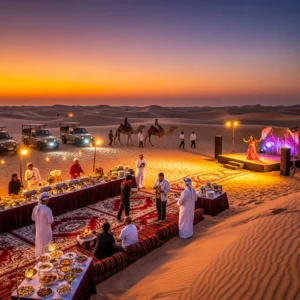
The camps are full of life.
The energy is high.
But it also means crowds.
Lots of them.
You will see lines at the buffet.
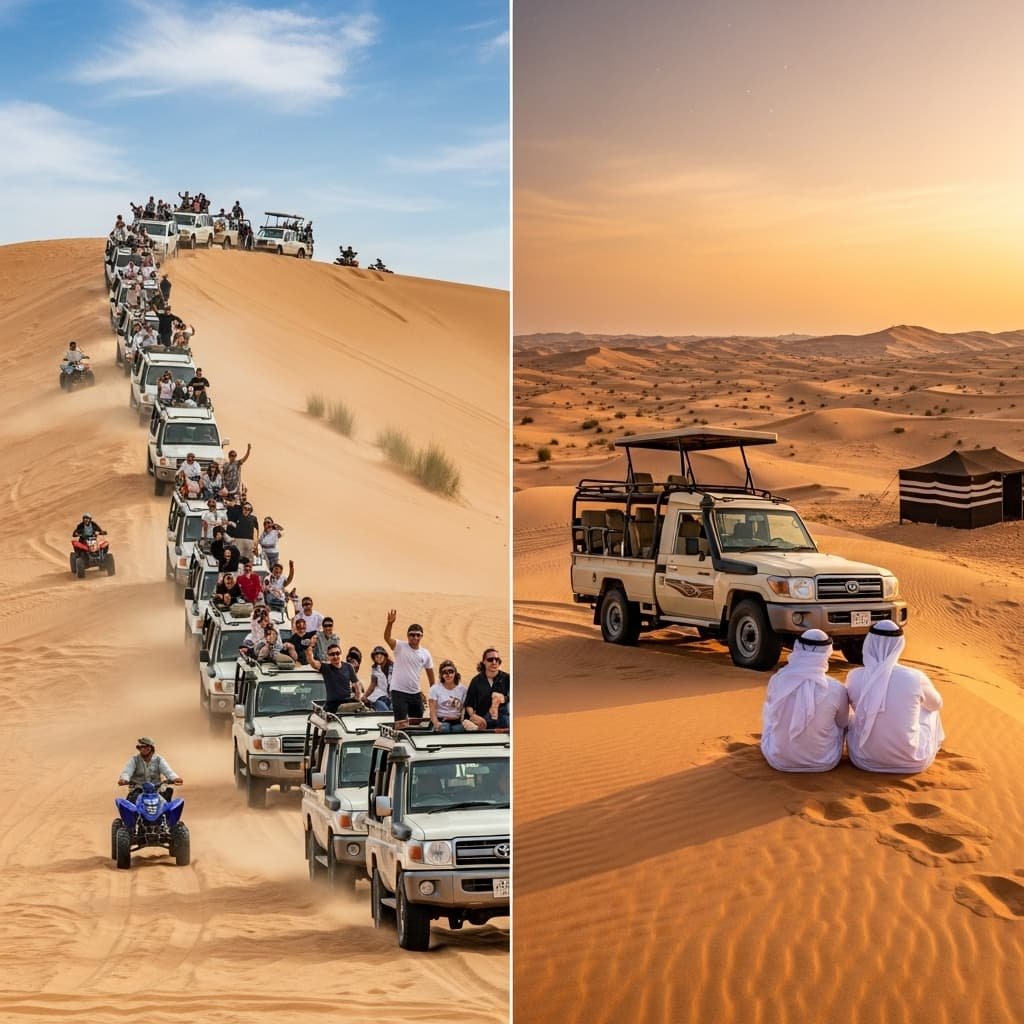
You will see convoys of 4x4s.
It feels like a festival.
If you like energy, this is great.
You meet people from all over.
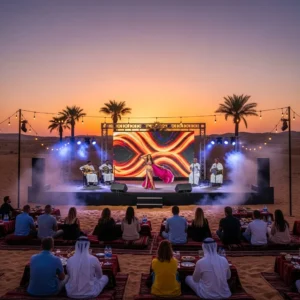
The shows have big audiences.
The applause is loud.
But if you want peace, be careful.
This might not be for you.
You need to know what you are signing up for.
Desert Safari Seasons dictate the atmosphere.
The Silence of the Low Season
Now let’s look at the low season.
This is mostly summer.
From June to September.
It is hot.
Very hot.
Most tourists stay away.
They prefer the malls.
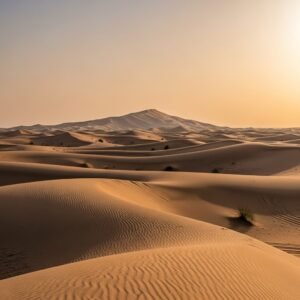
This leaves the desert empty.
It is quiet.
There are no lines.
You get VIP treatment.
The staff has more time for you.
You can take photos without people.
Your view is unobstructed.
But you must handle the heat.
The activities are shorter.
You spend more time in AC.
But the silence is real.
You can hear the wind.
You can hear the sand shift.
It is a meditative experience.
This is the hidden gem of Desert Safari Seasons.
Month by Month Breakdown: January
January is the peak of the peak.
The weather is cold.
You need a jacket.
The crowds are massive.
It is the Dubai Shopping Festival.
Tourists are everywhere.
The desert is busy from sunrise to sunset.
Prices are high.
Hotels are full.
If you go now, book early.
Use https://htdesertsafari.com/.
Secure your spot weeks ahead.
Expect traffic on the way.
Expect a lively camp.
It is fun but chaotic.
Month by Month Breakdown: February
February is similar to January.
The weather is still amazing.
It might rain a little.
Rain makes the sand firm.
Driving becomes exciting.
Crowds are still huge.
It is Valentine’s month.
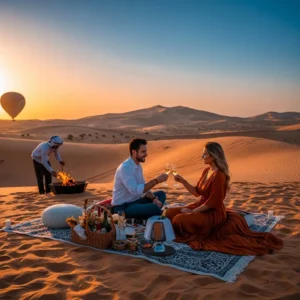
Couples fill the private dinners.
Chinese New Year often falls here.
This brings more groups.
The Desert Safari Seasons remain busy.
You won’t find much silence.
Unless you go deep.
Very deep into the dunes.
Month by Month Breakdown: March
March is a transition month.
It starts cool.
It ends warm.
The winter crowds start to leave.
But spring break begins.
Families arrive.
It is still busy.
But slightly less than December.
The days get longer.
You have more sunlight.
This is good for photos.
The water in the pools warms up.
You can swim in the morning.
And safari in the evening.
It is a balanced month.
Month by Month Breakdown: April
April is the shoulder season.
The heat knocks on the door.
Tourists start to thin out.
Prices begin to drop.
You can find deals.
The camps are less packed.
You can breathe easier.
The evenings are balmy.
Not cold, not hot.
Perfect for t-shirts.
If you want a mix.
This is a good time.
Moderate crowds.
Moderate prices.
One of the underrated Desert Safari Seasons.
Month by Month Breakdown: May
May is the start of summer.
It gets hot.
The crowds disappear.
You see empty tables.
The drivers are relaxed.
You can haggle for prices.
The dunes are untouched.
No tire tracks from yesterday.
Because the wind wiped them.
And no new cars came.
It feels exclusive.
You feel like an explorer.
Just drink lots of water.
Month by Month Breakdown: June
June is officially hot.
It is low season.
Only brave travelers come.
Or those on a budget.
Prices are rock bottom.
You save a lot of money.
The desert is silent.
You might be the only car.
The sunset is hazy.
But dramatic.
The humidity rises.
Prepare to sweat.
But enjoy the privacy.
Month by Month Breakdown: July
July is the peak of summer.
It is extremely hot.
Outdoor time is limited.
Most tours are evening only.
Morning is too dangerous.
But the camps have AC.
You stay cool inside.
You watch the show in comfort.
There are zero crowds.
You are the VIP.
If you hate people.
And love heat.
This is your month.
Month by Month Breakdown: August
August is like July.
Hot and humid.
But sometimes windy.
Sandstorms can happen.
It adds to the adventure.
The sky is white with heat.
But the nights are warm.
You can swim at night.
In your hotel pool.
After the safari.
It is the cheapest month.
Check https://dubaidesertsafarie.com/ for deals.
They offer summer discounts.
Month by Month Breakdown: September
September is the hope.
The heat starts to break.
Late September is nice.
Locals return from holidays.
The city wakes up.
The desert starts to cool.
Tourists trickle back.
It is still quiet.
But not empty.
It is a good compromise.
You beat the winter rush.
But avoid the July oven.
Month by Month Breakdown: October
October is the start of the season.
The weather is great.
Crowds are growing.
Prices go up slightly.
The vibe returns.
Animals come out.
Gazelles are active.
You see them on the drive.
It is a fantastic month.
Many say it is the best.
Not too cold yet.
Not too hot anymore.
The perfect balance of Desert Safari Seasons.
Month by Month Breakdown: November
November is busy.
The season is in full swing.
Europeans arrive.
Escaping their winter.
The desert is full again.
Camps are lively.
Shows are full.
You need to book ahead.
The energy is infectious.
Everyone is happy.
The weather is flawless.
Month by Month Breakdown: December
December is the finale.
Christmas and New Year.
The most crowded time.
Prices are highest.
Traffic is heavy.
But the festive spirit is unmatched.
Lights, decorations, music.
It is a party in the dunes.
If you love celebrations.
Come in December.
Just don’t expect silence.
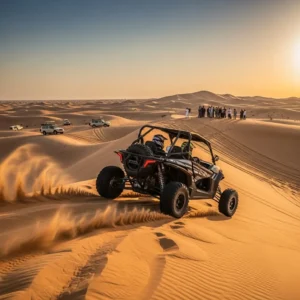
Impact on Dune Bashing
How do crowds affect the drive?
In quiet seasons.
The driver has freedom.
He can pick any line.
He can drive fast.
There are no other cars to block him.
He can stop anywhere.
For photos.
In crowded Desert Safari Seasons.
He must follow a convoy.
He has to be careful.
He cannot stop abruptly.
There is a car behind him.
The drive is safer.
But maybe less wild.
The tracks are already made.
The sand is churned up.
It is a different feel.
Impact on Camp Activities
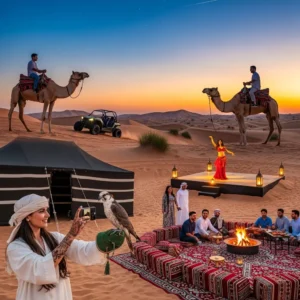
In a crowded camp.
You wait for camels.
Maybe 20 minutes.
You wait for henna.
Maybe 30 minutes.
You wait for the buffet.
It can be frustrating.
In a quiet camp.
You walk up to the camel.
You ride immediately.
You get henna done twice.
You eat first.
You get the best seats.
Front row for the show.
This is the luxury of quiet Desert Safari Seasons.
It saves you time.
It reduces stress.
Comparing the Costs
Supply and demand.
It rules Dubai.
In winter, prices are high.
Hotels charge double.
Safaris charge full price.
There are no discounts.
In summer, prices crash.
You get upgrades.
“Buy one get one free”.
“Kids go free”.
If you are on a budget.
Avoid the peak Desert Safari Seasons.
Go in May or September.
You get value.
Check https://royaldesertadventures.ae/.
Compare their seasonal rates.
You will see the difference.
The Vibe: Party vs Zen
Crowded seasons are loud.
Music pumps.
People laugh.
Kids run around.
It is social.
You make friends.
It feels like a night out.
Quiet seasons are zen.
The music is lower.
People whisper.
You relax.
You meditate.
It feels like a retreat.
Decide your mood.
Do you want to party?
Or do you want to think?
Choose the Desert Safari Seasons accordingly.
Photography Opportunities
Crowds ruin photos.
It is a fact.
You want a shot of the dune.
But there is a guy in it.
You want a sunset selfie.
But there is a bus behind you.
In peak season.
You have to be clever.
Walk far away.
Find a hidden angle.
In quiet seasons.
The desert is your studio.
You have clean backgrounds.
No photobombers.
Just you and the sand.
Photographers love the quiet.
The light is also different.
Winter light is crisp.
Summer light is hazy.
Both have beauty.
Wildlife Encounters
Animals hate noise.
They hide from crowds.
In busy Desert Safari Seasons.
You rarely see wildlife.
The engines scare them.
In quiet seasons.
The desert is theirs.
You might see an Oryx.
Standing on a ridge.
You might see a fox.
Running across the track.
If you love nature.
Go when it is quiet.
Go in the early morning.
Or late shoulder season.
Weather vs Comfort
This is the big trade-off.
Crowded season = Good weather.
Quiet season = Bad weather.
You cannot have both.
Usually.
Unless you go in Ramadan.
If Ramadan falls in winter.
You hit the jackpot.
Good weather.
And no crowds.
But no entertainment.
It is a unique combination.
Keep an eye on the Islamic calendar.
It shifts every year.
It creates a special Desert Safari Seasons window.
The Ramadan Factor
Let’s talk more about Ramadan.
It is a holy month.
Fasting from dawn to dusk.
No eating in public.
No loud music.
No belly dancing.
Tourists often avoid it.
They think it is boring.
But it is not.
It is respectful.
It is cultural.
The Iftar dinner is amazing.
The drive is peaceful.
The crowds are minimal.
It is the best time for introverts.
And for culture lovers.
It breaks the usual rules of Desert Safari Seasons.
Sunrise Safaris: The Cheat Code
Do you want good weather?
And no crowds?
Do a sunrise safari.
Even in peak winter.
Most tourists sleep in.
They go for the evening tour.
The morning is empty.
The weather is cool.
The light is gold.
You get the winter perks.
Without the winter crowds.
It is a smart move.
Book it with https://htdesertsafari.com/.
They specialize in timings.
Ask for the dawn slot.
Private Tours: Buying Silence
You can cheat the crowds.
By paying more.
Book a private car.
You don’t share with strangers.
You have your own space.
Book a VIP camp.
They have private areas.
Table service.
No waiting in lines.
Even in December.
You can find a bubble of peace.
It costs money.
But it saves your sanity.
If you hate crowds.
But can only travel in winter.
This is the solution.
Create your own private Desert Safari Seasons.
Clothing for Each Season
In crowded winter.
Dress to impress.
People dress up.
But also dress warmly.
It gets cold at night.
Bring a jacket.
In quiet summer.
Dress to survive.
Lightest fabrics.
Cotton and linen.
Shorts and sandals.
Change of clothes.
You will sweat.
Comfort over style.
Always.
Traffic and Logistics
Dubai traffic is legendary.
In peak season.
The road to the desert is jammed.
The pickup takes longer.
The drop-off takes longer.
You spend more time in the bus.
In quiet season.
The roads are clear.
You zip to the desert.
You get more time on the dunes.
Logistics are smoother.
Drivers are less stressed.
Punctuality is better.
Consider this factor.
When choosing Desert Safari Seasons.
Service Quality
Staff gets tired.
In peak season.
They serve thousands.
They run around.
They might be slower.
They might be less chatty.
In quiet season.
They are bored.
They want to talk.
They give you extra food.
They take photos for you.
They teach you about the desert.
The service is personal.
You feel like a guest.
Not a number.
This adds value.
To the quiet Desert Safari Seasons.
The Show Quality
This is interesting.
In peak season.
The shows are full energy.
The dancers feed off the crowd.
The applause drives them.
The fire show is intense.
In quiet season.
The audience is small.
The applause is quiet.
It can be awkward.
The dancer tries hard.
But the energy is low.
Some shows might be cancelled.
If there are too few people.
Check this beforehand.
If you love the show.
Go when it is busy.
Availability of Add-ons
Quads and buggies.
In peak season.
They might be booked out.
You have to wait.
Or settle for a bad bike.
In quiet season.
You have your pick.
Take the best buggy.
Ride for longer.
They might give you extra minutes.
Because no one is waiting.
Activities are more accessible.
During quiet Desert Safari Seasons.
Safety Comparisons
Crowded dunes can be risky.
Too many cars.
Drivers have to be hyper-aware.
Accidents are rare.
But possible.
Quiet dunes are safer.
More space to maneuver.
Less chance of collision.
Drivers can take it easy.
If you are nervous.
Go when it is less busy.
It feels safer.
Sunset Views
Sunset is the highlight.
In winter.
The sun is low.
The sky is clear.
Hundreds of people watch it.
Cameras clicking everywhere.
It is a shared moment.
In summer.
The sun is high.
The sky is hazy.
You watch it alone.
Silence surrounds you.
It is a personal moment.
Both are beautiful.
But in different ways.
Desert Safari Seasons change the mood.
The “Eid” Phenomenon
Eid holidays are wild.
Locals flood the desert.
Tourists join them.
It is the busiest time ever.
Prices skyrocket.
Traffic stops.
But the celebration is huge.
Fireworks.
Feasts.
Music.
If you want a cultural party.
This is it.
If you hate chaos.
Avoid Eid at all costs.
Check the dates.
They change every year.
Booking Strategies for Peak
If you choose peak.
Book 3 weeks ahead.
Confirm your pickup.
Be ready early.
Pack warm clothes.
Bring patience.
Don’t expect privacy.
Embrace the crowd.
Join the fun.
Use trusted links.
https://dubaidesertsafarie.com/ is reliable.
They handle large volumes well.
Booking Strategies for Quiet
If you choose quiet.
Book last minute.
Check the weather forecast.
Pick a cooler day.
Ask for discounts.
Bring a fan.
Bring extra water.
Enjoy the VIP feel.
Talk to the guide.
Learn more.
Use https://royaldesertadventures.ae/.
They offer great off-peak service.
The Solo Traveler Perspective
Solo travelers.
In peak season.
You meet people.
You are never alone.
It is safe and social.
In quiet season.
It can be lonely.
You might be the only one at a table.
But it is also empowering.
Just you and the world.
Choose what suits your personality.
Extrovert? Go peak.
Introvert? Go quiet.
Desert Safari Seasons cater to both.
Family Considerations
Families with kids.
Peak season is better.
The weather is safe for kids.
There are other kids to play with.
The entertainment keeps them busy.
Quiet season is tough.
Heat is dangerous for kids.
Boredom might set in.
If the camp is empty.
Stick to winter for families.
It is the safer choice.
Group Travel
Large groups.
Quiet season is great.
You can take over a camp.
Make it your own private party.
You get great rates.
Peak season is hard.
Hard to keep the group together.
Hard to find tables together.
Hard to book 10 cars.
If you are a big group.
Consider the shoulder Desert Safari Seasons.
Like October or April.
The “Golden Hour” Difference
Golden hour lasts longer in winter.
The sun sets slowly.
You have 30 minutes of perfect light.
In summer.
The sun drops like a stone.
You have 10 minutes.
You have to be fast.
Photographers, take note.
Winter gives you more time.
To get that perfect shot.
Sand Texture
Winter sand is firm.
It holds moisture.
It is easy to walk on.
It is darker in color.
Summer sand is loose.
It is dry and powdery.
You sink in.
It is hard to walk.
It is lighter in color.
This affects sandboarding.
Winter is faster.
Summer is slower.
Details matter.
In Desert Safari Seasons.
Stargazing Differences
Winter skies are clear.
You see Orion.
You see bright stars.
But light pollution from the camp is high.
Because all lights are on.
Summer skies can be hazy.
Humidity blocks stars.
But if you go deep.
And the camp is dim.
You might see more.
Generally, winter is better.
For clear views.
The Impact of Fog
Winter mornings often have fog.
It looks magical.
Dunes peeking through clouds.
It creates dreamy photos.
Summer rarely has fog.
It is just clear or hazy.
If you want the fog shot.
Go for a winter morning safari.
It is a rare treat.
Value for Money
What gives the best value?
Quiet season gives more goods.
More food.
More rides.
More attention.
But lesser weather.
Peak season gives better weather.
But less personal service.
Value is subjective.
Do you value comfort?
Or do you value service?
Answer this.
And you will know your season.
Conclusion: Which Season Wins?
There is no winner.
Only preferences.
Winter is for:
First timers.
Families.
Party lovers.
Heat haters.
Summer is for:
Budget travelers.
Introverts.
Privacy seekers.
Heat lovers.
Shoulder season is for:
Smart travelers.
Bargain hunters.
Balance seekers.
Understand the Desert Safari Seasons.
Don’t fight them.
Embrace them.
Plan accordingly.
And you will have a blast.
No matter when you go.
Dubai is always ready.
The desert is waiting.
Choose your time.
Book your ticket.
And go.
Frequently Asked Questions (FAQs)
1. What is widely considered the best time to visit Dubai for a desert safari? The absolute best time to visit Dubai for a desert safari is during the winter months, specifically from November to March. During this period, the weather is delightful, with daytime temperatures ranging from 20°C to 25°C. This allows for comfortable outdoor activities like dune bashing, camel riding, and dining under the stars without the oppression of extreme heat. The evenings are cool, requiring a light jacket, which adds to the cozy atmosphere of the desert camp. This is when the desert is most alive and enjoyable for the vast majority of tourists.
2. Is it worth doing a desert safari in the summer (June-August)? Yes, it can be worth it if you are prepared for the heat and looking for a bargain. The summer months constitute the low season, meaning prices for tours and hotels are significantly lower. The major advantage is the lack of crowds; you might have the dunes and the camp largely to yourself, offering a VIP-like privacy. However, you must be tolerant of temperatures exceeding 40°C. Most activities will be shorter, and you will spend more time in air-conditioned spaces or the car. If you are on a budget or seek solitude, summer is a viable option.
3. How crowded does the desert get in December? December is the peak of the peak season. It is incredibly crowded. Expect hundreds of 4×4 vehicles converging on popular dune bashing spots like the Red Dunes. Camps can be packed to capacity, with long lines for the buffet, camel rides, and henna painting. Traffic on the roads leading to the desert can also be heavy. However, the festive atmosphere is electric, with special New Year’s Eve celebrations and holiday decorations making it a fun, albeit busy, time to visit.
4. specific benefits of visiting during the shoulder season (April/October)? Shoulder seasons like April and October offer the best of both worlds. The weather is warm but not yet unbearable (around 30-35°C), allowing for swimming in the morning and safaris in the evening. The massive winter crowds have either left or haven’t arrived yet, so the camps are comfortably full but not packed. Prices are moderate—cheaper than December but more expensive than July. It is the sweet spot for travelers who want decent weather without the chaos of peak tourism.
5. What happens during Ramadan? Ramadan is a holy month of fasting that shifts by about 10 days each year. During this time, the Desert Safari Seasons experience changes drastically. No alcohol is served, and loud entertainment like belly dancing is prohibited by law. The safari becomes a peaceful, cultural experience focusing on the drive and a traditional Iftar dinner. It is the quietest time to visit, regardless of the weather, and offers a unique insight into local traditions. It is perfect for those seeking tranquility over parties.
6. Are morning safaris better in crowded or quiet seasons? Morning safaris are a great “hack” to avoid crowds during the busy winter season. Most tourists prefer the evening safari for the dinner and show, leaving the morning slots relatively empty. You can enjoy the cool winter weather and pristine dunes without the masses. In the quiet summer season, morning safaris are generally avoided because the heat rises too quickly, making the experience uncomfortable and potentially dangerous by 10 AM.
7. Do prices fluctuate significantly between seasons? Yes, prices fluctuate considerably. During the peak winter season, especially around Christmas and New Year, tour operators charge full price, and discounts are rare. Premium packages sell out weeks in advance. In contrast, during the summer low season, operators are desperate for business and often offer substantial discounts, “buy one get one free” deals, or complimentary upgrades to VIP seating. You can save 30-50% by traveling in the off-peak months.
8. How does the sand texture change between seasons? In the winter, the sand is cooler and tends to be firmer, especially in the mornings or after a rare rain shower. This makes walking on dunes easier and allows for faster sandboarding. The sand color often appears richer and darker. In the summer, the intense heat dries out the sand completely, making it very loose, powdery, and soft. You sink in more when walking, making it physically more demanding to climb dunes, and sandboards might slide a bit slower.
9. What should I wear for a winter safari vs. a summer safari? For a winter safari (Nov-Mar), wear layers. Long trousers and a t-shirt are good for the day, but you must bring a hoodie, sweater, or jacket for the evening as temperatures drop to 10-15°C. For a summer safari (Jun-Sep), wear the lightest, most breathable fabrics possible, like cotton or linen. Shorts and sandals are best. Bring a spare change of clothes as you will likely sweat significantly. A hat and sunglasses are mandatory year-round.
10. Are wildlife sightings better in a specific season? Yes, wildlife sightings are much better in the cooler months (Oct-Apr). Desert animals like the Arabian Oryx and Gazelles are active during the day when the temperature is mild. In the hot summer months, these animals are sensible and hide in the shade or burrows during the day, becoming nocturnal. Therefore, a winter safari gives you a much higher chance of spotting the local fauna roaming the dunes.
11. Does the entertainment show change based on the crowd level? The core lineup (Tanoura, Belly Dance, Fire Show) usually remains the same, but the energy can vary. In peak season with a full crowd, the atmosphere is buzzing, and performers feed off the applause. In the very quiet low season, if there are only a few guests, the show might feel a bit flat or intimate, depending on your perspective. Occasionally, in extremely low numbers, some operators might scale back the show, though reputable ones like https://htdesertsafari.com/ maintain standards year-round.
12. Is it safe to go dune bashing in the crowded season with so many cars? Yes, it is safe, but it requires skilled drivers. In peak season, drivers move in convoys and maintain strict distances. They are used to navigating traffic on the dunes. Accidents are rare because professionals control the environment. In fact, having other cars around is a safety net; if one gets stuck, there are plenty of others to help pull it out immediately. In quiet seasons, solo cars must be more cautious as help is further away.
13. Can I book a private safari to avoid crowds in peak season? Absolutely. Booking a private vehicle is the best way to insulate yourself from the masses during winter. You will have a dedicated car for the dune bash, meaning you don’t have to share the ride with strangers. At the camp, you can book VIP seating or a private table service to avoid buffet lines. This allows you to enjoy the great weather of the peak season while minimizing the annoyance of the crowds.
14. How far in advance should I book for December? For December, especially the last two weeks, you should book at least 2 to 3 weeks in advance. The best time slots and top-rated operators sell out quickly. If you want a specific time or a private car, earlier is better. For the summer months, you can often book the day before or even the same day, as there is plenty of availability.
15. Is traffic a major issue in peak season? Yes, traffic can be significant. The road from Dubai city to the desert (Al Lahbab or Al Aweer) can get congested in the late afternoon during peak winter months as hundreds of tour buses and SUVs head out simultaneously. This might increase your travel time by 30-45 minutes. Pickup times are often adjusted to be earlier to account for this. In summer, the roads are generally clear and fast.
16. Are there more insects in a specific season? The deep desert is generally free of insects. However, in the transition months (March/April and October/November), you might encounter some flies or beetles, especially near camel farms or vegetation. Mosquitoes are rare but can appear near artificial lakes like Al Qudra during mild weather. In the extreme heat of summer or the cold of winter, insect activity is minimal.
17. What is the impact of fog on the safari? Thick fog is a phenomenon mostly seen in the winter mornings. It can be incredibly beautiful, creating a mystical landscape where dunes float in the mist. It is a photographer’s dream. However, it can delay morning safaris slightly for safety reasons until visibility improves. Fog is almost non-existent in the summer months, which are characterized more by heat haze or dust.
18. Can I camp overnight in the summer? Camping overnight in the summer is not recommended unless you have a specialized AC tent. The night temperature stays around 30°C with high humidity, making sleeping outdoors in a sleeping bag very uncomfortable and sticky. Winter is the ideal season for overnight camping, where you can sleep under the stars in a sleeping bag or standard tent and enjoy the cool, fresh air.
19. How does the sunset differ between crowded and quiet seasons? In winter (crowded), the sunset is a communal event. Drivers park on high dunes, and hundreds of people gather to take photos. It can be hard to get a shot without strangers in it, but the shared excitement is fun. In summer (quiet), you might watch the sunset in total solitude. It is quiet, peaceful, and reflective. The winter sunset is often clearer and more golden, while the summer sunset can be redder due to atmospheric dust.
20. Which season is best for sandboarding? Winter is generally better. The cooler temperatures mean you can climb up the dune repeatedly without exhausting yourself or risking heatstroke. The sand is also firmer, allowing for a smoother glide. In summer, climbing a dune even once is a sweaty, tiring ordeal, and the loose hot sand offers more friction. If sandboarding is a priority, stick to the cooler months.
Conclusion
The debate of Desert Safari Seasons is settled.
It is a personal choice.
Winter offers perfection in weather.
But challenges in crowds.
Summer offers perfection in peace.
But challenges in heat.
You have the data.
You have the facts.
Now you make the call.
Don’t let the season stop you.
Dubai is always open.
The adventure is always there.
Book with https://htdesertsafari.com/.
Or https://royaldesertadventures.ae/.
And create your own story.
In the sands of time.
Enjoy the ride.