Desert Safari Safety Understanding the Strict Vehicle Standards of Dubai
Desert Safari Safety is the foundation of the world-class tourism industry in the United Arab Emirates. As we move into 2026, the Roads and Transport Authority (RTA) has implemented even more rigorous guidelines to ensure that every visitor can experience the thrill of the dunes without compromising their well-being. This analysis covers the technical and regulatory frameworks that keep the desert adventure secure.
The vast Arabian desert is an unpredictable environment. To navigate its shifting sands and steep slopes, a vehicle must be more than just powerful; it must be a fortress of modern engineering. Desert Safari Safety begins with the physical integrity of the SUVs used by tour operators, which are subjected to frequent and mandatory inspections.
For any traveler, knowing the Desert Safari Safety protocols provides a sense of peace. When you step into a 4×4 Land Cruiser or a Nissan Patrol, you are entering a machine specifically modified to withstand high-impact maneuvers and extreme temperatures. These standards are not just recommendations; they are strictly enforced laws that define the quality of Dubai’s tourism sector.
The Evolution of Desert Safari Safety Regulations in 2026
The year 2026 marks a significant milestone in the evolution of Desert Safari Safety. The Dubai Department of Economy and Tourism (DET) has collaborated with the RTA to update the registration and licensing process for all safari operators. This partnership ensures that every vehicle on the dunes meets the latest global safety benchmarks.
A key component of Desert Safari Safety is the requirement for “Commercial Desert Safari Licenses.” These are only granted to companies that maintain a fleet of at least 10 vehicles (or 5 vehicles plus a high-capacity bus) and employ a minimum number of certified guides. This ensures that the industry is professionalized and accountable.
Moreover, Desert Safari Safety now involves digital monitoring. Many vehicles are now equipped with advanced GPS tracking systems that allow operators to monitor their location in real-time. This technology is a lifeline in case of mechanical failure or if a vehicle deviates from the authorized tracks within the conservation reserves.
Critical Hardware: Roll Cages and Structural Integrity
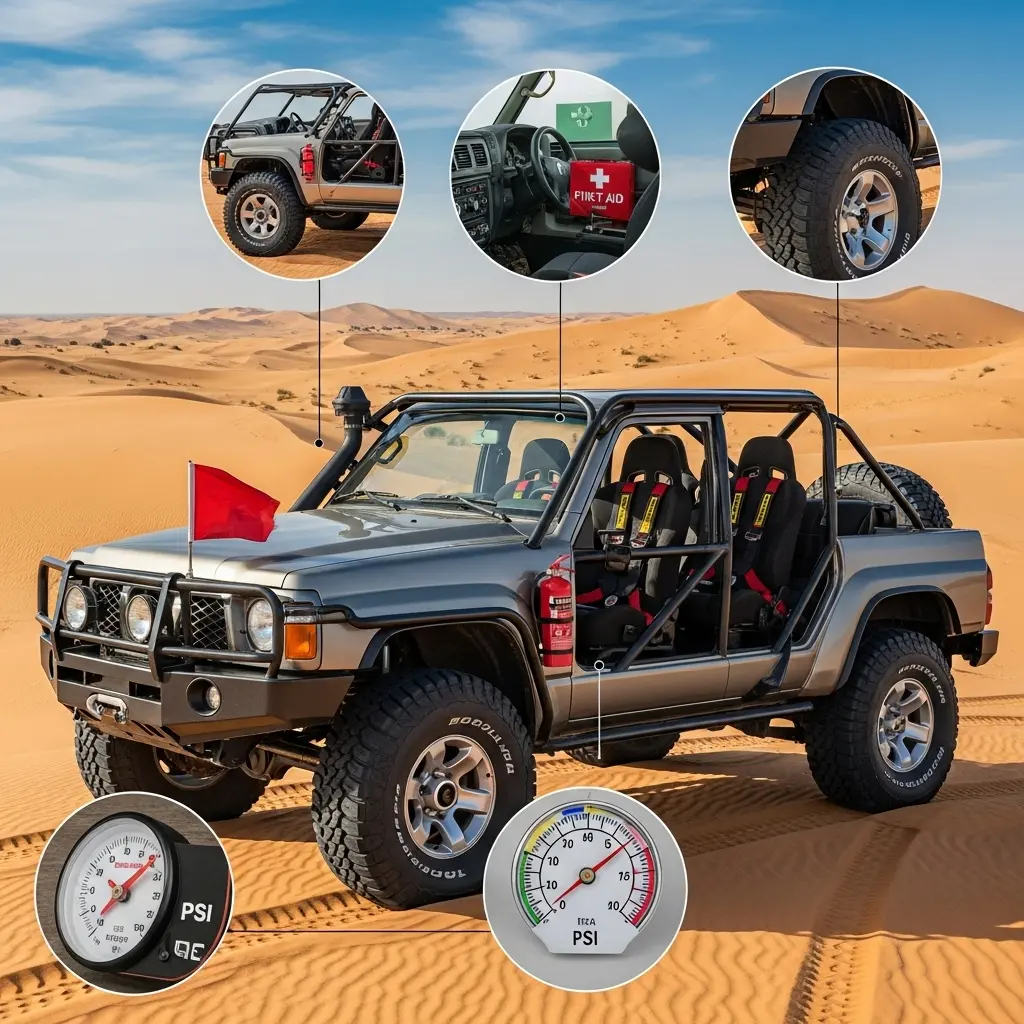
At the heart of Desert Safari Safety is the “Roll Cage.” This internal steel structure is a mandatory requirement for all SUVs participating in dune bashing. Its purpose is simple but vital: to protect the cabin’s structural integrity in the highly unlikely event of a vehicle rollover.
These roll cages are inspected annually as part of the RTA registration process. A vehicle that fails to show a perfectly maintained roll cage is immediately grounded. Desert Safari Safety standards dictate that the cage must be padded and integrated seamlessly so as not to obstruct passenger space or visibility.
Structural strength also extends to the chassis and suspension. Desert Safari Safety requires high-performance shock absorbers and robust suspension systems capable of absorbing the heavy impacts of jumping off sand crests. Without these specialized components, the vehicle would suffer metal fatigue, compromising the safety of everyone on board.
| Safety Feature | Standard Requirement | Purpose |
| Internal Roll Cage | High-Tensile Steel | Prevents cabin collapse during rollover |
| Suspension | Heavy-Duty/Off-Road | Absorbs shocks from dunes |
| Seat Belts | 3-Point Retractable | Mandatory for all passengers |
| First Aid Kit | RTA-Certified | Immediate medical response |
| Fire Extinguisher | Industrial Grade | Emergency fire suppression |
Tire Pressure Management and Off-Road Traction
One of the most misunderstood aspects of Desert Safari Safety is tire pressure. Before a vehicle even enters the dunes, the driver must manually deflate the tires to approximately 15-18 PSI. This increases the tire’s “footprint,” allowing the vehicle to float over soft sand rather than digging in.
High tire pressure on sand is a major safety risk. It leads to loss of traction and puts immense stress on the engine and transmission. Desert Safari Safety protocols require drivers to check pressures before and after every excursion. Once the tour is over, the tires are reinflated to road-legal levels using portable compressors.
Furthermore, Desert Safari Safety standards mandate the use of specific tire treads. Most operators use “All-Terrain” or “Mud-Terrain” tires that have deeper grooves. These tires are inspected for wear and tear monthly. If the tread depth is below the legal limit, the tire must be replaced to prevent blowouts in the high desert heat.
Professional Driver Training and Special Permits
You cannot have Desert Safari Safety without a world-class driver. In 2026, holding a standard UAE driving license is not enough. All safari guides must undergo a specialized five-day training program at an RTA-approved institute to earn their “Safari Driving Permit.”
This training covers more than just steering techniques. It includes modules on desert topography, mechanical basics of 4×4 vehicles, and emergency recovery. Desert Safari Safety is only as strong as the person behind the wheel, which is why the pass rate for these tests is rigorously managed to ensure only the best stay on the road.
Drivers are also trained in public speaking and cultural history. However, their primary responsibility remains guest management. A high-quality driver knows how to read the passengers’ comfort levels and adjust the dune bashing intensity accordingly. This psychological management is a core but often overlooked pillar of Desert Safari Safety.
Emergency Communication and Recovery Gear
Even with the best vehicles, the desert can be challenging. Desert Safari Safety standards require every vehicle to carry a suite of recovery gear. This includes heavy-duty tow straps, sand tracks, and industrial shovels. Being stuck in the sand is a common occurrence, and having the right tools to get out quickly is essential.
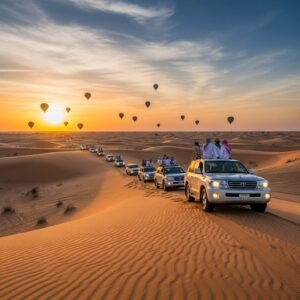
Communication is the next layer of Desert Safari Safety. Because cell service can be spotty in the deep desert, vehicles often travel in convoys. This “buddy system” ensures that if one car has an issue, another is there to assist. Some premium operators even use satellite phones or two-way radios for constant contact with their base camp.
Every driver is also a certified first-aider. Desert Safari Safety regulations require drivers to renew their first aid certificates every two years. The kits inside the vehicles are stocked with supplies to handle everything from heat exhaustion to minor cuts. This immediate response capability is vital when the nearest hospital is 45 minutes away in the city.
Fluid Levels and Heat Protection Systems
The extreme heat of the UAE desert, which can exceed 50°C in the summer, is the biggest enemy of machinery. Desert Safari Safety protocols involve a daily check of all fluid levels. This includes high-performance coolants, engine oil, and transmission fluids that are designed to withstand high temperatures.
Engines in these SUVs are often modified with larger radiators and additional cooling fans. Desert Safari Safety standards require that the air conditioning system be in perfect working order. A failure in the AC in the middle of a July safari is considered a safety emergency, as it puts passengers at risk of heatstroke.
Furthermore, the electrical systems are checked for any exposed wiring that could lead to fires in the dry heat. Desert Safari Safety means being proactive. Many companies use thermal imaging to check for “hot spots” in the engine before the car leaves the garage. This level of maintenance is why Dubai’s safari industry is the safest in the world.
Protecting Vulnerable Passengers and Health Guidelines
Not everyone is suited for the intense motion of dune bashing. Desert Safari Safety guidelines clearly state that pregnant women, individuals with chronic back or neck issues, and those with heart conditions should avoid the bumpy sections of the tour.
Reputable companies offer “Gentle Drives” as an alternative. This ensures Desert Safari Safety for families with young children or seniors. By following the tracks rather than climbing the highest dunes, everyone can enjoy the desert scenery without the physical strain of extreme maneuvers.
Age limits are also a part of the safety framework. While there is no strict legal age, most Desert Safari Safety advisors suggest that children under three should not participate in dune bashing. Operators provide child booster seats and infant seats, but these must usually be booked in advance to ensure the correct fitment in the SUV.
External Resources for Safety Comparisons
To see how safety is prioritized across different companies, you can check the fleet descriptions at https://royaldesertadventures.ae/ or read the detailed safety FAQs at https://dubaidesertsafarie.com/. These websites provide a window into the standard of care provided by leading Dubai operators.
For those interested in booking a tour that explicitly mentions RTA compliance and vehicle maintenance, visiting https://htdesertsafari.com/ is a recommended next step. Using these internal resources helps you verify that your chosen company takes Desert Safari Safety as seriously as the law requires.
Hygiene and Food Safety at the Desert Camp
Safety doesn’t end when the vehicle stops at the camp. Desert Safari Safety extends to the “Iftar” or BBQ dinner. All camps must be licensed by the Dubai Municipality, which conducts regular health and hygiene inspections of the kitchen facilities.
Food must be stored at precise temperatures to prevent spoilage in the heat. A high-value Desert Safari Safety experience includes a clean, organized buffet where raw and cooked foods are strictly separated. Bottled water is provided in unlimited quantities to prevent dehydration, which is a significant risk in the arid climate.
Handwashing stations and sanitizers are standard features in 2026. After the global health challenges of the past few years, Desert Safari Safety has adapted to include higher standards of surface sanitation and air filtration in indoor Majlis areas. These measures ensure that the only thing you take home from the desert is good memories.
The Role of Conservation Reserves in Safe Tourism
Many of the best safaris take place within the Dubai Desert Conservation Reserve (DDCR). Desert Safari Safety is enhanced in these areas because of the strict rules on vehicle speed and the prohibition of “freestyle” driving. By staying on designated paths, the risk of collisions or getting lost is virtually eliminated.
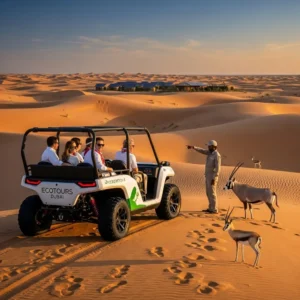
These reserves also provide a safer environment for wildlife. Desert Safari Safety in a reserve means observing the Arabian Oryx and gazelles from a distance. This prevents animal stress and ensures that the natural beauty of the desert is preserved for future tours.
Rangers patrol these areas constantly. Their presence adds an extra layer of Desert Safari Safety, as they can provide immediate assistance in case of a breakdown or a medical emergency. Choosing a tour that operates within a government-sanctioned reserve is a smart choice for any safety-conscious traveler.
Nighttime Safety and Visual Awareness
For evening and overnight safaris, Desert Safari Safety relies on visual equipment. All vehicles must have high-intensity LED light bars and perfectly functioning headlights. The desert becomes pitch black after sunset, and without these lights, navigating the dunes would be impossible.
Drivers use specialized night-driving techniques, focusing on the texture of the sand to identify drops and ridges. Desert Safari Safety training includes a module on night navigation, ensuring that the return trip to the city is as safe as the arrival.
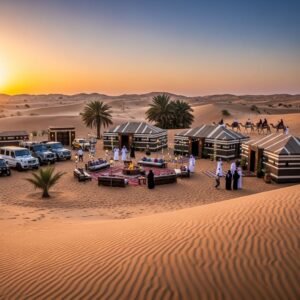
At the camp, fire safety is the priority. With live cooking and fire performers, the camp layout is designed with wide clearances and multiple fire extinguishers. Desert Safari Safety at night also involves clearly marked paths and low-level lighting to prevent trips and falls in the dark sand.
Sustainability and the Future of Safari Safety
In 2026, Desert Safari Safety is merging with sustainability. The introduction of hybrid and electric 4x4s is changing the maintenance landscape. These vehicles have fewer moving parts, which can actually improve reliability and Desert Safari Safety in the long run.
Solar-powered camps are also safer, as they remove the need for large quantities of diesel fuel to be stored on-site. This reduction in flammable materials is a major boost for the overall Desert Safari Safety profile of modern desert camps.
As Dubai aims for “Net Zero” tourism, we can expect Desert Safari Safety to include even more high-tech monitoring. AI-driven sensors could soon predict mechanical failures before they happen, and drone-assisted recovery could become the standard. The future of the desert is not just exciting; it is technologically secure.
Common Safety Myths vs. Reality
A common myth is that the desert is an “unregulated wild west.” In reality, Desert Safari Safety is governed by some of the strictest transport laws in the world. The Dubai RTA monitors every vehicle and driver with the same intensity as they monitor the city’s taxis and buses.
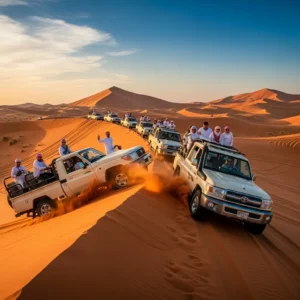
Another myth is that dune bashing is “uncontrolled.” Every slide and turn is a calculated move by a trained professional. Desert Safari Safety is about controlled risk. The “screams” of the passengers are part of the fun, but for the driver, it is a disciplined exercise in physics and traction management.
Finally, some people think that older cars are “tougher.” Desert Safari Safety standards in 2026 actually favor newer models. Modern SUVs come with better airbag systems, more advanced stability control, and superior fuel efficiency. A reputable company will never use a vehicle that is more than a few years old for its primary tours.
Summary of 2026 Vehicle Safety Markers
-
RTA Permit: The driver must have a valid safari driving permit displayed.
-
Roll Cage: Check for the padded steel tubes inside the cabin.
-
Convoys: High-value tours always travel with at least one other vehicle.
-
Seat Belts: If the driver doesn’t insist on everyone buckling up, it’s a red flag.
-
Maintenance: A clean vehicle with good tires is a sign of a company that values safety.
By keeping these Desert Safari Safety markers in mind, you can choose an operator that puts your life first. The dunes of Dubai are a place of incredible adventure, and when safety is handled by the pros, you are free to simply enjoy the ride.
Conclusion: Why Safety is the Best Amenity
Ultimately, Desert Safari Safety is the most important feature of your trip. No amount of BBQ food or belly dancing can make up for a lack of security. In Dubai, the government and private sector have worked tirelessly to create a culture of safety that is the envy of the world.
The next time you book a tour, don’t just look at the price. Look for the Desert Safari Safety certifications. Ask about their driver training and their vehicle maintenance schedule. A company that is proud to talk about its safety record is a company you can trust.
The golden sands are waiting for you. With the right vehicle, a trained driver, and the latest Desert Safari Safety standards in place, your journey into the Arabian wilderness will be a highlight of your life. Safety first, adventure second, and memories forever.
Frequently Asked Questions
1. What are the specific RTA vehicle requirements for a desert safari?
According to the latest RTA regulations for 2026, every Desert Safari Safety vehicle must be a four-wheel-drive SUV (like a Land Cruiser or Nissan Patrol). It must have an internally fitted, padded roll cage made of high-tensile steel. The vehicle must be equipped with a fire extinguisher, a certified first-aid kit, and a GPS tracking device. Furthermore, the SUV must pass an annual inspection specifically designed for off-road commercial use, which checks the suspension, chassis, and brake systems under extreme load conditions.
2. Are roll cages really necessary for dune bashing?
Yes, roll cages are the single most important physical component of Desert Safari Safety. While modern SUVs are built strong, they are not designed to support the full weight of the vehicle in a high-speed rollover on soft sand. The roll cage provides a “survival cell” for the passengers, preventing the roof from collapsing. In Dubai, it is illegal to take tourists dune bashing in a vehicle that does not have a certified and RTA-inspected roll cage.
3. How often are desert safari vehicles inspected?
Desert Safari Safety vehicles undergo multiple levels of inspection. Legally, they must pass a rigorous RTA inspection once a year to renew their commercial license. However, reputable tour operators conduct daily “pre-trip” inspections. These checks cover tire pressure, fluid levels, seat belt functionality, and cooling systems. Every month, a more detailed mechanical service is usually performed to replace filters, check brake pads, and inspect the suspension for any signs of stress or cracks.
4. What qualifications must a desert safari driver have?
To ensure Desert Safari Safety, a driver must hold a standard UAE driving license for at least two years. They then must complete a specialized training course at a school like the Emirates Driving Institute or Belhasa. This five-day course ends with a practical exam on the dunes. Only after passing this can they receive a “Safari Driving Permit” from the RTA. Additionally, they must hold a valid First Aid certificate and a Tour Guide permit from the Department of Economy and Tourism.
5. Is there an age or health limit for passengers?
For Desert Safari Safety reasons, it is highly recommended that children under three years old do not participate in dune bashing. Most companies suggest that adults over 65 or anyone with a history of back, neck, or heart problems should also avoid the high-intensity portion of the tour. Pregnant women are strictly advised against dune bashing. However, these individuals can still enjoy the desert by booking a “Gentle Drive” that takes them directly to the camp on flat tracks.
6. What happens if a vehicle gets stuck in the sand?
Getting stuck is a natural part of off-roading, but Desert Safari Safety protocols manage it efficiently. Every vehicle carries recovery equipment like sand tracks and tow ropes. Usually, another car from the same convoy will pull the stuck vehicle out in a matter of minutes. Drivers are trained in specific “recovery techniques” to ensure that the vehicle is freed safely without any risk to the passengers or the car’s mechanical systems.
7. Why do drivers deflate the tires before entering the desert?
Deflating the tires is a critical Desert Safari Safety procedure. By reducing the pressure to about 15-18 PSI, the surface area of the tire touching the sand increases. This prevents the vehicle from sinking into the soft dunes and provides the necessary traction to climb steep inclines. Driving on the sand with high-pressure road tires would cause the vehicle to get stuck instantly and could lead to engine overheating as the car struggles to move.
8. Are seat belts mandatory during dune bashing?
Absolutely. Desert Safari Safety rules state that every passenger must wear a seat belt at all times while the vehicle is in motion. During dune bashing, the car experiences sudden tilts and drops. The seat belt keeps you securely in your seat, preventing you from hitting the interior of the car or other passengers. Drivers are instructed not to start the drive until every passenger has buckled up.
9. How do companies handle medical emergencies in the desert?
Every safari vehicle is part of a convoy and is equipped with a first-aid kit. All drivers are trained in basic life support and emergency response. In the event of a more serious medical issue, the vehicle’s GPS allows the base camp to send coordinates to emergency services. Dubai’s rescue services are highly efficient and can reach most popular safari areas via helicopter or specialized off-road ambulances if needed.
10. What is the role of the “Lead Vehicle” in a safari convoy?
The lead vehicle is responsible for the overall Desert Safari Safety of the group. The lead driver is usually the most experienced and is responsible for “scouting” the dunes. They look for “soft spots,” hidden drops, or other vehicles. By following the lead car’s tracks, the other drivers in the convoy can navigate the desert more safely. The lead driver also manages the pace of the tour to ensure no one is left behind or pushed too hard.
11. Is it safe to go on a desert safari during the summer heat?
Yes, but you must choose an operator that prioritizes Desert Safari Safety in extreme heat. This means the vehicle’s AC must be in perfect condition, and there must be a surplus of chilled water on board. In the summer, tours often start a bit later to avoid the peak afternoon sun. The camps are also equipped with misting fans to keep guests cool. Most travelers find the summer desert quite beautiful, provided they follow the safety advice to stay hydrated and shaded.
12. Are the vehicles equipped with airbags?
Yes, all modern SUVs used for Desert Safari Safety come with multiple airbags (front and side). However, it is important to note that seat belts are your primary protection. In off-road conditions, airbags are a secondary safety measure. The roll cage and seat belts work together to provide the main protective framework during the adventure activities.
13. What should I do if I feel sick during the dune bashing?
If you experience motion sickness, inform your driver immediately. Desert Safari Safety is about guest comfort. The driver can slow down, take a break, or find a flatter route to the camp. It is very common for people to feel a bit uneasy, and drivers are trained to handle this professionally. Taking a motion sickness pill an hour before your pickup is also a good proactive safety tip.
14. Are there fire safety measures at the desert camps?
Yes, camp safety is just as important as vehicle safety. All desert camps must have fire extinguishers placed at regular intervals, especially near the kitchen and the smoking areas. The camp staff is trained in fire evacuation procedures. Since most camps are made of traditional fabrics and wood, Desert Safari Safety regulations require these materials to be treated with fire-retardant chemicals.
15. Can I bring my own car for a desert safari?
You can drive your own 4×4 into the desert, but Desert Safari Safety rules for personal cars are different. You should only do this if you have a high-clearance SUV, the proper recovery gear, and at least one other vehicle with you. Beginners should never enter the dunes alone. For the best safety, it is always recommended to go with a licensed professional company that has the RTA-approved equipment and trained guides.
16. How do companies ensure the safety of the food served?
Desert Safari Safety includes food hygiene. All food is prepared in kitchens licensed by the Dubai Municipality. It is transported to the camp in temperature-controlled containers. Once at the camp, it is kept on warming trays to ensure it stays at a safe temperature. Health inspectors make unannounced visits to these camps to check for cleanliness, water quality, and proper food handling practices.
17. Do safari vehicles have GPS and communication systems?
Yes, modern Desert Safari Safety standards in 2026 require most commercial vehicles to have GPS tracking. This allows the company to know exactly where the car is at all times. Drivers also use mobile phones and, in more remote areas, two-way radios to communicate with other drivers in the convoy. This connectivity is a vital safety net in the vast desert landscape.
18. What is the safety procedure for sandboarding?
Sandboarding is a low-risk activity, but Desert Safari Safety still applies. Guides will select a dune that is not too steep and is free of rocks or bushes. They will demonstrate how to balance on the board and how to fall safely. Guests are advised to stay within the designated area to avoid any collision with moving vehicles. It is a fun, self-paced activity that is safe for almost all ages.
19. Are there any specific safety rules for camel riding?
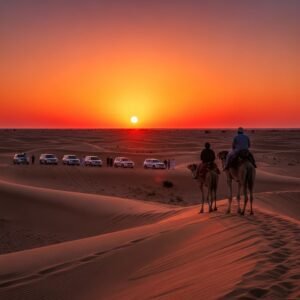
Camels are generally very calm, but Desert Safari Safety requires that you always follow the handler’s instructions. When the camel is standing up or sitting down, you must lean back and then forward as instructed to maintain your balance. You should never approach a camel from the back or make sudden loud noises that might startle it. The handlers are there to ensure that both the guests and the animals stay safe.
20. Why is insurance important for a desert safari?
Desert Safari Safety is backed by comprehensive insurance. In Dubai, every licensed tour operator must have insurance that covers all passengers in the event of an accident. This is part of the RTA licensing requirement. Before booking, you can ask to see the company’s insurance certificate. This legal protection is one of the main reasons why you should only book with licensed, reputable companies rather than unauthorized individuals.