Desert Safari Dubai Weather 12 Critical Insights for Perfect Planning
Understanding the Desert Safari Dubai Weather is the most important part of your trip.
It determines your comfort.
It dictates what you wear.
It even changes how the car drives on the sand.
Many tourists arrive unprepared.
They expect it to be hot all the time.
They are shocked when they shiver at night in January.
Or they underestimate the humidity in August.
This guide is your bible for the desert climate.
We will go beyond simple temperature charts.
We will explore the physics of the sand.
We will look at how heat affects wildlife.
We will guide you through every single month of the year.
We want you to be safe.
We want you to enjoy the dunes, whether it is 10°C or 45°C.
Let’s dive into the details of the Arabian climate.
The Basic Climate Overview
Dubai has an arid subtropical climate.
This means two main things: intense sun and low rain.
However, the Desert Safari Dubai Weather is not static.
It has two distinct seasons.
Winter runs from October to April.
Summer runs from May to September.
The transition weeks are short.
Humidity plays a huge role here.
Near the coast, humidity is high.
Deep in the desert, the air is drier.
This is a good thing.
Dry heat is easier to tolerate than humid heat.
But dry air also dehydrates you faster.
You don’t feel the sweat dripping.
It evaporates instantly.
This creates a false sense of hydration.
We will talk more about health safety later.
The Physics of Sand Temperature
Sand is a fascinating material.
It has a low specific heat capacity.
This means it heats up very fast.
But it also loses heat very fast.
This is why the Desert Safari Dubai Weather swings so wildly.
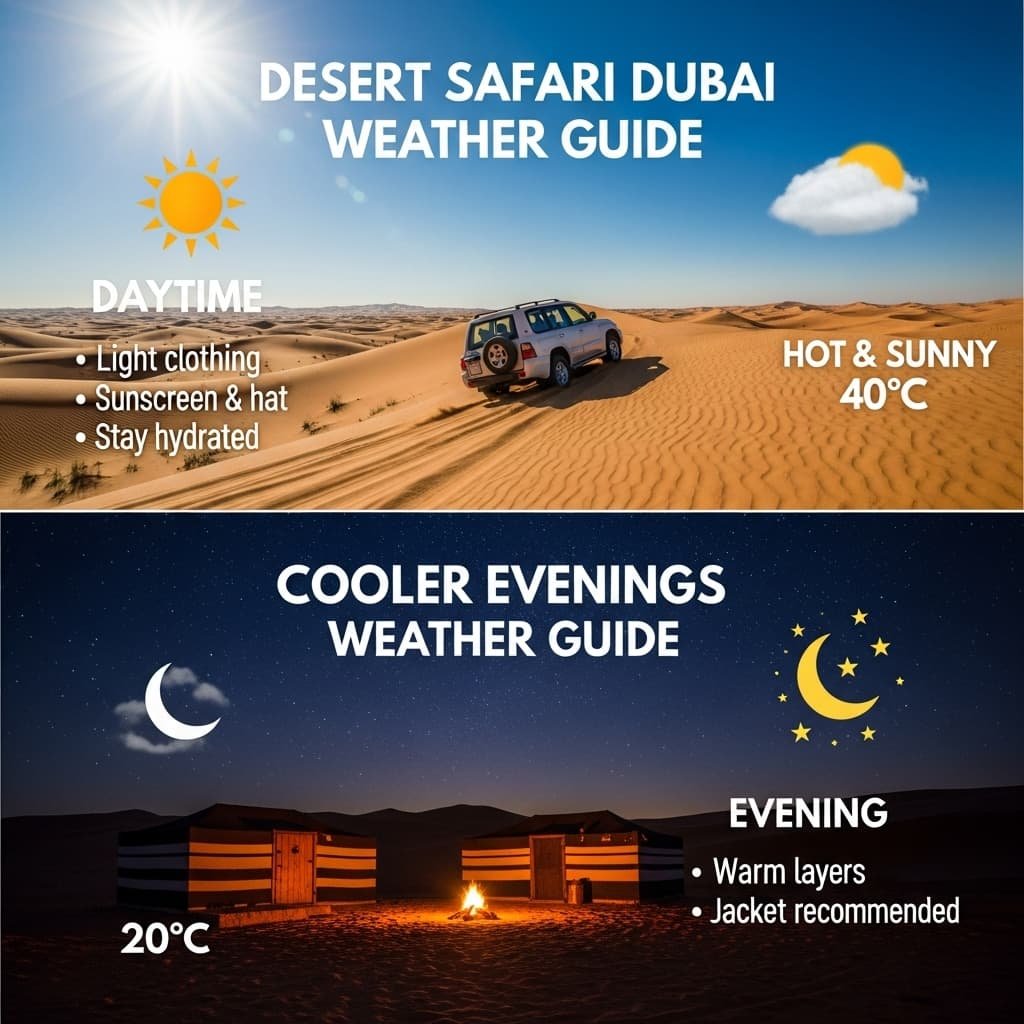
At 2:00 PM, the sand can be 60°C.
It can burn your bare feet in seconds.
At 2:00 AM, that same sand can be 10°C.
It feels like ice against your skin.
Concrete in the city holds heat.
It stays warm all night.
The desert floor does not holding heat.
Once the sun sets, the temperature plummets.
You need to understand this mechanism.
It explains why you need a jacket in the desert, even if the city feels warm.
January: The Coldest Month
January is the peak of winter.
The Desert Safari Dubai Weather is at its coolest.
Daytime highs are around 24°C (75°F).
Nighttime lows can hit 10°C (50°F) or lower.
This is perfect for active travelers.
You can do sandboarding without sweating.
You can hike up the dunes easily.
However, the evenings are chilly.
The wind in the open desert cuts through t-shirts.
You absolutely need a fleece or a hoodie.
Campfires are essential in January.
Sitting by the fire with hot tea is a highlight.
Rain is possible in January.
It is rare, but it happens.
Rain packs the sand down hard.
This makes dune bashing very fast and smooth.
It is a great month for speed lovers.
February: The Unpredictable Month
February is similar to January but with more surprises.
It is often the wettest month.
“Wet” in Dubai means a few days of showers.
But for a desert safari, rain changes everything.
The sky becomes dramatic.
Dark clouds over golden dunes look amazing.
Photographers love this contrast.
The Desert Safari Dubai Weather in February is pleasant.
Highs are around 25°C.
Lows are around 15°C.
It is starting to warm up slightly.
It is the season for flowers.
Yes, tiny desert flowers bloom after the rain.
The desert looks slightly green in patches.
It is a beautiful time for nature walks.
Wildlife is very active.
You might see gazelles running in the open.
March: The Perfect Balance
If you want the ideal Desert Safari Dubai Weather, choose March.
Winter is ending.
Summer is not yet here.
The temperature sits around 28°C during the day.
Nights are cool but not freezing (around 18°C).
You might not need a heavy jacket anymore.
A light shawl is enough.
The sand is warm but walk-able.
Swimming in camp pools becomes nice.
The water isn’t too cold.
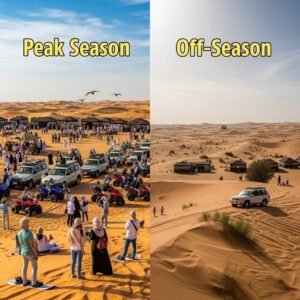
Crowds start to thin out slightly by the end of March.
It is the sweet spot.
You get the comfort of winter.
You get the longer daylight hours of spring.
Sunset is later, giving you more time for photos.
It is highly recommended for families with kids.
April: The Heat Returns
April marks the shift.
The Desert Safari Dubai Weather starts to climb.
We see highs of 33°C to 35°C.
Is it hot? Yes.
Is it unbearable? No.
The humidity is usually still low.
Evenings are balmy and perfect.
It is “T-shirt weather” 24/7.
You can leave the jacket at the hotel.
However, the midday sun is strong.
Sunscreen becomes critical in April.
The UV index rises sharply.
Morning safaris should be done early (before 9 AM).
Evening safaris are glorious.
The transition from hot day to warm night is seamless.
Prices start to drop in late April.
It is a good time for budget travelers who want decent weather.
May: The Shoulder Season
May is the gateway to summer.
Temperatures hit 38°C or 40°C consistently.
The sand gets very hot by noon.
You cannot walk barefoot anymore.
The Desert Safari Dubai Weather dictates your schedule.
Morning tours are tough.
They end by 11 AM because of the heat.
Evening tours are the standard choice.
The breeze at night is still okay.
It is not suffocating yet.
Crowds are gone.
You get privacy.
You might be the only car on a dune.
This is great for couples wanting romance.
Just drink plenty of water.
Dehydration risks increase in May.
June: The Summer Onset
June is officially summer.
Highs reach 42°C to 44°C.
Is a safari possible? Yes.
But you need to be smart.
The Desert Safari Dubai Weather is harsh.
Outdoor activities are kept short.
Camel rides are brief (10 minutes).
Sandboarding is quick.
Most of the time is spent in the AC car.
Or in the shaded camp area.
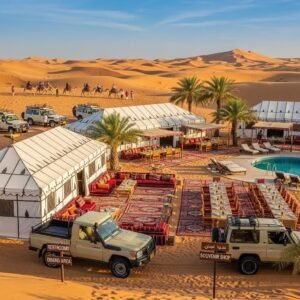
Premium camps use mist fans.
These fans spray water mist to cool the air.
It makes a huge difference.
If you visit in June, book a premium tour.
You need the better facilities.
Check https://htdesertsafari.com/ for their summer options.
They prioritize cooling equipment.
July: The Peak Heat
July is the hottest month.
Temperatures can touch 48°C.
This is extreme heat.
The Desert Safari Dubai Weather is a force of nature.
Why go in July?
Because it is cheap.
Prices crash.
You can get luxury experiences for budget rates.
But you must handle the heat.
You will sweat the moment you step outside.
Your sunglasses will fog up.
The sand is scorching.
Wear shoes with thick soles.
Thin flip-flops might melt (literally).
Drink electrolyte drinks.
Water alone is not enough.
You sweat out salts.
You need to replace them.
Safety is the priority in July.
August: The Humidity Spike
August is hot like July.
But it has a villain: Humidity.
Coastal humidity blows into the desert.
The “Real Feel” temperature can be 50°C+.
This is the toughest month for Desert Safari Dubai Weather.
The air feels heavy.
Visibility can be hazy.
The horizon looks white or grey.
Star gazing is difficult due to atmospheric moisture.
However, the nights stay warm.
If you like tropical warmth, this is it.
You can swim in the pools at night.
The water is warm like a bath.
It is a unique experience.
Just don’t expect to hike.
Stay near the fans.
Enjoy the indoor (or tented) entertainment.
September: The Slow Cool Down
September is a month of hope.
The first half is still very hot.
The second half sees a drop.
The Desert Safari Dubai Weather shifts back to bearable.
Highs drop to 38°C.
It feels significantly better than August.
The humidity starts to break.
Tourists start to return slowly.
It is a smart time to visit.
You get the summer prices.
But you get slightly better weather.
The sunset clarity improves.
The haze lifts.
Colors return to the sky.
It is a good time for photographers on a budget.
October: The Season Reopens
October is the start of the peak season.
The weather becomes fantastic again.
Highs of 35°C, dropping to 30°C by month-end.
Evenings are perfect (25°C).
The Desert Safari Dubai Weather is welcoming.
You can do everything again.
Long camel treks are back.
Morning safaris are enjoyable.
The energy returns to the camps.
Shows are in full swing.
It is festive.
Book in advance.
People know the weather is good.
Slots fill up.
It is the start of the busy period.
November: The Golden Month
Many locals say November is the best month.
Highs of 30°C.
Lows of 20°C.
It is flawless.
The Desert Safari Dubai Weather allows for anything.
Camping is amazing.
Sleeping under the stars is comfortable.
You don’t need heavy blankets yet.
The sand is cool enough for barefoot walking.
The sky is deep blue.
Wildlife is extremely active.
You see gazelles everywhere.
It is the perfect mix of summer warmth and winter cool.
If you can pick any month, pick November.
December: The Festive Peak
December is busy and cool.
Highs of 26°C.
Lows of 15°C.
It is very similar to January.
The Desert Safari Dubai Weather is crisp.
You need a jacket at night.
Christmas and New Year parties in the desert are huge.
The weather supports partying all night.
You won’t get sweaty dancing.
Fireworks look clear in the cold air.
It is expensive, but worth it.
The atmosphere is electric.
Just be prepared for crowds.
Everyone wants to enjoy this weather.
Clothing Guide: Fabrics Matter
What you wear depends on the Desert Safari Dubai Weather.
In summer (May-Sep):
Wear Linen or Cotton.
Avoid Polyester.
Polyester traps heat and sweat.
You will feel like you are in a plastic bag.
Linen breathes.
It lets the wind cool your skin.
Wear light colors.
White reflects the sun.
Black absorbs it.
In winter (Oct-Apr):
Bring layers.
Start with a t-shirt.
Bring a hoodie.
Maybe a scarf.
Denim is fine in winter.
In summer, denim is too heavy.
Wear loose trousers in summer.
Tight leggings will be uncomfortable in the heat.
Footwear Strategy
Shoes are critical.
In winter, you can wear sandals.
The sand is cool.
You can take them off easily.
Walking barefoot is therapy.
In summer, you need protection.
The sand is dangerous.
Wear closed sneakers or hiking boots.
Ensure they have good ventilation.
Mesh sneakers are good.
Leather boots might be too hot in July.
Bring extra socks.
Sand gets everywhere.
Changing into fresh socks after the tour feels great.
Hydration Science
Dehydration is the enemy.
The Desert Safari Dubai Weather is dry.
You lose water through breath and skin.
You might not notice because you are dry.
Rule of thumb: Drink before you are thirsty.
If you feel thirsty, you are already dehydrated.
Avoid caffeine before the trip.
Coffee dehydrates you.
Avoid alcohol before the trip.
It makes heat tolerance lower.
Stick to water and juices.
Most camps offer unlimited water.
Use it.
Don’t be shy to ask for more bottles.
Vehicle Stress and Weather
The weather affects the cars too.
In summer, engines get hot.
The AC works overtime.
Sand is soft and loose.
Cars get stuck more easily in soft sand.
Drivers have to drive carefully.
This might mean a smoother ride in summer.
In winter, the sand is firm.
It holds moisture.
Cars can grip better.
Drivers can perform wilder stunts.
The Desert Safari Dubai Weather changes the adrenaline level.
If you want extreme bashing, go in winter.
The physics of the sand favors the cold.
Photography and Light
Light is the photographer’s tool.
In summer, the sun is directly overhead.
This creates harsh, flat light at noon.
Shadows disappear.
Photos look washed out.
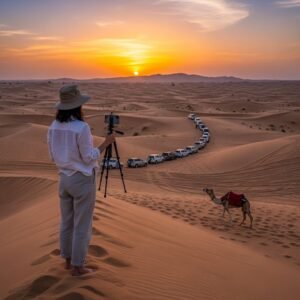
You must shoot at Golden Hour (sunset).
In winter, the sun is lower.
It casts long shadows all day.
This gives depth to the dunes.
The Desert Safari Dubai Weather in winter is photogenic.
The air is cleaner.
Less humidity means sharper horizons.
You can see the mountains clearly.
Protect your camera.
Heat can overheat sensors in July.
Keep your camera in a bag when not using it.
Wildlife Activity Cycles
Animals are smart.
They react to the Desert Safari Dubai Weather.
In summer, they are nocturnal.
They hide in burrows during the day.
You won’t see many Oryx in July at 3 PM.
They are sleeping under trees.
In winter, they are diurnal.
They roam during the day.
They enjoy the sun.
If you want to see wildlife, go in winter.
Or do a night safari in summer.
Use a red light to spot them.
The ecosystem changes its rhythm based on the heat.
Health Risks: Heat Stroke
Know the signs of heat stroke.
Dizziness.
Headache.
Nausea.
Stop sweating (this is bad).
If you feel this, tell your guide instantly.
They have ice packs.
They will move you to the AC.
Don’t be a hero.
The Desert Safari Dubai Weather is powerful.
Respect it.
In winter, the risk is hypothermia (rare, but possible if wet).
If it rains and you get soaked, the wind can freeze you.
Bring a dry change of clothes in February.
Booking Strategy: Price vs Weather
There is a direct link between price and weather.
Great weather = High Price.
Bad weather = Low Price.
If you are on a budget, target May or September.
The Desert Safari Dubai Weather is manageable.
The prices are lower.
You get value.
Check https://dubaidesertsafarie.com/ for shoulder season deals.
They often have promotions.
If money is no object, aim for November to February.
You pay for comfort.
It is worth it if you can afford it.
Camping Considerations
Overnight stays are tricky.
In summer, sleeping in a tent is hard.
It is hot and sticky.
Unless the tent has AC, avoid it.
In winter, it is delightful.
But bring a good sleeping bag.
The ground gets cold.
You need insulation.
The Desert Safari Dubai Weather at 4 AM is the coldest point.
Be prepared.
Wake up for sunrise.
It is the crispest air you will ever breathe.
Sandstorms: The Wild Card
Sandstorms can happen anytime.
But they are common in transition months.
February/March and August/September.
The wind picks up the sand.
Visibility drops to zero.
It hurts your skin (sandblasting).
Tours get cancelled.
Check the forecast.
If it is windy, wear sunglasses and a scarf.
Cover your face.
It is an adventure in itself.
But it can ruin a dinner.
Operators usually refund if safety is an issue.
Check https://royaldesertadventures.ae/ for their storm policy.
Children and Elderly
Vulnerable groups need extra care.
For kids, the Desert Safari Dubai Weather in summer is risky.
They overheat fast.
They might get cranky.
Stick to winter for small kids.
For elderly, the extreme heat is dangerous for heart conditions.
Also, the extreme cold in winter nights can be tough on joints.
March and November are best for seniors.
Moderate, gentle weather.
Plan according to the weakest member of your group.
Conclusion
The Desert Safari Dubai Weather is not a barrier.
It is a variable.
You can visit in any month.
You just need to adjust your expectations.
You need to adjust your clothing.
And you need to adjust your attitude.
Winter offers the classic, easy experience.
Summer offers a raw, intense, and private experience.
Both have value.
Now you are armed with knowledge.
You know about the sand physics.
You know about the fabrics.
You know about the hydration.
You are ready to book.
Choose the month that fits your style.
Choose the provider that respects safety.
And enjoy the majestic Arabian Desert.
It is beautiful in the sun.
It is beautiful in the cold.
It is waiting for you.
20 FAQs About Desert Safari Dubai Weather
1. Is the Desert Safari Dubai Weather unbearable in summer? For some, yes. In July and August, temperatures can reach 48°C with high humidity. However, tour operators adapt to this. They start tours later in the afternoon, minimize outdoor exposure, and maximize time in air-conditioned vehicles and shaded camps with fans. If you are sensitive to heat, avoid summer. If you enjoy heat and want a bargain, it is manageable with precautions.
2. What is the absolute best month for weather? November is widely considered the best month. The daytime highs are around 30°C, which is warm but pleasant, and night lows are around 20°C, which is cool but not freezing. It offers the perfect balance for all activities, including camping, dune bashing, and dining outdoors without needing heavy winter clothes.
3. Do I need a winter jacket for the desert? Yes, if you visit between December and February. The desert loses heat rapidly after sunset. Temperatures can drop to 10°C. Coupled with the wind, it feels very cold. A hoodie, fleece, or light down jacket is essential for the evening entertainment and dinner portion of the safari.
4. Does it ever rain during a safari? Yes, rainfall occurs primarily in January and February. It is usually short-lived but can be intense. Rain packs the sand, making dune bashing faster and smoother. However, severe storms can lead to tour cancellations due to safety concerns regarding flash floods in wadis. Always check the forecast during these months.
5. How does the weather affect dune bashing? In winter, the sand is cooler and holds moisture, making it firm. This allows cars to grip better and perform more aggressive maneuvers. In summer, the sand is dry, hot, and very soft. Cars sink easily, so drivers must be more cautious to avoid getting stuck. The ride is generally smoother and less aggressive in the heat.
6. Can I wear shorts in the desert? Yes, shorts are practical for the heat. In summer, they are almost necessary. However, keep cultural modesty in mind; knee-length is best. In winter, you might find shorts too cold for the evening part of the tour, so bring a pair of trousers to change into or wear jeans from the start.
7. Is it safe for children in August? It is risky. Children regulate body temperature less efficiently than adults and can succumb to heat exhaustion quickly in 45°C weather. If you must go in August with kids, book a private car so you can control the AC and return to the hotel immediately if they feel unwell. Winter is much safer for families.
8. What is the humidity like in the desert? Generally, the deep desert is drier than the city. However, in August and September, humidity can spike, making the heat feel oppressive. High humidity creates a haze that reduces visibility and makes you sweat profusely. In winter, the air is crisp and dry, which is much more comfortable.
9. Are there fewer tourists in the hot months? Yes, significantly fewer. The Desert Safari Dubai Weather in summer deters the masses. This means no queues for activities, plenty of space at the buffet, and a private feel to the tour. If you value privacy over weather comfort, summer is the time to go.
10. Do prices drop when the weather is bad? Yes. “Bad” weather (extreme heat) corresponds with the off-peak season (June-September). Prices for safaris can drop by 30-50%. You can find premium experiences for budget prices. Conversely, prices are highest in the perfect weather of December and January.
11. What shoes are best for hot sand? In summer, do not wear open flip-flops or walk barefoot. The sand can reach 60°C and will burn your feet instantly. Wear closed sneakers or hiking sandals with a thick sole. In winter, the sand is cool, and walking barefoot is one of the best parts of the experience.
12. How does weather impact photography? Winter offers the best light. The sun is lower, creating shadows and depth. The air is clear. In summer, the overhead sun flattens images and humidity creates a white haze that ruins landscape shots. For professional-quality photos, visit between November and March.
13. Is the water in camp pools heated? Most desert camps do not have heated pools. In January, the water can be quite cold (around 18°C). In summer, the water warms up naturally to 30°C+, making it like a warm bath. The best swimming weather is March, April, October, and November.
14. Can I see stars in the summer? Visibility is often lower in summer due to atmospheric haze and humidity. The sky can look milky white even at night. In winter, the cold air is clear and dry, making the stars pop against a black background. Winter is definitely superior for stargazing.
15. What happens if there is a sandstorm? Sandstorms reduce visibility to near zero and are abrasive to skin and eyes. If a storm is predicted, tours are usually cancelled or rescheduled. If you get caught in a mild one, wrap a scarf (Ghutra) around your face and wear sunglasses. It is an adventurous but gritty experience.
16. How much water should I drink? In summer, aim for at least 500ml every hour. Don’t wait until you are thirsty. In winter, you still need to hydrate, but the urgency is lower. Tours provide unlimited water; ensure you always have a bottle in your hand, regardless of the season.
17. Is morning safari better in winter? Yes. In winter, a morning safari (8 AM – 12 PM) is delightful with cool breezes. In summer, by 9 AM it is already scorching hot, making outdoor activities unpleasant. We recommend morning safaris only between October and April.
18. Why is the URL slug important? The URL slug desert-safari-dubai-weather-guide-tourists tells search engines exactly what the page is about. It matches user queries like “Dubai safari weather guide”. When booking, checking the URL ensures you are on a verified site like https://royaldesertadventures.ae/ and not a fake one.
19. Does the car AC work in the desert? Yes, but in summer it works hard. The immense heat radiating from the sand can make the AC struggle. Premium operators maintain their fleets better to ensure cooling. In winter, drivers often turn the AC off and open windows to let in the fresh desert air, which is a lovely experience.
20. What is the “Shoulder Season”? The shoulder season consists of the transition months: May and September. The weather is hot but not at its peak, and crowds are thin. Prices are moderate. It is a good compromise for travelers who want to avoid the peak winter rates but also avoid the deadly July heat.