Desert Safari Amenities 50 Vital Features You Must Know
When you book a trip to the dunes, you focus on the thrill. You think about the dune bashing. You imagine the sunset photos. However, the reality of your experience often depends on something else. It depends on Desert Safari Amenities.
The facilities at the camp can make or break your night. A beautiful sunset cannot save a trip if the toilets are dirty. Great food does not matter if there is nowhere comfortable to sit.
Many tourists overlook these details. They book the cheapest ticket they find. Then they arrive at a camp with poor lighting and no running water. This leads to disappointment and frustration.
This guide is here to change that. We will dive deep into every single facility you should expect. We will cover hygiene, safety, comfort, and accessibility.
We will look at the difference between budget and luxury amenities. You will learn what questions to ask before you book. You will understand the standards set by the Dubai tourism authorities.
Whether you are traveling with toddlers or grandparents, this information is vital. It ensures you are prepared. It ensures you get value for your money.
Let’s explore the infrastructure of the desert. Let’s uncover the truth about Desert Safari Amenities.
1. The Importance of Camp Infrastructure
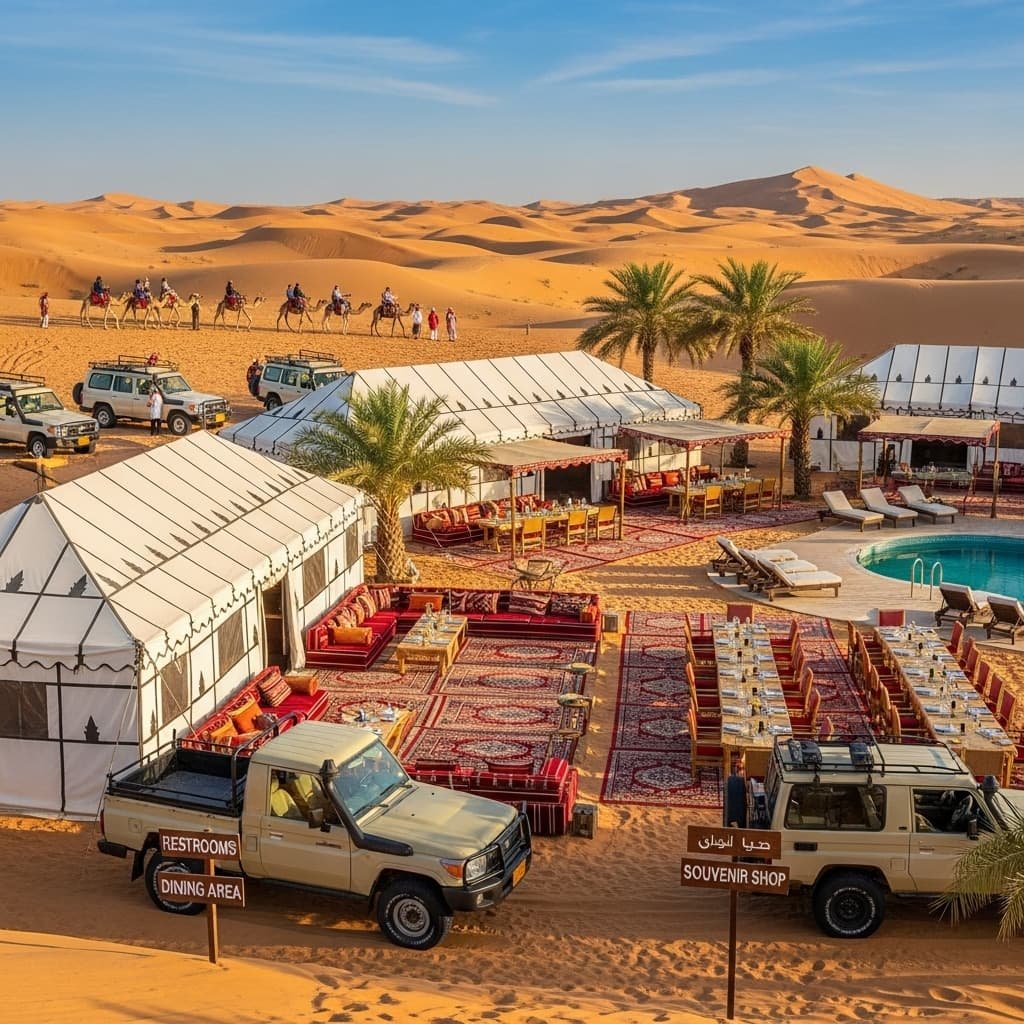
The desert is a harsh environment. It is hot, dusty, and remote. Building a comfortable camp there is an engineering challenge.
Good infrastructure is the backbone of a successful safari. It ensures that the lights stay on. It ensures that the water runs.
Without proper infrastructure, a camp is just a few tents in the sand. With it, it becomes a hospitality venue.
You need to look for camps that invest in their facilities. This includes reliable generators and water tanks.
It also includes solid flooring in key areas. Walking on sand is fun for five minutes. Walking on it for six hours is tiring.
2. Parking Facilities and Arrival
Your experience starts when you arrive. If you drive yourself, parking is the first amenity you encounter.
Standard camps have open sand parking. It can be chaotic. Your car will get dusty.
Premium camps offer paved or hardened parking areas. This keeps your vehicle cleaner. It makes walking to the entrance easier.
Some luxury camps even offer valet parking. This is a rare but welcome feature in the desert.
Proper lighting in the parking lot is essential for safety. You do not want to stumble in the dark after the show.
3. Welcome Area and Reception
The reception sets the tone. It is where you get your first impression of the Desert Safari Amenities.
A good welcome area is shaded. It protects you from the late afternoon sun.
It should have seating for those waiting for their group.
Staff should be present to guide you. They should check your tickets efficiently.
In VIP setups, you are greeted with dates and Arabic coffee immediately. This is traditional hospitality.
Clear signage is also part of a good reception. You should know exactly where to go.
4. Restroom Hygiene Standards
Let’s be honest. This is the most critical facility.
Budget camps often use trailer toilets. These can be cramped. They often smell bad due to the heat.
Standard camps have permanent brick-and-mortar restrooms. These are better. They usually have running water and soap.
Luxury camps offer hotel-standard restrooms. They have marble counters. They have attendants cleaning constantly.
You should expect toilet paper to be stocked. You should expect hand soap to be available.
If hygiene is a priority for you, check reviews specifically for this.
5. Prayer Rooms
Dubai is an Islamic city. Prayer facilities are a mandatory requirement for licensed camps.
There should be separate prayer rooms for men and women.
They must be clean and quiet. They should be away from the loud music of the stage.
Prayer mats should be provided. They must be vacuumed regularly.
A designated washing area (Wudu) is also part of this amenity. It should have running water.
This shows respect for the culture and the guests.
6. Seating Arrangements
Comfortable seating is a major component of Desert Safari Amenities.
Traditional seating involves carpets and cushions on the floor. This is authentic Bedouin style.
However, it can be hard on the back and knees.
Many camps now offer low tables with bean bags. This provides more support.
VIP sections offer elevated sofas. These are much more comfortable for long periods.
Dining tables with chairs are available in premium packages. This is best for eating dinner comfortably.
7. Dining Area Layout
The layout of the dining area affects the flow of the evening.
A bad layout creates bottlenecks. Long lines form at the buffet.
Good amenities include multiple buffet stations. This splits the crowd.
There should be clear pathways between tables. You should not have to squeeze past people.
The food stations should be covered. This protects the food from sand and flies.
Lighting in the dining area must be bright enough to see what you are eating.
8. Buffet Station Equipment
The equipment used to serve food matters. It affects food safety.
Chafing dishes must be used to keep hot food hot.
Cold counters or ice beds are needed for salads. In the desert heat, mayonnaise-based salads can spoil quickly without this.
Sneeze guards should be installed over the food. This is a basic hygiene standard.
Plates and cutlery should be clean. Premium camps use ceramic plates and metal cutlery. Budget camps use disposable plastic.
Check https://htdesertsafari.com/ to see which dining setup their packages offer.
9. Live Cooking Stations
Fresh food is always better. Live cooking stations are a premium amenity.
Look for camps that have a live BBQ grill. You can smell the charcoal.
Fresh bread stations are also popular. You can watch the bread being baked in a traditional oven.
Some camps have live pasta or shawarma stations.
This adds theater to the meal. It also guarantees freshness.
It reduces the reliance on food that has been sitting in warmers.
10. Beverage Counters
Hydration is life in the desert.
Basic Desert Safari Amenities include a water dispenser. You help yourself to plastic cups.
Better camps have manned beverage counters. Staff pour the drinks for you.
They offer a variety of sodas, juices, and laban.
The drinks should be ice cold. Warm water is not refreshing in the summer.
In licensed camps, there is a separate bar for alcohol. This should be discreet but accessible.
11. Air Conditioning and Climate Control
The Dubai summer is intense. AC is not just a luxury; it is a necessity for some.
Standard camps are open-air. They rely on the evening breeze.
Better camps use large industrial mist fans. These cool the air significantly.
The top tier of Desert Safari Amenities includes AC tents. These are fully enclosed glass structures.
They allow you to watch the show in 22-degree comfort.
Heaters are provided in winter. The desert gets cold at night.
12. Lighting and Ambience
Lighting serves two purposes: safety and mood.
Floodlights are needed for the parking and activity areas.
However, the dining area should have warm, ambient lighting.
Fairy lights and lanterns create a magical atmosphere.
Strobe lights are used for the stage show.
If the lighting is too harsh, it ruins the vibe. If it is too dark, you trip over sandbags.
13. Sound Systems
The music drives the entertainment.
A cheap sound system sounds tinny and distorted. It hurts your ears.
A professional sound system delivers clear audio. You can feel the bass of the belly dance music.
The volume should be managed. It should be loud enough to hear, but not so loud you can’t talk.
The microphone system for the MC must work clearly. Announcements are important for safety and timing.
14. Stage Visibility
You pay to see the shows. The stage is the focal point.
A raised stage is a crucial facility. It allows people at the back to see.
The stage floor should be smooth for the dancers.
Pillars and tent poles should not block the view. Good camp design avoids this.
VIP seating usually offers the best direct view of the stage.
15. VIP Majlis Areas
For those who want privacy, a Majlis is key.
This is a private tent or sectioned-off area.
It offers exclusivity. You are separated from the general crowd.
It often includes a dedicated waiter. You do not have to go to the buffet.
It usually features plush seating and better carpets.
It is one of the most sought-after Desert Safari Amenities for families and couples.
16. Kids Play Areas
Traveling with children changes your priorities.
Some camps have designated play areas. They might have a slide or a swing set.
This keeps the little ones occupied while parents eat.
The area must be safe. It should be fenced off from the camels and dune buggies.
Soft sand is a natural cushion, but equipment should be well-maintained.
Check if there are supervisors. Usually, parents must supervise their own kids.
17. Baby Changing Facilities
This is often overlooked but vital for new parents.
Changing a diaper on a sandy floor is a nightmare.
Good camps provide a changing table in the women’s restroom.
It should be clean and sanitized.
If this is important to you, ask specifically before booking. Not all camps have it.
It is a small detail that makes a huge difference in comfort.
18. Accessibility for Wheelchairs
The desert is naturally inaccessible. Sand is the enemy of wheels.
However, some camps have adapted. They are inclusive.
They install concrete pathways or hard rubber mats.
These paths lead from the entrance to the dining area and toilets.
They have accessible restrooms with wide doors and grab bars.
https://royaldesertadventures.ae/ can arrange specialized transport for wheelchair users.
19. Medical and First Aid
Safety is the ultimate amenity.
Every camp must have a fully stocked first aid kit.
There must be staff trained in CPR and basic first aid.
Some large camps even have a nurse on duty.
Defibrillators (AEDs) are becoming more common in premium camps.
You hope you never need this facility, but you must ensure it is there.
20. Fire Safety Equipment
Camps use fire for cooking and shows. Tents are flammable.
Fire extinguishers must be visible and accessible.
Sand buckets are often placed around the camp.
There should be clearly marked emergency exits.
The staff should be trained in evacuation procedures.
Licensed camps are inspected by the Civil Defense to ensure these Desert Safari Amenities are up to code.
21. Security Personnel
A large camp can hold 500 people. Security is needed to keep order.
Security guards ensure that only ticketed guests enter.
They manage any disputes or unruly behavior.
They ensure that guests do not wander off into the dark desert.
They add a layer of safety, especially for solo female travelers.
22. Henna Painting Stations
This is a cultural amenity.
There should be a dedicated area for Henna artists.
It needs good lighting so the artist can see the intricate designs.
It should have comfortable seating for the guest while they wait for the dye to dry.
The quality of the henna used matters. It should be natural and safe for skin.
23. Shisha Smoking Areas
Shisha is a popular activity.
There is usually a designated Shisha corner.
It should be away from the main dining area to avoid smoke bothering non-smokers.
The pipes must be cleaned and sanitized between users.
Disposable mouthpieces are a mandatory hygiene standard.
VIP service brings the Shisha to your table.
24. Souvenir Shops
Shopping is part of the tourism experience.
Camps have small shops selling sand art, scarves, and trinkets.
These shops should be well-lit and organized.
Prices should be displayed to avoid aggressive haggling.
The shopkeepers should be polite and respectful.
It is a convenient amenity for buying last-minute gifts.
25. Photography Counters
Professional photographers roam the camp.
There is a counter where you can view and buy your photos.
This area needs computers and screens.
It should have card payment facilities.
They often sell digital copies or printed frames.
It allows you to take home high-quality memories without carrying a camera.
26. Camel Riding Stations
Camel riding is a standard inclusion.
The boarding area needs to be safe. It should have steps or a platform.
This helps elderly guests or those with mobility issues get on the camel.
The area should be lit at night.
Handlers must be present to control the animals.
The queue area should be shaded if the riding happens during the day.
27. Sandboarding Gear
Sandboarding is fun, but you need good gear.
The boards should be waxed and maintained.
Broken bindings can cause ankle injuries.
There should be a variety of boards for standing or sitting.
Amenities include a designated safe slope for boarding.
It should be away from the 4×4 tracks for safety.
28. Quad Bike Rental Area
This is usually an add-on facility.
The rental area needs a safety briefing zone.
Helmets and goggles must be provided. They must be clean.
There should be a fenced track for beginners.
Mechanics should be on-site to fix any bike issues immediately.
29. Falconry Display Area
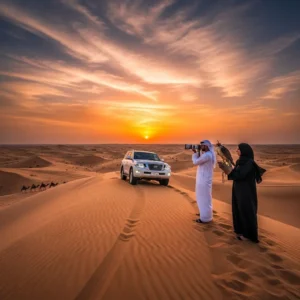
Holding a falcon is a classic photo op.
The bird needs a perch. The handler needs a space to work.
Gloves must be provided to protect your arm from the talons.
The area should be calm so the bird does not get stressed.
It is usually located near the entrance for arrival photos.
30. Costume Photography Studio
Many camps offer traditional Arabic dress for photos.
The clothes must be clean. They are worn by many people.
Regular laundering is a vital hygiene amenity here.
There should be separate changing areas for men and women.
Mirrors should be available.
31. Water Supply and Tanks
You don’t see this, but you need it.
Camps rely on water tanks. They must be large enough to last the night.
If a camp runs out of water, the toilets stop working.
Regular refilling by water trucks is part of the logistics.
The water must be clean and treated.
32. Power Generators
The desert has no electricity grid.
Large diesel generators power the Desert Safari Amenities.
They should be placed far away from the seating area to reduce noise.
Backup generators are essential. If one fails, the show must go on.
Silent generators are used by luxury camps to maintain peace.
33. Waste Management Systems
A camp produces a lot of trash.
Bins should be placed everywhere. They should be emptied regularly.
Recycling bins are becoming more common in eco-friendly camps.
Food waste must be disposed of carefully to avoid attracting pests.
A clean camp is a comfortable camp.
34. Pest Control Measures
Flies and ants live in the desert.
Good camps fog the area before guests arrive.
They use citronella candles or electric bug zappers.
Food covers are essential to keep flies off the buffet.
Regular pest control contracts are a sign of a well-managed facility.
35. Communication Systems
Cell reception can be spotty in the dunes.
Staff use walkie-talkies to coordinate.
Good camps have Wi-Fi boosters for their payment systems.
Some luxury camps offer free Wi-Fi for guests.
Emergency satellite phones are kept for deep desert safaris.
36. Transport Fleet Quality
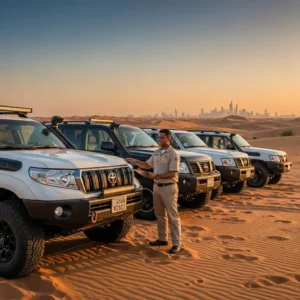
The cars are a mobile amenity.
They must be 4×4 Land Cruisers or similar.
Roll cages must be installed for safety.
Seatbelts must work for every passenger.
The AC in the car must be powerful.
The cars should be clean and smell fresh.
37. Bus Transfer Quality
If you take the bus option, comfort matters.
The bus should have high-back seats.
AC is non-negotiable.
There should be luggage space if needed.
The bus should be maintained to avoid breakdowns on the highway.
38. Driver Training and Uniforms
The staff are part of the service.
Drivers should be uniformed. This looks professional.
They must be trained in off-road driving.
They should speak basic English to communicate with guests.
Their hygiene and presentation reflect the company’s standards.
39. Customer Service Desk
Problems happen. You need a place to complain or ask for help.
A designated manager or help desk is a valuable facility.
They can resolve seating issues.
They can help with lost and found items.
They ensure that your feedback is heard.
40. Payment Facilities
Cash is not always king anymore.
Camps should have POS machines for credit cards.
Signal boosters are needed to ensure the machines work.
This allows you to buy souvenirs or extra drinks easily.
It adds convenience to the Desert Safari Amenities.
41. Eco-Friendly Features
Sustainability is a growing concern.
Some camps use solar lights.
They avoid single-use plastics. They use glass bottles or dispensers.
They have water-saving toilets.
These amenities appeal to the environmentally conscious traveler.
42. Private Dinner Setups
For romance, you need isolation.
Some camps offer a setup away from the main camp.
This requires a portable kitchen and service station.
It requires dedicated lighting and furniture.
It is a premium facility for anniversaries and proposals.
Check https://dubaidesertsafarie.com/ for romantic package options.
43. Group Booking Facilities
Corporate groups have different needs.
They need AV equipment for speeches.
They need large tables to sit together.
They might need branding areas for banners.
Camps must be adaptable to host these events.
44. Alcohol Bar Licensing
Not all camps serve alcohol.
Those that do must display their license.
The bar should be stocked with a decent variety.
Glassware should be used for VIPs, plastic for safety in general areas.
Bartenders should be trained to mix basic cocktails.
45. Vegetarian and Vegan Options
Dietary amenities are crucial.
The buffet must label the food clearly.
There should be substantial options for vegetarians, not just salad.
Vegan dishes should be available.
Chefs should be available to answer allergen questions.
46. Fresh Juice Stations
Freshly squeezed juice is a treat.
Some camps have a dedicated juice bar.
They offer orange, pineapple, and watermelon juice.
This is a paid extra usually, but a nice facility to have.
It is much better than the sugary powdered juice often served.
47. Ice Cream Counters
Kids (and adults) love ice cream.
A freezer with ice cream is a great amenity in the heat.
Some camps have soft-serve machines.
It is a small touch that adds to the enjoyment.
48. Shoe Racks
You take your shoes off to sit on the carpets.
There should be shoe racks to keep things organized.
Otherwise, there is a pile of shoes at the entrance.
It prevents tripping and makes finding your shoes easier.
49. Hand Sanitizer Stations
Since the pandemic, this is standard.
Dispensers should be at the entrance, the buffet, and the toilets.
They should be refilled regularly.
It provides peace of mind for hygiene-conscious guests.
50. Signage and Maps
Large camps can be confusing.
Clear signs pointing to the toilets, bar, and exit are needed.
They should be in English and Arabic.
Good signage prevents guests from getting lost or frustrated.
It improves the flow of foot traffic.
Comparing Amenities: Budget vs. Luxury
It is important to understand what you are paying for.
Budget Amenities:
-
Shared bus transport.
-
Trailer toilets.
-
Plastic chairs.
-
Limited buffet (chicken/rice).
-
No alcohol license.
Premium Amenities:
-
Land Cruiser pickup.
-
Permanent restrooms.
-
Cushioned seating.
-
Live BBQ and fresh bread.
-
Licensed bar.
Luxury Amenities:
-
Private car.
-
Hotel-grade toilets with attendants.
-
Table service (no lines).
-
Gourmet menu (steak/prawns).
-
AC tent or private Majlis.
When you book with https://htdesertsafari.com/, you can see these differences clearly.
The Role of Maintenance
Amenities are useless if they are broken.
A broken lock on a toilet door creates anxiety.
A flickering light is annoying.
A blown speaker ruins the show.
Good operators have a maintenance team on site. They fix issues immediately.
They check the cars daily. They clean the camp nightly.
Questions to Ask Before Booking
To ensure you get the best Desert Safari Amenities, ask these questions:
-
Is the toilet a trailer or a building?
-
Is there AC in the dining area?
-
Do you offer table service or is it self-service?
-
Is the camp wheelchair accessible?
-
Are beverages unlimited?
-
Is there a baby changing station?
The answers will tell you the quality level of the camp.
Conclusion
A desert safari is a bucket-list experience. Do not let bad facilities ruin it.
Understanding the Desert Safari Amenities allows you to make an informed choice. You can decide what matters to you.
If you value hygiene, book a premium camp. If you have back pain, book a camp with chairs. If you are hot, book an AC tent.
The desert is beautiful, but it is wild. The camp is your shelter. Make sure it is a comfortable one.
Spend a little extra to get the amenities that ensure safety and relaxation. Your memories will be of the golden sands and the starry night, not of the dirty bathroom or the long line for food.
Choose wisely. Use the resources at https://dubaidesertsafarie.com/ and https://royaldesertadventures.ae/ to find the best facilities in Dubai.
Enjoy the adventure, but enjoy it in comfort.
Frequently Asked Questions (FAQs)
1. What kind of toilet facilities can I expect at a desert safari camp? The quality of toilet facilities varies significantly based on the price of your ticket. Budget camps often utilize temporary trailer-style portable toilets. These can be cramped, hot, and sometimes lack proper supplies like toilet paper or soap. Standard and premium camps, however, invest in permanent brick-and-mortar restroom blocks. These facilities are much cleaner, have running water, flushable toilets, and are separated for men and women. Luxury camps go a step further by providing hotel-standard restrooms with marble finishes, air conditioning, and full-time attendants who clean the stalls after every use. If hygiene is a major concern for you, it is highly recommended to book a premium or luxury package to ensure access to these better facilities.
2. Is there air conditioning available in the desert camps? Most standard desert safari camps are open-air venues designed to give you an authentic outdoor experience. They typically use large industrial fans and evaporative mist coolers to manage the heat during the warmer months. However, these are not fully air-conditioned. If you require full climate control, you must look for specific “AC Tent” or “Glass House” packages. These are premium amenities found in luxury camps where the dining area is enclosed in a glass structure with powerful air conditioning units, allowing you to stay cool while watching the entertainment. During the winter months, AC is not needed, and some camps may even provide heaters or blankets.
3. Are the camps wheelchair accessible? The desert terrain is naturally difficult for wheelchairs due to the soft sand. However, many reputable camp operators have made efforts to be inclusive. They install concrete pathways or hard rubber mats that connect the drop-off point to the main dining area, the stage, and the restrooms. Accessible toilets with wider doors and grab bars are also available in better camps. However, activities like dune bashing and camel riding are generally not wheelchair accessible. It is crucial to inform the tour operator in advance so they can arrange for a suitable vehicle and ensure that the camp crew is ready to assist with accessibility needs.
4. Is the water at the camp safe to drink? Yes, the water provided at licensed desert safari camps is safe to drink. They typically use large dispensers with 5-gallon bottles of purified mineral water, which is the standard across Dubai. You will either be given sealed plastic cups or bottles. The tap water in the restrooms is generally for washing hands and is not intended for drinking. Premium camps may offer branded bottled water served at your table. It is important to stay hydrated, so ensure that the camp you choose offers unlimited water, which is a standard amenity in almost all packages.
5. Do the camps have baby changing facilities? This is an amenity that varies by camp. High-quality family-oriented camps usually install baby changing tables in the female restrooms, and sometimes in the male restrooms or a dedicated family room. However, budget camps often lack this facility, forcing parents to change diapers on benches or in their laps, which is not ideal. If you are traveling with an infant, you should specifically ask the operator about changing facilities before booking. Additionally, high chairs for feeding are available in some, but not all, dining areas.
6. Is there a place to charge my phone at the camp? Power outlets are not commonly available at individual tables in a desert camp, as the facility is powered by generators. However, most camps have a central charging station, usually located at the reception desk, the souvenir shop, or the photography counter. You can ask the staff to plug in your phone for you. Because these stations can be busy or unattended, it is strongly advised to bring a high-capacity power bank with you. This ensures you can keep your phone charged for photos and videos without leaving it out of your sight.
7. Are there vegetarian and vegan food options available? Yes, desert safari buffets are designed to cater to a wide range of international tourists. The standard menu always includes vegetarian dishes such as hummus, moutabal, tabbouleh, fatoush salad, plain rice, noodles, and a vegetable curry (often dal or mixed veg). Vegan guests can eat the salads, breads, and rice dishes. However, the variety for vegans might be limited compared to meat-eaters. If you have strict dietary requirements or severe allergies, it is best to contact the operator in advance. Premium camps are more likely to prepare a special meal for you if notified beforehand.
8. Is alcohol served at the camp? Alcohol service depends on the licensing of the specific camp. Many camps have a bar license that allows them to sell beer, wine, and spirits. However, alcohol is almost never included in the standard ticket price; it is an extra cost. You will need to purchase drinks from the designated bar area. It is important to note that during Islamic holidays and the holy month of Ramadan, no alcohol is served in any desert camp in compliance with UAE law. Always check the calendar and the camp’s policy if having a drink is important to your experience.
9. What safety equipment is available for dune bashing? Safety is the most critical amenity for the adventure portion of the trip. All vehicles used for dune bashing must be 4x4s (usually Toyota Land Cruisers) that are modified with internal roll cages. This protects passengers in the unlikely event of a rollover. Every seat must have a working seatbelt, and the driver will ensure you are buckled up before entering the dunes. The vehicles are also equipped with first aid kits and fire extinguishers. The tire pressure is lowered to ensure better traction and safety on the soft sand.
10. Are there prayer facilities at the camp? Yes, providing prayer facilities is a mandatory requirement for all licensed desert camps in Dubai. You will find separate prayer rooms or designated tents for men and women. These areas are kept clean and quiet, away from the noise of the entertainment stage. Fresh prayer mats are provided. There is also usually a washing area (Wudu) nearby with running water. This amenity ensures that Muslim guests can perform their prayers comfortably and on time during the safari.
11. Can I pay with a credit card at the camp? Most modern camps are equipped with Point of Sale (POS) machines to accept credit card payments for souvenirs, photos, alcohol, or quad bike rentals. However, because the camps are located in remote desert areas, the cellular signal that these machines rely on can sometimes be spotty or slow. It is highly recommended to carry some cash (AED) with you as a backup. This ensures you can still buy what you want even if the digital payment system is down. Small bills are also useful for tipping the staff and drivers.
12. Is there a designated smoking area? Yes, smoking is generally permitted in desert camps, but there are restrictions. Most camps have designated smoking areas or allow smoking in the open outdoor spaces. However, smoking might be prohibited in the main dining tent or under the covered canopies to prevent smoke from bothering other guests while they eat. Shisha smoking is a popular activity and is usually done in a specific Shisha lounge area. In VIP sections, you may be allowed to smoke Shisha at your table. Always look for signage or ask a staff member where you can smoke.
13. What happens if I have a medical emergency? All licensed camps take safety seriously. They are required to have staff members trained in basic first aid and CPR. Fully stocked first aid kits are available to treat minor cuts, bruises, or dehydration. For more serious medical emergencies, the camp management has direct communication lines with emergency services. The drivers are trained to transport patients quickly from the desert to the nearest main road where an ambulance can meet them, or drive directly to the nearest hospital, which is typically about 20-30 minutes away from the camp locations.
14. Are there lockers to store my bags? Lockers are not a standard amenity in most desert safari camps. You are generally expected to keep your belongings with you. If you have brought a backpack or a change of clothes, you can usually leave it in the car that brought you to the desert, as the same driver will take you back. However, do not leave valuables like wallets, passports, or expensive electronics in the car. Keep them in a small bag with you at your table. If you are in a VIP section, the area is more secure, but personal vigilance is always required.
15. Is there Wi-Fi available at the camp? Public Wi-Fi is not a common amenity in standard desert camps. You are encouraged to disconnect and enjoy the nature. However, the mobile data coverage (4G/5G) from major UAE providers like Etisalat and Du is usually quite strong in the desert camp areas. You can rely on your own mobile data plan for internet access. Some ultra-luxury camps or corporate event setups may provide a dedicated Wi-Fi hotspot for guests, but this is the exception rather than the rule.
16. How is the lighting at the camp? The lighting is designed to balance safety with atmosphere. The parking areas, restrooms, and main pathways are illuminated with bright floodlights or strong LED lights to prevent tripping on the uneven sand. The dining and seating areas usually feature softer, warm ambient lighting using traditional lanterns, fairy lights, and dimmers to create a relaxing Bedouin vibe. The stage area has professional performance lighting, including spotlights and strobes, to enhance the dance shows. It is bright enough to see your food but dark enough to see the stars if you step away from the center.
17. Are there showers available? Showers are generally not available for guests in standard desert safari camps. The water supply is limited and reserved for toilets and hand washing. However, if you are doing an overnight safari where you sleep in the desert, basic shower facilities might be provided in the morning. These are usually simple stalls. If a shower is essential to you, you must check the specific amenities of the overnight package you are booking. For evening safaris, you will not have access to a shower.
18. What kind of souvenirs can I buy at the camp? The souvenir shops at the camp offer a range of traditional and tourist items. You can find sand art bottles (where artists create designs with colored sand inside a bottle), Arabic scarves (ghutras), belly dancing outfits, fridge magnets, keychains, and small camel statues. There are also counters selling professional photos taken of you during the tour. Be aware that prices in these shops can be higher than in the city, so polite bargaining is often expected and accepted.
19. Is there a specific area for Henna painting? Yes, almost every camp has a dedicated Henna station. This is usually a small tent or a shaded corner with cushions where the Henna artists work. A small design on the hand is often included for free in your ticket price, while larger, more intricate designs on the arms or legs will cost extra. The area is well-lit to ensure the artist can work precisely. It is a popular amenity for ladies and children.
20. How do I know if a camp has good amenities before booking? The best way to judge the amenities is to look at the ticket tier and read recent reviews. If a package is extremely cheap, the amenities will likely be basic (trailer toilets, plastic chairs). If you book a “VIP” or “Premium” package, better amenities are guaranteed. Check the photos on the operator’s website to see the seating and toilet setup. Websites like https://dubaidesertsafarie.com/ and https://royaldesertadventures.ae/ are good places to compare packages that explicitly list their facilities, ensuring you know exactly what level of comfort to expect.