Desert Photo Experience: 21 Powerful Secrets for Stunning Dubai Safari Photography
Dubai is famous for towering skyscrapers and lavish beaches. Yet, the real magic lies just beyond the city limits.
It waits in the timeless, golden sea of the Arabian desert. This vast landscape offers the ultimate Desert Photo Experience.
For photo lovers, a desert safari is not just a tour. It is a dedicated mission to capture stunning, world-class images.
The light, the textures, and the cultural elements combine for spectacular results.
This guide reveals 21 powerful secrets to transform your snaps into professional-grade photographs. Master the Desert Photo Experience now.
We cover everything from timing and gear to booking the perfect Dubai Photography Tour.
1. Timing is Everything: Mastering the Desert Light
Light is the single most critical factor in achieving the best Desert Photo Experience. Poor light yields flat, boring images.
The Golden Hour Phenomenon
The famous Golden Hour is the undisputed champion for Sand Dune Photography.
It occurs shortly after sunrise and just before sunset.
The low angle of the sun casts incredibly long, soft shadows.
These shadows accentuate the natural curves and textures of the sand dunes.
This light turns the sand a rich, warm, golden hue. It creates a stunning, cinematic look for your Desert Photo Experience.
Always prioritize booking a safari that aligns with this precious window.
The Blue Hour Secret
The Blue Hour precedes the sunrise and follows the sunset. It is a period of cool, ambient light.
The sky deepens to a rich indigo color. This provides a stunning contrast to the warm desert foreground.
It is perfect for capturing silhouettes of camels or traditional architecture.
This brief period offers a moody, dramatic aesthetic for your Desert Photo Experience.
Midday Photography Challenges
Midday sun is extremely harsh and should generally be avoided for the best Desert Photo Experience.
The high sun eliminates shadows, making the sand look flat and washed out.
It also creates unflattering highlights and squinting subjects.
If forced to shoot at midday, seek shade or use diffusers and strong flash fill.
2. Camera Gear and Settings for Desert Photo Experience
The desert is harsh on equipment. Proper gear and settings are non-negotiable for a successful Desert Photo Experience.
Essential Gear for Sand Dune Photography
Bring a dust-proof or weather-sealed camera body if possible. Sand is the enemy of electronics.
Pack a wide-angle lens (16–35mm) to capture the vastness of the dunes.
A telephoto lens (70–200mm) is excellent for compressing perspective and isolating subjects.
Always use a UV filter to protect your main lens element from scratching by wind-blown sand.
Protecting Your Gear
Keep your camera in a sealed, dust-proof bag when not actively shooting.
Never change lenses on the dunes, as sand can easily enter the sensor.
Use a blower bulb, not your breath or a cloth, to remove sand particles.
The longevity of your equipment depends on these Desert Photo Guide tips.
Camera Settings for Sand
For the best Desert Photo Experience, switch your camera to Aperture Priority (Av or A) mode.
Use a small aperture (f/8 to f/11) to maximize depth of field, keeping the vast landscape sharp.
Shoot in RAW format. This captures maximum detail, crucial for post-processing the subtle desert colors.
Use a slightly slower shutter speed (e.g., 1/100th second) for creative motion blur on walking camels.
3. Composition Secrets: Capturing the Best Desert Shots
Effective composition turns a simple snapshot into one of the Best Desert Shots.
Rule of Thirds on Dunes
Apply the Rule of Thirds rigorously to your Sand Dune Photography.
Place the horizon line on the upper or lower third, never in the middle.
Use the crests and valleys of the dunes as leading lines to guide the viewer’s eye into the frame.
The natural flow of the sand provides exceptional compositional elements.
Foreground and Detail
Don’t ignore the foreground in your Desert Photo Experience.
Include interesting textures like desert grass, tracks in the sand, or a small bush.
These details add depth and scale to your landscape images.
A wide-angle lens excels at capturing these foreground elements.
Silhouettes and Contrast
The best time for powerful silhouettes is right at the edge of the Golden Hour.
Position your subject (camel, person, falcon) against the brightest part of the sky.
Expose for the sky, forcing the subject into a dark, striking shape.
This technique is a staple for the most dramatic Arabian Desert Picture.
4. Locations: Finding the Perfect Photo Spot
Not all dunes are equal. A true Dubai Photography Tour takes you to the most photogenic locations.
The Big Dune Formations
Search for areas with large, smooth, and relatively undisturbed dune formations.
These provide clean, flowing lines essential for quality Sand Dune Photography.
The private conservation areas often feature the most pristine sandscapes.
Operators like https://royaldesertadventures.ae/ specialize in accessing these exclusive areas.
Capturing the Traditional Camp
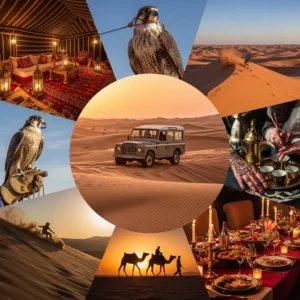
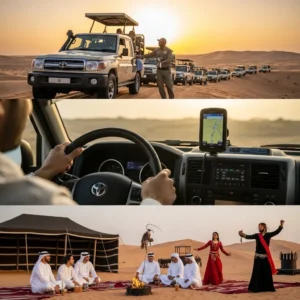
The Bedouin camp offers a wealth of cultural photography subjects.
Focus on details: the texture of the carpets, the patterns of the henna, the glow of the lanterns.
The camp becomes a fantastic backdrop for portraits, reflecting Dubai Safari Photo Tips.
Use a wide-angle lens to capture the whole camp atmosphere under the night sky.
Wildlife and Flora
Keep an eye out for desert wildlife, such as gazelles or the Arabian Oryx.
A telephoto lens is essential for safely capturing these shy creatures.
The contrast of the small, resilient desert flora against the sand makes for compelling close-ups.
5. Specialized Photography: Luxury Photo Safari
A specialized Luxury Photo Safari offers resources unavailable on standard tours.
Private Photo Shoot Dubai Experience
A private tour guarantees exclusivity. There are no crowds or strangers in your shots.
This is the only way to ensure truly personalized images for your Desert Photo Experience.
You control the itinerary, allowing for extended time at the most visually appealing spots.
This level of control defines a Private Photo Shoot Dubai.
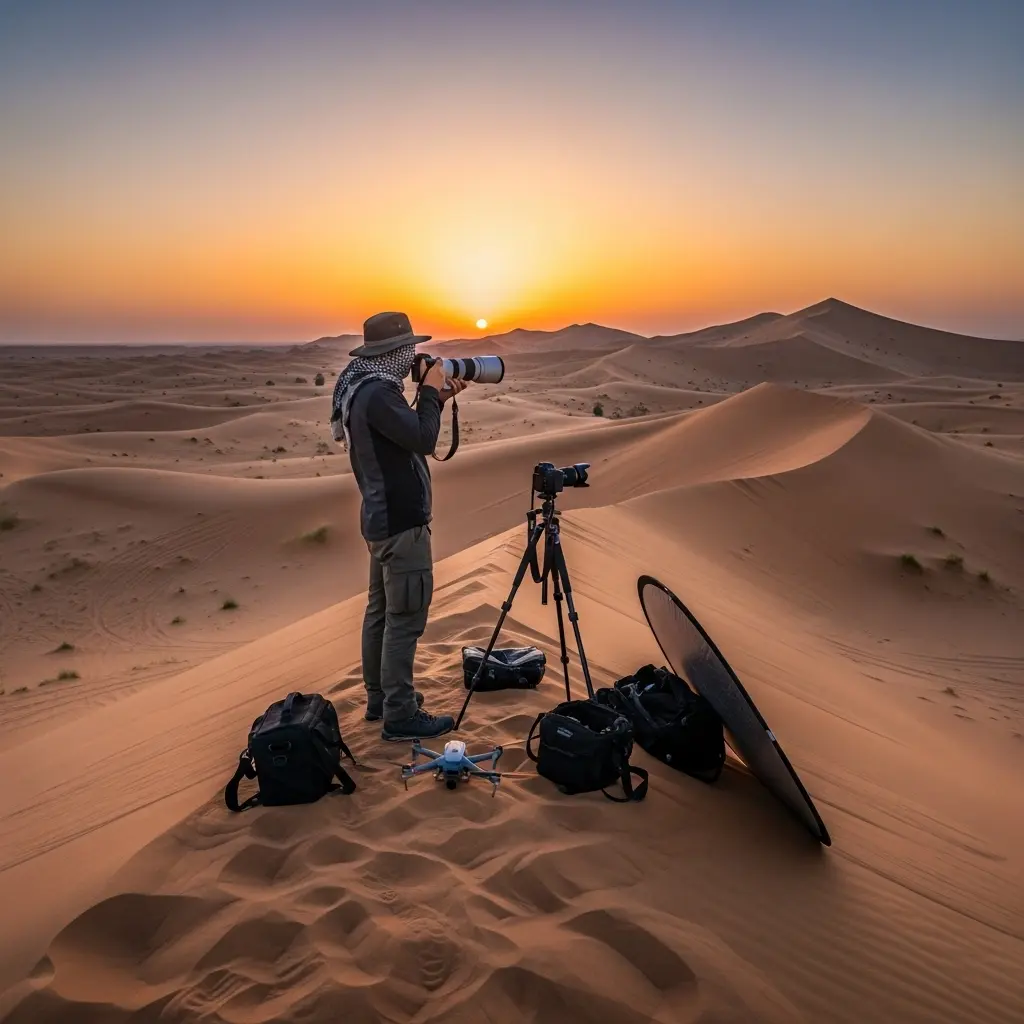
Drone Photography Rules and Timing
Check the Drone Photography Rules and permits needed in Dubai and the conservation zones.
Drones provide epic, unique perspectives of the dune patterns.
Fly during the Golden Hour for spectacular overhead shadow play.
The panoramic scale captured by the drone enhances any Desert Photo Experience.
Professional Guidance
Some luxury operators include a professional photographer.
They act as your photo guide, directing you to the best vantage points and assisting with settings.
This is invaluable for elevating the quality of your Best Desert Shots.
6. People and Portraiture: Dubai Safari Photo Tips
Adding people to the landscape gives scale and emotion to your Desert Photo Experience.
Posing with Falcons
The traditional Falconry display is a dynamic photo opportunity.
Focus on the intense connection between the handler and the bird.
Capture the falcon mid-flight using a fast shutter speed (1/1000th second or higher).
This is a signature element of the Dubai Photography Tour.
Traditional Attire and Henna
Encourage subjects to wear or pose with traditional Arabian attire provided at the camp.
The flowing fabric adds visual interest and authenticity.
Capture close-up detail shots of the intricate henna designs.
This provides cultural context to your Arabian Desert Picture.
Capturing the Action: Dune Bashing
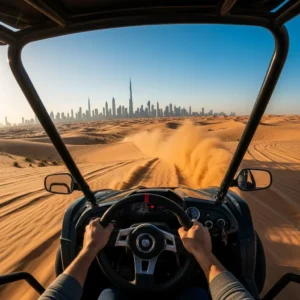
Photographing the Dune Bashing requires preparation. Shoot from outside the vehicle while it is parked.
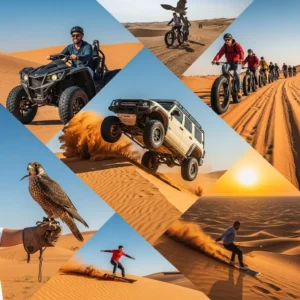
Use a fast shutter speed to freeze the motion of another 4×4 cresting a dune.
The dust kicked up by the vehicle adds drama and movement to the shot.
7. Post-Processing: Enhancing Your Sand Dune Photography
Editing is where your Desert Photo Experience truly comes to life.
Tonal Adjustments and Color Grading
Enhance the warmth of the sand by adjusting the white balance towards the warmer end of the spectrum.
Boost the contrast slightly to make the subtle dune textures stand out.
Use the color grading tools to apply a distinct look, often emphasizing oranges and deep blues.
This transforms raw files into stunning Sand Dune Photography.
Sharpening and Detail
Carefully sharpen the image to bring out the fine grain of the sand and the edges of the dunes.
Be cautious not to over-sharpen, which can introduce noise.
The vastness of the desert requires careful attention to detail throughout the frame.
Dealing with Haze
Desert haze, often caused by dust, can flatten the image.
Use the Dehaze tool in your editing software to restore clarity and contrast.
This small adjustment can dramatically improve the final quality of your Best Desert Shots.
8. Booking Strategies: Trusted Safari Booking for Photographers
A standard tour may not meet a photographer’s needs. Choose a specialized Trusted Safari Booking.
Vetting the Tour Guide
Ask operators specifically about their photography-focused tours.
A quality Desert Photo Guide understands the light and will drive to the best spots.
They will be patient and willing to wait for the perfect shot.
Look for reviews on sites like https://dubaidesertsafarie.com/ that mention photo quality and guide flexibility.
The Private Photo Shoot Dubai Advantage
The extra cost of a Private Photo Shoot Dubai is an investment in quality.
It allows you to dictate the schedule, ensuring you are at the prime location during the Golden Hour.
You avoid the constraints and rushing typical of a group tour.
Dedicated Photography Time
Confirm the package includes dedicated, non-rushed time for photography at the sunset spot.
Some standard tours rush this segment, ruining the opportunity.
This dedicated time is essential for the ultimate Desert Photo Experience.
9. The Digital Desert: Social Media and Sharing
Your Desert Photo Experience culminates in sharing your masterpiece.
Hashtags and Community
Use relevant hashtags to reach a wide audience, such as #DesertPhotoExperience and #DubaiPhotographyTour.
Engage with other photographers who specialize in Arabian Desert Picture themes.
Creating a Photo Story
Don’t just share single images. Create a visual story of your Full Safari Itinerary.
Show the journey, the thrill, the sunset, the camp details, and the cultural elements.
This narrative depth resonates strongly with viewers.
10. Night Sky Photography: Arabian Desert Picture
The desert, far from city lights, is an ideal location for night sky photography.
Gear for Stargazing
You will need a sturdy tripod, a wide-angle lens (f/2.8 or faster), and a remote shutter release.
Patience is key for this type of Desert Photo Guide adventure.
Settings and Technique
Use a long exposure (15 to 30 seconds) and a high ISO (1600–6400).
Focus manually on a bright star or the distant horizon.
The resulting images of the Milky Way over the dunes are incredibly rewarding.
This is a rare opportunity for an unforgettable Desert Photo Experience.
11. Ethical Photography: Respecting the Desert
Responsible photography maintains the beauty of the Desert Photo Experience for future generations.
Leave No Trace
Do not disturb the natural flow of the dunes or the desert flora.
Take all trash, including small items, with you when you leave.
Ethical considerations are part of the Desert Adventure Planning.
Respecting Privacy
Always respect the privacy of performers and camp staff.
Avoid intrusive or prolonged close-up shots without explicit consent.
This respectful approach ensures a positive Dubai Photography Tour for everyone.
12. Planning for the Season: Best Desert Shots Timing
The time of year influences the angle and quality of light, affecting the Best Desert Shots.
Winter Light (November–March)
The sun is lower in the sky, resulting in longer, more dramatic shadows.
The Golden Hour light is richer and lasts slightly longer.
This is the absolute Best Time to Visit Dubai for photography.
Summer Light (June–August)
The sun is directly overhead, minimizing shadows.
Shooting must be confined to the 30 minutes right at sunset to avoid harsh light.
Summer requires more patience and advanced editing skills for the best Desert Photo Experience.
13. Advanced Techniques: Creative Sand Dune Photography
Explore advanced creative techniques to differentiate your Sand Dune Photography.
Long Exposure for Atmosphere
Use Neutral Density (ND) filters to achieve ultra-long exposures during the day.
This can smooth the sand’s texture, giving it a soft, ethereal, painterly look.
This technique transforms the vastness into a tranquil Arabian Desert Picture.
Panorama and Stitching
Capture ultra-wide vistas by shooting a series of overlapping images for a panorama.
Stitching these together in post-processing creates stunningly detailed, high-resolution landscapes.
This is ideal for capturing the immense scale of the desert.
14. Essential Safari Photo Tips: Quick Wins
Quick Dubai Safari Photo Tips to guarantee success, even without a professional camera.
Use Your Smartphone’s Best Feature
Use your phone’s Portrait Mode to create a beautiful shallow depth of field.
This blurs the background, making your subject pop against the sand.
Shoot during the Golden Hour using the panoramic mode for wide-angle shots.
Clean Your Lens
Dust is the enemy. Clean your phone or camera lens before every single shot.
Even a tiny speck can ruin an otherwise perfect Desert Photo Experience.
Shoot Low Angle
Get down low to the sand. Shooting from a low angle emphasizes the size of the dunes.
This creates powerful foreground interest and dramatic scale.
15. The Private Photo Shoot Dubai Itinerary
A tailored Private Photo Shoot Dubai itinerary ensures all your photography needs are met.
Customized Time Slots
The itinerary is adjusted to meet the specific Golden Hour Safari requirements.
The guide ensures the vehicle is parked at the exact spot at the exact time.
This dedication to timing is the most valuable aspect of the private tour.
Model Management
If you have hired a model, the guide and driver assist with access and logistics.
The privacy of the location ensures an uninterrupted, focused shoot.
16. The Trusted Safari Booking Guarantee
Booking through a highly reputable provider guarantees a superior Desert Photo Experience.
Insurance and Safety
Ensure the operator has comprehensive insurance covering passengers and off-road activities.
A Trusted Safari Booking provides peace of mind, allowing you to focus solely on shooting.
Vehicle Reliability
A dedicated, well-maintained 4×4 ensures no breakdowns in remote areas, protecting your gear and schedule.
Reliable transport is critical for capturing the fleeting Best Desert Shots.
17. Editing for Social Media: Desert Photo Guide Filters
Specific editing techniques work best for sharing your Desert Photo Experience on platforms like Instagram.
Warm Tones and Contrast
Social media photos benefit from slightly warmer tones to emphasize the desert heat and sun.
A strong contrast applied subtly makes the subjects stand out on a small screen.
Cropping for Impact
Crop your images to an aspect ratio that suits the platform (e.g., 4:5 for Instagram).
Ensure the composition remains strong even after cropping.
18. Continuous Learning: Taking the Next Step
The Desert Photo Experience is a journey of continuous learning.
Research and Inspiration
Study the work of professional landscape and portrait photographers who specialize in the desert.
Use their techniques as inspiration for your next Dubai Photography Tour.
Practice Makes Perfect
The more you practice Sand Dune Photography, the better you will become at anticipating the light and framing the scene.
Every safari is a chance to refine your skills and capture the ultimate Arabian Desert Picture.
FAQs: Best Desert Experiences for Photo Lovers in Dubai
1. What is the single most important factor for achieving professional-level Desert Photo Experience images, and when does it occur?
The single most important factor for achieving professional-level Desert Photo Experience images is light quality, specifically during the Golden Hour Safari. This period occurs in the 30-45 minutes immediately following sunrise and immediately preceding sunset. The low sun angle provides long, soft shadows that dramatically enhance the texture and shape of the Sand Dune Photography. All photographers should time their Dubai Photography Tour to maximize this crucial window.
2. How does booking a Private Photo Shoot Dubai package benefit a photographer compared to joining a standard group safari?
Booking a Private Photo Shoot Dubai package primarily benefits a photographer through exclusivity and itinerary control. Exclusivity: You avoid having strangers in your landscape or portrait shots, guaranteeing clean, personal images. Control: You can dictate the schedule, ensuring the guide drives to the prime, uncrowded locations precisely during the Golden Hour Safari, rather than being rushed by a group schedule. This control is essential for professional-grade results.
3. What specific camera settings and gear are mandatory for effective Sand Dune Photography and protecting the equipment from the desert environment?
Mandatory gear for Sand Dune Photography includes a weather-sealed camera body, a UV protective filter on all lenses, and a blower bulb (for cleaning). Settings: Shoot in RAW format for maximum editing flexibility, use a small aperture like f/8 to f/11 for extensive depth of field, and set the shutter speed high (1/500th) for action or low (1/100th) for slight motion blur on subjects. Always keep a dust-proof bag handy.
4. Is drone photography permitted during a Desert Photo Experience, and what specific rules or limitations should be kept in mind for the Dubai Photography Tour?
Drone photography is permitted but heavily regulated during a Desert Photo Experience. Rules: You must secure a permit from the UAE General Civil Aviation Authority (GCAA). Many desert safari locations fall within restricted airspace or conservation areas, making unauthorized flight illegal. A private safari operator, particularly those found on https://royaldesertadventures.ae/, can often advise on or facilitate access to permitted drone areas, but strict adherence to local laws is mandatory.
5. What are the best methods for safely protecting sensitive camera equipment from the fine desert sand during a Desert Photo Experience?
The best methods for safely protecting sensitive equipment from sand involve proactive sealing and cleaning. Sealing: Keep the camera in a sealed, dust-proof bag when not in use. Never change lenses in the open desert, as sand can enter the sensor. Cleaning: Use a blower bulb to remove sand (never wipe, which can scratch). Avoid using zoom lenses in windy conditions, as they pump air and sand into the camera body.
6. How can a photographer utilize the Blue Hour during a Golden Hour Safari to capture unique and atmospheric images that differ from the sunset shots?
The Blue Hour (the period just before sunrise or after sunset) is best utilized for moody, high-contrast, and abstract images during a Golden Hour Safari. Technique: Use this cool light for silhouettes (subjects against the deep indigo sky). The ambient blue light contrasts beautifully with the warm glow of camp lanterns or vehicle lights, creating dramatic, artistic photos. A slightly longer exposure is often needed to capture the light effectively.
7. What are the essential Dubai Safari Photo Tips for capturing the cultural elements (Henna, Falcons, Attire) respectfully and effectively at the camp?
Essential Dubai Safari Photo Tips for cultural elements prioritize respect and detail. Respect: Always ask permission before taking close-up photos of local performers or staff. Attire: Focus on the textures and flowing lines of the traditional attire. Henna: Use a shallow depth of field (low aperture) to capture detailed close-ups of the intricate designs. The camp provides the ideal backdrop for authentic Arabian Desert Picture portraits.
8. Which external resources, like https://dubaidesertsafarie.com/, should photographers use to vet operators specializing in the Luxury Photo Safari experience?
Photographers should use external resources like https://dubaidesertsafarie.com/ and https://hafiztourism.com/ to vet operators by filtering reviews for specific keywords such as “photography tour,” “patient guide,” and “private safari.” Focus: Look for consistency in reviews that mention the guide’s knowledge of light, their willingness to pause for photos, and the quality of the unique locations they were taken to, which are hallmarks of a true Luxury Photo Safari.
9. What specific post-processing techniques are crucial for enhancing the colors and textures of a raw Sand Dune Photography image?
Crucial post-processing techniques for Sand Dune Photography include: 1. White Balance: Adjusting the white balance toward the warmer, orange tones to enhance the Golden Hour effect. 2. Contrast: Slightly boosting contrast and clarity to make the subtle sand textures stand out. 3. Dehaze: Applying a moderate dehaze to counteract atmospheric haze, ensuring crisp details across the vast landscape. These steps bring the raw image to life.
10. How can a photographer ensure they capture the scale and vastness of the desert in their Best Desert Shots compositions?
To capture the scale and vastness of the desert in their Best Desert Shots, a photographer should: 1. Use a Wide-Angle Lens: This maximizes the field of view. 2. Include a Subject: Place a small subject (a person, a camel, or a 4×4 vehicle) in the frame. The contrast between the small subject and the huge landscape immediately communicates scale. 3. Use Leading Lines: Utilize the long, sweeping lines of the dunes to guide the viewer’s eye deep into the background.
11. What is the impact of wind and light on the cleanliness of the dunes, and what does this mean for the Desert Photo Guide timing advice?
Wind and light have a massive impact on the cleanliness of the dunes. Impact: High winds erase tracks and create beautiful ripples, but they also risk sandstorms. Light: The Desert Photo Guide advises shooting early morning after a windy night, as the sun’s low angle reveals freshly cleaned, sharp dune lines. Shooting late afternoon means more tracks from other tours, so prioritizing Morning Safari Length can yield cleaner shots.
12. What are the safety precautions a photographer should take when attempting to capture dynamic shots of the Dune Bashing activity?
Safety precautions when capturing Dune Bashing include: 1. Staying Clear: Never stand in the path of the vehicle or on the crest of a dune during the activity. 2. Shooting from Safety: Only shoot from the edge of the designated area, or from a securely parked, stationary vehicle. 3. Gear Protection: Protect your camera from flying sand with a plastic covering or by standing upwind. Use a fast shutter speed (1/1000s) to freeze the action.
13. What is the minimum equipment required for a beginner to achieve decent Arabian Desert Picture photos using just a smartphone?
The minimum equipment for a beginner to achieve a decent Arabian Desert Picture using a smartphone is: 1. A small Tripod: Essential for stable shots during sunset or the Blue Hour. 2. Lens Cleaning Cloth: To constantly remove dust from the phone camera lens. 3. Smartphone Editing Apps: Capable apps for adjusting brightness, contrast, and color temperature (e.g., Lightroom Mobile). Using the phone’s Portrait Mode for subjects can create professional-looking depth of field.
14. How can a private tour booked through a service like https://royaldesertadventures.ae/ facilitate advanced, multi-location shooting for a single Desert Photo Experience?
A private tour booked through a service like https://royaldesertadventures.ae/ facilitates advanced, multi-location shooting by offering time and location flexibility. Facilitation: The private guide can quickly move the 4×4 between entirely different environments (e.g., from a red-sand area to a pale-sand conservation zone) within a short window. This allows the photographer to capture a diverse range of Desert Photo Experience styles, a logistic impossibility for standard group tours.
15. When planning a Desert Photo Experience, how important is it to allocate time for the return journey, and how does this affect the sunset viewing?
It is extremely important to allocate sufficient time for the return journey, as this directly dictates the time available for sunset viewing. Impact: The final return time to the city is often fixed. If the photographer takes too long at the sunset spot, the entire Full Safari Itinerary is rushed, potentially causing the camp dinner and shows to be missed or cut short. A reliable operator will gently manage this time, ensuring the photographer gets their shots without compromising the schedule of the dinner.