A Desert Flora Guide: Discovering the Resilient Life of the Sands
At first glance, the Arabian Desert can seem like an endless, uniform ocean of sand—a beautiful but barren landscape. However, for those who take the time to look closer, a secret and incredibly resilient world reveals itself. The desert is home to a fascinating and diverse array of flora, a kingdom of plants that have mastered the art of survival in one of the world’s most extreme environments.
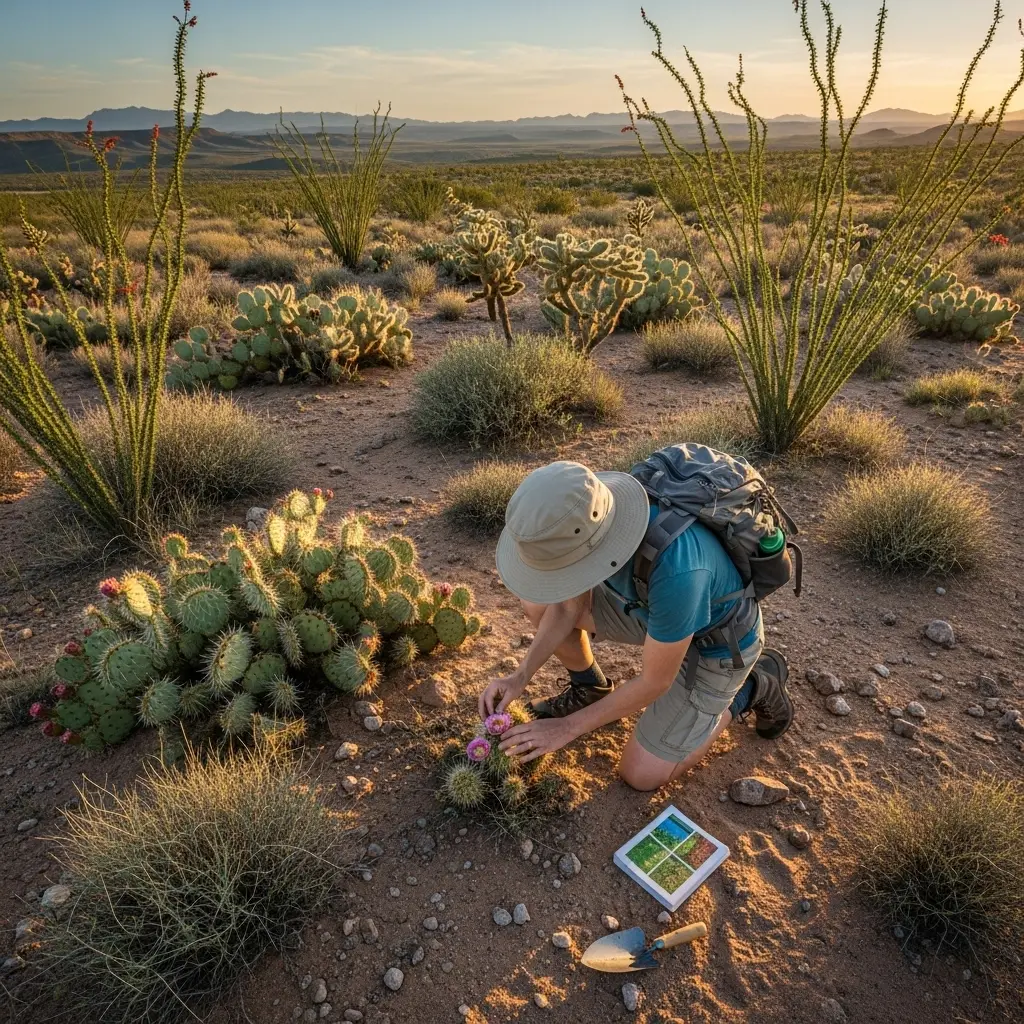
A nature-focused desert safari provides a unique opportunity to witness these miracles of adaptation. It is a chance to move beyond the adrenaline of the dunes and connect with the quiet, tenacious life that underpins the entire desert ecosystem. This in-depth Desert Flora Guide will introduce you to the remarkable plants you can find, the genius of their survival strategies, and the deep knowledge the Bedouin people had of them for medicine, food, and tools.
Prepare to see the desert not as an empty space, but as a complex and beautiful garden, filled with stories of survival, ingenuity, and life.
The Genius of Desert Plant Adaptation
Before we profile the individual plants in this Desert Flora Guide, it’s essential to understand the incredible strategies they use to survive. Desert plants are masters of engineering, having evolved sophisticated ways to cope with a lack of water, intense heat, and salty soil.
Conquering Drought
The biggest challenge is the scarcity of water. Plants combat this in several ways:
- Deep Taproots: Some plants, like the mighty Ghaf tree, send a single, incredibly long taproot deep into the ground—sometimes over 30 meters (100 feet)—to reach the subterranean water table.
- Shallow, Sprawling Roots: Others have a wide, shallow root system that can quickly absorb the maximum amount of water from the rare desert rains before it evaporates.
- Water Storage: Succulent plants store water in their thick, fleshy leaves or stems, creating their own internal reservoir to draw upon during dry spells.
Beating the Intense Heat
Surviving scorching temperatures requires a different set of tools:
- Small or Waxy Leaves: Many desert plants have tiny leaves or a thick, waxy coating. Both features reduce the surface area exposed to the sun and minimize water loss through evaporation (transpiration).
- Reflective Surfaces: Some plants are covered in fine, light-colored hairs that reflect the intense sunlight, keeping the plant cool.
- Dormancy: Many annual plants have a short, fast life cycle. They will sprout, flower, and produce seeds within a few weeks of a rain shower, and their seeds will then lie dormant in the soil for months or years, waiting for the next rain.
Thriving in Salty Soil
The desert soil can have a high concentration of salt, which is toxic to most plants. Plants that can thrive in these conditions are called halophytes. They have special mechanisms to filter out or excrete excess salt, allowing them to grow where others cannot.
A Field Guide to the Key Plants of the Arabian Desert
Equipped with this knowledge, let’s explore some of the specific plants you might encounter. A safari that includes a nature walk is a perfect way to use this Desert Flora Guide.
The Ghaf Tree (Prosopis cineraria)
The Ghaf is the national tree of the UAE and a true symbol of resilience. This incredibly hardy, evergreen tree is the king of the desert. Its deep root system allows it to find water far below the surface, meaning it can stay green even in the harshest summer. For centuries, it has been a source of shade, shelter, and food (its leaves and pods are nutritious for livestock) for both humans and wildlife.
The Date Palm (Phoenix dactylifera)
While often found in cultivated oases, the Date Palm is the “tree of life” in Arabia. Its importance to the region’s culture and history cannot be overstated. It provided the most vital food source—the energy-rich date—and every part of the tree was used. Its fronds were woven to make shelters (barasti), baskets, and mats, while its trunk was used in construction.
Acacia Tree (Acacia tortilis)
The iconic, flat-topped Acacia tree is a common sight on the desert plains. It is a vital part of the ecosystem, providing shade and a micro-climate that allows other, smaller plants to grow beneath it. Its leaves and pods are a key food source for camels and gazelles, and its thorny branches offer protection for nesting birds. The Bedouins used its hard, durable wood to make tools and for firewood.
Sodom’s Apple (Calotropis procera)
This is one of the most common shrubs you will see in the desert. It is easily identifiable by its large, grey-green, fleshy leaves. It is an extremely hardy plant that can thrive in disturbed soil. While its milky-white sap is poisonous, the Bedouins had a vast knowledge of its medicinal properties, using it in carefully prepared amounts to treat various ailments, from skin conditions to scorpion stings.
Desert Hyacinth (Cistanche tubulosa)
Spotting a Desert Hyacinth is a rare and special treat. This is a fascinating parasitic plant that has no chlorophyll (it is not green). It lives underground, attached to the roots of a host shrub. After a good rain, it sends up a spectacular, thick stalk covered in bright yellow flowers. It is highly prized in traditional medicine.
Saltbush (Atriplex)
A perfect example of a halophyte, the Saltbush is a low-lying shrub that thrives in the salty soil of desert flats. Its leaves are often covered in tiny, greyish scales that help it manage its salt intake. It is a crucial plant in the desert ecosystem and a primary source of food for grazing camels, a fact that is central to any Desert Flora Guide about the region.
The Bedouin Pharmacy: Traditional Uses of Desert Plants
For the Bedouins, the desert was not an empty space but a living pharmacy and pantry. Their deep ethnobotanical knowledge, passed down through generations, was essential for their survival.
This knowledge transformed the humble vegetation of the desert into a vital resource. Plants were used to treat everything from headaches and stomach ailments to more serious issues like snake bites and scorpion stings. The sap, leaves, roots, and seeds were all used to create traditional remedies. For example, the leaves of some plants were boiled to make a tea to soothe coughs, while the ash from others was used as an antiseptic powder for wounds.
This deep connection is something to remember when you see these plants on your tour. A specialized cultural safari, like some found on https://royaldesertadventures.ae/, may even include a guide who can point out these plants and explain their uses. Exploring reviews on https://dubaidesertsafarie.com/ and https://hafiztourism.com/ can help you find operators known for their knowledgeable guides.
A Bedouin Ethnobotany Chart
Frequently Asked Questions (FAQs)
1. What is the national tree of the UAE, and why is it so important? The national tree of the UAE is the Ghaf tree (Prosopis cineraria). It was chosen for its incredible resilience and its deep cultural significance. It is a symbol of stability, peace, and tolerance in the desert environment. It can survive for decades in the harsh climate, providing shade, shelter, and food for both wildlife and livestock, making it a true “life-giver.”
2. What is the ‘Desert in Bloom’ phenomenon? This is a rare and magical event that occurs after the desert receives significant and widespread winter rains. The dormant seeds of countless annual wildflowers, which can lie in the sand for years, all germinate at once. For a few short weeks, the desert floor can be transformed into a stunning carpet of purple, yellow, and white flowers. It is a breathtaking sight.
3. Are there poisonous plants in the Dubai desert that I should avoid? Yes, several desert plants are poisonous if ingested or if their sap comes into contact with the skin. A prime example is Sodom’s Apple, whose milky sap is toxic. Another is the Desert Gourd, whose fruit is extremely bitter and poisonous. On a guided nature walk, your guide will point these out. It is a critical rule of this Desert Flora Guide to never touch or eat any plant unless you are with an expert.
4. What are ‘halophytes’? Halophytes are plants that are salt-tolerant. They have unique physiological adaptations that allow them to grow in soil with a high concentration of salt, such as in coastal salt flats or inland desert basins. They are a vital part of the desert ecosystem, as they can thrive in areas where most other plants cannot. The Saltbush is a perfect example.
5. What is a “Desert Rose”? Is it a flower? A Desert Rose is not a plant. It is a beautiful and intricate crystal formation, typically of gypsum or barite, that includes large amounts of trapped sand grains. The crystals form in a rosette shape, resembling a blooming rose. They are found in arid, sandy conditions and are a fascinating geological feature, but they are not part of the desert flora.
6. How did the Bedouins find and use Desert Truffles? Desert Truffles, known as Faqah, are a highly prized delicacy that grows underground, often near the roots of the Desert Sunflower plant. They appear in the spring after winter rains. The Bedouins were expert foragers, able to spot the very subtle cracks in the soil that indicated a truffle was growing beneath. They are a rich source of protein and have a unique, earthy flavor.
7. Can I take a plant or its seeds home with me as a souvenir? Absolutely not. The desert ecosystem is extremely fragile. Removing any plant, seed, or even rock from its natural environment is prohibited, especially in a protected area like the Dubai Desert Conservation Reserve. The best way to take a memory home is through your photographs.
8. How do desert plants get pollinated in such a vast landscape? Desert plants rely on a variety of pollinators. Many are pollinated by the wind. Others rely on the desert’s hardy insects, such as bees, wasps, and moths. Some plants are also pollinated by birds and bats. It is a tough and competitive environment for pollination, which is why many desert plants have evolved to be very hardy self-pollinators as well.
9. What is the role of the Dubai Desert Conservation Reserve (DDCR) in preserving flora? The DDCR plays a vital role. By protecting a massive area of the desert from development, grazing, and traffic, it allows the native flora to grow in a natural, undisturbed state. The DDCR is a living laboratory and a gene bank for the region’s indigenous plants, ensuring their survival for future generations. A visit to the DDCR is the best way to use this Desert Flora Guide.
10. What is the difference between a tree and a shrub in a desert context? In a desert environment, the line can be blurry. Generally, a tree is defined as a woody plant with a single, main trunk, like the Ghaf. A shrub is a woody plant with multiple stems branching out from the base, like the Saltbush. However, due to the harsh conditions, many desert trees may grow in a more stunted, shrub-like form.
11. Is it true that some desert plants only germinate after a fire? This is a characteristic of some ecosystems, particularly those with frequent wildfires like in Australia or California. However, it is not a major feature of the Arabian Desert ecosystem, where large-scale natural fires are very rare. Desert plants here are primarily adapted to germinate in response to rainfall.
12. What are the most common trees I will see on a desert safari? The two most common and important trees you will see are the Ghaf tree and the Acacia tree. The Ghaf is the tall, green, single-trunked tree, while the Acacia is the classic, thorny, flat-topped “umbrella” tree that is so iconic of the African and Arabian landscapes.
13. Does the Date Palm grow wild in the desert? While the Date Palm is perfectly adapted to arid conditions, it requires a consistent source of groundwater to thrive. For this reason, it does not typically grow wild in the open, sandy desert. It is the defining feature of an oasis, a fertile area where underground water comes to the surface, and is most famously seen in vast, cultivated plantations.
14. What is the national flower of the UAE? The national flower of the UAE is the Tribulus omanense. It is a small, low-growing plant that produces delicate, bright yellow flowers. It is incredibly resilient and can be found blooming on the gravel plains and dunes, adding a beautiful splash of color to the landscape.
15. How did Bedouins use plants for making tools or shelters? The Bedouins were masters of using every available resource. The strong, durable wood from the Ghaf and Acacia trees was used for the central poles and support structures of their tents. The flexible fronds of the date palm were woven into mats for flooring and walls (barasti), as well as ropes, baskets, and fans.
16. What does “ethnobotany” mean? Ethnobotany is the scientific study of the relationship between people and plants. It explores how a particular culture (like the Bedouins) has used native plants for food, medicine, tools, clothing, and rituals. It is a fascinating field that combines botany, history, and anthropology, and it is the key to understanding the traditional knowledge in this Desert Flora Guide.
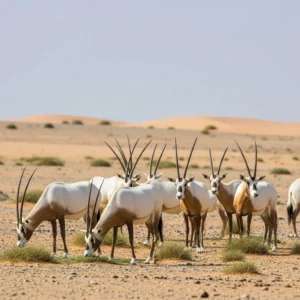
17. Do the desert animals eat these plants? Yes, the desert flora is the foundation of the entire food web. Camels, Arabian Oryx, and gazelles are all herbivores that graze and browse on the leaves, pods, and shoots of various shrubs and trees, particularly the Acacia and Saltbush.
18. What is the best way to identify plants on my safari? The best way is to go with a knowledgeable guide on a dedicated nature tour. A good guide will act as your personal, walking Desert Flora Guide. You can also use plant identification apps on your smartphone, which can often identify a plant from a photograph you take.
19. Why do so many desert plants have thorns? Thorns are a crucial defense mechanism. In an environment where vegetation is scarce, plants are a valuable source of food and moisture for animals. Sharp thorns, like those on the Acacia tree, are a plant’s way of protecting itself from being eaten by herbivores, ensuring its own survival.
20. What is the most important lesson from the desert’s flora? The most profound lesson from the flora of the desert is the power of adaptation and resilience. These plants demonstrate that life can not only survive but thrive in the most challenging of conditions through incredible ingenuity. They are a powerful symbol of the tenacity of life and a testament to the secret, hidden beauty of the desert.