
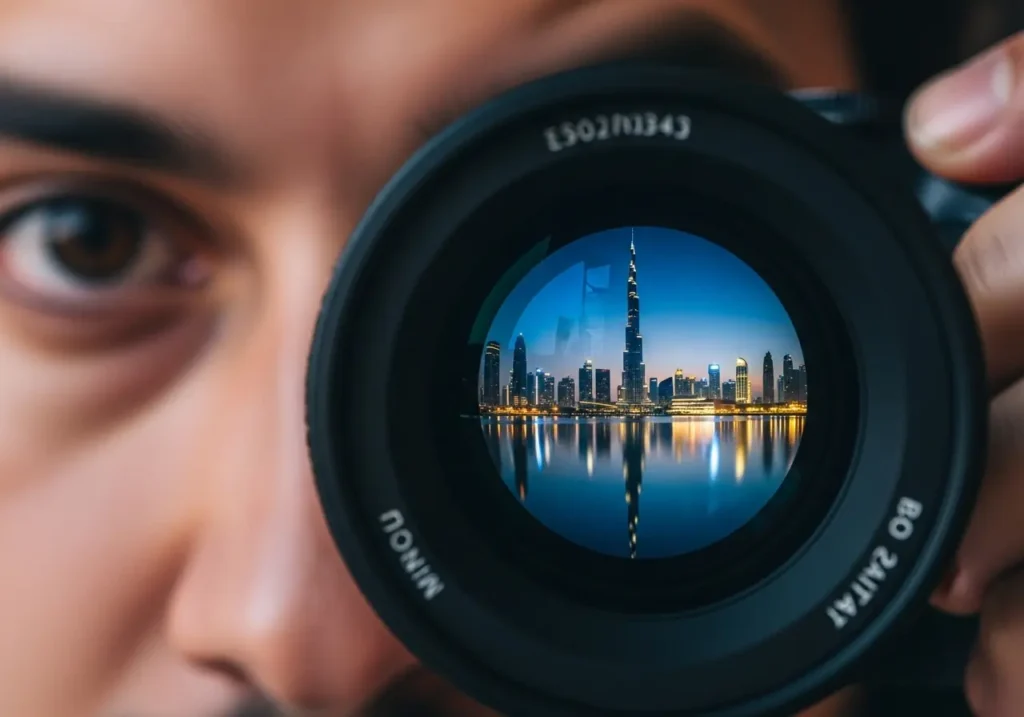
The Ultimate 2025 Guide to Capture Stunning Views in Dubai
Welcome to the most definitive and in-depth guide to help you Capture Stunning Views in Dubai, a city that is a true paradise for photographers. This is not just a list of locations; it is a comprehensive masterclass in transforming what you see with your eyes into breathtaking, unforgettable images.
In a city celebrated for its futuristic architecture and timeless desert landscapes, the opportunities to Capture Stunning Views are endless. It is a place where the golden light of dawn kisses the top of the world’s tallest building, and the fiery sunset melts into the serene waters of the Arabian Gulf.
This exhaustive guide will be your personal escort on a photographic journey through this incredible metropolis. We will explore the essential gear you need for 2025, master the technical skills to elevate your photography, and uncover the secrets of the most iconic locations. We will cover every practical detail and insider tip you need to plan the perfect trip to Capture Stunning Views.
Prepare to be inspired by the interplay of light, landscape, and architecture. Discover why learning to Capture Stunning Views in Dubai is more than just a hobby—it is an essential and unforgettable part of any visit to this incredible city.
What Makes Dubai a Photographer’s Dream?
To learn how to Capture Stunning Views, you must first understand your canvas. Dubai offers a unique combination of elements that make it one of the most photogenic cities on Earth.
The Unique Desert Light
The light in Dubai has a magical quality, largely due to its desert climate. The fine atmospheric dust acts as a natural softbox, creating incredibly warm and vibrant colors during the “golden hours” of sunrise and sunset. This is the secret ingredient to many a stunning photograph.
A Symphony of Architectural Marvels
Dubai’s skyline is a testament to human ambition and a playground for architectural photographers. From the soaring spire of the Burj Khalifa to the intricate form of the Museum of the Future, the city is filled with iconic structures that provide powerful subjects. The ability to Capture Stunning Views of this architecture is a key skill.
The Power of Natural Contrasts
Nowhere else in the world can you find such a dramatic juxtaposition of landscapes. The futuristic city is flanked by the timeless, rolling dunes of the Arabian Desert on one side and the tranquil, turquoise waters of the Arabian Gulf on the other. This contrast provides an endless source of creative inspiration.
A Tapestry of Rich Culture
Beyond the modern facade, Dubai has a rich and vibrant culture that offers incredible photographic opportunities. The bustling souks, the historic Dubai Creek, and the diverse faces of its residents provide a wealth of stories waiting to be told through your lens. A true photographer aims to Capture Stunning Views of this cultural heart.
A City of Spectacular Events
Dubai loves a celebration, and these events are a fantastic opportunity for photography. The world-famous New Year’s Eve fireworks, the daily displays during the Dubai Shopping Festival, and various cultural festivals provide dynamic and colorful subjects.
Essential Gear for 2025: What’s in a Pro’s Bag?
While the best camera is the one you have with you, having the right gear can significantly expand your ability to Capture Stunning Views. Here’s a look at an ideal kit for 2025.
The Camera Body: DSLR vs. Mirrorless
The debate continues, but for 2025, modern mirrorless cameras have the edge due to their compact size, electronic viewfinders, and advanced autofocus systems. Look for a camera with a high-resolution full-frame sensor and excellent low-light performance.
The Holy Trinity of Lenses
To be prepared for any situation and to truly Capture Stunning Views, most professional photographers rely on three key lenses:
- The Ultra-Wide Angle Zoom (e.g., 16-35mm f/2.8): This is your lens for epic landscapes, grand architectural shots, and dramatic interior photos.
- The Standard Zoom (e.g., 24-70mm f/2.8): This is the ultimate workhorse. It is perfect for street photography, environmental portraits, and general walk-around shooting.
- The Telephoto Zoom (e.g., 70-200mm f/2.8): This lens is for compressing perspectives, isolating details in the architecture, and capturing candid portraits from a distance.
The Essential Tripod
A sturdy yet lightweight tripod is non-negotiable if you are serious about photography. It is absolutely essential for:
- Shooting in low light (sunrise, sunset, blue hour, night).
- Creating sharp, detailed landscape images.
- Long exposure photography (e.g., light trails, silky water).
Filters: The Secret Sauce
- Circular Polarizer (CPL): This is the most important filter. It reduces glare on water and glass, deepens the blue of the sky, and boosts color saturation.
- Neutral Density (ND) Filters: These act like sunglasses for your lens, allowing you to use slow shutter speeds even in bright daylight. They are the key to creating those beautiful, silky water effects.
Smartphone Photography Gear
You can absolutely Capture Stunning Views with just your phone. A few accessories can elevate your mobile photography:
- A Small Tripod and Phone Mount: For stability in low light.
- Lens Attachments: Clip-on wide-angle or telephoto lenses can expand your creative options.
- Essential Apps: Snapseed and Adobe Lightroom Mobile are powerful, free editing apps that can transform your phone photos.
The Aerial Perspective: Drones
Drones offer a breathtaking and unique perspective of Dubai’s landscape. However, be aware that flying a drone in the UAE is subject to strict rules and regulations. You must register your drone and obtain the necessary permits from the Dubai Civil Aviation Authority (DCAA).
Mastering the Fundamentals: Technical Skills to Capture Stunning Views
Great gear is useless without a solid understanding of the fundamentals of photography. Mastering these technical skills is the key to unlocking your creative potential.
Understanding the Exposure Triangle
This is the foundation of all photography.
- Aperture (f-stop): Controls the amount of light entering the lens and the depth of field (how much of your image is in focus). A low f-number (e.g., f/1.8) creates a shallow depth of field (blurry background), while a high f-number (e.g., f/11) creates a deep depth of field (everything in focus).
- Shutter Speed: Controls how long the camera’s sensor is exposed to light. A fast shutter speed (e.g., 1/1000s) freezes motion, while a slow shutter speed (e.g., 10s) blurs motion.
- ISO: Controls the sensor’s sensitivity to light. A low ISO (e.g., 100) produces the highest quality image, while a high ISO (e.g., 3200) allows you to shoot in the dark but can introduce digital “noise” or grain.
The Power of Shooting in RAW
If your camera allows it, always shoot in RAW format instead of JPEG. A RAW file is like a digital negative; it captures all the data from the sensor, giving you much more flexibility to adjust exposure, colors, and details during the editing process. It is a game-changer if you want to Capture Stunning Views.
Mastering Focus for Ultimate Sharpness
- Single Point AF: Use this mode to tell your camera exactly where you want it to focus. It’s perfect for static subjects like architecture.
- Manual Focus: For landscape and night photography, switching to manual focus is often best. Use your camera’s live view screen, magnify the image, and adjust the focus ring until the details are perfectly sharp.
Compositional Rules to Live By
How you arrange the elements in your frame is what turns a snapshot into a photograph.
- Rule of Thirds: Imagine your frame is divided into a 3×3 grid. Place your key subjects along these lines or at their intersections for a more balanced and dynamic composition.
- Leading Lines: Use roads, pathways, or the curve of a dune to create lines that lead the viewer’s eye into the image.
- Framing: Use elements in the foreground, like an archway or a window, to create a natural frame around your main subject.
- Symmetry and Patterns: Dubai’s architecture is filled with incredible symmetry and repeating patterns. Use these to create powerful, graphic images.
- Using Scale: To show the immense scale of Dubai’s buildings or the vastness of the desert, include a person or a car in your shot.
Top 11 Locations in Dubai to Capture Stunning Views (2025 Edition)
Now, let’s explore the best locations in the city to put your skills to the test.
1. Burj Khalifa & The Dubai Fountain
This is the undisputed king of Dubai photo spots.
- Why it’s a top spot: It’s the world’s tallest building, offering a powerful vertical subject.
- Best time to shoot: Blue hour, just after sunset, when the building’s lights are on but there is still color in the sky.
- Photo opportunities: The classic shot from the Souk Al Bahar bridge, the reflections in the Dubai Fountain, long exposures of the fountain show.
- Technical tip: Use a wide-angle lens and a tripod. Bracket your exposures to handle the high contrast between the bright lights and the dark sky.
2. The Arabian Desert
The desert is essential for any photographer seeking an authentic Dubai Cultural Experience.
- Why it’s a top spot: It offers a landscape of pure, minimalist beauty.
- Best time to shoot: Sunrise and sunset golden hours.
- Photo opportunities: Sweeping dune scapes, camel caravans, sunset silhouettes, and action shots of dune bashing.
- Technical tip: A polarizing filter will make the sky a deeper blue. Use a telephoto lens to compress the layers of distant dunes. An organized tour with a company like Dubai Desert Safarie is the safest and easiest way to access the best spots.
3. Al Fahidi Historical Neighbourhood
This is where you can Capture Stunning Views of Old Dubai’s soul.
- Why it’s a top spot: The narrow alleyways, traditional wind towers, and rustic textures provide endless character.
- Best time to shoot: Early morning to get soft, directional light filtering into the alleyways and to avoid the crowds.
- Photo opportunities: Architectural details, street scenes, the contrast between old buildings and the modern skyline in the distance.
- Technical tip: A standard zoom lens (24-70mm) is perfect for this area. Look for interesting patterns of light and shadow.
4. The Dubai Creek & Souks
This is the vibrant, beating heart of the city’s heritage.
- Why it’s a top spot: The bustling energy of the souks and the constant movement of the abras on the creek.
- Best time to shoot: Late afternoon, when the light is golden and the souks are at their busiest.
- Photo opportunities: Portraits of vendors, details of spices and gold, action shots of the abras crossing the creek.
- Technical tip: Use a fast shutter speed to freeze the motion of the busy scenes. Be respectful when photographing people.
5. Jumeirah Beach & Burj Al Arab
This is the iconic postcard view of Dubai.
- Why it’s a top spot: It offers the world-famous view of the sail-shaped Burj Al Arab hotel.
- Best time to shoot: Sunset is the classic time. The blue hour after sunset is also magical.
- Photo opportunities: The classic shot of the hotel from Sunset Beach, long exposures of the waves crashing on the shore with the hotel in the background.
- Technical tip: Use a tripod and an ND filter to create a silky smooth effect on the water.
6. Dubai Marina & JBR
This is the “canyon of skyscrapers,” a vision of the future.
- Why it’s a top spot: The density of the towering, futuristic buildings creates a stunning urban landscape.
- Best time to shoot: Blue hour and night, when all the buildings are lit up.
- Photo opportunities: Shots from the Marina Walk, long exposures of the light trails from the boats, panoramic views from one of the bridges.
- Technical tip: A tripod is essential for sharp night shots. Look for reflections in the calm waters of the marina.
7. The Palm Jumeirah
This man-made island offers several unique perspectives.
- Why it’s a top spot: The view of the Atlantis hotel and the panoramic views of the Dubai Marina skyline from the crescent.
- Best time to shoot: Sunset, looking back towards the Marina.
- Photo opportunities: The classic shot of the Atlantis, the skyline view from the Palm Jumeirah Boardwalk.
- Technical tip: The monorail offers some interesting elevated viewpoints as it travels down the trunk.
8. The Dubai Frame
This landmark offers a unique, symbolic way to Capture Stunning Views.
- Why it’s a top spot: It literally frames the city, with Old Dubai on one side and New Dubai on the other.
- Best time to shoot: Late afternoon and sunset.
- Photo opportunities: The view from the top, and also photos of the Frame itself from the surrounding Zabeel Park.
- Technical tip: A wide-angle lens is needed to capture the full view from the top.
9. Al Qudra Lakes & Love Lake
An unexpected natural oasis in the desert.
- Why it’s a top spot: A beautiful combination of desert, water, and wildlife.
- Best time to shoot: Sunrise and sunset.
- Photo opportunities: Reflections of the dunes in the water, wildlife shots of oryx and birds, the iconic heart shape of Love Lake (requires a drone).
- Technical tip: A long telephoto lens is essential for wildlife photography.
10. Jaddaf Waterfront
A modern cultural hub with a serene atmosphere.
- Why it’s a top spot: It offers a unique view of the Business Bay and Downtown skyline across the creek, framed by the contemporary art of the sculpture park.
- Best time to shoot: Blue hour, when the city lights reflect in the water.
- Photo opportunities: The Jameel Arts Centre, the outdoor sculptures, the skyline reflections.
- Technical tip: The area is very peaceful, allowing you to take your time and set up your tripod without being disturbed.
11. A Rooftop Bar
An elevated perspective can completely transform your photography.
- Why it’s a top spot: It allows you to get above the street-level chaos and Capture Stunning Views of the city’s grand layout.
- Best time to shoot: Sunset and blue hour.
- Photo opportunities: Cityscape panoramas, long exposures of the traffic below creating light trails.
- Technical tip: Check the bar’s policy on tripods beforehand; some do not allow them. A small “gorillapod” can be a discreet alternative.
Planning Your Ultimate Photography Trip
A little planning can help you maximize your time and ensure you are in the right place at the right time.
- Best Time of Year: The winter months (October to April) offer the most pleasant weather and the clearest skies.
- Logistics: Renting a car gives you the most flexibility to move between locations.
- Expert Help: For a completely stress-free trip, consider using a full-service travel company. The experts at Hafiz Tourism can help you design and book a perfect, photography-focused itinerary that covers all the highlights of Dubai and the wider UAE.
Your Invitation to Create Masterpieces
Dubai is a city that was built to be photographed. It is a canvas of incredible scale, contrast, and beauty, waiting for you to interpret it through your lens.
This guide has given you the tools, the locations, and the secrets. Now it is up to you to go out and create.
Whether you are a seasoned professional or just starting your photographic journey, the opportunities to Capture Stunning Views in Dubai are endless. So charge your batteries, clean your lenses, and get ready to create your own masterpiece.