Best Camera Settings for Desert Safari Photography: Navigating the Magnificent Sands
Best Camera Settings for Desert Safari Photography represent the definitive technical variable for travelers seeking to capture the soul of the Arabian dunes in 2026. While the vast red landscapes of the United Arab Emirates are impressive at any hour, the coordination between professional optics and the shifting light requires surgical precision. For a tourist looking to master their digital narrative, understanding the exposure triangle in an environment of high-reflectivity sand is the primary first step toward a magnifique vacation.
The Arabian desert is an environment of raw power, and in 2026, the demand for high-standard media has led to a logistical revolution. Operators no longer just drive into the sand; they utilize astronomical data and AI-driven dispatch systems to ensure vehicles reach the most prestigious ridges exactly as the “Golden Hour” commences. This precision ensures that every guest, from the casual smartphone user to the professional filmmaker, has a sanctuary of light to create their desert story.
This extensive report serves as your master blueprint for technical and creative success. We explore the nuances of sensor performance, the importance of focal length, and the professional standards required for creators who navigate the sands of Lahbab and Al Awir. Let us navigate the magnificent world of desert photography and uncover the secrets to a perfect Best Camera Settings for Desert Safari Photography strategy.
The Phenomenon of High-Key Desert Light
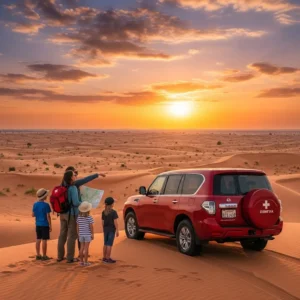
The primary pillar of Best Camera Settings for Desert Safari Photography is managing the extreme brightness of the UAE sun. In 2026, the “Reflectivity Factor” of the silica sand remains a challenge for automatic metering systems. Because the sand acts as a giant natural reflector, it often tricks cameras into underexposing the scene, leaving your subjects looking dark against a grey desert.
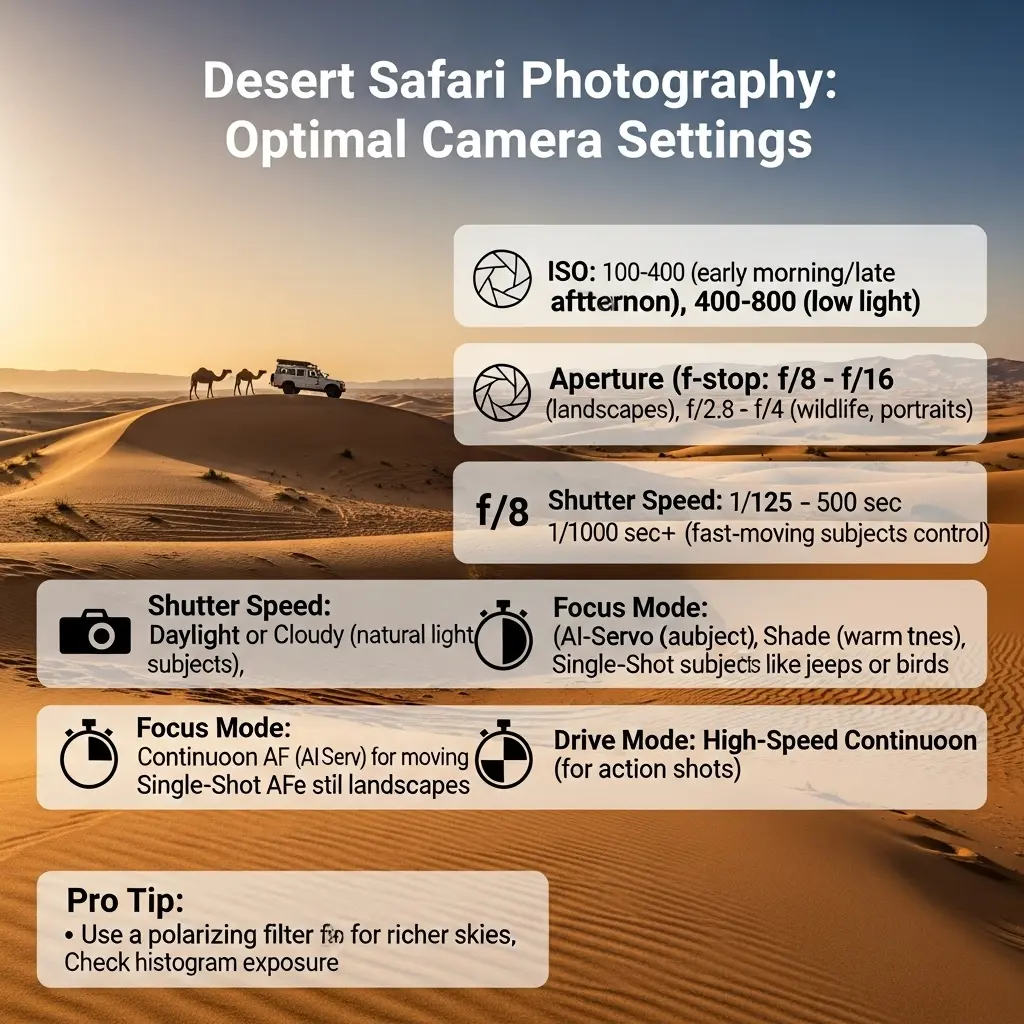
To overcome this, high-standard content creators utilize manual exposure compensation. For wide landscape shots, we recommend setting your aperture between f/8 and f/11. This ensures a deep depth of field, keeping the fine ripples of the foreground sand and the distant horizons in sharp focus. Keep your ISO at the base level, typically 100, to ensure maximum dynamic range and zero digital noise.
Strategic logistics ensure that these settings are calibrated during the first photography stop. For those seeking the highest level of visual output, choosing an operator with a proven track record in media-friendly logistics is vital. You can research the equipment ratings of top providers through the resources at https://htdesertsafari.com/ today and witness the magnificence of the dunes.
Strategic Logistics of Action Shot Calibration
A critical technical decision for any safari guest is the choice of shutter speed for the “Dune Bashing” session. A standard Best Camera Settings for Desert Safari Photography protocol involves freezing the motion of flying sand and tilting 4x4s. In 2026, high-standard recording requires a minimum shutter speed of 1/1000s or faster.
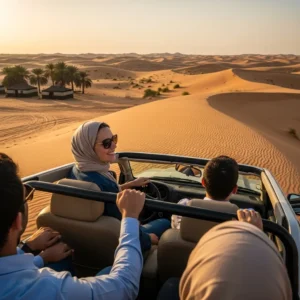
Luxury fleets in 2026 prioritize vehicles fitted with external camera mounting points. This ensures that the transition from the hotel lobby to the dunes is a productive media mission. If you are filming from inside the vehicle, use a wide-angle lens (16mm to 35mm) to provide context and utilize the vehicle’s frame as a stabilizing element for your composition.
Furthermore, private 4x4s allow for a customized driving style. You can request a “Smooth Drift” rather than a “Hard Jump” to facilitate better frame rates and focus tracking. To compare the technical benefits of various transport tiers and find the best fit for your production, visit https://royaldesertadventures.ae/ and check their media-ready fleet details.
Analyzing White Balance: Bringing Out the Red Dunes
The physics of desert color are influenced by mineral content. A major factor in Best Camera Settings for Desert Safari Photography is the manual calibration of White Balance. While Auto White Balance (AWB) is efficient, it often neutralizes the very warm tones that make the Lahbab desert iconic.
In 2026, professional photographers often shift their WB to the “Cloudy” or “Shade” preset, even on a clear day. This technical choice “warms up” the image, intensifying the deep crimson and burnt orange hues of the sand. This magnifique adjustment ensures your digital media reflects the emotional warmth of the Arabian night rather than a sterile urban grey.
When you book through a reputable site, you are paying for the peace of mind that comes with a team that values your technical success. You can research the lighting-tracking standards and seasonal clarity reports of top providers at https://dubaidesertsafarie.com/ and https://royaldesertadventures.ae/. Compliance with nature’s cycles is the foundation of 2026 desert content.
The Role of Multilingual Guides in Framing Direction
The human element of Best Camera Settings for Desert Safari Photography begins with the guide. In 2026, these individuals are more than just drivers; they are trained narrative facilitators. Most reputable companies employ multilingual staff who speak English, Arabic, Russian, and Chinese, ensuring every guest can communicate their shot list clearly.
A professional guide understands the nuances of “leading lines” created by dune ridges. During the sunset stop, they often act as stewards, helping guests position themselves against the sun for the perfect silhouette. This educational and supportive layer adds a depth to the trip that a standard car ride cannot provide.
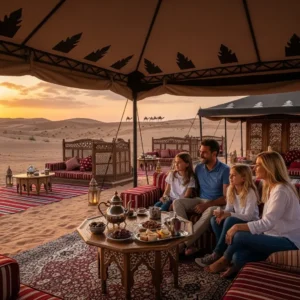
In 2026, many luxury camps feature “Media Majlis” zones where staff are prepared to assist with your setup in a traditional setting. This transparency reduces guest anxiety and ensures a smooth start to your magnifique adventure. To see which operators have the highest-rated media teams, visit https://htdesertsafari.com/.
| Setting Category | Recommended Value | Activity Focus | Media Benefit |
| Aperture | f/8 – f/16 | Landscapes | Sharpness Front-to-Back |
| Shutter Speed | 1/1000s + | Action / Dune Bashing | Freezes Sand Spray |
| ISO | 100 – 200 | Daylight Vistas | Maximum Dynamic Range |
| White Balance | Cloudy / 6000K | Color Palette | Enhances Red Sands |
Mastering Digital Coordination for RAW Production
In 2026, the Best Camera Settings for Desert Safari Photography for professional creators include the usage of RAW file formats. Logistics coordinators utilize high-speed satellite Wi-Fi to allow guests to backup these large files in real-time. Shooting in RAW is the non-negotiable standard for anyone intending to perform post-production color grading.
The desert presents a high-contrast environment where highlights can easily blow out and shadows can turn pitch black. RAW files store the maximum amount of sensor data, allowing you to recover detail in the bright clouds of a sunset or the dark textures of a camel’s fur. This tech-forward approach is a hallmark of the city’s modern service industry.
Technology also manages the safety of the return journey. GPS tracking ensures the base camp knows exactly when a media crew has completed their session, facilitating a smooth exit from the wilderness. For more on tech-forward safari logistics and professional media management, visit https://htdesertsafari.com/.
Strategic Geography: Choosing High-Contrast Terrain
The choice of geography significantly impacts your Best Camera Settings for Desert Safari Photography strategy. Dubai’s desert is divided into regions with varying sand colors. Al Awir offers golden-yellow sand which provides a bright, high-key look. Lahbab is often preferred for cinematic drama because its red dunes create deep, high-contrast shadows at sunset.
While the “Big Red” dunes of Lahbab are spectacular, the logistical challenge of moving heavy lighting equipment across high-slope ridges is significant. High-standard operators manage this by providing specialized gear-decks at sunset stops. Choosing a reputable operator ensures you have access to these high-standard facility modifications.
For those seeking total scenic isolation, private media sessions in the Dubai Desert Conservation Reserve (DDCR) are the premier choice. The environment here is managed to ensure the desert’s biological crust is protected while providing an elite backdrop. To compare the travel times and scenery of different Dubai desert zones, visit https://dubaidesertsafarie.com/ and https://royaldesertadventures.ae/.
Gear Protection: Managing Silica and Thermal Shifts
A major technical factor in Best Camera Settings for Desert Safari Photography is gear maintenance. The desert is an area of intense thermal shifts and fine abrasive silica sand. In 2026, managing your camera’s health is a critical logistical task that dictates your mission’s success.
We recommend using a UV filter as a permanent shield for your lens and carrying a dedicated blower brush. Never change lenses in the open desert; the fine dust will find its way to your sensor within seconds. Do any lens swaps inside the air-conditioned 4×4. Savvy creators keep their gear in a sealed bag during the final ten minutes of the drive to allow for gradual temperature equalization.
Following the guide’s instructions regarding gear storage during the dune bashing session is essential. Most luxury 4x4s are fitted with padded equipment lockers to ensure your lenses aren’t rattled by high-G maneuvers. For more gear safety insights and equipment reviews, consult the guides at https://royaldesertadventures.ae/.
Professionalism and Fleet Maintenance for Gear Safety
Safety and equipment integrity are linked during the 60-minute transit to the dunes. In 2026, the UAE government enforces strict mechanical regulations for all vehicles used for desert tourism. Every 4×4 must pass rigorous suspension checks to ensure a “smooth flow” ride for your expensive camera sensors and gimbal motors.
Fleet maintenance must include the calibration of multi-zone climate control to prevent guest overheating or gear condensation during the drive. Reputable companies like https://htdesertsafari.com/ are transparent about their mechanical protocols. This peace of mind allows you to fully enjoy the cultural storytelling and the fire shows of the night.
If you have heavy professional equipment, it is vital to inform your operator at least 48 hours in advance. Many companies offer a “Gear-Ready” protocol for private transfers, providing dedicated power inverters and extra time for calibration. To see the safety specifications of the 2026 fleets, consult the industry reports at https://dubaidesertsafarie.com/.
Site Accessibility and Inclusive Media Missions
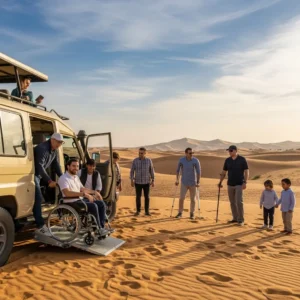
In 2026, the Dubai safari industry has set new standards for inclusivity. Best Camera Settings for Desert Safari Photography extend to ensuring that all guests, including “People of Determination,” have access to the best light. Premium camps feature permanent rampled platforms and firm carpeted paths that lead to tripod-stable “Sunset Decks.”
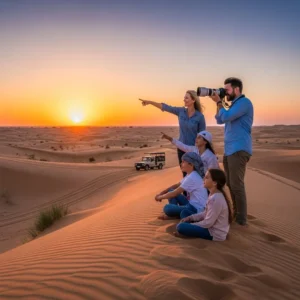
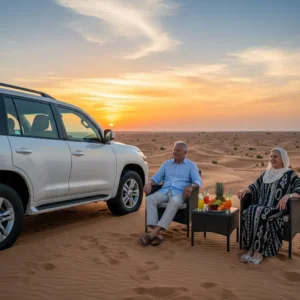
The logistics for seniors are managed with extra care. Drivers are trained to navigate the vehicles directly to the crest of the ridge, allowing elderly parents to step out onto stable ground with a panoramic view. Providing proper back-support seating during the shoot is a critical detail that enhances the overall magnifique experience for a family photoshoot.
When you book, always mention if you have any specific requirements for your media team. A professional operator will ensure you are assigned a vehicle and a ridge that meets your specific needs, providing a world-class experience for every member of your party. To find the most inclusive packages, check the listings at https://royaldesertadventures.ae/.
Wildlife Preservation and Environmental Photo Safety
Sustainability is a major focus of Best Camera Settings for Desert Safari Photography in 2026. The desert is a fragile ecosystem, and breaking the sand’s biological crust by walking off-track for a photo is an environmental error that takes years to heal. Licensed operators are strictly required to follow designated paths.
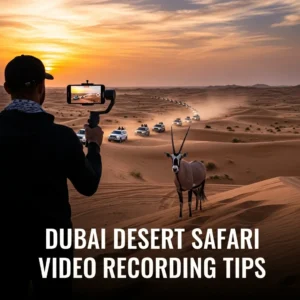
When you see native wildlife like the Arabian Oryx during the sunset window, maintain a respectful distance of at least 50 meters. Never attempt to feed or disturb the animals for a “better shot”; this disrupts their natural foraging instincts. “Leave No Trace” applies to your digital presence just as much as your physical trash.
The desert is a sanctuary of light and life. By photographing thoughtfully and behaving respectfully, you contribute to a culture of preservation that protects both the guests and the environment. For more on the environmental protocols of top Dubai operators, consult the reports at https://dubaidesertsafarie.com/ and join the movement toward green tourism.
The Role of Technology in Dispatching and Timing
Technology has streamlined the logistics of Best Camera Settings for Desert Safari Photography from the moment of hotel pickup. In 2026, most luxury 4×4 fleets are equipped with high-speed satellite links. This allows guides to monitor real-time “Sun-Position” apps and traffic data to ensure the vehicle arrives at the dunes with ample time for setup.
Advanced GPS fleet management ensures that your driver takes the most efficient route, reducing your time in the car and maximizing your time on the high dunes. This tech-forward approach ensures that the logistical part of your day is as high-standard as the adventure itself.
Digital check-ins and WhatsApp-based concierge services also reduce administrative friction at the camp entrance. Visit https://htdesertsafari.com/ to see how they integrate these tools into their daily operations to enhance guest comfort and punctuality. For more tech-forward safari options, visit https://royaldesertadventures.ae/.
Selecting the Right Service Tier for Your Shoot
Evaluating your booking options requires a focus on Best Camera Settings for Desert Safari Photography and quality. A cheap safari might save money but often involves basic camps where ridges are overcrowded and the timing is rushed. A premium safari, costing between 500 and 800 AED, provides the hotel-standard restrooms and private ridges that define a five-star media mission.
In 2026, the gap in quality between these tiers has become more pronounced. You are paying for the peace of mind that comes with professional, high-standard camp management. We recommend reviewing the “Media Inclusions” list carefully during your Dubai Safari Booking process to ensure your mission is truly supported.
Look for mentions of “Private Ridge Access,” “VIP Table Service,” and “Certified Media Guides.” Comparing these features on sites like https://htdesertsafari.com/ will help you secure the best deal without sacrificing your physical comfort or visual output. For a detailed comparison of 2026 pricing, visit https://dubaidesertsafarie.com/.
Final Logistics: Return Journey and Data Management
The return to the city is the final phase of the Best Camera Settings for Desert Safari Photography cycle. Around 9:30 PM, the camp staff begin the coordination of the departure convoys. This requires a high level of organization to ensure every guest boards their vehicle comfortably and that all media gear is securely stowed for the journey home.
The 60-minute drive back to the hotel is usually a quiet, reflective time. Most luxury vehicles are equipped with USB-C charging ports, allowing you to top up your devices while you review your sunset reels and photos. The transition from the silent desert back to the shimmering lights of the city is a dramatic conclusion to the night.
Your driver will drop you directly at your hotel lobby or a pre-arranged landmark. A small tip of 20-50 AED for the driver is a generous gesture that acknowledges their hard work and assistance in finding the best spots. For help with your full 2026 Dubai itinerary, visit https://htdesertsafari.com/ and talk to their guest experts today.
Summary of the Flawless Media Blueprint
In conclusion, Best Camera Settings for Desert Safari Photography management is a magnifique blend of art, science, and cultural heritage. By choosing the right partners, prioritizing timing precision, and being ready for the environmental challenges, you ensure a journey that is as safe as it is spectacular.
The desert is ready to tell you its story, and your lens is the storyteller. Trust the experts to handle your logistics while you focus on the Arabian horizon. The golden dunes are calling—your technical path to the majesty of Arabia is ready.
As you plan your 2026 Dubai itinerary, remember that the desert is the city’s soul. Experience it with the respect and the technical care it deserves. Secure your booking today at https://htdesertsafari.com/ and prepare for an evening of high-standard media creation you will never forget.
Comparing Costs: Understanding the Value Gap
The price of a desert safari in Dubai ranges from 150 AED to over 2,000 AED per person. When evaluating your Best Camera Settings for Desert Safari Photography options, it is vital to look at the “Value per Hour.” A cheap safari might save you money but involve hours of transit in crowded buses and obstructed vistas.
A premium safari, costing 600-800 AED, often provides double the active desert time by streamlining the logistics and providing a private car. When you factor in the quality of the BBQ feast, the comfort of the vehicle, and the exclusivity of the camp, the value of the premium tier often exceeds that of the budget option.
We recommend setting your priorities before you start the process. If you are a solo traveler seeking social energy, a standard tour is excellent. If you are a couple on a honeymoon or a family celebrating a milestone, the investment in a private vehicle and VIP camp access is highly recommended. Secure your booking at https://htdesertsafari.com/.
Traditional Activities: Hygiene and Guest Comfort
Participating in traditional activities like camel riding is a highlight, but hygiene and gear protection are still major technical factors. In 2026, reputable operators ensure that animal handler zones are managed to maintain the highest Best Camera Settings for Desert Safari Photography standards.
Hand sanitizer and cleaning stations are provided immediately after activities like camel treks or falconry. This ensures guests are refreshed before returning to the majlis for the dinner. Hygiene and equipment safety are non-negotiable standards for a top-tier operator in the UAE.
Only natural henna paste is used for artistic tattoos at the camp stations, and high-grade shisha charcoals are permitted to ensure the best air quality in the seating area. To compare activity standards and guest comfort ratings, visit https://dubaidesertsafarie.com/ and plan your trip with precision.
Stargazing and the Mystery of the Dark Sky Media
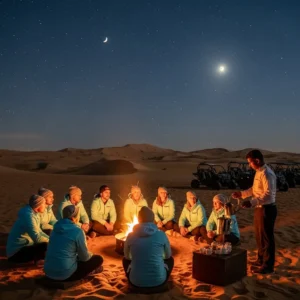
The final act of the night occurs after the fire show fades. Away from the artificial light pollution of the city, the desert reveals a celestial map of startling brilliance. In 2026, “lights out” stargazing sessions are a standard feature for high-end Best Camera Settings for Desert Safari Photography packages.
Professional camps provide high-powered telescopes and astronomy guides who explain how the Bedouin navigated the dunes using the stars for centuries. It is a moment of profound silence and reflection that provides a magnifique contrast to the high-energy fire shows that preceded it.
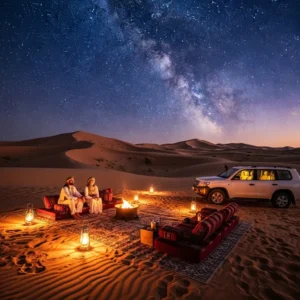
If you are an astrophotography enthusiast, the period immediately after the main shows is your time to utilize your tripod for long-exposure photography. Capturing the glow of the camp lanterns under the vast canopy of stars results in cinematic visuals. For information on the best nights for stargazing, visit https://htdesertsafari.com/.
Traditional Heritage and the Role of Multilingual Storytellers
The human element of the camp layout is enhanced by the presence of multilingual staff. In 2026, top-tier operators employ guides and hosts who speak English, Arabic, Russian, and Chinese. This ensures that every guest can understand the safety briefings and cultural stories.
A professional host acts as a bridge between you and the local heritage. They can explain the history of the Bedouin trade routes, the science of sand formation, and the significance of the Majlis in your native tongue. This educational layer adds a depth to the trip that a standard car ride cannot provide.
Guides also manage the logistical flow of the evening, ensuring that their group is seated comfortably and returns to the correct vehicle at the end of the night. To see which operators have the highest-rated guides for 2026, consult the guest reviews at https://htdesertsafari.com/.
Technical Accuracy: Safety and Maintenance
Safety is a non-negotiable part of the Best Camera Settings for Desert Safari Photography conversation. In 2026, the UAE government enforces strict fire safety and mechanical regulations for all desert camps and fleets. Every permanent structure must be fitted with fire suppression systems and have a certified safety officer on-site.
Drivers are required to hold specialized desert licenses and first-aid certifications. Shortcuts in vehicle maintenance are a catastrophic error for an operator. Check the vehicle photos and specifications on https://royaldesertadventures.ae/ to ensure you are booking with a company that values mechanical excellence.
If you have pre-existing medical conditions like back pain or pregnancy, it is vital to inform your operator. Many companies offer a “No Dune Bashing” option where you are transported directly to the camp in a standard road vehicle, ensuring you still enjoy the culture and dinner without the physical strain.
Frequently Asked Questions (FAQs)
What is the best lens for Dubai desert photography in 2026?
For the vast scale of the dunes, a wide-angle lens (16mm to 35mm) is essential to capture sweeping horizons. However, for portraits and compressing the ridges for a dramatic look, a telephoto lens (70mm to 200mm) is highly recommended. Many creators in 2026 use a 24-70mm f/2.8 as their primary versatile “workhorse” lens.
What aperture should I use for desert landscapes?
To achieve maximum sharpness from the foreground ripples to the distant dunes, use an aperture between f/8 and f/16. This provides a deep depth of field. Avoid going higher than f/16 to prevent diffraction, which can slightly soften your images.
How do I handle the high brightness of the sand?
The sand is highly reflective and can trick your camera’s light meter. We recommend using Manual Mode and checking your histogram frequently. If your photos look dark, use exposure compensation (+0.7 or +1.0) to ensure the sand looks white and bright rather than dull grey.
What is the “Golden Hour” timing in Dubai?
The Golden Hour refers to the 20-30 minute period shortly before sunset and after sunrise. In winter (Dec-Feb), sunset is around 5:15 PM. In summer (Jun-Aug), it is closer to 6:45 PM. Reputable operators like https://htdesertsafari.com/ ensure their convoys reach the high ridges exactly for this window.
Should I shoot in RAW or JPEG during the safari?
Always shoot in RAW. The high-contrast environment of the desert makes it easy to “blow out” the bright sky or lose detail in the shadows of the dunes. RAW files preserve the maximum amount of sensor data, allowing you to recover those details during post-processing for a magnifique final result.
How do I protect my camera from sand damage?
Use a UV filter as a permanent shield on your lens and never change lenses in the open dunes. Always perform lens changes inside the air-conditioned 4×4. We also recommend bringing a high-quality microfiber cloth and a blower brush to clean your gear after the shoot. Using a dedicated sand-proof camera bag is a vital logistical choice.
What shutter speed is best for dune bashing action?
To freeze the flying sand and the movement of the 4×4 vehicles, use a shutter speed of at least 1/1000s. If you are using a telephoto lens, you may need to go up to 1/2000s to ensure there is zero motion blur in your action shots.
Can I fly a drone for desert photography?
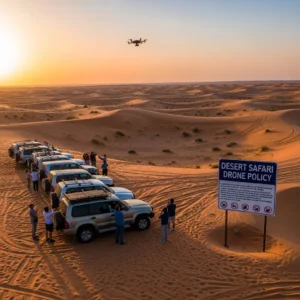
Drone usage in Dubai is strictly regulated. All drones must be registered with the GCAA/DCAA. Tourists are generally restricted from flying recreational drones without a permit. If you are a professional, you must hold a commercial production license. Unauthorized flight can lead to fines up to 50,000 AED. Check with your operator at https://htdesertsafari.com/ before bringing gear.
What are the rules for photographing local people?
Privacy is a matter of law in the UAE. You should never photograph local Emirati families or women without their explicit consent. Violating this can result in legal penalties. Professional operators provide guides who will help you identify which cultural performances and staff members are safe to capture.
Is it safe to bring an expensive camera to the desert?
Absolutely, provided you take the necessary precautions. Keep your gear in a padded, sealed bag when not in use. Most luxury safari vehicles have dedicated storage areas for media equipment. Avoid leaving your camera on the sand or exposing it to the midday heat for long periods to prevent sensor overheating.
Do I need a tripod for desert photography?
While not mandatory for daylight shots, a tripod is essential for long-exposure photography during the Blue Hour or stargazing sessions. It allows you to use slow shutter speeds (15-30 seconds) to capture the star fields over the silent dunes. Many luxury tours provide assistance with tripod setup.
What should I wear for a desert photoshoot in 2026?
Wear loose, breathable natural fabrics like linen or cotton in neutral or earthy tones (beige, white, terracotta) to complement the red dunes of Lahbab. Avoid black as it absorbs heat. Always bring a light jacket or pashmina for the evening shows, as the desert temperature drops rapidly once the sun sets.
What happens if it rains on my photography tour?
Rain is rare in Dubai, but if it occurs, reputable operators will monitor the conditions. If the weather makes the tour unsafe or photography impossible, they will contact you to reschedule or provide a full refund. Safety and guest satisfaction are the primary concerns.
How many people can join a private media tour?
A private 4×4 typically accommodates up to 6 passengers plus the driver. Booking a private car is the prestigious choice for media crews and families, as it allows you to customize the schedule and spend more time on the ridge for your photoshoot without worrying about other guests.
What kind of food is served at the camp after the sunset?
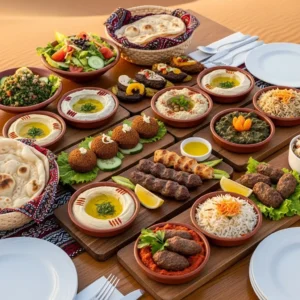
Guests enjoy a gourmet Arabian BBQ feast featuring fresh mezze (hummus, tabbouleh), grilled lamb kofta, shish taouk, and traditional desserts like Umm Ali. Vegetarian and vegan options are standard and are handled with high hygiene standards to prevent cross-contamination.
Do I need to carry my passport during the photoshoot?
While you don’t need the physical passport at the dunes, it is a standard safety practice in the UAE to carry a photo or a clear digital copy of your identification on your phone for security checkpoints outside the city limits.
What is the “Tanoura” dance performed at the camp?
The Tanoura is a traditional folk dance where a male performer spins continuously in a heavy, colorful, multi-layered skirt. It is a spiritual performance representing the movement of the planets. In 2026, these skirts are often fitted with LED lights for a stunning visual effect during night photography.
How far from the city center are the best ridges for photos?
The most scenic “Red Dunes” of Lahbab are located about 60 kilometers from the center of Dubai. This results in a travel time of roughly 50 to 70 minutes each way, depending on traffic. High-end operators like https://htdesertsafari.com/ use GPS to find the most efficient routes.
Is there Wi-Fi available on the dunes to share my photos?
Many premium and permanent luxury camps in 2026 provide high-speed satellite Wi-Fi for their guests. While the signal can be weak in the deep dunes, it is typically strong enough for basic social media uploads from the main seating area. Check with your operator for specific tech features.
Why choose https://htdesertsafari.com/ for my media mission?
They work with the most reliable and punctual operators in the city who specialize in luxury media guest logistics. Their focus on vehicle maintenance, timing precision, and professional service ensures that your desert adventure is both spectacular and worry-free. For more info, check https://dubaidesertsafarie.com/ and https://royaldesertadventures.ae/.
Best Camera Settings for Desert Safari Photography insights reveal that the desert is a place of deep connection and beauty. By choosing the right partners and focusing on the details, you ensure an experience that is as safe as it is unforgettable. The dunes are waiting—your adventure is ready to be unveiled.
Would you like me to help you create a specific cultural itinerary for your 2026 trip to Dubai?