Arabian Coffee Culture: The Profound Ritual of the Desert Welcome
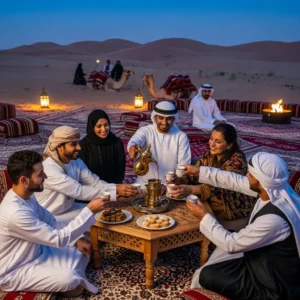
Upon arriving at a desert safari camp, weary and exhilarated from the adventures on the dunes, one of the first things you will be offered is a small, handleless cup of steaming, fragrant coffee. This simple gesture is your formal initiation into the profound world of Arabian Coffee Culture. This is not merely a beverage; it is a ceremony, a language of respect, and the most important symbol of hospitality in the Arab world.
The serving of Gahwa, as Arabic coffee is known, is a tradition steeped in history and governed by a complex and beautiful etiquette. Every element, from the shape of the pot to the amount that is poured, has a deep cultural meaning. For the Bedouin tribes of the desert, sharing coffee was the foundation of all social interaction—a ritual that could seal friendships, broker truces, and welcome weary travelers.
To truly understand the desert safari experience, one must appreciate the depth of this ritual. This guide explores the fascinating journey of coffee to Arabia, the meticulous art of its preparation, the intricate rules of serving and receiving it, and its central role in the Arabian Coffee Culture that is so graciously shared with guests under the desert stars.
1. A Bean’s Journey: The History of Coffee in Arabia
The story of the global coffee phenomenon begins not far from the Arabian Peninsula. The rich history of how this humble bean became the centerpiece of Arabian Coffee Culture is a tale of legends, mystics, and the birth of the world’s first cafes.
The Legend of Kaldi the Goatherd
The most popular legend of coffee’s discovery takes place in the 9th century in the highlands of Ethiopia. A goatherd named Kaldi noticed that his goats became incredibly energetic and seemed to “dance” after eating the bright red berries from a particular shrub. Curious, Kaldi tried the berries himself and felt a similar stimulating effect. He took the berries to a local monastery, where the abbot, after initially disapproving, discovered that the roasted and brewed beans helped the monks stay awake during long hours of prayer.
The Sufi Connection in Yemen
From Ethiopia, the coffee bean traveled across the Red Sea to Yemen. Here, in the 15th century, Sufi mystics embraced coffee for its ability to enhance spiritual devotion and concentration. They were the first to cultivate the coffee plant systematically and to roast and brew the beans into a beverage much like we know it today. For the Sufis, coffee was not a social drink but a religious aid, a crucial part of their history that predates the social Arabian Coffee Culture.
The Rise of the Coffeehouse
From Yemen, coffee’s popularity exploded across the Arabian Peninsula and the wider Middle East. By the 16th century, the world’s first coffeehouses, or qahveh khaneh, had appeared in cities like Mecca, Cairo, and Damascus. These became vibrant centers of social life where men would gather to drink coffee, exchange news, play chess, and listen to storytellers and musicians. They were the original “penny universities,” places of intellectual and social exchange fueled by this new, invigorating drink.
2. The Art of Gahwa: Ingredients and Preparation
The Arabic coffee, or Gahwa, that you taste on a desert safari is very different from the coffee typically consumed in the West. Its unique flavor and aroma are the result of specific ingredients and a traditional preparation method.
The Golden Beans
The foundation of Gahwa is high-quality Arabica coffee beans. The key difference lies in the roast. The beans are roasted very lightly, which is why the resulting brew has a pale, golden or greenish hue, not the dark brown or black of espresso. This light roast preserves the coffee’s delicate, nuanced flavors and results in a lower acidity.
The Soul of Gahwa: Cardamom
The most distinctive characteristic of Gahwa is the addition of freshly ground cardamom. This aromatic spice is mixed in with the coffee grounds during the brewing process. Cardamom imparts a wonderful, slightly sweet and floral fragrance and a flavor that perfectly complements the coffee. In traditional Bedouin culture, a generous amount of cardamom was also a sign of the host’s wealth and generosity.
Other Aromatic Additions
Depending on the region or the host’s preference, other spices might be added to the brew. Saffron is sometimes included to give the coffee a beautiful golden color and a subtle, luxurious aroma. Cloves or a touch of rosewater can also be used to create a unique flavor profile. The art of Gahwa lies in achieving the perfect balance of these ingredients.
3. The Ceremony of Service: A Language of Respect
The most important aspect of Arabian Coffee Culture is the intricate etiquette surrounding its service. This is a beautiful, non-verbal dance of respect between the host and the guest.
The Dallah and the Finjan
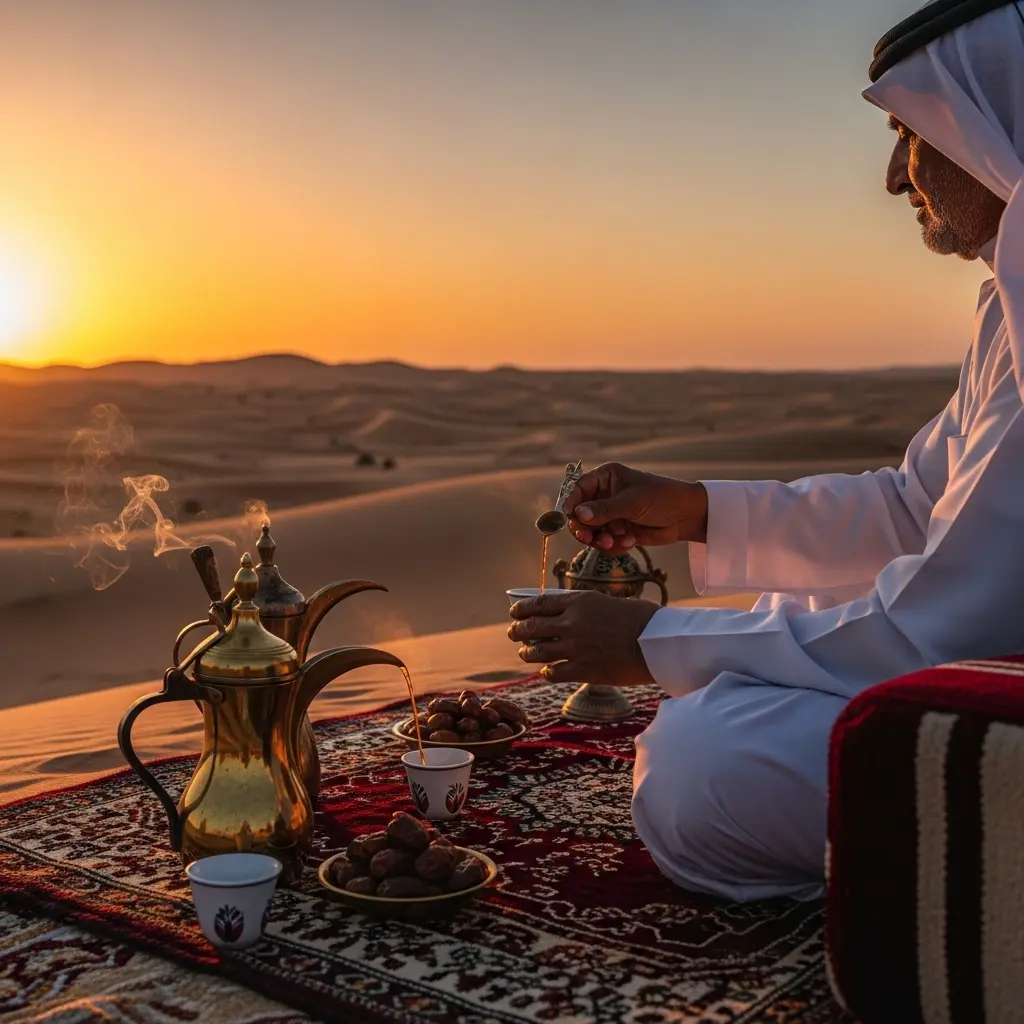
Two key items are used in the ceremony. The coffee is brewed and served from a traditional pot called a dallah. This is typically made of brass or silver, with a distinctive long, curved spout and a large handle. The coffee is poured into a small, handleless cup called a finjan. The design of these items is both practical and deeply symbolic.
The Host’s Honor
In a traditional setting, it is considered an honor for the host to prepare and serve the coffee personally. The server, or muqahwi, holds the dallah in their left hand and a stack of finjans in their right. They will always serve the guest of honor or the eldest person in the room first, moving clockwise around the majlis.
The Significance of the Small Pour
The server will only pour a small amount of coffee into the finjan, usually filling it less than halfway. This is a crucial gesture in Arabian Coffee Culture. A small pour signifies that the host is attentive and wishes for the guest to stay, as they are ready to refill the cup as many times as the guest desires. To fill the cup to the top would be a grave insult, implying that the host wants the guest to drink up and leave.
The Guest’s Role: Receiving and Finishing
The guest must always accept the finjan with their right hand. It is considered disrespectful to use the left hand. After drinking the small amount of coffee, the guest can either hold the cup out for a refill or signal that they have had enough. The signal is a famous and elegant gesture: the guest gently shakes or wiggles the finjan from side to side two or three times before handing it back. This silent cue is understood by all and politely ends the service.
4. The Majlis: The Stage for Coffee Culture
The coffee ritual does not happen in a vacuum. It is the central act of the majlis, the traditional Emirati sitting place and the heart of social life.
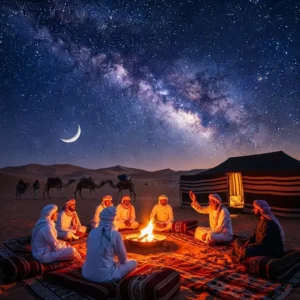
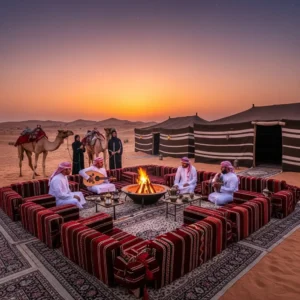
The majlis is a space dedicated to receiving guests and fostering community. It is where stories are told, business is conducted, and friendships are strengthened. The Arabian Coffee Culture is the fuel for this social engine. The ritual of preparing and sharing Gahwa is what formally opens a social gathering and creates a warm, welcoming atmosphere. The desert safari camp, with its large, comfortable, and communal seating areas, is a modern re-imagining of the majlis, and the welcome coffee you receive serves its ancient purpose of bringing people together. Reputable tour operators, like those found on https://royaldesertadventures.ae/, take great care in recreating this authentic atmosphere.
5. UNESCO Recognition: A Global Treasure
The significance of Arabian Coffee Culture is so profound that in 2015, it was inscribed on the UNESCO list of the Intangible Cultural Heritage of Humanity. This recognition highlights Gahwa as a ceremonial act of generosity and a defining characteristic of Arab culture that is passed down through generations. It acknowledges the complex set of skills and social etiquette that surround this simple beverage, elevating it to a global cultural treasure. Exploring this tradition on a desert safari, by checking options on sites like https://dubaidesertsafarie.com/ and https://hafiztourism.com/, offers a chance to engage with this world-renowned heritage.
The Equipment of the Gahwa Ceremony
Understanding the tools used in the ritual deepens the appreciation for the tradition.
Frequently Asked Questions (FAQs)
1. What is the main difference between Gahwa and Turkish coffee? The two are very different. Gahwa, which is central to Arabian Coffee Culture, is made from very lightly roasted beans and is brewed with cardamom, resulting in a thin, golden, and aromatic coffee. Turkish coffee is made from very darkly roasted beans that are ground to a super-fine powder. It is brewed to be thick and strong and is often served sweet, with a layer of foam on top.
2. Is Arabic coffee strong in caffeine? Because the beans are so lightly roasted, Gahwa actually retains a higher concentration of caffeine than dark roasts like espresso. However, because it is served in such a small quantity (usually only 1-2 ounces at a time), the amount of caffeine you consume in one serving is quite low. You would need to drink many finjans to equal the caffeine in a standard cup of Western coffee.
3. Why is cardamom such an important ingredient? Cardamom is the soul of Gahwa’s flavor and aroma. It adds a wonderful, complex fragrance and a slightly sweet, floral taste that balances the coffee. Historically, it was also a very expensive spice, so a host who used a generous amount of cardamom was displaying their wealth and their high regard for the guest. It also has traditional medicinal uses, believed to aid digestion.
4. Is it ever acceptable to refuse the first cup of coffee offered? In a traditional and formal setting, it is considered quite impolite to refuse the first cup. The offering of coffee is a fundamental sign of peace and welcome. Accepting at least one small cup is a sign of respect and acknowledges the host’s hospitality. After the first cup, it is perfectly acceptable to refuse more by shaking the finjan.
5. What does it mean if a host fills your coffee cup to the top? This is a powerful and very negative gesture in traditional Arabian Coffee Culture. A full cup is a silent signal that the guest is unwelcome and that the host wants them to finish their drink quickly and leave. It is the opposite of the small, respectful pour. You are highly unlikely to ever experience this, but it’s a fascinating aspect of the non-verbal language of the coffee ritual.
6. Is coffee still served in this traditional way in modern Emirati homes? Yes, absolutely. While many young Emiratis might drink a cappuccino in their daily life, the traditional Gahwa ceremony is still the heart of hospitality in the home. Whenever guests are received, especially during important occasions like Eid, weddings, or family gatherings, the dallah and finjans will be brought out, and the ancient rituals of welcome are performed with great pride.
7. How did coffee get the nickname “The Devil’s Drink” in Europe? When coffee first arrived in Europe in the 17th century, some conservative clergymen were suspicious of this dark, stimulating beverage from the Islamic world. They labeled it the “bitter invention of Satan.” According to legend, Pope Clement VIII decided to taste it before banning it. He enjoyed it so much that he reportedly “baptized” it, making it an acceptable Christian beverage.
8. What is the UNESCO designation that Arabic coffee has received? In 2015, UNESCO inscribed “Arabic coffee, a symbol of generosity” on its list of the Intangible Cultural Heritage of Humanity. The designation recognizes that the importance of Gahwa lies not just in the drink itself, but in the entire culture surrounding it: the knowledge, the rituals, the social etiquette, and its central role in promoting social cohesion and hospitality.
9. What are the health benefits of drinking Gahwa? Gahwa has several potential health benefits. The lightly roasted beans are high in antioxidants. The primary spice, cardamom, is also rich in antioxidants and has been used in traditional medicine as an anti-inflammatory and digestive aid. Because it is served without milk or sugar, it is a very low-calorie beverage.
10. What is the historical significance of the shape of the dallah? The dallah’s distinctive shape—with its wide base, narrow waist, and long, curved spout—is a result of centuries of functional design. The wide base provides stability when placed on hot coals or sand. The long spout helps to cool the coffee slightly as it is poured and allows for a precise, elegant pour into the small finjan. Over time, this functional shape has become a powerful cultural icon.
11. Does the type of date served with the coffee matter? Yes, connoisseurs of Arabian Coffee Culture will pay close attention to the dates. Serving high-quality, succulent dates is another sign of a host’s generosity. There are hundreds of varieties of dates, and premium types like Medjool or Khidri are often reserved for special guests.
12. Can I buy a dallah and finjans as a souvenir? Yes, dallahs and finjans are very popular souvenirs. You can find everything from simple, functional sets for daily use to incredibly ornate, silver-plated ceremonial sets that are works of art. They are widely available in souks and gift shops across the UAE.
13. Do people drink Gahwa all day long? Gahwa is primarily a social drink. It is served when guests arrive, during social gatherings, and at business meetings. While an individual might have a cup in the morning, it is not typically consumed throughout the day in the same way Westerners might constantly sip on filter coffee. Its role is more ceremonial than habitual.
14. What does it mean if the host drinks the coffee first? In ancient times, particularly when dealing with potential rivals, a host might sip the coffee from the finjan before offering it to a guest. This was a powerful gesture of trust, proving to the guest that the coffee was not poisoned and that they came in peace.
15. Is there a specific way to grind the beans for Gahwa? Yes, the grind is typically coarse, not a fine powder like Turkish coffee. This is because the coffee is simmered rather than boiled, and a coarse grind prevents the brew from becoming muddy and allows the grounds to settle at the bottom of the dallah.
16. Are there female-only coffee gatherings? Yes, traditionally and today, women have their own majlises and social gatherings where they uphold the same rich traditions of Arabian Coffee Culture. The rituals and etiquette are the same, providing a vital space for community and socializing among women.
17. What is the role of incense (Bukhoor) in the coffee ceremony? The burning of bukhoor (scented wood chips) is often the final act of the hospitality ritual. After the coffee has been served, the host will pass around a burner (mabkhara) with fragrant smoke. This is a gesture of honor and a way of scenting the guest’s clothes as a beautiful, intangible parting gift. It signals the gracious end of the gathering.
18. How is the coffee kept hot throughout a long gathering? The traditional dallah, made of metal like brass or copper, is very effective at retaining heat. For long gatherings, it would be kept warm on a brazier of hot coals. Today, it is common to see modern, insulated dallahs that function like a thermos, keeping the coffee hot for many hours.
19. Is the coffee served at a desert safari authentic? Yes, the Gahwa served at a reputable desert safari is completely authentic. It is prepared in the traditional manner with the correct light-roast beans and cardamom. The serving ceremony is a slightly simplified version of the formal ritual, but it accurately represents the core gestures and the spirit of the welcoming tradition.
20. What is the single most important lesson of Arabian Coffee Culture? The most important lesson is that simple acts can carry profound meaning. The ritual of serving coffee teaches that hospitality is an art form. It is about more than just providing food and drink; it is about showing respect, making a guest feel honored, and building connections through shared and graceful traditions. It is a beautiful reminder of the power of a simple, warm welcome.