Horse Riding Desert Safari 27 Epic Secrets for a Majestic Dubai Adventure
Dubai is famous for engines.
It is famous for 4x4s smashing through dunes.
It is famous for fast cars.
But before the engines, there was something else.
There was the heartbeat of the desert.
The Arabian Horse.
For centuries, this animal was the soul of the Bedouin.
It was their transport.
It was their friend.
It was their pride.
Today, you can reconnect with that history.
A Horse Riding Desert Safari is not just a tour.
It is a spiritual journey.
It takes you away from the noise of the city.
It places you in the silence of the sands.
You sit high in the saddle.
You feel the rhythm of the animal.
You see the dunes from a completely different perspective.
Many tourists miss this.
They stick to the Land Cruisers.
They stick to the camels.
But the horse offers freedom.
It offers grace.
It offers speed.
If you are tired of the mechanical world.
If you want to feel the wind in your face.
This guide is for you.
We have written the definitive manual on equestrian adventures in Dubai.
We will cover the breeds.
We will cover the locations.
We will cover the safety rules.
We will ensure you ride with confidence.
Saddle up.
The Legacy of the Arabian Horse
You cannot ride here without understanding the history.
The Arabian horse is one of the oldest breeds in the world.
They were bred for endurance.
They were bred for the harsh desert climate.
They have large nostrils to intake oxygen.
They have strong bones.
They are incredibly intelligent.
When you book a Horse Riding Desert Safari, you are likely riding one of these legends.
Or a mix breed designed for stability.
Bedouins treated horses like family.
They often slept in the tents with their owners.
This created a bond.
A bond you will feel when you touch them.
They are sensitive animals.
Treat them with respect.
1. Choosing the Right Time: Sunrise vs Sunset
The sun dictates everything in the desert.
Midday is too hot.
For you and for the horse.
You have two main choices.
Sunrise is for the energetic.
You wake up early.
The air is crisp.
The sand is cool.
You watch the world wake up.
It is silent.
Sunset is for the romantic.
The light is golden.
The shadows are long.
It is cooler than the afternoon.
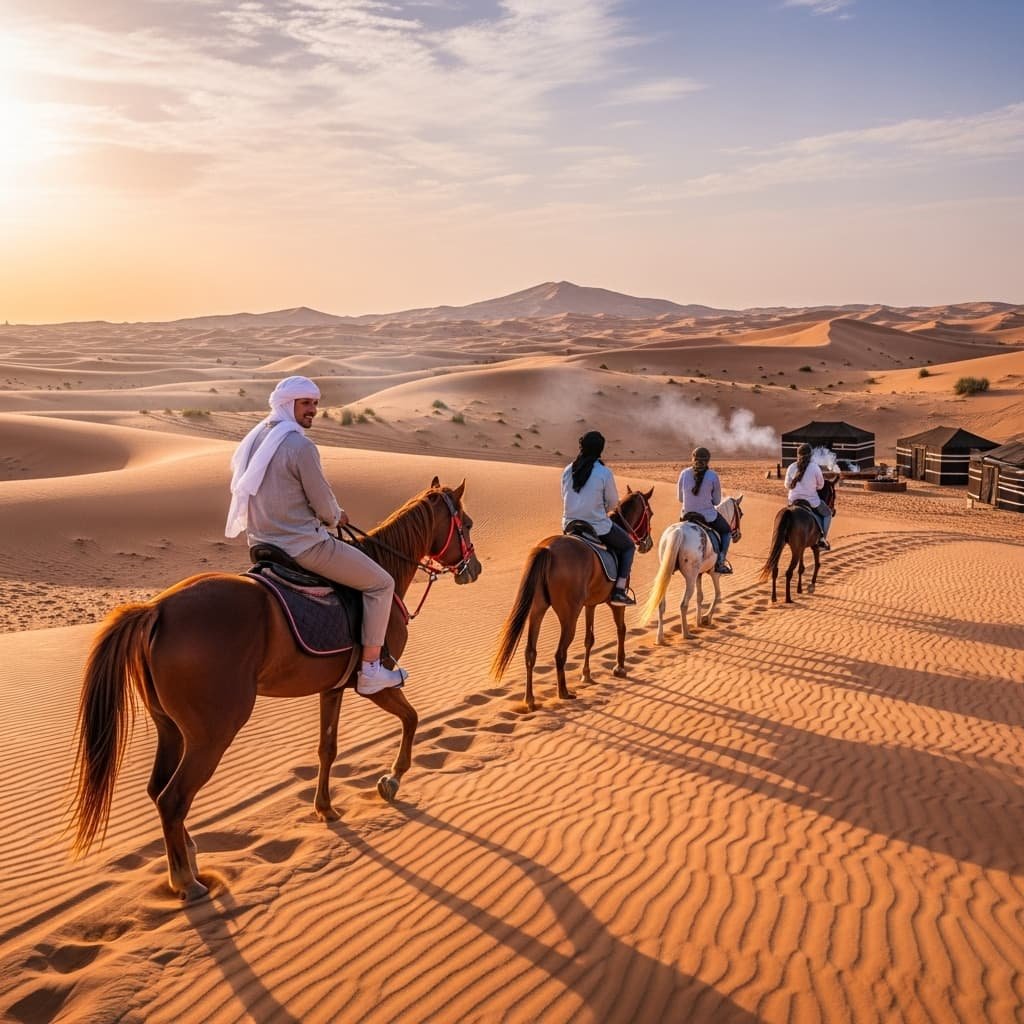
It is the most popular time for a Horse Riding Desert Safari.
If you want photos, go at sunset.
If you want solitude, go at sunrise.
2. Beginner vs Advanced Riders
Do you need to be a jockey?
No.
Most tours cater to beginners.
The horses are trained.
They are calm.
They follow the leader.
You will walk.
Maybe trot a little.
If you are an advanced rider.
You must tell the operator.
You want to canter.
You want to gallop.
Operators separate the groups.
Putting a galloping rider with a nervous beginner is dangerous.
Be honest about your skill level.
It ensures safety for everyone.
3. The Location: Al Qudra vs Red Dunes
Where do you ride?
There are two main spots.
Al Qudra Desert is famous for its lakes.
It is a conservation reserve.
It is flat with small dunes.
It is full of wildlife.
You might see gazelles while riding.
This is great for scenic rides.
The Red Dunes (Al Lahbab) are different.
They are high.
They are dramatic.
Riding here is more challenging.
The sand is deeper.
The views are more epic.
Your Horse Riding Desert Safari experience depends on the terrain.
Choose Al Qudra for nature.
Choose Red Dunes for adventure.
4. What to Wear for Comfort
Fashion matters, but comfort wins.
Do not wear shorts.
The saddle will rub your legs.
You will get chafing.
It hurts.
Wear long pants.
Jeans are okay, but leggings are better.
Jodhpurs are best if you have them.
Wear closed shoes.
Sneakers are fine.
Boots with a small heel are safer.
They stop your foot slipping through the stirrup.
Do not wear sandals.
Sandals are dangerous around hooves.
Wear a helmet.
The operator provides this.
Do not argue.
Wear it.
5. Weight Limits and Animal Welfare
Horses are strong.
But they have limits.
Most operators have a weight limit.
Usually around 90kg to 100kg.
This is for the horse’s back.
If you are heavier, do not be offended.
Ask for a larger horse.
Or choose a camel ride instead.
Reputable operators care for their animals.
Check the condition of the horses.
Do they look well-fed?
Are their coats shiny?
If the horses look skinny or sad, walk away.
Do not support bad ethics.
Trust sites like https://royaldesertadventures.ae/ for ethical partners.
6. Safety Briefing Essentials
Before you mount, listen.
The guide will talk to you.
“Don’t walk behind the horse.”
“Hold the reins like this.”
“Keep a distance from the horse in front.”
Horses can kick if crowded.
Keep two horse-lengths distance.
This is the golden rule.
If you lose control, pull the reins gently.
Do not scream.
Screaming scares the animal.
Stay calm.
Your energy transfers to the horse.
If you are calm, the horse is calm.
7. Mounting the Horse
This is the first challenge.
Put your left foot in the stirrup.
Grab the mane and the saddle.
Bounce up.
Swing your right leg over.
Sit gently.
Do not land like a sack of potatoes.
That hurts the horse.
Adjust your stirrups.
Your legs should be bent slightly.
Not too long.
Not too short.
Ask the guide to help you.
A comfortable seat is key to a good Horse Riding Desert Safari.
8. The Connection with the Animal
Take a moment.
Pat the horse’s neck.
Talk to it.
Let it smell your hand.
Horses are social.
They want to know who is riding them.
This builds trust.
A trusting horse listens better.
It makes the ride smoother.
You are a team for the next hour.
Act like a partner.
Not a passenger.
9. Dealing with the Terrain
Sand is soft.
It shifts.
The horse has to work harder than on grass.
Be balanced.
Do not lean too far forward.
Do not lean too far back.
Stay centered.
When going up a dune, lean forward slightly.
When going down, lean back slightly.
This helps the horse balance.
Watch out for rabbit holes.
The guide will lead the way.
Follow their path.
They know the safe ground.
10. Photography on Horseback
You want the shot.
The “Lawrence of Arabia” shot.
But holding a phone while riding is risky.
If you drop it, it’s gone in the sand.
If you spook the horse, you fall.
Ask the guide to take photos.
They are used to it.
Stop the horse first.
Pose.
Then put the phone away.
Do not try to take selfies while galloping.
That is a recipe for disaster.
Some Horse Riding Desert Safari packages include a photographer.
This is the safest option.
11. Health Benefits of Riding
Riding is a workout.
You use your core.
You use your legs.
You use your balance.
It burns calories.
It improves posture.
It is also good for the mind.
It is meditative.
The rhythm of the hooves is soothing.
It reduces stress.
You breathe fresh air.
It is better than a gym session.
It is therapy.
12. Combining with Other Activities
You can do more than just ride.
Combine it with a standard safari.
Drive the 4×4 first.
Then ride the horse at sunset.
Then have the BBQ dinner.
This is a full experience.
It gives you the adrenaline of the car.
And the peace of the horse.
Check https://dubaidesertsafarie.com/ for these combos.
They handle the logistics.
You just enjoy the day.
13. The Romantic Angle
Are you a couple?
This is perfect for proposals.
Riding into the sunset together.
It is cinematic.
You can book a private ride.
Just you, your partner, and a guide.
The guide can hang back.
You have privacy.
It is much more romantic than a crowded bus.
Many people get engaged on these rides.
If you plan this, tell the operator.
They can arrange flowers at the finish line.
14. Family Riding Tips
Kids love horses.
But safety is paramount.
Children usually need to be over 5 or 6 years old.
They might ride ponies.
Or smaller horses.
They might be led by a guide on a lead rope.
This ensures they don’t lose control.
Helmets are non-negotiable for kids.
Make sure they wear sunscreen.
Make sure they drink water.
A Horse Riding Desert Safari is a core memory for a child.
It builds confidence.
15. The Cost Breakdown
Horses are expensive to keep.
They eat a lot.
They need vets.
So, riding is not the cheapest activity.
Expect to pay between 200 AED and 500 AED.
It depends on the duration.
30 minutes is cheaper.
1 hour is standard.
Sunrise rides might be premium.
Private rides cost more.
Do not look for the cheapest option.
Cheap often means poor animal care.
Pay for quality.
You are paying for the horse’s welfare.
16. Booking in Advance
These tours are small groups.
Usually 4 to 6 people.
They sell out.
Especially in winter.
Do not just show up at the stable.
Book online.
Use trusted portals like https://htdesertsafari.com/.
Secure your slot.
Give them your height and weight.
Give them your experience level.
This helps them assign the right horse.
Preparation prevents disappointment.
17. The Tack and Gear
Western or English?
Most desert riding uses English saddles.
Or specialized endurance saddles.
They are comfortable for long rides.
Western saddles are rare here.
The bridle is usually simple.
Check the girth before you get on.
Is it tight?
If the saddle slips, you fall.
Ask the guide to check it.
Safety is a continuous process.
18. Hydration for the Rider
The desert is dry.
You are exercising.
You will get thirsty.
Drink water before the ride.
Carry a small bottle if you have a pocket.
But don’t let it bounce around.
Most operators offer water before and after.
Take it.
Dehydration causes headaches.
It ruins the fun.
Stay hydrated to stay sharp.
19. Insurance and Liability
Riding is an “adventure sport”.
Does your travel insurance cover it?
Check your policy.
Some basic policies exclude horse riding.
You might need an “active” add-on.
The operator will ask you to sign a waiver.
Read it.
It says you ride at your own risk.
This is standard.
But knowing you are insured gives peace of mind.
Don’t ignore the paperwork.
20. Seasonal Considerations
Winter (October to April) is prime time.
You can ride anytime.
Summer (May to September) is brutal.
You can only ride at sunrise.
Sunset is still hot (35°C+).
The sand holds the heat.
Some stables close in summer.
Or they reduce hours.
If you visit in July, book the 5:00 AM slot.
It is the only bearable time.
Your Horse Riding Desert Safari should be enjoyable, not a survival test.
21. Respecting the Environment
The desert is fragile.
Don’t throw trash.
Don’t scream.
Don’t chase wildlife.
If you see a gazelle, watch it quietly.
Stay on the tracks.
Don’t trample vegetation.
The desert ecosystem is slow to recover.
Be a responsible tourist.
Leave only hoof prints.
Take only memories.
22. Tipping the Groom
The groom takes care of the horse.
He brushes it.
He feeds it.
He saddles it for you.
He works hard.
If you enjoyed the ride, tip him.
20 to 50 AED is generous.
It means a lot to them.
Hand it to him directly.
Say thank you.
It encourages good care for the animals.
23. What if You Fall?
It happens.
Riders fall.
If you feel yourself slipping, kick your feet out.
Let go of the reins.
Do not drag.
Land and roll.
Sand is softer than concrete.
Usually, only pride is hurt.
The guide will catch the horse.
Check yourself for injuries.
If you are okay, get back on.
“Getting back in the saddle” is a saying for a reason.
It conquers the fear immediately.
24. The Dressage of the Desert
Arabian horses are show-offs.
They carry their tails high.
They arch their necks.
You look good just sitting on them.
Take advantage of this elegance.
Sit up straight.
Shoulders back.
Look proud.
You are riding a piece of history.
Match the horse’s dignity.
It makes for better photos.
It makes for better riding.
25. Transportation to the Stables
Stables are far from the city.
Al Qudra is 45 minutes away.
Al Lahbab is 50 minutes away.
Taxis might go there.
But getting a taxi back is hard.
Uber is expensive.
Book a Horse Riding Desert Safari that includes transfers.
The driver picks you up.
He waits for you.
He brings you back.
It is stress-free.
It is worth the extra cost.
26. Solo Travelers Welcome
You don’t need a group.
You can book as a single rider.
You will join a small group.
It is a great way to meet people.
Horse people are friendly.
You have a shared interest.
You chat on the trail.
You chat after the ride.
Don’t be afraid to go alone.
You are never alone with a horse.
27. The After-Ride Glow
You finish the ride.
You dismount.
Your legs feel jelly.
But your spirit feels high.
You watch the sun dip below the horizon.
You drink a cold water.
You pet the horse one last time.
This feeling is unique.
It is the satisfaction of connection.
Of physical effort.
Of nature.
This is why you booked a Horse Riding Desert Safari.
Hold onto that feeling.
It is the best souvenir.
Detailed FAQs: Horse Riding Desert Safari
Here are 20 comprehensive questions and answers to ensure you are ready for your equestrian adventure.
1. Do I need previous horse riding experience?
No, you do not need to be an expert. Most Horse Riding Desert Safari tours are designed for absolute beginners. The horses used for these tours are typically older, calmer, and very well-trained. They are used to following the leader in a line. The guide will give you a briefing on how to steer and stop. If you have never ridden before, you will walk the horse, which is a gentle pace. However, if you want to trot or canter, you will need to demonstrate some experience to the guide first.
2. What is the weight limit for riders?
The standard weight limit across most stables in Dubai is between 90kg and 100kg (approx. 200-220 lbs). This is strictly enforced for the welfare of the horses. Carrying a rider heavier than this on soft sand puts excessive strain on the horse’s back and legs. If you are close to or over this limit, please inform the operator honestly when booking. They might have a larger draft-cross horse available, or they might recommend a camel ride instead, as camels can carry much more weight.
3. What should I wear for the ride?
Proper attire is crucial for safety and comfort. You must wear long trousers (jeans, leggings, or riding breeches). Do not wear shorts or skirts, as the saddle leather will chafe your skin painfully. Wear closed-toe shoes like sneakers or boots. Do not wear sandals, flip-flops, or high heels. The operator will provide a safety helmet, which is mandatory. It is also a good idea to wear sunglasses to protect your eyes from the sun and dust, but make sure they fit securely so they don’t fall off.
4. Is it safe for children?
Yes, horse riding can be a wonderful activity for children, but there are age restrictions. Most operators require children to be at least 5 or 6 years old to ride their own pony or horse. Younger children might be allowed on a “lead rein” walk where a guide holds the horse’s rope the entire time. Teenagers can usually ride with the adult group. Always ask about the specific child policy when booking your Horse Riding Desert Safari to ensure they have appropriate gear and animals for kids.
5. Can I gallop in the desert?
Galloping is reserved for experienced riders only. The desert terrain can be unpredictable with soft patches or burrows. If you are an experienced rider (confident in all gaits), you can book an “Advanced Ride”. The guide will take you separately or faster. However, on a mixed group tour with beginners, the pace will be restricted to a walk to ensure everyone’s safety. Do not attempt to gallop without the guide’s permission, as it can trigger the other horses to run, causing chaos.
6. What time of day is best for riding?
The best times are strictly sunrise and sunset. In the winter months (October to April), you can ride throughout the day, but early morning and late afternoon are still most pleasant. In the summer months (May to September), you must ride at sunrise (around 5:30 AM or 6:00 AM) or sunset. Midday riding is dangerous due to heatstroke risks for both you and the horse. Sunset rides offer the most beautiful light for photography and a cooler breeze.
7. How long is the ride?
A standard Horse Riding Desert Safari usually involves 60 minutes of actual riding time. This is sufficient for most beginners, as riding uses muscles you aren’t used to, and you might get sore if you ride longer. Some premium packages offer 90-minute rides or sunrise breakfast rides. There are also shorter 30-minute options for kids. The total tour time, including pickup and drop-off, will be around 3 to 4 hours.
8. Can I bring my phone or camera?
You can bring them, but carrying them while riding is a risk. You need your hands for the reins. If you drop your phone in the deep sand, it can be very difficult to find. Most guides are happy to take photos for you using your phone at designated stop points. We recommend wearing pants with zippered pockets or a secure belt bag to store your phone while the horse is moving. Do not wear a camera around your neck as it will bounce and hurt you.
9. What breed of horses will I ride?
You will typically ride Arabian horses or Part-Arabians. These breeds are native to the region and perfectly adapted to the desert climate. They are known for their stamina, intelligence, and beauty. Some stables also use Thoroughbred crosses or Quarter Horses which are calm and steady. The horses are usually geldings (neutered males) or mares, which are generally more docile than stallions. You can ask the operator about their horses when you check in; they love talking about them.
10. Is pick-up and drop-off included?
This depends on the package you book. Some “Ticket Only” options require you to make your own way to the stables. This can be tricky as stables are often deep in the desert, far from taxi routes. We highly recommend booking a package that includes transfers from your hotel. Trusted providers like https://royaldesertadventures.ae/ usually offer door-to-door service. This saves you the stress of navigating and the risk of being stranded without a ride back.
11. Can I book a private ride for a proposal?
Yes, private rides are very popular for couples and proposals. You pay a premium fee to have a guide just for the two of you. This allows you to set your own pace and have privacy. You can arrange with the stable beforehand to stop at a scenic dune for the “big moment”. Some operators can even set up a small picnic or have flowers waiting. It is one of the most romantic ways to experience Dubai.
12. What happens if I fall off?
Falls are rare on beginner walking tours, but they can happen. The sand provides a relatively soft landing compared to hard ground. Guides are trained in first aid. If you fall, the most important thing is to let go of the reins so you don’t get dragged. Check yourself for injuries. If you are unhurt, the guide will help you remount. Most riders get back on immediately to rebuild confidence. If you are injured, the stable has emergency protocols to get you medical help.
13. Is the activity insured?
Reputable stables carry public liability insurance. However, horse riding is often classified as a “high-risk activity” by travel insurance companies. You should check your own personal travel insurance policy to see if it covers equestrian activities. You will be required to sign a liability waiver before riding, acknowledging the risks. Booking through established sites like https://htdesertsafari.com/ ensures you are dealing with licensed and insured operators.
14. Are the horses treated well?
Animal welfare is a major concern. Top-tier operators in Dubai take excellent care of their horses. They are fed high-quality feed, groomed daily, and given plenty of rest. They have air-conditioned stables for the summer. You can usually tell by looking at the horse: are its ribs showing? Is it lethargic? Does it have sores? If you see signs of neglect, refuse to ride and report it. Supporting ethical tourism ensures the horses are happy and healthy.
15. Can I feed the horses?
You should ask the groom or guide first. Horses have sensitive stomachs and some might be on special diets. Usually, feeding them a carrot or an apple after the ride is allowed and appreciated as a “thank you”. Do not feed them random plants from the desert. Also, be careful with your fingers; feed them with a flat palm so they don’t accidentally nip you. It is a nice way to bond with the animal.
16. What is the cancellation policy?
Most operators offer a full refund if you cancel 24 to 48 hours in advance. If you cancel on the day of the ride, you will likely be charged 100% because the horse has been reserved and prepped for you. Weather-related cancellations (e.g., sandstorms or rain) are decided by the stable. If they cancel due to weather, you will get a full refund or a reschedule. Always read the specific terms on your booking confirmation.
17. Can I ride if I am pregnant?
No. Horse riding is strictly prohibited for pregnant women. The risk of falling, even from a walking horse, is too high. The bouncing motion can also be uncomfortable or unsafe. Stables will refuse to let you ride if you are pregnant. We recommend booking a dinner safari or a nature drive instead, where you can enjoy the desert safely from a vehicle.
18. Is there a toilet at the stables?
Yes, the equestrian centers are well-equipped facilities. They have restrooms, changing rooms, and often a waiting area with seating and water. You can change into your riding gear there. However, once you are out in the desert on the horse, there are no toilets. Go before you mount. The ride is usually only an hour, so it is manageable.
19. How is this different from a camel ride?
A camel ride is slow, rhythmic, and high up. It is very traditional but can be uncomfortable for your hips. A horse ride is more active. You feel more connected to the movement. Horses are more responsive to your commands. A camel follows a line; a horse can be steered (to an extent). Horse riding feels more like a sport; camel riding feels more like a transport experience. Both are great, but the Horse Riding Desert Safari is more thrilling.
20. Can I customize a package with a BBQ dinner?
Yes. Many tourists combine the afternoon ride with an evening safari camp. You do the ride from 4:30 PM to 5:30 PM, and then the driver takes you to the Bedouin camp for the 7:00 PM dinner and show. This is a “Combo Tour”. It is efficient and gives you the full desert experience. Check https://dubaidesertsafarie.com/ for these specific combination packages to save money and time.
The desert is waiting.
The horses are ready.
You have the knowledge to ride with confidence.
Don’t just watch the dunes from a window.
Feel them beneath hooves.
Hear the breath of the stallion.
Ride into the golden light.
Book your Horse Riding Desert Safari today.
It is an adventure you will never forget.
Saddle up and go.