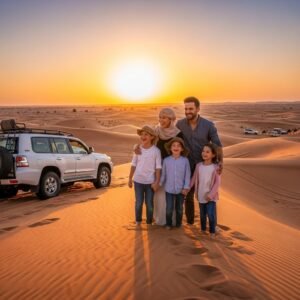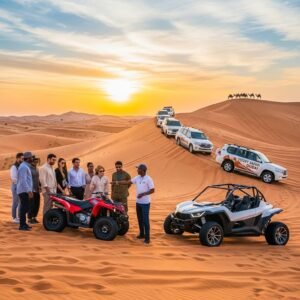
Dubai is a playground for adults. It has fast cars and high towers. But it is also a wonderland for children.
One of the top activities is the Family Desert Safari Dubai. It is a chance to show your kids the world beyond the iPad screen.
However, taking children into the desert sounds scary. Parents have valid concerns.
Is it safe? What will they eat? Are there toilets? Is it too hot?
These are the questions that keep you awake. We understand. Traveling with kids requires military-level planning.
That is why we wrote this guide. It is not just a brochure. It is a survival manual for parents.
We cover everything from car seats to camel moods. We discuss diaper changes and dune bashing.
We want you to feel confident. We want your kids to be safe.
This is a long read. We did not cut corners. We want to ensure your Family Desert Safari Dubai is flawless.
Let’s prepare for the adventure of a lifetime.
Why the Desert is Good for Kids
You might think the desert is just sand. To a child, it is a giant sandbox.
It is nature on a massive scale. It sparks imagination.
Kids living in cities rarely see such open space. The silence (when they stop screaming) is profound.
They learn about geography. They see how the wind shapes the earth.
They learn about history. They see how Bedouins survived without supermarkets.
It is a sensory experience. The feel of the sand. The smell of the BBQ. The sight of the stars.
It disconnects them from technology. There is no Wi-Fi in the deep dunes. They have to play.
A Family Desert Safari Dubai bonds you together. You share a unique experience.
You will talk about that camel ride for years.
Understanding Age Appropriateness
Not every safari is right for every age. You need to know the limits.
Infants (0-2 Years)
This is the hardest age. The heat is a risk. The sand is messy.
You cannot do dune bashing with an infant. It is dangerous. Shaken baby syndrome is a real risk.
However, you can still go. You must book a private car.
You skip the dunes. You go straight to the camp.
You enjoy the sunset. You take photos. It is a relaxed evening.
Toddlers (3-5 Years)
Toddlers love the sand. They will roll in it.
They are still too young for hard dune bashing. Their neck muscles are weak.
You should still stick to a private car. Do a “soft drive.”
The driver goes over small bumps. It is like a rocking cradle.
The camp activities are great for them. They love the camel.
School Age (6-12 Years)
This is the golden age for a Family Desert Safari Dubai.
They can handle the dune bashing. They find it exciting.
They can try sandboarding. They can get a henna tattoo.
They are old enough to remember the experience.
They can eat the buffet food. They can stay awake for the show.
Teenagers (13-17 Years)
Teens are hard to please. But the desert usually wins them over.
They love the photo opportunities. It is great for their social media.
They can try quad biking. It gives them a sense of independence.
They enjoy the thrill. It is not “boring parent stuff.”
The Dune Bashing Dilemma
Dune bashing is the main activity. It is a rollercoaster in a car.
For a family, this is the biggest safety question.
Is it safe for my kids?
If you are in a shared car, the answer is “maybe not.”
In a shared car, you cannot control the driver. Other tourists might want to go fast.
If your child gets scared and cries, it is awkward. You cannot stop easily.
This is why we insist on a Private Vehicle for families.
In a private car, you are the boss.
You can tell the driver, “Please drive slowly.”
You can tell the driver, “My child is scared, please stop.”
You can choose to skip the big dunes. You can stick to the flat tracks.
This control makes the Family Desert Safari Dubai safe and enjoyable.
We recommend https://royaldesertadventures.ae/ for their excellent private family packages.
Car Seats and Safety Gear
In Dubai, car seats are mandatory for young children.
However, safari companies do not always provide them by default.
When you book, you must request a car seat. Do not assume it is there.
Better yet, bring your own. You know your seat fits your child.
The drivers are used to installing them.
During the dune drive, the seatbelt must be tight.
Check it yourself. Do not rely on the driver.
Remove loose objects from the car. A flying water bottle can hurt a child.
Choosing the Right Time: Morning vs Evening
Timing is crucial for kids. Their sleep schedule matters.
The Morning Option
This is great for high-energy kids.
You start at 8:00 AM. You are done by 12:00 PM.
It avoids the “witching hour” in the late afternoon.
It is cooler. The sun is not at its peak yet.
However, there is usually no meal. It is just snacks.
There is no entertainment show.
If your kids are toddlers who nap at 1:00 PM, this is perfect.
The Evening Option
This is the full Family Desert Safari Dubai experience.
Pickup is at 3:00 PM. Drop off is at 9:00 PM.
You get the sunset. You get the dinner. You get the shows.
It can be tiring for little ones. It is a long day.
If your kids can stay up late, this is better value.
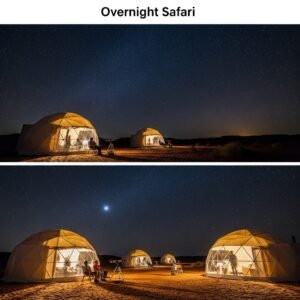
The camp lights up at night. It is magical for them.
Food for Picky Eaters
Kids are notorious for being picky. Will they eat the safari food?
The standard buffet is Arabic and Indian.
There is Hummus and bread. Most kids like bread.
There is grilled chicken. It is usually not spicy.
There is rice. There is pasta or noodles in many camps.
However, if your child only eats nuggets, you might struggle.
We recommend bringing backup food.
Pack a lunchbox. Put in their favorite snacks.
Bring crackers, fruit, or a sandwich.
The camp staff will not mind. They understand parents.
Do not let a hungry child ruin the Family Desert Safari Dubai.
Hydration and Heat Management
Kids forget to drink. They get distracted by the camels.
Dehydration makes them cranky. It can make them sick.
You must be the water monitor. Force them to take sips every 15 minutes.
Bring their favorite water bottle.
If it is summer, limit the time in the direct sun.
Keep them in the shade at the camp.
Bring a portable fan. A spray bottle with water is fun and cooling.
Watch for red faces. If they look too hot, cool them down instantly.
Bathroom Facilities check
This is a parent’s number one worry. “I need to go potty!”
In the desert, there are no trees to hide behind.
During the drive (45 mins), there are no toilets.
Make sure everyone goes before you leave the hotel.
There is usually a stop at a meeting point before the dunes. Use the toilet there.
At the camp, there are proper toilets.
They are separate for men and women. They have running water.
However, they can get busy.
Bring your own toilet paper. Just in case.
Bring hand sanitizer. Kids touch everything.
If you have a baby, bring a changing mat. There are no changing tables in the desert.
You will have to change them on a bench or in the car.
The Camel Ride with Kids
Kids love animals. The camel is the star of the show.
But camels are tall. Much taller than a horse.
Do not put a small child on a camel alone.
Sit with them. Hold them tight.
The camel stands up back legs first. You will pitch forward.
Then front legs. You pitch back.
Warn your child. Tell them it will be bumpy.
If they are scared, do not force them.
Let them pet the camel first. Let them see it is gentle.
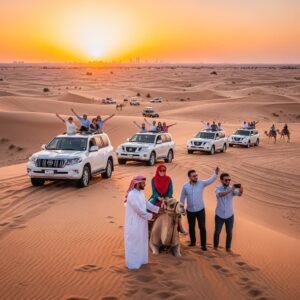
A Family Desert Safari Dubai photo on a camel is a classic souvenir.
Sandboarding for Little Ones
Sandboarding is like sledding.
Teenagers can stand up. Small kids should sit down.
Sit on the board with your child between your legs.
Hold them. Slide down together.
It is not fast. The sand creates friction.
It is great fun. They will want to do it again.
The hard part is walking back up. You will have to carry the board and maybe the child.
Be prepared for a workout.
Quad Biking Rules for Families
Quad bikes look fun. But they are machines.
Most operators have an age limit for driving. Usually 16+.
However, there are smaller kids’ quads in some places.
Or you can ride a double bike with your child.
You drive. They sit in front or behind.
Go slow. Do not take risks.
Make sure they wear a helmet that fits.
If the helmet is too big, it is unsafe. Do not ride.
Check https://dubaidesertsafarie.com/ for family-friendly quad options.
Entertainment: Is it Appropriate?
The evening shows are cultural.
Belly dancing is art. It is not vulgar.
However, some conservative families might prefer to skip it.
You can eat dinner while the show is on. You do not have to watch closely.
The Tanoura show is a hit with kids.
The man spins in a light-up skirt. It looks like a human spinning top.
Kids are mesmerized by the colors.
The Fire Show is exciting. But keep kids back.
The performer spins fire. Sometimes sparks fly.
Do not let kids run to the stage.
Henna Painting for Children
The Henna lady is popular.
It is a natural dye. It is safe for kids’ skin.
Girls love getting a “tattoo.”
Ask for a small design. A flower or a star.
It needs to dry. This is the hard part.
Tell your child not to touch their clothes. Henna stains fabric permanently.
Once it dries, it crumbles off. The orange mark stays.
It is a lovely badge of their Family Desert Safari Dubai trip.
Packing List for Parents
You need a go-bag. Do not rely on the operator.
Clothes: Spare set of clothes for kids. They will get sandy. Jackets. It gets cold at night. Comfortable shoes. Sneakers are best.
Health: Sunscreen. Apply before you leave. Motion sickness medicine for kids. Consult your doctor. Band-aids. For small scratches. Bug spray. Sometimes there are flies.
Gadgets: Fully charged iPad. For the drive to the desert. Power bank. Your phone will die from photos. Headphones.
Comfort: Baby wipes. A huge pack. You will need them for sand, food, and sweat. Plastic bags. To put the sandy clothes in.
Dealing with Sand Everywhere
Sand gets everywhere. In shoes. In pockets. In ears.
Accept it. It is part of the fun.
Do not stress about keeping them clean. Let them play.
Before you get back in the car, shake them off.
Take off their shoes. Empty the sand.
Use baby powder. It helps remove sand from skin.
When you get to the hotel, put them straight in the bath.
Scams Targeting Families
Families are targets for upsells.
The photographer will take a photo of your cute kid.
Then they will pressure you to buy it for 100 AED.
You do not have to buy it. Say no firmly.
The shop at the camp sells toys. Plastic camels.
They are overpriced. Distract your child.
Buy the same toy at the Day to Day shop in the city for 5 AED.
Be smart. Protect your budget.
Private vs Shared: The Cost Analysis
A shared tour is cheaper. Maybe 150 AED per person.
A private car is maybe 800 AED total.
If you are a family of 4, the shared cost is 600 AED.
The private car is only 200 AED more.
For that extra money, you get peace of mind.
You get safety. You get flexibility.
It is the best investment for a Family Desert Safari Dubai.
Do not be cheap on safety when kids are involved.
Educational Value of the Safari
Make it a learning trip.
Teach them about the Bedouins. How did they find water?
Show them the stars. You can see constellations.
Show them the falcon. Explain how it hunts.
It is better than a geography lesson in school.
They are seeing it with their own eyes.
Ask the guide questions. They love sharing their culture with kids.
Winter vs Summer for Families
Dubai has two extremes.
Winter (Oct-Apr): This is perfect. The weather is nice. You can stay out all evening. The sand is cool.
Summer (May-Sep): It is brutal. 45 degrees. We do not recommend the evening safari for small kids in summer. It is too hot. They will be miserable. If you must go, do a morning drive. Or find a luxury camp with AC.
The Falcon Encounter
The falcon is cool. It looks like a dinosaur bird.
The handler will let your child hold it.
They wear a glove. The bird is heavy.
Stand next to them. Support their arm.
The bird is hooded. It is calm.
It makes for a brave profile picture.
Explain to your child to be quiet. Sudden moves scare the bird.
Sunset Photography with Family
You want that perfect family photo.
The sunset stops are chaotic. Everyone wants the same spot.
Walk a bit further away. Find a clean dune.
Coordinate your clothes. White looks good on sand.
Blue looks good. Avoid brown or beige. You will disappear.
Ask the driver to take the photo. Get everyone to jump.
These are the memories of your Family Desert Safari Dubai.
Emergency Protocols for Parents
What if your child gets sick?
Tell the driver immediately.
They have a direct line to emergency services.
They can drive you out of the desert to the main road in 15 minutes.
Ambulances are fast in Dubai.
Do not panic. You are never truly isolated.
Keep your insurance details on your phone.
Booking the Right Operator
This is the final step. Who do you trust?
Look for “Family Friendly” tags.
Read reviews from other parents.
Avoid the cheapest options. They cut corners on safety.
We recommend https://htdesertsafari.com/ for their reliable family packages.
Check if they have child seats available. Ask before you book.
Conclusion
A Family Desert Safari Dubai is an adventure. It is chaotic, sandy, and loud.
But it is also beautiful.
Seeing your child roll down a dune laughing is worth the effort.
Seeing them stare at a camel in wonder is priceless.
With the right preparation, it is safe.
Follow our tips. Pack the right gear. Book the private car.
You will handle the desert like a pro.
Your kids will thank you. (Maybe when they are older).
Go make some memories in the sand.
FAQs
1. Is a Desert Safari safe for a 2-year-old child? Yes, a Family Desert Safari Dubai can be safe for a 2-year-old, but strict precautions are needed. You must not participate in the standard dune bashing. The violent shaking is dangerous for a toddler’s neck and spine. Instead, you should book a private vehicle and request a “direct-to-camp” transfer or a “soft drive.” This allows you to drive gently on flat tracks. Always bring your own car seat to ensure your child is securely strapped in during the journey to and from the desert.
2. Do I need to bring a car seat for the safari? Yes, it is highly recommended to bring your own car seat. While some premium operators can provide one upon request, availability is not guaranteed. You know the history and fit of your own seat. The 4×4 vehicles (Land Cruisers) have standard ISOFIX points or seatbelts to secure the car seat. Using a car seat is the only way to ensure your child’s safety during the highway drive and the off-road portions of the trip.
3. What is the best time of year for a family safari? The best time for a family safari is during the winter months, from late October to early April. The weather is pleasant, with daytime temperatures around 25°C, making it comfortable for children to play in the sand without overheating. Summer months (May to September) are extremely hot, often exceeding 40°C. If you visit in summer, the heat can be dangerous for young children, so you should look for morning tours or air-conditioned luxury camps.
4. Can my 5-year-old go dune bashing? Technically, yes, but it depends on the child and the intensity of the drive. A standard shared dune bashing experience might be too rough and scary for a 5-year-old. It is much better to book a private car. This allows you to instruct the driver to take it easy. You can do “baby dunes” where the car goes over small bumps gently. This gives the child the thrill without the fear or risk of injury.
5. What food will my children eat at the camp? The camp buffet typically includes kid-friendly options like rice, flatbread (Khubz), grilled chicken (mild), and pasta or noodles. There are also fries and fresh fruit. However, if your child is a picky eater, the spices in the Arabic dishes might be unfamiliar. It is a smart move to pack a lunchbox with their favorite snacks, a sandwich, or crackers just in case they refuse the buffet food. No one will stop you from bringing your own food for kids.
6. Are there changing facilities for babies? Desert camps have restroom facilities, but they rarely have dedicated baby changing tables. You will likely have to change diapers on a bench in the ladies’ prayer room or in the backseat of your 4×4 vehicle. It is essential to bring a portable changing mat, plenty of wipes, and plastic bags to dispose of dirty diapers, as you shouldn’t leave them in the open bins at the camp due to the heat and hygiene.
7. How do I handle motion sickness with kids? Motion sickness is common in the dunes. To prevent it, feed your children a light, non-greasy meal about 2 hours before the trip. Avoid heavy dairy or fried foods. Consult your pediatrician about giving them a mild anti-nausea medication like Dramamine before the pickup. During the drive, encourage them to look out the front window at the horizon. If they feel sick, ask the driver to stop immediately for fresh air.
8. Is the evening entertainment appropriate for children? Yes, the entertainment is generally family-friendly. The Tanoura show (spinning dancer) is colorful and mesmerizing for kids. The Fire Show is exciting, though you should ensure kids stay seated at a safe distance. The Belly Dance is an artistic performance and is standard in Dubai tourism, but some conservative families may choose to focus on dinner during this part. Overall, the atmosphere is festive and suitable for all ages.
9. What should children wear for the safari? Comfort is key. Dress them in loose, breathable cotton clothes. Long pants are better than shorts as they protect knees from scraping on the sand and keep sand out of places it shouldn’t be. Closed-toe shoes like sneakers are safer than sandals, which can trip them up in deep sand. In winter, definitely bring a warm jacket or hoodie, as the desert temperature drops significantly after sunset and kids will get cold quickly.
10. Are there specific activities for kids at the camp? Yes, kids usually love the camel ride (with an adult). There is often a lady doing Henna painting, which girls enjoy. Sandboarding is a huge hit; small kids can sit on the board and slide down gentle dunes. Some camps have a small play area or sell simple toys. The biggest activity, however, is simply playing in the massive sandbox that is the desert. Bring a small bucket and spade if you want to keep them occupied.
11. Is it safe to hold the falcon? Yes, it is safe. The falcons used for photos are well-trained and accustomed to people. They wear a hood covering their eyes to keep them calm. The handler will place a heavy leather glove on your child’s arm to protect them from the talons. You should stand right next to your child to support their arm, as the bird can be heavier than it looks. It makes for a wonderful and safe photo memory.
12. How much water should we bring? While reputable operators provide water, you should always bring your own supply for the family, especially for the drive to the desert. Kids get dehydrated faster than adults. Aim to have at least two small bottles per child. Having their familiar sippy cup or water bottle encourages them to drink more. In summer, bring a spray bottle with water to mist their faces and keep them cool.
13. Can we bring a stroller to the desert? A stroller is practically useless in the soft sand. The wheels will get stuck immediately. If you have an infant, a baby carrier (strapped to your chest or back) is much more practical. You can leave the stroller in the trunk of the car during the dune drive and camp visit. The camp area usually has carpets, but the ground underneath is uneven sand, so carrying the baby is the best option.
14. What if my child gets scared of the dark? The desert camp is well-lit with floodlights and lanterns, so it is not pitch black. However, the surrounding dunes are very dark. If your child is afraid of the dark, keep them within the well-lit central area of the camp. Bring a small flashlight or let them hold a glow stick (you can buy these cheaply beforehand). It turns the dark into a fun game rather than something scary.
15. Is there a medical kit on board? All licensed safari vehicles are required to carry a first aid kit. The drivers are trained in basic first aid. However, their kit contains generic items. If your child requires specific medication (like an inhaler for asthma, EpiPen for allergies, or specific pain relief), you must bring it with you. Do not rely on the driver having pediatric-specific medicines.
16. Can we skip the dune bashing and just go to dinner? Yes, this is often the best option for families with very young children or anxious kids. You can book a “Dinner Only” package. A driver will pick you up and take the highway and then a flat track directly to the camp entrance. You miss the rough driving but still get the full camp experience, including the camel ride, sunset photos, dinner, and shows. This is a stress-free way to enjoy the Family Desert Safari Dubai.
17. How long is the drive to the desert? From the center of Dubai (like Downtown or Marina), the drive to the desert edge takes about 45 minutes to 1 hour. This can feel long for a child. Prepare for this “boring” part of the trip. Bring iPads, coloring books, or travel games to keep them entertained in the car. Make sure they use the bathroom before leaving the hotel, as there are no stops on the highway.
18. Are the toilets at the camp clean enough for kids? In reputable camps, the toilets are regularly cleaned and have running water, soap, and tissue. However, they are high-traffic public restrooms. They might not be up to the standard of a 5-star hotel. It is wise to bring seat sanitizing wipes or hover your child. Always accompany young children to the restroom, as the floors can be wet or sandy, and they might need help with the taps.
19. What about bugs and insects? The desert does have insects, but they are rarely a problem at the camps. The camps are treated to keep pests away. You might see some flies around the food (which is why food is covered). Mosquitoes are generally not a major issue in the dry desert, but applying a little bug spray on your child’s ankles is a good preventative measure, just in case. Scorpions exist in the deep desert but avoid the noise of the camp.
20. Why should I book a private tour for my family? Booking a private tour gives you control. In a shared car with strangers, you cannot ask the driver to slow down if your child is crying, because the other tourists paid for a thrill. In a private car, the schedule revolves around you. You can stop for potty breaks, drive slowly, leave the camp early if the kids are tired, and ensure a hygienic environment. It is worth the extra cost for the peace of mind.