Dubai Desert Safari Safety 30 Essential Tips for Secure Trips
Dubai is one of the safest cities in the world. The crime rate is low. The streets are monitored. However, the desert is a different environment. It is wild nature.
A Dubai Desert Safari Safety plan is essential for every tourist. You are leaving the comfort of the city. You are entering a landscape of extreme heat and shifting sands.
Most tourists book a trip without thinking about the risks. They see the glossy photos on Instagram. They see the smiling faces.
They do not see the preparation behind those smiles. A safe trip is a planned trip.
We want you to have the time of your life. We do not want you to end up in a hospital. We do not want you to have a bad experience.
This guide is the most comprehensive safety manual available. We have covered every aspect of the safari.
From the moment you book your ticket to the moment you return to your hotel. We cover health, vehicles, food, and activities.
Read this carefully. Share it with your travel companions. Knowledge is your best protection in the desert.
1. Choosing a Licensed Operator
The first step in Dubai Desert Safari Safety is choosing the right company.
Not all operators are the same. There are hundreds of companies. Some are legitimate. Some are illegal freelancers.
A licensed operator is registered with the Dubai Department of Tourism and Commerce Marketing (DTCM). This is the government body that regulates tourism.
They enforce strict safety standards. They inspect the vehicles. They check the drivers.
If you book with an unlicensed operator, you have no protection. If there is an accident, you might not be covered.
How do you know if they are licensed? Check their website. Look for their license number.
Read reviews on independent sites. Look for comments about safety.
We recommend booking with established names. https://htdesertsafari.com/ is a licensed and trusted provider. They follow all government regulations.
2. Driver Qualifications and Training
Your life is in the hands of your driver. This is literal.
Dune bashing is not normal driving. It requires special skills. It requires a special license.
In Dubai, safari drivers must have a specific RTA (Roads and Transport Authority) license for desert driving.
This is not a standard driving license. They have to undergo rigorous training.
They learn how to handle the car on soft sand. They learn how to recover a stuck vehicle. They learn first aid.
When you get in the car, you can ask to see this license. A professional driver will be proud to show it.
If the driver seems inexperienced or reckless, speak up. You have the right to feel safe.
3. Vehicle Safety Standards
The car itself is a safety device. Most safaris use Toyota Land Cruisers or Nissan Patrols.
These are robust 4×4 vehicles. But they need modifications for the desert.
Look inside the car. Is there a roll cage?
A roll cage is a metal frame inside the car. It protects the roof from collapsing if the car rolls over.
This is a mandatory requirement for dune bashing vehicles. If you do not see bars inside, do not go dune bashing.
Check the seatbelts. Every passenger must have a working seatbelt.
Check the condition of the car. Is it clean? Does it look well-maintained?
Old, rattling cars are a red flag. They might have mechanical failures in the middle of the desert.
4. Understanding Dune Bashing Risks
Dune bashing is an extreme sport. It is marketed as fun, but it has risks.
The car moves violently. It climbs steep dunes. It drops suddenly.
This motion causes G-force. It causes lateral movement.
If you are not strapped in, you will get hurt. You will hit the window. You will hit the roof.
Dune bashing risks include motion sickness. This is very common.
It can also cause whiplash if your neck is weak.
If the car rolls (which is rare but possible), the roll cage saves you. But loose objects become missiles.
Do not leave your phone or water bottle loose on the seat. Hold them or put them in a secure pocket.
5. Restrictions for Pregnant Women
This is a critical rule. Pregnant women should NEVER do dune bashing.
The violent jerks can cause placental abruption. It can induce early labor.
It does not matter if you are 2 months or 8 months pregnant. The risk is too high.
This does not mean you cannot go to the desert. You can still enjoy the experience.
You must book a safe desert safari guide package that skips the bashing.
You can book a private car. The driver will take you directly to the camp.
They will use flat tracks. They will drive slowly.
This way, you are safe. You still get to see the sunset. You still get the dinner.
Always inform the operator if you are pregnant when booking.
6. Age Limits for Children
Is the safari safe for babies? This is a common question.
Technically, there is no law banning babies. But most operators have strict policies.
Children under 3 years old are usually not allowed on shared dune bashing trips.
Their neck muscles are not fully developed. The jerking motion can cause injury.
If you have a baby, you must book a private car. You must bring a car seat.
You can instruct the driver to drive gently. Or skip the dunes.
Children aged 3 to 10 usually need a booster seat.
Always ensure the child lock is on. Kids might open the door in excitement.
Check the desert safari age limit policy of your specific operator before paying.
7. Precautions for Seniors
Older adults love the desert too. But they need to be careful.
Osteoporosis is a concern. If you have brittle bones, the bumps are dangerous.
Heart conditions are also a risk. The adrenaline rush can be stressful.
Back problems are the biggest issue. If you have a slipped disc or chronic back pain, do not bash.
The vertical compression when the car lands can aggravate back injuries.
Seniors should opt for the “Dinner Only” package. Or the “Nature Safari” in the conservation reserve.
These are smooth rides. They focus on wildlife and scenery.
8. Motion Sickness Management
Motion sickness ruins the trip for many people.
The car moves like a boat in a storm. It goes up and down and side to side.
If you get sea sick, you will get sand sick.
How to prevent it? Do not eat a heavy meal before the trip.
Avoid greasy food. Avoid milk. Eat something light like toast or fruit.
Take a motion sickness pill. Dramamine is a popular brand.
Take it 1 hour before the pickup. Taking it in the car is too late.
Sit in the front seat if possible. Look at the horizon. Do not look at your phone.
If you feel sick, tell the driver immediately. They will stop.
Fresh air helps. Walking on the sand helps.
9. Seatbelt Discipline
This cannot be stressed enough. Wear your seatbelt.
Some tourists take it off to take selfies. This is incredibly stupid.
The driver cannot predict the sand. A soft patch can stop the car instantly.
If you are not buckled, you will fly forward.
The driver might refuse to move until everyone is buckled. Respect this.
It is for your safety. It is also the law.
Tighten the belt. It should be snug across your hips.
10. Hydration in the Heat
The desert is hot. Even in winter, the sun is strong.
You lose water through sweat. You lose water through breathing the dry air.
Dehydration happens fast. It causes headaches. It causes dizziness.
Drink water before you feel thirsty. Keep sipping throughout the trip.
Reputable operators provide unlimited water. Keep a bottle with you.
Avoid alcohol before the trip. It dehydrates you.
Avoid too much caffeine. Coffee is a diuretic.
If you feel dizzy, sit in the shade. Drink water. Tell your guide.
11. Sun Protection Strategy
The sun is your enemy in the desert.
UV rays reflect off the sand. You get a double dose of radiation.
Sunburn can happen in 15 minutes.
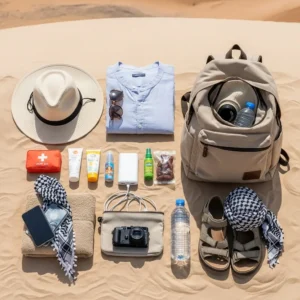
Wear sunscreen. Use SPF 50 or higher. Apply it to all exposed skin.
Don’t forget the back of your neck. Don’t forget your ears.
Wear sunglasses. The glare can cause “snow blindness” or sand blindness.
Wear a hat. A wide-brimmed hat is best.
Or buy a traditional headscarf (Guthra or Sheila). It protects your head and neck effectively.
12. Clothing for Safety
What you wear affects your safety.
Do not wear high heels. You will twist your ankle in the soft sand.
Wear sneakers or trainers. They protect your feet.
The sand can be scorching hot. It can burn the soles of your feet.
Sandals are okay for the evening. But closed shoes are better for activities.
Wear loose, breathable clothing. Cotton and linen are best.
Tight synthetic clothes trap heat. They can cause heat rash.
Avoid very short skirts. They are uncomfortable on camels. They are not culturally appropriate.
13. Winter Safety: The Cold Shock
People forget that deserts get cold.
In winter (December to February), the temperature drops rapidly after sunset.
It can go from 25°C to 10°C in two hours.
The wind makes it feel colder.
Hypothermia is rare but being shivering cold is miserable.
Bring a jacket. Bring a hoodie. Bring a scarf.
If you are doing an overnight safari, bring thermal wear.
Check the weather forecast before you go.
14. Sandboarding Safety Tips
Sandboarding looks easy. But you can get hurt.
The biggest risk is tumbling.
If you fall, try to land on your side. Do not put your hands out to break the fall. You can break your wrist.
Keep your knees bent. This lowers your center of gravity.
Do not wax the board too much. It becomes too fast.
If you are not confident, sit on the board. Use it like a sled.
It is safer and just as fun.
Climbing back up the dune is exhausting. Take breaks. Do not overexert yourself.
15. Quad Biking Risks and Rules
Quad biking is a major cause of accidents.
These are powerful machines. They are not toys.
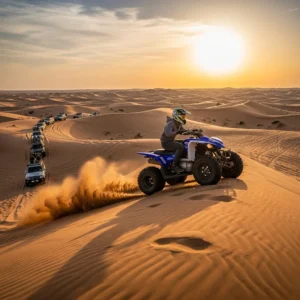
Quad biking safety gear is mandatory. You must wear a helmet.
If an operator lets you ride without a helmet, leave. They are unsafe.
Follow the leader. Do not race other tourists.
Do not try to drift. The sand is unpredictable. The bike can flip easily.
Keep a safe distance from the person in front. If they stop suddenly, you will crash.
Stay in the designated area. There are hidden drops in the open desert.
Check https://dubaidesertsafarie.com/ for operators with well-maintained bike fleets.
16. Camel Riding Precautions
Camels are gentle but tall. Falling from a camel is a long drop.
The most dangerous moment is when the camel stands up or sits down.
It does this in a jerky motion. Back legs first, then front legs.
You will pitch forward and backward.
Hold the handle tight. Lean back when it leans forward. Lean forward when it leans back.
Do not scream. Loud noises scare the animal.
Do not walk behind a camel. It can kick.
Listen to the handler. They know the animal’s mood.
17. Wildlife Awareness
The desert is alive. There are animals you need to avoid.
Scorpions are present. They hide under rocks and in the sand.
They are nocturnal. They come out at night.
Do not walk barefoot in the dark outside the camp area.
Snakes like the Sand Viper exist. They are rare but dangerous.
Do not stick your hands into holes in the sand.
If you see an animal, do not touch it. Take a photo from a distance.
Camps are usually sprayed and cleaned. The risk inside the camp is low.
But if you wander off into the dark dunes, be vigilant.
18. Camp Hygiene and Food Safety
You are eating a buffet in the middle of nowhere. Is it safe?
The Dubai Municipality inspects these camps. They have strict hygiene rules.
However, be smart. Look at the food.
Is the hot food hot? Is the cold food cold?
If the salad looks wilted, skip it.
Wash your hands before eating. Most camps have sinks.
Carry a hand sanitizer. It is useful after touching camels or sand.
Desert camp hygiene is generally good in reputable camps.
Budget camps might cut corners. This is why price matters.
19. Fire Safety at the Camp
The camps use fire for cooking and entertainment.
There are bonfires. There are fire shows.
Keep a safe distance from the fire show performer.
They spin fire balls on chains. Sometimes a chain can slip.
Do not let your children run near the stage during the fire show.
Be careful with your clothes near the bonfire. Synthetic fabrics melt easily.
Locate the fire extinguishers. Every camp has them.
20. Solo Female Traveler Safety
Is it safe for women alone? Yes, absolutely.
Dubai is very safe for women. The solo female safari safety record is excellent.
However, standard travel rules apply.
Dress modestly. It avoids unwanted attention.
Sit in the front of the car or with a family if possible.
You can request to be in a “family car” when booking.
If anyone makes you uncomfortable, tell the guide. They will handle it strictly.
Avoid walking alone far into the dark dunes at night.
We recommend checking https://royaldesertadventures.ae/ as they are known for being very family and female-friendly.
21. Emergency Protocols
What if something goes wrong?
Every convoy has a lead driver. He is in charge of safety.
He carries a radio. He can call for help.
Police helicopters can reach the desert in minutes.
If there is a medical emergency, tell the driver.
Do not panic. The drivers are trained for this.
Keep the emergency number of the tour operator on your phone.
Know the local emergency number: 999 for Police, 998 for Ambulance.
22. Avoiding Tourist Scams
Scams can compromise your safety and wallet.
The “Free Safari” scam is common. You are taken to a sales pitch.
You lose control of your time. You might be stranded until the pitch ends.
The “Cheap Ticket” scam. You buy a ticket on the street.
The car is unlicensed. The driver is untrained. This is a safety risk.
Always book through official channels.
Do not buy “diamonds” or “gold” at the camp. They are fake.
23. Alcohol Consumption Rules
Alcohol is served in most camps. But be careful.
Being drunk in the desert is dangerous. You can get dehydrated fast.
You can lose your balance on the dunes.
Public drunkenness is a crime in the UAE.
If you become aggressive or messy, the police will be called.
You can be arrested.
Enjoy a drink, but know your limits.
Do not offer alcohol to the driver. It is strictly forbidden.
24. Respecting Local Culture
Safety also means safety from legal trouble.
Insulting the culture can get you in trouble.
Do not take photos of local women without permission.
Do not make rude gestures.
Do not swear loudly.
During Ramadan, do not eat or drink in public during daylight hours.
The camps usually have a screened area for eating during Ramadan.
Respect the rules, and you will be welcomed warmly.
25. Tire Pressure and Safety
You will see the driver letting air out of the tires.
This is normal. It is safe.
Lower pressure gives the tire a wider surface area. It floats on sand.
If they do not deflate tires, the car will get stuck.
Or the car will bounce violently.
After the safari, they must re-inflate the tires.
Wait for them to do this. Do not pressure them to rush.
Driving on the highway with deflated tires is very dangerous. The tire can blow out.
26. The Convoy System
Safaris usually move in a convoy. A line of 5 or 10 cars.
This is for safety. If one car gets stuck, the others help.
Do not ask your driver to leave the convoy.
If you are alone in the desert and get stuck, you are in trouble.
The convoy leader sets the safe path. The others follow.
This is why “private” safaris still often drive near other cars.
27. Summer Safari Precautions
In summer (June to September), the heat is extreme. 45°C or more.
Summer safari precautions are vital.
Do not book a morning safari in summer. It is too hot.
Book an evening safari. The sun is setting.
Ensure the car has good Air Conditioning.
Ensure the camp has cooled areas.
Watch for signs of heat stroke. Flushed skin. Rapid heartbeat. Confusion.
If this happens, cool the person down immediately.
28. Sandstorm Safety
Sandstorms can happen. They reduce visibility to zero.
If a sandstorm hits, the driver will stop.
Do not get out of the car. The sand hurts your skin and eyes.
Wait it out. They usually pass quickly.
The operator might cancel the tour if a storm is predicted.
Accept the cancellation. It is for your safety.
29. Lost and Found
It is easy to lose things in the sand.
If you drop your phone on a dune, it buries itself.
Keep your belongings in a zipped bag.
If you lose something in the car, call the operator immediately.
They check the cars after every shift.
If you lose something in the camp, it is harder to find.
Do not bring your passport to the desert. Leave it in the hotel safe.
Bring a copy or a photo of your ID.
30. Insurance Coverage Details
Check your travel insurance. Does it cover “adventure sports”?
Some policies exclude dune bashing.
If you are injured, your insurance might refuse to pay.
You need to add a “hazardous activity” rider to your policy.
The tour operator also has insurance.
But their insurance only covers you while you are in the car or camp.
It does not cover you if you wander off and trip.
Be double protected. Check your own policy.
Conclusion
Dubai Desert Safari Safety is about preparation and awareness.
The desert is a beautiful, magical place. It should be enjoyed.
By following these 30 tips, you eliminate 99% of the risks.
You know how to pick a safe car. You know what to wear. You know what to eat.
You are now smarter than the average tourist.
You can relax and focus on the fun.
The thrill of the dunes is waiting. The beauty of the sunset is waiting.
Go with confidence. Go with safety.
Book your safe adventure today.
FAQs
1. Is dune bashing safe for everyone? Dune bashing is generally safe for healthy adults, but it is not safe for everyone. It involves high-speed driving over rough terrain, causing sudden drops and lateral movements. It is strictly restricted for pregnant women, children under 3 years old, and people with back or neck problems. Seniors with heart conditions or osteoporosis should also avoid it. For these groups, a “flat ride” or “nature safari” is a much safer alternative that allows them to enjoy the desert scenery without the physical stress of the bashing.
2. What are the most important safety features to look for in a safari vehicle? The most critical safety feature is the internal roll cage. This is a framework of metal bars reinforced inside the vehicle cabin to protect passengers in case of a rollover. You should also check for functional seatbelts for every passenger—not just lap belts, but preferably 3-point belts. The vehicle should appear well-maintained, with good tires. Inside, there should be a first aid kit and a fire extinguisher. Licensed safari vehicles also have a tracking device monitored by the police or tourism authorities.
3. Can I do a desert safari if I am pregnant? You can do a desert safari, but you cannot do dune bashing. Pregnant women safari rules are very strict regarding the off-road drive risk. The vibration and G-forces can be harmful to the pregnancy. However, you can book a specialized package where a private driver takes you directly to the camp using smooth, flat tracks. This way, you avoid the dangerous bashing but still get to enjoy the sunset, the camel riding (gentle only), the dinner, and the shows safely.
4. Are the desert camps hygienic? Yes, licensed desert camps are inspected regularly by the Dubai Municipality and must adhere to strict health and food safety codes. Desert camp hygiene standards are generally high, especially in mid-range and luxury camps. Food is kept at safe temperatures, and restrooms are cleaned frequently. However, extremely cheap budget camps may struggle with overcrowding and cleanliness. It is always a good idea to bring your own hand sanitizer and to visually inspect the food buffet before eating.
5. Is it safe to visit the desert in the summer? Yes, but you need summer safari precautions. The temperatures can exceed 45°C (113°F). The risk of heat stroke and dehydration is real. To stay safe, avoid morning safaris in summer as the sun is too intense. Choose evening safaris where the temperature drops slightly. Wear loose, light-colored clothing. Drink double the amount of water you think you need. Ensure your booking includes an air-conditioned vehicle and access to cooled areas at the camp.
6. What happens if there is a medical emergency in the desert? Safari guides are trained in basic first aid. They travel in convoys, so there is always backup. If a serious medical emergency occurs, the lead driver coordinates with the police and ambulance services. The Dubai Police Air Wing (helicopters) can reach deep desert locations quickly if evacuation is needed. It is crucial to inform your guide immediately if you feel unwell. Also, keeping your travel insurance details on your phone is a good safety habit.
7. Are there dangerous animals in the Dubai desert? While the desert is home to scorpions, spiders (like the Camel Spider), and vipers, encounters with tourists are extremely rare. These animals are shy and avoid the noise and vibration of the safari cars and camps. The campsites are regularly maintained and treated to keep pests away. To stay safe, simply avoid walking barefoot in the sand outside the illuminated camp area at night, and do not stick your hands into rocks or holes in the ground.
8. Is it safe for solo female travelers? Dubai is consistently ranked as one of the safest cities for women, and this extends to the desert. Solo female safari safety is high. Professional drivers are vetted and respectful. To feel extra secure, solo women can request to be seated in a car with other families or couples rather than a group of single men. Booking with reputable companies like https://royaldesertadventures.ae/ ensures a high standard of professionalism. Common sense rules apply: dress modestly and keep your valuables close.
9. Do I really need to wear a helmet for quad biking? Yes, absolutely. Quad bikes can flip if they hit a soft patch of sand or a hidden dune edge. Head injuries are the most common serious injury from quad biking accidents. Quad biking safety gear usually includes a helmet and sometimes goggles. If an operator tells you “it’s okay, you don’t need one,” do not ride with them. It shows a disregard for your safety. Always strap the helmet on tight before you touch the throttle.
10. How do I know if a tour operator is legitimate? Legitimate tour operators must display their license from the Department of Tourism and Commerce Marketing (DTCM). Their drivers must carry a specific safari driver’s ID card issued by the RTA. Their vehicles will often have specific tourism number plates or markings. You can verify their reputation by checking online reviews on platforms like TripAdvisor or Google Maps. Avoid booking with random individuals on the street who offer “cheap deals” but cannot produce a license or an office address.
11. What is the “Safe Driver” age limit? There is no upper desert safari age limit for passengers, provided they are in good health. However, for active participation, restrictions apply. For dune bashing, seniors (60+) are often advised to take it easy. For quad biking, the driver usually needs to be at least 16 years old to drive alone. Younger children can ride as passengers with an adult if the bike is designed for two. Always check the specific age policy of your operator, as insurance rules may vary between companies.
12. Can I wear contact lenses in the desert? You can, but it can be uncomfortable. The wind blows fine sand and dust. If sand gets under your contact lens, it is very painful and can scratch your cornea. It is safer and more comfortable to wear glasses or prescription sunglasses. If you must wear contacts, wear tight-fitting wraparound sunglasses to protect your eyes from the wind, and carry eye drops and a spare pair of lenses just in case.
13. What should I do if the car gets stuck? Getting stuck is part of the adventure! It happens frequently. Do not panic. Do not get out of the car unless the driver asks you to. If you get out, stay close to the vehicle. Do not wander off to take photos, as other cars in the convoy might not see you. The driver will use a shovel or tow rope to free the car. Trust their expertise. It is usually resolved in a few minutes.
14. Are there specific food allergies protocols? The buffet at the camp is mass-produced. While they separate vegetarian and non-vegetarian food, cross-contamination can happen. If you have a severe nut allergy or celiac disease (gluten), the standard buffet is a risk. It is safer to bring your own snacks or meal. Alternatively, book a private dinner or VIP service where you can speak to the chef directly about ingredients. Always carry your EpiPen if you have severe allergies.
15. Is it safe to camp overnight in the desert? Yes, but only with a licensed operator. “Wild camping” on your own requires knowledge of the terrain and permits. Booking an overnight package is very safe. You sleep in a secure camp with staff present all night. They provide sleeping bags or beds. The main safety issue at night is the cold and tripping in the dark. Bring a torch (flashlight) and warm clothes. It is a peaceful and memorable experience.
16. How much water should I drink? You should aim to drink at least 1 liter of water during a 4-hour safari, and more in summer. Do not wait until you are thirsty. Thirst is a sign you are already dehydrated. Avoid sugary sodas as they don’t hydrate as well as water. If you are doing active sports like sandboarding or quad biking, double your intake. Monitoring your urine color is a good test; if it is dark, drink more water immediately.
17. Can I bring my own car for the safari? You can drive your own car to the meeting point at the desert edge (A “Self-Drive” package). This is safe. However, you should NEVER take your own rental car or private car onto the dunes unless you are a trained professional with a modified vehicle. Standard road SUVs will get stuck, overheat, or flip. Recovery from the deep desert is very expensive (thousands of Dirhams). Always transfer to the operator’s professional 4×4 for the dune drive.
18. What are the rules for photography safety? Do not take photos while standing up through the sunroof during the drive. If the car hits a bump, you will be thrown against the metal edge, causing severe chest or rib injuries. Sit down and buckle up while the car is moving. When outside, be careful of your camera gear; sand destroys lenses. Also, culturally, never take photos of government buildings, military sites, or local women without explicit permission.
19. Is travel insurance mandatory for a safari? It is not legally mandatory for you to show insurance to book a ticket. However, it is highly recommended for your own financial safety. If you break a leg sandboarding, hospital costs in Dubai are high. The operator’s insurance covers their liability (if they are at fault), but it might not cover accidents deemed as “your fault” or general medical issues. Comprehensive travel insurance gives you total peace of mind.
20. Who do I contact if I have a complaint about safety? If you witness unsafe behavior—like a driver speeding on the highway, a car without seatbelts, or poor hygiene—you should report it. First, speak to the camp manager. If they do not resolve it, you can file a complaint with the Dubai Tourism (DTCM) via their hotline or website. They take safety complaints very seriously and can fine or suspend the operator. Your feedback helps keep the industry safe for everyone.