Eco Friendly Safari Experiences Transforming the Dubai Desert Landscape
Eco Friendly Safari adventures have emerged as the premier choice for travelers who want to enjoy the majesty of the dunes without leaving a heavy footprint. For decades, the vast sands of the UAE have hosted millions of visitors. However, the modern era demands a new approach that balances thrill with environmental preservation.
An Eco Friendly Safari is more than just a tour; it is a commitment to the earth. By choosing these specialized excursions, you support initiatives that protect local flora and fauna. This approach ensures that the golden landscape remains pristine for the generations of explorers yet to come.
In this deep dive, we will explore why the move toward sustainability is vital. We will look at how technology and tradition merge to create a better way to travel. From solar-powered lighting to waste-reduction strategies, every element of an Eco Friendly Safari serves a specific, green purpose.
The Rising Demand for Eco Friendly Safari Options
The global travel community is shifting its focus toward ethical experiences. Travelers now ask deeper questions about where their money goes and how their presence affects the land. This shift has birthed the Eco Friendly Safari movement in the heart of Dubai.
An Eco Friendly Safari prioritizes the health of the sand dunes over high-speed thrills. Traditional dune bashing, while exciting, can often lead to the displacement of sand and the destruction of vegetation. Green tours focus on educational drives that respect the natural contours of the land.
Operators are now investing in specialized training for their staff. Guides on an Eco Friendly Safari are not just drivers; they are environmental ambassadors. They explain the delicate balance of the desert, teaching guests how to appreciate the silence and the subtle life found in the arid terrain.
Solar Energy and the Eco Friendly Safari Infrastructure
One of the most impressive feats of the Eco Friendly Safari model is the use of renewable energy. In the past, remote camps relied on diesel generators that produced thick smoke and loud noise. Today, top-tier sustainable camps have transitioned to 100% solar power.
Solar panels are strategically placed to capture the intense Arabian sun throughout the day. This stored energy then powers the entire Eco Friendly Safari camp during the cool desert nights. From the fairy lights in the dining area to the charging ports in guest tents, everything runs on clean energy.
This transition to solar power does more than just reduce carbon emissions. It restores the natural silence of the desert. Without the hum of a generator, guests on an Eco Friendly Safari can hear the wind whistling through the dunes and the distant calls of desert owls.
| Category | Standard Safari | Eco Friendly Safari |
| Power Source | Diesel Generators | Solar Photovoltaic Systems |
| Carbon Footprint | High Emission | Near Zero Emission |
| Noise Levels | Constant Engine Hum | Natural Desert Silence |
| Lighting | Traditional Bulbs | High-Efficiency LED |
| Energy Storage | None (Direct Burn) | Advanced Battery Systems |
Water Management and Conservation in Arid Environments
Water is life in the desert, and an Eco Friendly Safari treats every drop with the utmost respect. Many of these camps use atmospheric water generators that literally pull drinking water out of the thin desert air. This technology eliminates the need for plastic water bottles.
Greywater recycling is another pillar of the Eco Friendly Safari philosophy. Water used for washing hands or showering is filtered and reused for irrigation. This allows small patches of Ghaf trees and desert shrubs to thrive around the camp, providing shade and oxygen.
Guests are also part of the solution. On an Eco Friendly Safari, you will find signage that encourages mindful water usage. By involving the traveler in the process, these tours create a shared sense of responsibility for the desert’s most precious resource.
Biodiversity Protection and Wildlife Observation
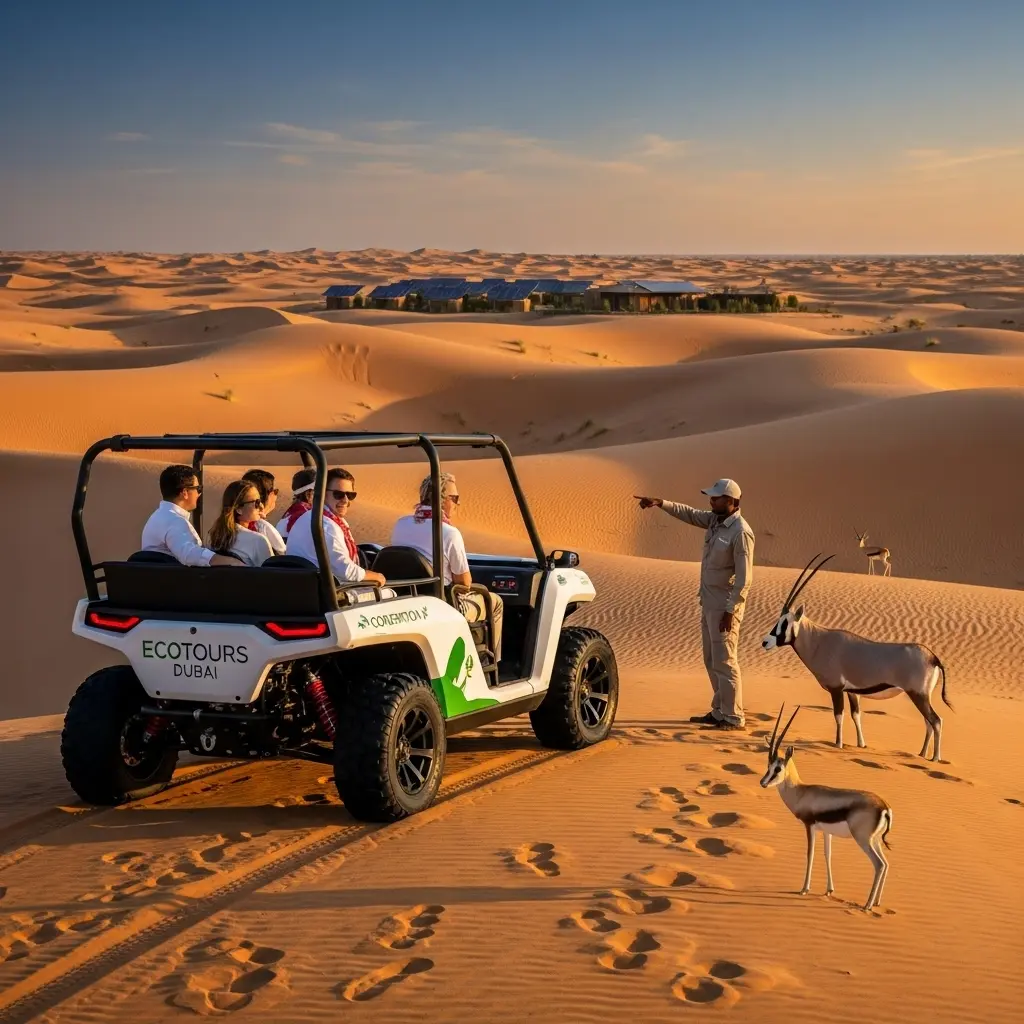
The Dubai Desert Conservation Reserve is a prime example of where an Eco Friendly Safari takes place. This area is dedicated to the protection of the Arabian Oryx and the Sand Gazelle. These animals were once nearly extinct, but thanks to ethical tourism, their numbers are growing.
During an Eco Friendly Safari, wildlife spotting is done from a distance. Guides use high-quality binoculars to show guests the animals without invading their personal space. This “look but don’t touch” policy is essential for reducing animal stress in the wild.
Furthermore, an Eco Friendly Safari often includes bird watching. The desert is home to many migratory species that stop at the small oases. By keeping the camps clean and the noise levels low, these safaris ensure that the birds feel safe enough to return year after year.
Waste Reduction and Zero Plastic Initiatives
Plastic pollution is a global crisis, and the Eco Friendly Safari industry is fighting back. Most green camps have implemented a strict ban on single-use plastics. Instead of plastic cups and cutlery, they use glass, metal, and bamboo alternatives.
Waste sorting is a daily ritual on an Eco Friendly Safari. Organic waste from the kitchen is often composted to enrich the desert soil in controlled areas. Non-organic waste is transported back to the city to be processed in professional recycling facilities.
This commitment to waste reduction extends to the procurement process. An Eco Friendly Safari operator will choose suppliers who use minimal packaging. By influencing the supply chain, these companies are helping to make the entire Dubai tourism industry more sustainable.
Architecture and Sustainable Design of Desert Camps
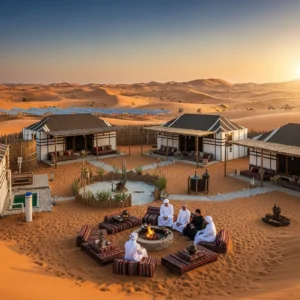
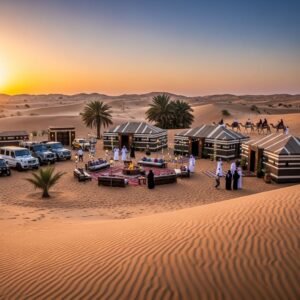
The physical footprint of an Eco Friendly Safari camp is designed to be temporary and non-intrusive. Many structures use traditional Bedouin designs that allow for natural ventilation. This reduces the need for energy-hungry air conditioning systems.
Materials used in an Eco Friendly Safari camp are often natural or recycled. Reclaimed wood, stone, and organic canvas are preferred over concrete and steel. These materials not only look more authentic but also have a much lower environmental impact during production.
The layout of an Eco Friendly Safari camp is also carefully planned. Tents are spaced out to allow for the natural movement of animals and the flow of the wind. This design ensures that the camp feels like a part of the landscape rather than an imposition upon it.
The Role of Locally Sourced and Organic Food
Dining on an Eco Friendly Safari is a journey through the flavors of the region. Chefs prioritize locally grown vegetables and fruits from organic farms in the UAE. This reduces the “food miles” and ensures that the ingredients are as fresh as possible.
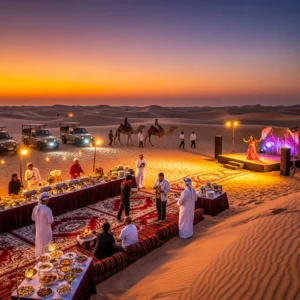
A typical Eco Friendly Safari menu features traditional dishes like hummus, grilled meats, and fresh dates. By focusing on regional cuisine, these tours support local farmers and fishermen. It also gives travelers a more authentic taste of Arabian hospitality.
Food waste is also managed with extreme care. Portions on an Eco Friendly Safari are designed to satisfy without creating excess. Any leftover food that cannot be composted is often donated to local community programs, ensuring that nothing goes to waste.
Transportation and the Future of Electric Desert Tours
The most significant source of carbon in tourism is transportation. To address this, many Eco Friendly Safari providers are looking toward electric vehicles (EVs). While the technology for sand-dune-capable EVs is still evolving, many transfer vehicles from the city are already electric.
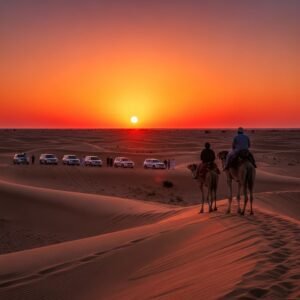
For those who want a truly carbon-neutral experience, an Eco Friendly Safari often includes camel trekking. Camels have been the “ships of the desert” for thousands of years. They provide a silent, rhythmic way to see the dunes that is completely in harmony with nature.
When motorized vehicles are used on an Eco Friendly Safari, they are maintained to the highest standards. This ensures they run efficiently and produce fewer emissions. Drivers are also trained in “eco-driving” techniques that minimize fuel consumption and tire wear on the sand.
Cultural Preservation and Community Engagement
A Sustainable Safari is not just about the sand and the stars; it is about the people. An Eco Friendly Safari provides a platform for local Bedouin descendants to share their stories and traditions. This cultural exchange is vital for keeping local heritage alive.
Many Eco Friendly Safari programs invest a portion of their revenue back into local community projects. This might include supporting local schools or funding environmental research. By choosing a green tour, you are directly contributing to the social welfare of the region.
Guides on an Eco Friendly Safari will often teach guests basic Arabic phrases and explain the history of the desert tribes. This creates a deeper connection between the visitor and the land. It transforms a simple vacation into a meaningful cultural experience.
Educational Opportunities for Every Traveler
One of the most valuable aspects of an Eco Friendly Safari is the education it provides. Guests leave the desert with a much better understanding of the challenges facing our planet. They see firsthand how small changes can make a big difference.
Children are especially welcomed on an Eco Friendly Safari. Many camps have “Junior Ranger” programs that teach kids about animal tracks and solar power. These experiences foster a lifelong love for nature and a commitment to environmental protection.
Even for adults, an Eco Friendly Safari is a chance to learn. Whether it is a talk about the stars or a demonstration of traditional water-finding techniques, the learning never stops. It is an intellectual adventure as much as a physical one.
Strategic Partnerships for Better Tourism
For travelers seeking high-quality desert experiences, https://royaldesertadventures.ae/ and https://dubaidesertsafarie.com/ offer excellent perspectives on desert exploration. If you are looking to book your next trip, you can check the internal options at https://htdesertsafari.com/ for a variety of packages.
Building a Greener Future in the Sands
The UAE has made great strides in its “Green Agenda,” and the Eco Friendly Safari is a core part of that vision. As the country prepares for a future beyond oil, sustainable tourism will be a key economic pillar. The desert is a resource that must be managed with care.
Investors are now looking at the Eco Friendly Safari model as a template for other types of tourism. The lessons learned in the desert—about water, energy, and waste—can be applied to city hotels and coastal resorts. The desert is teaching us how to live in balance with a harsh environment.
By participating in an Eco Friendly Safari, you are a part of this global shift. You are proving that tourism can be a force for good. The dunes are calling, and they are asking us to tread lightly as we explore their golden mysteries.
Conclusion: The Impact of Your Choices
Every traveler has the power to change the world through their choices. Selecting an Eco Friendly Safari is a vote for a cleaner, greener, and more ethical travel industry. It is a choice that benefits the animals, the environment, and the local people.
The beauty of the Dubai desert is a gift that we must protect. Through the practices of an Eco Friendly Safari, we can ensure that this gift remains vibrant and full of life. The sand may shift, but our commitment to sustainability must remain rock solid.
As you look forward to your next adventure, consider the path of the Eco Friendly Safari. Experience the thrill of the dunes, the peace of the stars, and the warmth of Arabian hospitality, all while knowing you are protecting the world you love to explore.
Advanced Eco Friendly Safari Technologies
As we look deeper into the mechanics of the Eco Friendly Safari, we find cutting-edge technology at every turn. Some camps are now trialing biodegradable “sand-fixers” that help stabilize paths without using chemicals. This prevents the erosion that can happen with frequent foot traffic.
Another innovation in the Eco Friendly Safari space is the use of smart-grid technology. These systems manage the distribution of solar power with extreme precision. If a tent is empty, the system automatically shuts off the lights and charging ports to save energy for the rest of the camp.
Even the toilets in an Eco Friendly Safari are high-tech. Vacuum-flush systems, similar to those found on airplanes, use 90% less water than a standard toilet. This is a game-changer for desert camps where water must be managed with extreme care.
The Aesthetic Beauty of Sustainable Camps
There is a common misconception that an Eco Friendly Safari means sacrificing style. In reality, the most beautiful camps in Dubai are often the most sustainable. The use of natural materials creates an “Eco-Chic” aesthetic that is incredibly popular on social media.
An Eco Friendly Safari camp often features handcrafted furniture and traditional lanterns. The absence of harsh electric lights allows the natural beauty of the desert to shine. Under the soft glow of a solar-powered LED, the textures of the sand and the canvas come to life.
Designers of these Eco Friendly Safari spaces take inspiration from the landscape. The colors are muted—beiges, creams, and browns—reflecting the surrounding dunes. This visual harmony helps guests feel a sense of peace and relaxation that is hard to find in the bustling city.
Seasonal Considerations for Eco Friendly Safari Trips
While an Eco Friendly Safari is available for much of the year, the experience changes with the seasons. During the cooler winter months, the desert is vibrant and full of activity. This is the best time for long nature walks and camel treks.
In the summer, an Eco Friendly Safari operator might adjust their timings. Tours often start later in the day to avoid the intense heat. This shift highlights the beauty of the desert at night, focusing on astronomy and nocturnal wildlife spotting.
Regardless of when you visit, an Eco Friendly Safari is managed to account for the weather. In the summer, cooling is provided through natural ventilation and misting systems that use recycled water. This ensures guest comfort without the massive energy drain of traditional air conditioning.
Marketing and the Ethics of Green Tourism
The success of the Eco Friendly Safari depends on honest communication. Unfortunately, “greenwashing” is a risk in any industry. Travelers must look for specific details and certifications that prove a tour is actually an Eco Friendly Safari.
Ethical operators will be proud to show you their solar panels and their recycling systems. They will be transparent about their wildlife policies. An Eco Friendly Safari is not just a label; it is a set of verifiable actions that happen every single day in the desert.
Social media influencers are also playing a role. By highlighting the features of an Eco Friendly Safari, they are making sustainability “cool” for a younger generation. This peer-to-peer marketing is essential for driving the demand for greener travel options.
The Long-Term Vision for Dubai Eco Tourism
The Eco Friendly Safari is just the beginning. The UAE government has set ambitious goals for carbon neutrality by 2050. This means that eventually, every desert tour will have to follow the Eco Friendly Safari model to remain in operation.
We can expect to see more protected areas and stricter regulations on vehicle usage. The goal is to turn the entire Dubai desert into a world-class example of sustainable land management. The Eco Friendly Safari is the blueprint for this ambitious future.
As technology improves, we might even see hydrogen-powered 4x4s and fully autonomous eco-shuttles. The sky is the limit when it comes to innovation in the Eco Friendly Safari sector. The commitment to the environment will continue to drive progress in the years to come.
Why Silence is a Luxury in the Desert
In our modern, noisy world, silence has become a rare commodity. One of the greatest gifts of an Eco Friendly Safari is the opportunity to experience true quiet. By removing generators and loud engines, these tours restore the auditory landscape of the desert.
This silence is not just peaceful; it is restorative. Studies show that spending time in quiet, natural environments reduces stress and improves mental health. An Eco Friendly Safari is a form of “nature therapy” that heals the mind while protecting the earth.
When you sit on a dune at sunset during an Eco Friendly Safari, you aren’t just seeing the beauty—you are hearing it. The rustle of the sand and the distant sound of a falcon are the only tracks on the air. It is a profound experience that stays with you long after the trip is over.
The Global Impact of Your Desert Adventure
When you choose an Eco Friendly Safari in Dubai, you are supporting a global movement. The lessons learned here are shared with conservationists and tour operators around the world. Your desert trip helps fund the research that saves species in other arid regions.
The UAE is a global hub, and the Eco Friendly Safari is one of its most important exports. Travelers take the “green habits” they learn in the desert back to their own countries. This ripple effect means that one Eco Friendly Safari can lead to thousands of small, green changes across the globe.
We are all interconnected, and the desert reminds us of our shared responsibility. Whether you are from Europe, Asia, or the Americas, an Eco Friendly Safari shows you that we all breathe the same air and drink the same water. It is a powerful lesson in global citizenship.
FAQ: Everything You Need to Know About Eco Friendly Safaris
1. Is an Eco Friendly Safari safe for the whole family?
Yes, an Eco Friendly Safari is incredibly safe. In fact, because the pace is often slower and more focused on observation than high-speed driving, it can be even safer for small children and elderly travelers. The guides are highly trained professionals who prioritize the well-being of their guests and the environment. All safety equipment is provided, and the vehicles are maintained to the highest safety standards to ensure a worry-free experience for everyone involved.
2. What should I wear on an Eco Friendly Safari to stay comfortable?
We recommend wearing loose-fitting, breathable clothing made from natural fibers like cotton or linen. These fabrics help regulate your body temperature in the desert heat. It is also important to bring a light jacket or sweater for the evening, as the desert temperature can drop significantly once the sun goes down. A wide-brimmed hat and polarized sunglasses are essential for sun protection. Footwear should be comfortable; sandals are fine for the camp, but closed-toe shoes are better if you plan on doing a nature walk.
3. Do I need to bring my own water on an Eco Friendly Safari?
Most Eco Friendly Safari operators provide high-quality, filtered water throughout the trip. To stay in line with the zero-plastic policy, they often provide reusable bottles or use glass dispensers. You do not need to bring your own plastic bottles. If you have your own favorite reusable flask, feel free to bring it, and the staff will be happy to keep it filled with chilled, fresh water.
4. How long does a typical Eco Friendly Safari last?
A standard evening Eco Friendly Safari usually lasts about 6 to 7 hours, starting in the mid-afternoon and returning after dinner. However, there are also overnight options that allow you to sleep under the stars. Morning safaris are also available for those who want to see the desert at sunrise. The duration depends on the package you choose, but every minute is designed to be engaging and respectful of the natural surroundings.
5. Can I see the Arabian Oryx on every Eco Friendly Safari?
While wildlife sightings can never be 100% guaranteed, your chances are very high on an Eco Friendly Safari. These tours usually operate in protected reserves like the DDCR, where the Oryx roam freely. The guides are experts at tracking and know the areas where the animals are most likely to be found. Because the tours are quiet and non-intrusive, the animals are more likely to stay in the area rather than running away from the sound of engines.
6. Is the food on an Eco Friendly Safari suitable for vegetarians or vegans?
Absolutely. Most Eco Friendly Safari camps offer a wide range of vegetarian and vegan options. Traditional Middle Eastern cuisine is naturally very “veg-friendly,” with dishes like hummus, moutabel, tabbouleh, and lentil soup being staples. If you have specific dietary requirements or allergies, it is always best to inform the operator at the time of booking so the chef can prepare a special meal for you.
7. How do Eco Friendly Safari camps handle electricity?
Electricity is primarily generated through solar power. Large solar arrays collect energy during the day and store it in advanced lithium-ion battery systems. This power is then used for lighting, kitchen equipment, and charging points. Some camps also use small wind turbines to supplement the solar power. This decentralized “off-grid” system is a marvel of modern engineering and is a core component of the Eco Friendly Safari experience.
8. What happens to the waste generated during an Eco Friendly Safari?
Waste management is a rigorous process. Organic waste is composted on-site or taken to a local composting facility. Recyclables like glass, paper, and metal are sorted and sent to specialized recycling centers in Dubai. Anything that cannot be recycled is managed according to strict government environmental regulations. The goal of an Eco Friendly Safari is to ensure that no trash is ever left in the desert or buried in the sand.
9. Are there toilets at the Eco Friendly Safari camp?
Yes, all reputable Eco Friendly Safari camps have modern, clean toilet facilities. These are often high-tech “dry” toilets or low-flow vacuum systems that use minimal water. The waste is stored in sealed tanks and transported out of the desert to be treated at specialized facilities. You can enjoy the wilderness without having to sacrifice basic hygiene and comfort.
10. Why is dune bashing limited on an Eco Friendly Safari?
Dune bashing involves driving at high speeds over the dunes, which can cause significant environmental damage. It leads to sand erosion, destroys the roots of desert plants, and can collapse the burrows of animals like the Arabian toad-headed lizard. An Eco Friendly Safari focuses on “dune driving” or nature drives, which are slower and follow established tracks to minimize the impact on the land while still providing a scenic and exciting ride.
11. Is an Eco Friendly Safari more expensive than a regular tour?
The price can be slightly higher because the technology and logistics required for sustainability are more costly. For example, solar power systems and water filtration tech require significant investment. Additionally, Eco Friendly Safari operators often pay higher fees to access protected reserves and hire more highly trained guides. Most travelers find the small extra cost is well worth it for a higher quality, more ethical experience.
12. Can I take photos of the wildlife on an Eco Friendly Safari?
Yes, photography is highly encouraged! However, your guide will ensure that you maintain a respectful distance from the animals. Using a zoom lens is the best way to get great shots without disturbing the wildlife. Your guide can also help you find the best lighting and angles for your photos. Remember, the goal of an Eco Friendly Safari is to leave the animals exactly as you found them.
13. Do Eco Friendly Safari tours run during the summer months?
Yes, many do, but the itinerary might change to account for the heat. Summer tours often start later in the evening or earlier in the morning. Some camps also use innovative, low-energy cooling systems to keep guests comfortable. However, some smaller operators may close during the peak of summer (July and August) to allow the desert environment a “rest period” from human activity.
14. What is the maximum group size for an Eco Friendly Safari?
To keep the environmental impact low, an Eco Friendly Safari usually has smaller group sizes than mass-market tours. You might be in a vehicle with 4 to 6 people, and the total number of guests at a camp is often capped. This ensures a more personalized experience and prevents the “overcrowding” that can lead to land degradation and a diminished guest experience.
15. How do I book a reputable Eco Friendly Safari?
You should look for operators that clearly state their environmental policies on their website. Check for certifications and read reviews from other eco-conscious travelers. Websites like https://htdesertsafari.com/ are great places to start your search. Always ask questions about their solar power, waste management, and wildlife policies before you book to ensure they meet the standards of a true Eco Friendly Safari.
16. Is there Wi-Fi in the desert during an Eco Friendly Safari?
Some camps offer Wi-Fi in common areas, but many choose not to provide it to encourage guests to “unplug” and connect with nature. If there is Wi-Fi, it is usually powered by the camp’s solar grid. We recommend checking with your specific operator if internet access is a requirement for you, but most people find that the beauty of an Eco Friendly Safari is the best “connection” they can have.
17. What kind of entertainment is provided?
Entertainment on an Eco Friendly Safari focuses on traditional and low-impact activities. This includes stargazing with an astronomer, traditional Oud music, falconry demonstrations, and henna painting. You won’t find loud, flashy shows that require massive amounts of electricity or produce noise pollution. The focus is on authentic culture and the natural beauty of the night sky.
18. Are the vehicles used on an Eco Friendly Safari different?
Yes, they are often newer models that meet higher emission standards. Some operators are also transitioning to hybrid or electric vehicles where possible. The tires are also kept at a specific pressure to minimize the “churning” of the sand. Every aspect of the vehicle, from its fuel efficiency to its tire tread, is considered in the context of an Eco Friendly Safari.
19. Can I go sandboarding on an Eco Friendly Safari?
Yes, sandboarding is a popular and eco-friendly activity because it doesn’t require any motors or fuel. It is a great way to interact with the dunes using only gravity. Your guide will select a specific dune for sandboarding that is not home to any fragile vegetation or animal burrows, ensuring that your fun doesn’t come at the expense of the environment.
20. How does an Eco Friendly Safari contribute to global conservation?
By choosing an Eco Friendly Safari, you are funding the protection of the desert. The fees paid to enter reserves go directly toward ranger salaries, wildlife research, and habitat restoration. Furthermore, these tours act as a global model for how tourism can be managed in delicate ecosystems. The success of the Eco Friendly Safari in Dubai inspires similar projects in deserts around the world, from the Sahara to the Gobi.
The decision to take an Eco Friendly Safari is a decision to protect the future of our planet. It is an invitation to see the desert not as a playground, but as a living, breathing masterpiece that deserves our respect. Join the movement and experience the desert in a way that is as kind as it is beautiful.