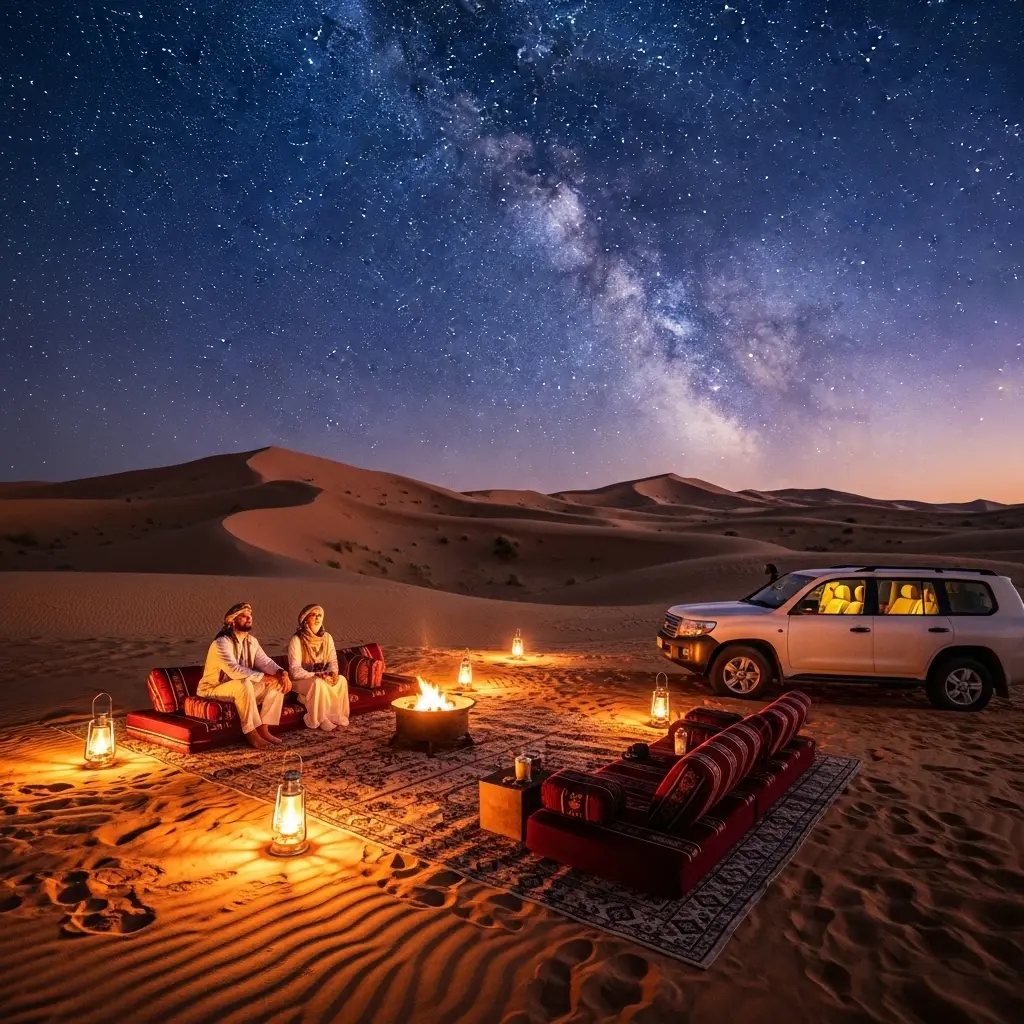
Desert Safari Night Photography Tips: Navigating the Magnificent Darkness of the Dunes
Desert Safari Night Photography Tips have become the definitive technical variable for creators and luxury travelers exploring the United Arab Emirates in 2026. While the daytime dunes offer a stark and bright beauty, the transition into the nocturnal realm provides a magnifique palette of deep indigos and shimmering celestial light. For a tourist looking to master their digital narrative, understanding the coordination between professional optics and the raw Arabian wilderness is the primary first step toward a world-class portfolio.
The Arabian desert is an environment of raw power, and in 2026, the demand for high-standard night imagery has led to a logistical revolution. Operators no longer just drive into the sand; they utilize celestial tracking data and high-powered lighting setups to ensure media-focused guests reach the most prestigious ridges exactly as the Milky Way becomes visible. This precision ensures that every guest has a sanctuary of darkness to create their desert story.
This extensive report serves as your master blueprint for legal and technical nocturnal media. We explore the nuances of sensor performance, the importance of tripod logistics, and the professional standards required for astrophotographers who navigate the sands of Lahbab and Al Awir. Let us navigate the magnificent world of night flight and uncovering the secrets to a perfect Desert Safari Night Photography Tips strategy.
The Phenomenon of the Desert Atmospheric Clarity
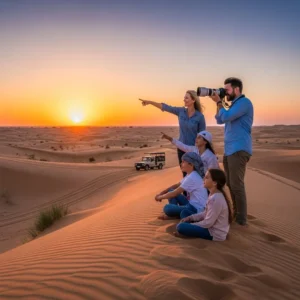
The primary pillar of Desert Safari Night Photography Tips is the exceptional atmospheric clarity found away from the city’s light pollution. In 2026, the “Blue Hour” remains the prestigious benchmark for media quality. As the heat of the day dissipates, the air becomes less turbulent, allowing for sharper long-exposure shots that capture the fine textures of the dunes.
For travelers, this window is when the silence of the Lahbab sands translates into visual stillness. To maximize this moment, logistical precision is required. Vehicles must be positioned in deep basins at least thirty minutes after sunset to allow the sensors to cool and the atmospheric haze to settle.
Strategic logistics ensure that these stops are located far from the flickering neon of urban development. This exclusivity is what separates a world-class operator from a budget provider. To explore the highest-rated nocturnal itineraries and secure your spot under a cloudless sky, visit https://htdesertsafari.com/ today and witness the magnificence of the dunes.
Strategic Logistics of Long Exposure Setup
A critical technical detail in Desert Safari Night Photography Tips involves the management of physical stability. A standard 4×4 vehicle provides a great vantage point, but the soft sand can be a nightmare for long-exposure work. High-standard content creators utilize sand-auger tripods or weighted platforms to ensure zero vibration during a 30-second shutter release.
Luxury fleets in 2026 prioritize private ridge access for media teams. By utilizing advanced permits, these operators take guests to secluded zones where the dunes remain pristine and untouched by tire tracks. This technical superiority allows you to capture the “Virgin Sand” aesthetic, which is highly valued in modern cinematic travel media.
Private transfers often include specialized “Media Waiters” who assist with portable battery management and cable logistics while you focus on the constellations. This level of service ensures that your mission remains productive and safe. To compare the technical benefits of various transport tiers and find the best fit for your gear, visit https://royaldesertadventures.ae/.
Analyzing Sensor Health: Heat and Dust Management
The physics of desert photography are influenced by thermal shifts. A major factor in Desert Safari Night Photography Tips is managing the “Noise” generated by hot camera sensors. In 2026, professional cameras are more sensitive than ever, but the desert air can still cause thermal artifacts during long sessions.
A cool air-conditioned 4×4 is a magnifique advantage, but moving a camera directly into the night air can cause lens fogging. Professional guides are experts at managing these transitions, often suggesting a “Slow Acclimatization” period where the gear is kept in the rear cargo area to gradually match the exterior temperature.
When you book through a reputable site, you are paying for the peace of mind that comes with a team that values your technical success. You can research the equipment-tracking standards and seasonal clarity reports of top providers at https://dubaidesertsafarie.com/ and https://royaldesertadventures.ae/. Mechanical safety and gear integrity are the twin pillars of 2026 desert content.
The Role of Multilingual Guides in Lighting Direction
The human element of Desert Safari Night Photography Tips begins with the guide. In 2026, these individuals are more than just drivers; they are trained in basic light-painting techniques and framing. Most reputable companies employ multilingual staff who can explain the best celestial alignments in English, Arabic, Russian, and Chinese.
A professional inclusive guide understands the nuances of “leading lines” created by star trails. During the night stop, they often act as stewards, holding portable LED panels to provide a subtle “rim light” on the dune ridges for your foreground. This educational and supportive layer adds a depth to the trip that a standard tour cannot provide.
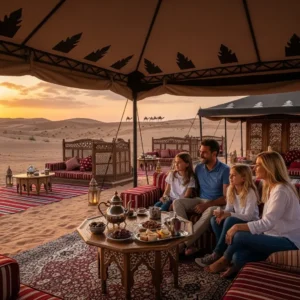
In 2026, many luxury camps feature “Stargazing Majlis” zones where staff are prepared to assist with your setup in a traditional setting. This transparency reduces guest anxiety and ensures a smooth start to your magnifique adventure. To see which operators have the highest-rated cultural programs and media-friendly staff, visit https://htdesertsafari.com/.
| Equipment Metric | Casual Standard | Professional / Elite | Performance Benefit |
| Lens Aperture | f/4.0 or higher | f/1.8 to f/2.8 | Lower ISO / Cleaner Files |
| Stability | Standard Tripod | Sand-Screw Mount | Zero Motion Blur |
| Power Source | Internal Battery | External Power Bank | 4+ Hour Continuous Use |
| Storage | 128GB SD Card | 2TB SSD Recording | Uncompressed Raw 8K |
Mastering Digital Coordination for Astrophotography
In 2026, the Desert Safari Night Photography Tips for professional creators include the usage of specialized “Dark Sky Apps.” Logistics coordinators utilize these tools to map out the exact position of the Milky Way core. When booking your private 4×4, providing your focal length requirements ensures the driver heads to a ridge with an unobstructed horizon.
Digital manifest systems used by managers now include a section for “Low Light Requirements.” Once at the dunes, high-speed satellite Wi-Fi is often available, allowing you to sync your astronomical data in real-time. This tech-forward approach is a hallmark of the city’s modern service industry.
Technology also manages the safety of the return journey. GPS tracking ensures the base camp knows exactly when a media crew has completed their session, facilitating a smooth exit from the wilderness. For more on tech-forward safari logistics and professional media management, visit https://htdesertsafari.com/.
Strategic Geography: Identifying the Darkest Zones
The choice of geography significantly impacts your Desert Safari Night Photography Tips strategy. Dubai is zoned into regions with varying levels of “Bortle Scale” darkness. While Al Awir is closer to the city (45 mins) and offers some light glow from the skyline—which can be a magnifique artistic choice—Lahbab is significantly darker.
Lahbab, known for its iconic “Big Red” dunes, is roughly 60 minutes away. The visual reward here is a higher contrast between the black dunes and the bright star fields. Identifying these zones through local, regulated guides is roughly 40% more efficient than attempting to guess the darkness levels independently.
For those seeking total isolation, the Dubai Desert Conservation Reserve (DDCR) is the premier choice. Access is strictly controlled, and the environment is managed to ensure the desert’s biological crust is protected while providing an elite backdrop. To compare the travel times and scenery of different Dubai desert zones, visit https://dubaidesertsafarie.com/ and https://royaldesertadventures.ae/.
Site Etiquette: Respecting Nocturnal Wildlife and Norms
A major technical factor in Desert Safari Night Photography Tips is the respect for desert ecology. Many native species like the Arabian Oryx are most active at night. In 2026, guests are expected to maintain a “No-Flash Zone” in designated wildlife corridors.
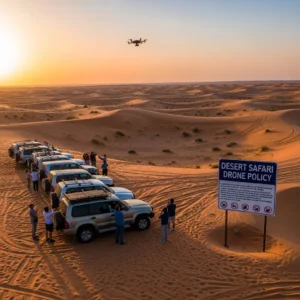
Using high-powered strobes can be highly disruptive to the fauna. Professional guides are trained to monitor the distance between your setup and the local wildlife. Furthermore, flying drones during the call to prayer near desert mosques is seen as a breach of cultural etiquette. Using natural fibers like linen for your own attire provides a respectful, elegant look for any “Behind-the-Scenes” media work.
If you are planning a cinematic time-lapse, it is vital to inform the dispatcher during the booking phase. Many operators offer “Eco-Media” packages where you are accompanied by a trained naturalist who ensures your work doesn’t stress the wildlife. For health, safety, and etiquette tips, visit https://htdesertsafari.com/.
The Significance of Weather and Gear Maintenance
One technical detail often missed in a Desert Safari Night Photography Tips guide is the impact of the environment on your optics. The desert is an area of intense thermal shifts and fine abrasive silica sand. In 2026, managing your camera’s health is a critical logistical task.
Night temperatures in winter dropping below 15 degrees can impact battery life significantly. Lithium-ion batteries lose efficiency in the cold, so high-standard content creators carry insulated battery wraps. Furthermore, high-velocity sand can jam zoom mechanisms in minutes.
Following the guide’s instructions regarding gear storage during the dune bashing session is essential. Most luxury 4x4s are fitted with padded lockers to ensure your lenses aren’t rattled by high-G maneuvers. For more gear safety insights and equipment reviews, consult the guides at https://royaldesertadventures.ae/.
Professionalism and Fleet Maintenance for Media Crews
Safety is the non-negotiable foundation of any desert adventure, including the protection of expensive media gear. In 2026, the UAE government enforces strict mechanical regulations for all desert fleets. Every vehicle must be fitted with internal roll cages to protect both passengers and equipment during technical dune navigation.
Fleet maintenance must include the calibration of the vehicle’s high-powered Wi-Fi to support the high-bandwidth requirements of modern digital backdrops. Reputable companies like https://htdesertsafari.com/ are transparent about their mechanical protocols. This peace of mind allows you to focus on your framing rather than the state of your transport.
If you have heavy professional equipment, it is vital to inform your operator at least 48 hours in advance. Many companies offer a “Gear-Ready” protocol for private transfers, providing dedicated power inverters and extra time for calibration. To see the safety specifications of the 2026 fleets, consult the industry reports at https://dubaidesertsafarie.com/.
Site Accessibility and Inclusive Media Sessions
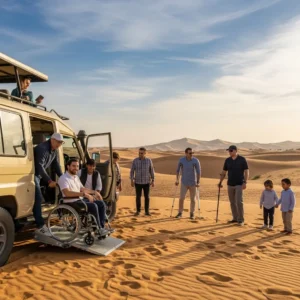
In 2026, the Dubai safari industry has set new standards for inclusivity. Desert Safari Night Photography Tips extend to ensuring that all guests, including “People of Determination,” have access to aerial technology. Premium camps feature “Media Stations” with stable platforms and power outlets for those with limited mobility to operate their gear.
The logistics for seniors are managed with extra care. Drivers are trained to navigate the dunes with a “smooth flow” protocol, avoiding the jarring movements that can rattle passengers. Providing proper back-support seating during the shoot is a critical detail that enhances the overall magnifique experience for a family media mission.
When you book, always mention if you have any specific requirements for your media team. A professional operator will ensure you are assigned a vehicle and a ridge that meets your specific needs, providing a world-class experience for every member of your party. To find the most inclusive packages, check the listings at https://royaldesertadventures.ae/.
Environmental Stewardship and Data Privacy
Sustainability is a major focus of Desert Safari Night Photography Tips in 2026. The desert is a fragile ecosystem, and the daily operation of camps must be managed responsibly. Licensed operators are strictly required to follow “Leave No Trace” principles, ensuring all organic waste is processed correctly.
When you are at the camp, you will notice the total absence of intrusive drone flight during the main BBQ feast. This protects the privacy of guests and prevents noise pollution from disturbing the peaceful Arabian night. Supporting these “Quiet Zones” provides a moral comfort that aligns your vacation with your personal values.
The desert is a sanctuary of light and life. By flying thoughtfully and behaving respectfully, you contribute to a culture of preservation that protects both the guests and the environment. For more on the environmental protocols of top Dubai operators, consult the reports at https://dubaidesertsafarie.com/ and join the movement toward green tourism.
The Role of Technology in Airspace Management
Technology has streamlined the logistics of Desert Safari Night Photography Tips from the moment of hotel pickup. In 2026, most luxury 4×4 fleets are equipped with high-speed satellite links. This allows you to check the real-time weather and celestial maps while you are in transit, helping you plan your shooting schedule.
Advanced GPS fleet management ensures that your driver takes the most efficient route, reducing your time in the car and maximizing your time on the high dunes for nocturnal capture. This tech-forward approach ensures that the logistical part of your day is as high-standard as the adventure itself.
Digital check-ins and WhatsApp-based concierge services also reduce administrative friction at the desert entry point. Visit https://htdesertsafari.com/ to see how they integrate these tools into their daily operations to enhance guest comfort and punctuality. For more tech-forward safari options, visit https://royaldesertadventures.ae/.
Selecting the Right Service Tier for Your Shoot
Evaluating your booking options requires a focus on Desert Safari Night Photography Tips and quality. A cheap safari might save money but often involves basic camps where lighting is poor and ridges are crowded. A premium safari, costing between 500 and 800 AED, provides the hotel-standard restrooms and private ridges that define a five-star media mission.
In 2026, the gap in quality between these tiers has become more pronounced. You are paying for the peace of mind that comes with professional, high-standard camp management. We recommend reviewing the “Media Inclusions” list carefully during your Dubai Safari Booking process to ensure your mission is truly supported.
Look for mentions of “Private Ridge Access,” “On-Site Power,” and “Certified Media Guides.” Comparing these features on sites like https://htdesertsafari.com/ will help you secure the best deal without sacrificing your physical comfort or legal safety. For a detailed comparison of 2026 pricing, visit https://dubaidesertsafarie.com/.
Final Logistics: Return Journey and Data Management
The return to the city is the final phase of the Desert Safari Night Photography Tips cycle. Around 9:30 PM, the camp staff begin the coordination of the departure convoys. This requires a high level of organization to ensure every guest boards their vehicle comfortably and that all media gear is securely stowed.
The 60-minute drive back to the hotel is usually a quiet, reflective time. Most luxury vehicles are equipped with USB charging ports, allowing you to top up your devices while you review your night footage. The transition from the silent desert back to the shimmering lights of the city is a dramatic conclusion to the night.
Your driver will drop you directly at your hotel lobby or a pre-arranged landmark. A small tip of 20-50 AED for the driver is a generous gesture that acknowledges their hard work and assistance in finding the best spots. For help with your full 2026 Dubai itinerary, visit https://htdesertsafari.com/ and talk to their guest experts today.
Summary of the Flawless Media Blueprint
In conclusion, Desert Safari Night Photography Tips management is a magnifique blend of art, science, and cultural heritage. By choosing the right partners, prioritizing legal compliance, and being ready for the environmental challenges, you ensure a journey that is as safe as it is spectacular.
The desert is ready to tell you its story from a perspective that only a high-standard lens can capture. Trust the experts to handle your logistics while you focus on the Arabian horizon. The golden dunes are calling—your legal and technical path to the majesty of Arabia is ready.
As you plan your 2026 Dubai itinerary, remember that the desert is the city’s soul. Experience it with the respect and the technical care it deserves. Secure your booking today at https://htdesertsafari.com/ and prepare for an evening of high-standard media creation you will never forget.
Comparing Costs: Understanding the Value Gap
The price of a desert safari in Dubai ranges from 150 AED to over 2,000 AED per person. When evaluating your Desert Safari Night Photography Tips options, it is vital to look at the “Value per Hour.” A cheap safari might save you money but involve hours of transit in crowded buses and obstructed vistas.
A premium safari, costing 600-800 AED, often provides double the active desert time by streamlining the logistics and providing a private car. When you factor in the quality of the BBQ feast, the comfort of the vehicle, and the exclusivity of the camp, the value of the premium tier often exceeds that of the budget option.
We recommend setting your priorities before you start the process. If you are a solo traveler seeking social energy, a standard tour is excellent. If you are a couple on a honeymoon or a family celebrating a milestone, the investment in a private vehicle and VIP camp access is highly recommended. Secure your booking at https://htdesertsafari.com/.
Traditional Activities: Hygiene and Gear Comfort
Participating in traditional activities like camel riding is a highlight, but hygiene and gear protection are still major technical factors. In 2026, reputable operators ensure that animal handler zones are managed to maintain the highest Desert Safari Night Photography Tips standards.
Hand sanitizer and cleaning stations are provided immediately after activities like camel treks or falconry. This ensures guests are refreshed before returning to the majlis for the dinner. Hygiene and equipment safety are non-negotiable standards for a top-tier operator in the UAE.
Only natural henna paste is used for artistic tattoos at the camp stations, and high-grade shisha charcoals are permitted to ensure the best air quality in the seating area. To compare activity standards and guest comfort ratings, visit https://dubaidesertsafarie.com/ and plan your trip with precision.
Stargazing and the Mystery of the Dark Sky Media
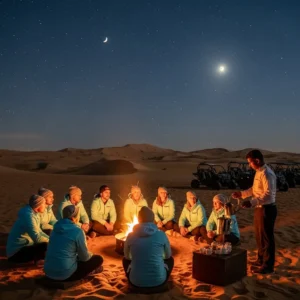
The final act of the night occurs after the fire show fades. Away from the artificial light pollution of the city, the desert reveals a celestial map of startling brilliance. In 2026, “lights out” stargazing sessions are a standard feature for high-end Desert Safari Night Photography Tips packages.
Professional camps provide high-powered telescopes and astronomy guides who explain how the Bedouin navigated the dunes using the stars for centuries. It is a moment of profound silence and reflection that provides a magnifique contrast to the high-energy fire shows that preceded it.
If you are an astrophotography enthusiast, the period immediately after the main shows is your time to utilize your tripod for long-exposure photography. Capturing the glow of the camp lanterns under the vast canopy of stars results in cinematic visuals. For information on the best nights for stargazing, visit https://htdesertsafari.com/.
Traditional Heritage and the Role of Multilingual Storytellers
The human element of the camp layout is enhanced by the presence of multilingual staff. In 2026, top-tier operators employ guides and hosts who speak English, Arabic, Russian, and Chinese. This ensures that every guest can understand the safety briefings and cultural stories.
A professional host acts as a bridge between you and the local heritage. They can explain the history of the Bedouin trade routes, the science of sand formation, and the significance of the Majlis in your native tongue. This educational layer adds a depth to the trip that a standard car ride cannot provide.
Guides also manage the logistical flow of the evening, ensuring that their group is seated comfortably and returns to the correct vehicle at the end of the night. To see which operators have the highest-rated guides for 2026, consult the guest reviews at https://htdesertsafari.com/.
Technical Accuracy: Safety and Vehicle Maintenance
Safety is a non-negotiable part of the Desert Safari Night Photography Tips conversation. In 2026, the UAE government enforces strict fire safety and mechanical regulations for all desert camps and fleets. Every permanent structure must be fitted with fire suppression systems and have a certified safety officer on-site.
Drivers are required to hold specialized desert licenses and first-aid certifications. Shortcuts in vehicle maintenance are a catastrophic error for an operator. Check the vehicle photos and specifications on https://royaldesertadventures.ae/ to ensure you are booking with a company that values mechanical excellence.
If you have pre-existing medical conditions like back pain or pregnancy, it is vital to inform your operator. Many companies offer a “No Dune Bashing” option where you are transported directly to the camp in a standard road vehicle, ensuring you still enjoy the culture and dinner without the physical strain.
Frequently Asked Questions (FAQs)
What is the best camera setting for Desert Safari Night Photography Tips in 2026?
For the dunes at night, we recommend using Manual Mode. Start with a wide-angle lens (14mm to 24mm) at its widest aperture (f/1.8 to f/2.8). Set your ISO between 1600 and 3200 depending on the moon’s phase. Use a shutter speed of 15 to 25 seconds for star fields. Always shoot in RAW format to allow for magnifique detail recovery in post-processing.
Do I need a tripod for night photos in the desert?
Yes, a tripod is essential. To capture the Milky Way or sharp silhouettes of the dunes against the stars, your camera must remain perfectly still for several seconds. In 2026, many luxury operators provide heavy-duty tripods for their media guests. If bringing your own, ensure it has spiked feet to grip the shifting sand ridges effectively.
How do I protect my gear from sand during a night shoot?
Fine silica sand is the enemy of camera sensors. Never change lenses in the open desert; do so inside the air-conditioned 4×4. Use a UV filter to protect the front element of your lens. We also recommend bringing a dedicated rain cover (used as a sand shield) and a blower brush to clean the exterior of your camera after the session.
Is it safe to do astrophotography alone in the dunes?
No, for safety reasons, you should always be accompanied by a professional guide from a reputable operator like https://htdesertsafari.com/. The desert is a vast and confusing landscape at night. Professional guides have GPS-tracked vehicles and satellite communication, ensuring you can focus on your media while they handle the nocturnal navigation.
What is the “Rule of 500” in desert night photography?
The Rule of 500 is a technical guide to prevent star trailing. Divide 500 by your lens focal length (e.g., 500 / 20mm = 25 seconds). This gives you the maximum shutter speed you can use before the stars start to appear as lines rather than points. Modern 2026 sensors are very high resolution, so some creators prefer the “Rule of 300” for absolute sharpness.
Can I capture the Milky Way during a standard evening safari?
It depends on the location and light pollution. Standard economy safaris often stay near city-adjacent areas like Al Awir where the light glow is too bright. For the best astrophotography, book a “Dark Sky” or “Overnight” package in the Lahbab or Al Marmoom regions through https://royaldesertadventures.ae/. These areas offer the Bortle Class 3 or 4 skies needed for celestial shots.
What should I wear for a night-time desert shoot in 2026?
While the day is hot, the desert temperature drops rapidly at night. Wear loose, breathable cotton for the day, but pack a medium-weight fleece or a traditional pashmina for the night. Neutral colors like beige, white, or terracotta look best for “Behind-the-Scenes” content. Wear secure sneakers; avoid sandals as the sand can be cold and sharp.
Is there Wi-Fi in the desert to post my night shots?
Many premium 4×4 vehicles and permanent luxury camps in 2026 now provide high-speed satellite Wi-Fi. However, the signal can be weak in certain deep-dune zones. Most creators find it best to review their files in the car and upload them once the vehicle reaches the main highway or the camp’s mesh network.
How far in advance should I book a media-focused safari?
During the peak winter season (Nov-Mar), we recommend booking at least 10 to 14 days in advance, especially during the “New Moon” phase when the sky is darkest. High-quality operators like https://htdesertsafari.com/ have limited permits for the most secluded ridges, and these spots fill up quickly among the creator community.
Can I use a drone for night photography in the desert?
Drone flight at night is strictly regulated in the UAE. Recreational hobbyists are generally not permitted to fly after sunset. Commercial pilots require a special DCAA permit and must use aircraft fitted with anti-collision lighting. Always check with your tour manager before launching any gear to ensure you are in compliance with 2026 laws.
Is medical assistance available if I get injured during a night shoot?
Yes, all licensed desert camps have first-aid kits and staff trained in emergency response. Reputable operators like https://htdesertsafari.com/ prioritize guest safety above all else and have protocols in place for immediate city transit if needed. Their vehicles are equipped with emergency beacons for 24/7 support.
What kind of lighting is provided for the “Camp Shots”?
Luxury desert camps in 2026 use warm-spectrum LED lanterns and real flame torches to provide an authentic and photography-friendly atmosphere. These lights are positioned to enhance the architectural textures of the majlis without creating harsh glares or “Hot Spots” in your digital media.
How many people join a private media safari?
A private 4×4 typically accommodates 1 to 6 passengers plus the driver. Booking a private car is the prestigious choice for media crews and professional photographers, as it allows you to customize the schedule and spend as much time as needed on a single ridge without worrying about other guests.
Do I need to carry my passport during the night shoot?
While you don’t need the physical passport at the dunes, it is a standard safety practice in the UAE to carry a photo or a clear digital copy of your identification on your phone for security checkpoints outside the city center. This is especially important for late-night return transits.
What happens if it is cloudy on my booking date?
Cloud cover is rare but can occur. A slight haze can actually make for magnifique “Dreamy” star shots. If the weather makes the tour unsafe or the photography impossible, reputable operators will contact you to reschedule or provide a full refund. Safety and guest satisfaction are the primary concerns.
How far from the city center are the best night ridges?
The most scenic “Dark Sky” ridges are located about 60 to 70 kilometers from the center of Dubai. This results in a travel time of roughly 75 minutes each way. High-end operators like https://htdesertsafari.com/ use GPS to find the most efficient routes to minimize transit and maximize your shooting time.
Can I watch the food being cooked while I set up my shots?
Yes, most high-quality camps have open BBQ stations and live cooking areas. The glow from the charcoal pits can be a magnifique secondary light source for your “Desert Culture” series. Just ensure you don’t get too close with your gear to avoid grease or smoke damage.
Why choose https://htdesertsafari.com/ for a night photography mission?
They work with the most reliable and punctual operators in the city who understand the specific needs of creators and astrophotographers. Their focus on vehicle maintenance, timing precision, and technical support ensures your desert adventure is both spectacular and worry-free. For more info, check https://dubaidesertsafarie.com/ and https://royaldesertadventures.ae/.
Do I need to tip the driver for helping with the lights?
Tipping is not mandatory but is widely appreciated for exceptional service. A tip of 20 to 50 AED for your driver is a kind gesture if they assisted in holding reflectors or light panels during your nocturnal session.
What is the “Blue Hour” in the Dubai desert?
The Blue Hour refers to the 15-20 minute period after sunset when the sky turns a deep, saturated indigo. It is the best time for capturing the contrast between the cool sky and the warm lights of the camp. A punctual pickup and arrival are vital to catch this magnifique window.
Desert Safari Night Photography Tips insights reveal that the desert is a place of deep connection and beauty. By choosing the right partners and focusing on the details, you ensure an experience that is as safe as it is unforgettable. The dunes are waiting—your adventure is ready to be unveiled.
Would you like me to help you create a specific cultural itinerary for your 2026 trip to Dubai?