Camel Riding Guide: Your Comprehensive Look at the Arabian Desert’s Timeless Journey
The Arabian Desert is a place defined by its vastness, silence, and history. No single activity better embodies the region’s timeless spirit than the gentle art of Camel Riding Guide.
For centuries, the camel, often called the “Ship of the Desert,” was the sole means of transport across these golden sands.
Today, participating in a Desert Safari Camel Ride is an essential part of the modern Desert Safari Experience.
It offers a peaceful, authentic contrast to the high-speed thrills of dune bashing. This guide covers everything you need to know for a safe and memorable Camel Riding Experience.
1. The History and Culture of the Arabian Camel Ride
Understanding the camel’s role enriches your Arabian Camel Ride. It is not just a tourist novelty.
Camels were the lifeline of the Bedouin nomadic tribes. They provided transport, milk, meat, and wool.
Their immense endurance and ability to cross the arid, waterless land made civilization possible in the desert.
The Desert Safari Camel Ride is a tribute to this profound historical partnership between humans and these magnificent animals.
2. Choosing Your Camel Riding Experience
Camel Riding Guide sessions come in various formats, depending on the safari package you select.
Short, Introductory Dubai Camel Ride
Most standard safaris include a short, 5 to 10-minute Dubai Camel Ride near the Bedouin camp or a dune bashing stop.
This allows beginners to experience the mounting and dismounting process and the unique rocking gait.
It is a perfect, low-commitment introduction to the Camel Riding Guide activity.
Extended Camel Safari Dubai Trek
For those seeking a deeper experience, many operators offer a dedicated Camel Safari Dubai.
These treks can last from 30 minutes up to a full hour, moving away from the crowded areas.
Some specialized packages, found on sites like https://royaldesertadventures.ae/, offer multi-hour or sunrise Best Camel Riding treks.
Sunset and Sunrise Camel Riding Experience
These are highly sought-after for the unparalleled photography opportunities.
The sunset Desert Safari Camel Ride captures the golden hour as the camels silhouette against the dramatic sky.
The sunrise trek offers a serene start to the day, witnessing the desert awaken in the cool, crisp air.
3. Camel Ride Safety: Preparing for Your Trek
Camel Ride Safety is paramount. Camels are large, powerful animals, and proper protocol must be followed.
Following the Handler’s Instructions
The most crucial rule is to strictly follow the instructions of the camel handler (or guide).
They manage the animal’s temperament and ensure your security during the entire Camel Riding Experience.
Listen carefully to the instructions for mounting and dismounting.
Mounting and Dismounting
This is the trickiest part of the Camel Riding Guide. The camel first kneels on its front legs, then its rear legs.
When it stands, it rises rear legs first, causing a sudden, forward jerk. Hold on tight to the saddle horn during this motion.
The reverse process happens when the camel kneels to dismount, resulting in a sudden, backward tilt.
4. What to Wear for Maximum Camel Riding Comfort
Your attire significantly affects the comfort of your Desert Safari Camel Ride.
Recommended Clothing
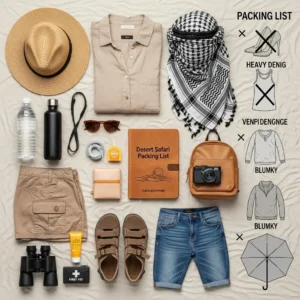
Wear comfortable, loose-fitting clothes. Long pants or jeans are strongly recommended.
Long pants prevent chafing on the saddle and protect your skin from sun and sand.
Avoid very short shorts or skirts, as they will lead to discomfort during the Arabian Camel Ride.
Footwear is Essential
Choose comfortable, flat, closed-toe shoes or sturdy sandals.
High heels or restrictive footwear are unsafe and completely impractical for mounting and dismounting a camel.
You want shoes that can handle sand but won’t slip off easily.
5. Best Camel Riding Techniques: How to Sit
Sitting properly is key to enjoying your Best Camel Riding experience and maintaining balance.
The Rocking Gait
Camels have a unique rocking gait because both legs on the same side move forward together. This creates a gentle, side-to-side sway.
Do not try to fight this motion. Relax and let your body move naturally with the camel.
Holding onto the saddle horn or safety bar with both hands is advisable, especially for beginners.
Posture and Balance
Sit upright and relax your back. Let your hips absorb the camel’s movement.
Maintain a stable core but avoid stiffening up completely, as this will amplify the camel’s rocking motion.
Proper posture ensures a relaxed Camel Riding Guide journey.
6. Health and Restrictions for Camel Ride Safety
While a gentle activity, there are some health considerations for Camel Ride Safety.
Who Should Avoid Riding?
Camels are generally gentle, but the mounting/dismounting motion can be jarring.
Individuals who are pregnant, or those with severe back, neck, or spine problems, should avoid the Camel Riding Experience.
Consult your doctor before booking if you have any serious health concerns.
Children and Weight Limits
Most operators allow children to participate, often sharing a saddle with a parent.
However, strict adherence to minimum age or height requirements for the Desert Safari Camel Ride is observed for safety.
Operators also impose weight limits to ensure the comfort and health of the animals.
7. Camel Safari Dubai: Integrating the Experience
The Camel Safari Dubai is typically part of a larger, full-day Desert Safari Experience.
The Contrast with Dune Bashing
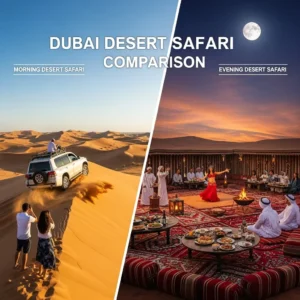
The gentle pace of the Desert Safari Camel Ride provides a perfect respite from the high-adrenaline dune bashing.
The contrast between the two activities offers a balanced and comprehensive Dubai Desert Tour.
It gives you a moment of traditional quietude amidst the excitement.
Cultural Immersion at the Camp
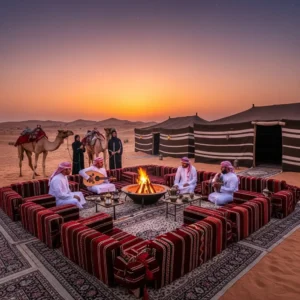
The Arabian Camel Ride often takes you to or from the Bedouin camp.
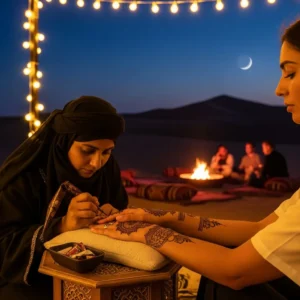
Riding a camel before enjoying the cultural shows, dinner, and henna adds authenticity to the entire Desert Safari Experience.
The camel embodies the spirit of the desert evening.
8. Choosing the Best Camel Riding Operator
The quality of your Best Camel Riding experience relies heavily on the operator’s commitment to animal welfare and safety.
Animal Welfare
Choose an operator known for treating their animals humanely. The camels should look healthy, well-fed, and rested.
Reputable companies ensure the camels are given frequent breaks and are not overworked.
This commitment to animal welfare reflects the operator’s overall quality and ethics.
Booking with Confidence
Look for companies with excellent reviews regarding both customer and animal care.
Trusted operators like https://hafiztourism.com/ and https://dubaidesertsafarie.com/ provide clear guidelines on their Desert Safari Camel Ride packages.
For specialized or private Camel Safari Dubai options, check out the offerings at https://royaldesertadventures.ae/.
9. Photography and Memories of Your Camel Riding Guide Journey
The Camel Riding Guide experience is incredibly photogenic. Capture the magic with these tips.
Golden Hour Shots
The best time for photos is during the “golden hour,” just before sunset or after sunrise.
Capture the long shadows and the deep colors of the desert. The silhouette of a camel train is an iconic Dubai Desert Tour shot.
Ask your guide if they can take a photo of you sitting atop the camel against the dunes.
Camera Safety
Protect your camera or phone from the fine desert sand. Use a strap and keep devices sealed when not in use.
The gentle pace of the Arabian Camel Ride makes it easier to capture stable shots than during dune bashing.
10. Understanding the Camel: The Ship of the Desert
The camel’s biology is fascinating and explains its dominance in the Desert Safari Camel Ride history.
Physical Adaptations
Camels have wide, leathery pads on their feet that prevent them from sinking into the soft sand.
They have thick eyelashes and nostrils that can close, offering protection from sandstorms.
These adaptations ensure the Camel Riding Guide journey is reliable and stable.
Endurance and Hydration
A camel can drink up to 40 gallons of water at once and survive for long periods without drinking, making them the ultimate vehicle for a Desert Safari Experience.
Their remarkable endurance cemented their role as the primary transport for an authentic Dubai Desert Tour.
11. Different Breeds for Different Arabian Camel Ride Purposes
Not all camels are the same. Different breeds are used for different Arabian Camel Ride purposes.
Dromedary vs. Bactrian
The camels used in the UAE are almost exclusively Dromedary camels (one hump). Bactrian camels (two humps) are found in Central Asia.
The Dromedary is highly adapted to the hot, arid environment of the Desert Safari Experience.
Racing and Riding Camels
There are breeds specifically raised for racing (lighter, faster) and those used for riding and transport (sturdier, calmer).
The camels you ride during your Desert Safari Camel Ride are carefully selected for their gentle temperament and stability.
12. Camel Riding Experience: Overcoming Initial Nerves
It is natural to feel nervous before your first Camel Riding Experience. They are large animals.
Trust Your Guide
Trust in the expertise of your handler. They know the animal and will ensure a calm, smooth process.
Remember, the camels used for the Best Camel Riding are docile and accustomed to carrying tourists.
Focus on the Scenery
Once you are mounted, focus your attention on the incredible desert landscape. The nerves will quickly subside.
The gentle motion is meant to be relaxing, offering a unique perspective of the Dubai Desert Tour.
13. Advanced Camel Riding Guide Tips for Long Treks
If you opt for a long-duration Camel Riding Guide trek, these tips are crucial for comfort.
Saddle Comfort
The saddles used for tourist rides are often padded, but long treks can still cause discomfort.
Bring a small, soft towel or cushion to place on the saddle for extra cushioning during your Camel Safari Dubai.
Take short breaks to stretch your legs if the operator allows.
Sun Protection on Long Rides
Longer exposure means increased risk. Reapply sunscreen frequently.
Wear a wide-brimmed hat or a traditional scarf to shade your neck and face during the extended Desert Safari Camel Ride.
14. Integrating Camel Riding with Other Desert Activities
The Desert Safari Camel Ride complements other desert activities perfectly, creating a varied itinerary.
-
After Dune Bashing: The gentle ride is a welcome calm after the storm of the 4×4.
-
Before Dinner: The ride to the camp builds an appetite and sets a traditional mood for the evening.
It provides a necessary anchor to the traditional roots of the Desert Safari Experience.
15. Economic Impact of the Desert Safari Camel Ride
The Desert Safari Camel Ride plays an important role in the local tourism economy.
Animal Care and Training
The revenue generated from the Camel Riding Experience helps fund the care, feeding, and veterinary attention these animals require.
It provides employment for handlers, trainers, and support staff, often from local Bedouin communities.
Preserving Heritage
By participating in the Camel Riding Guide, tourists directly contribute to the preservation of Arabian heritage and traditions that might otherwise fade.
It turns an ancient necessity into a modern, sustainable Dubai Desert Tour attraction.
16. The Sounds and Sights of the Best Camel Riding
A true Best Camel Riding experience is defined by its subtle sensory details.
The Sound of Silence
Away from the main camp, the silence of the desert is broken only by the soft pad of the camel’s feet on the sand.
The occasional snort or gentle moan from the camel adds to the natural desert symphony.
This stillness is a core part of the Arabian Camel Ride appeal.
The View from Above
Sitting high atop the camel offers an elevated viewpoint of the dunes and the distant horizon.
This unique perspective adds immense value to the overall Desert Safari Experience.
17. Booking Dedicated Camel Safari Dubai Tours
For enthusiasts, booking a dedicated Camel Safari Dubai is recommended over a standard safari inclusion.
Dedicated tours focus solely on the trekking experience, often in more picturesque, remote areas.
They offer richer insight into the animals and the art of desert navigation. Explore these focused treks with operators like https://royaldesertadventures.ae/.
18. Desert Safari Camel Ride: Tipping Etiquette
Tipping is customary for the handler who assists you with your Desert Safari Camel Ride.
A small token of appreciation acknowledges the care they take in ensuring your Camel Ride Safety and comfort.
While not mandatory, a few Dirhams go a long way in showing gratitude for the personalized service.
19. Photography from the Camel’s Back: Advanced Tips
For the more adventurous photographer, capturing shots while on the Desert Safari Camel Ride is possible.
Use a wide-angle lens to capture the vastness and the camel’s head in the foreground for a dynamic shot.
Secure your camera or phone to your wrist with a strap at all times to prevent accidental drops onto the sand.
20. The Ultimate Takeaway: Why Choose the Arabian Camel Ride
The Arabian Camel Ride is the perfect embodiment of the desert’s past and present.
It offers peace, cultural depth, and a connection to nature that contrasts beautifully with the urban pulse of modern Dubai.
It is a non-negotiable part of any authentic Desert Safari Experience.
Finalizing Your Dubai Desert Tour
Whether you choose a quick introduction or a long Camel Riding Guide trek, prepare for a journey into history. Ensure your booking is with a reputable operator. For standard quality tours, check https://dubaidesertsafarie.com/ or https://hafiztourism.com/. Embrace the slow pace, enjoy the rocking motion, and let the Ship of the Desert carry you through an unforgettable Dubai Desert Tour.
Frequently Asked Questions (FAQs) – Long Answers
1. What are the key differences between the Camel Riding Guide experience in a standard safari versus a dedicated Camel Safari Dubai trek?
The key differences between a standard safari and a dedicated Camel Safari Dubai trek revolve around duration, focus, and setting. A standard safari includes a short, 5 to 10-minute Desert Safari Camel Ride near the camp, primarily as a photo opportunity and a quick introduction. It is one activity among many. A dedicated Camel Riding Guide trek, however, focuses entirely on the experience, lasting anywhere from 30 minutes to several hours. These treks typically venture deeper into the dunes, away from vehicle noise and crowds, offering a more tranquil, authentic, and historically immersive Camel Riding Experience. They are often scheduled during sunrise or sunset for superior views.
2. How important is proper attire, specifically long pants, for ensuring comfort and safety during the Desert Safari Camel Ride?
Proper attire, particularly wearing long pants, is extremely important for comfort during a Desert Safari Camel Ride. Due to the design of the saddle and the natural rocking gait of the animal, friction between your legs and the leather or fabric saddle is common. Short pants or skirts can lead to significant chafing and skin irritation, especially during longer Arabian Camel Ride excursions. Long, loose-fitting trousers (linen or light denim) not only prevent this chafing but also offer essential sun protection for your legs, making the entire Camel Riding Experience much more pleasant and focused on the scenery.
3. What specific instructions should a beginner follow during the mounting and dismounting process to ensure Camel Ride Safety?
The most critical moment for Camel Ride Safety is the mounting and dismounting process, as the animal’s sudden movements can be jarring. When mounting, the camel is instructed to rise from a kneeling position, pushing up with its rear legs first. The beginner must lean back to counterbalance the sharp, forward lurch. When dismounting, the camel kneels with its front legs first, causing a sudden backward tilt. The rider must lean forward to counterbalance this motion. In both cases, holding the saddle horn firmly with both hands is crucial, and riders must always wait for the handler’s instructions before attempting to move.
4. Are there any physical or health restrictions that would prevent someone from participating in the Camel Riding Experience?
Yes, there are important physical and health restrictions regarding the Camel Riding Experience. The jarring motions during mounting and dismounting, as well as the constant rocking during the trek, can pose risks. Therefore, individuals who are pregnant, those with recent surgeries, or those suffering from chronic back, neck, or spine problems are strongly advised against the activity. Most operators, prioritizing Camel Ride Safety, also impose strict age limits for very young children and sometimes have general weight limits to ensure the health and comfort of the animals. Always consult a doctor if you have doubts about participating in the Best Camel Riding.
5. How should I choose a reputable tour operator for the Camel Safari Dubai, particularly concerning animal welfare?
Choosing a reputable operator for your Camel Safari Dubai requires prioritizing animal welfare. Look for companies that openly discuss their animal care policies and have a transparent commitment to ethical treatment. Signs of a good operator include: camels that appear healthy, well-fed, and are not showing visible signs of injury or overwork; handlers who treat the animals gently and respectfully; and established rest and feeding schedules for the camels. Trusted companies like https://hafiztourism.com/ and https://dubaidesertsafarie.com/ often provide details about their animal welfare standards, which should be a key factor in your booking decision.
6. How does the unique, rocking gait of the Arabian Camel Ride affect the rider, and how should they adjust their posture?
The Arabian Camel Ride features a unique, rolling or rocking gait because the camel moves both legs on the same side together, unlike a horse. This creates a rhythmic, side-to-side sway that can feel unfamiliar and even slightly nauseating to beginners. The rider should adjust by relaxing their back and hips and letting their body move naturally with the camel’s rhythm. Avoid trying to stiffen your posture or fight the movement, as this will only amplify the rocking sensation and lead to discomfort. Maintaining a relaxed, slightly upright posture and keeping a firm grip ensures a stable Desert Safari Camel Ride.
7. What are the best times of day for a Camel Riding Experience for photography, and what makes the desert light so special?
The best times of day for capturing the perfect Camel Riding Experience photos are during the “golden hour”: immediately after sunrise and just before sunset. The desert light during these times is soft, warm, and highly directional, which creates long, dramatic shadows that accentuate the texture of the sand dunes. This low-angle sunlight bathes the landscape in rich, warm hues, making the camel’s silhouette against the brightly colored sky an iconic shot for your Dubai Desert Tour. This lighting dramatically enhances the beauty of the Best Camel Riding.
8. Is it possible to book a private or specialized Camel Riding Guide experience, and what exclusive features might these offer?
Yes, it is definitely possible to book a private or specialized Camel Riding Guide experience. These often cater to couples, families, or small groups seeking exclusivity and a longer trek. Exclusive features might include: a dedicated private guide and handler; longer trekking durations (up to an hour or more); rides scheduled in remote, less-crowded parts of the desert; and sometimes, the ride culminates at a private dining area set up just for your group. For exploring these premium and bespoke options, you can check specialized operators like https://royaldesertadventures.ae/.
9. How can the Camel Riding Guide experience be smoothly integrated with other high-energy Desert Safari Activities?
The Camel Riding Guide experience is strategically integrated into the safari itinerary to provide a pleasant contrast and break from high-energy activities. Typically, the gentle Desert Safari Camel Ride is scheduled immediately after the exhilarating dune bashing. This serves as a calming, relaxing transition. It also often takes place just before arriving at the Bedouin camp for dinner and shows, setting a traditional, peaceful mood and enhancing the overall Desert Safari Experience by balancing adrenaline with cultural quietude.
10. What unique cultural insights can a tourist gain from participating in a simple Desert Safari Camel Ride?
Participating in a simple Desert Safari Camel Ride offers unique cultural insights into the foundational lifestyle of the Bedouin people. It allows the tourist to physically engage with the animal that was historically the most prized possession, symbolizing wealth, transportation, and survival. The experience emphasizes the slow, patient rhythm of life in the desert, contrasting sharply with the speed of modern Dubai. It serves as a tangible connection to the ancient Arabian Camel Ride culture, illustrating the skill and bond required for life as a desert nomad.
11. What are the common misconceptions about the Camel Riding Experience that tourists should be aware of before booking?
A common misconception about the Camel Riding Experience is that it is as smooth as riding a horse. The camel’s rocking gait is distinctly different and requires a period of adjustment. Another misconception is that the ride is easy; while gentle, it requires core stability, and the mounting/dismounting is physically demanding. Tourists also often underestimate the importance of their guide, assuming the camel is automated. In reality, the handler’s skill is paramount for a safe and enjoyable Camel Ride Safety experience.
12. What role does the camel’s unique physiology play in its suitability for the Best Camel Riding treks in the desert?
The camel’s unique physiology is perfectly adapted for the Best Camel Riding treks. Its wide, flat, and padded feet act like natural snowshoes, preventing it from sinking into the soft desert sand. Its long legs keep its body elevated from the scorching ground heat. Furthermore, its ability to close its nostrils, coupled with thick eyelashes, provides natural defense against sandstorms. These physical adaptations make the camel the most reliable and enduring form of transport for any genuine Dubai Desert Tour across the arid landscape.
13. How should tourists who are prone to motion sickness prepare for the rocking motion of the Arabian Camel Ride?
Tourists who are prone to motion sickness should prepare by taking preventative medication (such as a travel sickness pill) roughly one hour before the start of the Arabian Camel Ride. During the trek, it is helpful to focus their gaze on the distant horizon rather than looking down at the camel’s movement or the ground immediately beneath them. While the movement is rhythmic and slower than dune bashing, this focused visual stability can significantly reduce feelings of nausea, ensuring the Desert Safari Experience remains enjoyable.
14. Are there opportunities for interaction with the camels, such as feeding or petting, during the standard Desert Safari Camel Ride?
Yes, there are often opportunities for respectful interaction with the camels during the Desert Safari Camel Ride, but they are typically controlled by the handlers. Tourists should always ask the handler’s permission before attempting to touch or pet the animal. Many handlers will offer a chance for a brief photo alongside the camel before or after the ride. Feeding is generally discouraged unless directed by the guide, as the animals follow a specific diet. Respectful interaction enhances the personal aspect of the Camel Riding Guide journey.
15. What are the key distinctions in safety protocols between a vehicle-based Desert Safari Experience and the human-animal interaction of the Camel Riding Guide?
The safety protocols for a vehicle-based Desert Safari Experience (like dune bashing) focus on mechanical reliability, driver training, and seatbelt usage. In contrast, the Camel Riding Guide emphasizes control over a large animal and human-animal interaction. Camel Ride Safety protocols involve: strict adherence to handler instructions, controlled mounting/dismounting procedures, and careful animal selection based on temperament and health. The focus shifts from high-speed motion safety to avoiding falls and managing the animal’s natural behavior for a secure Dubai Desert Tour.