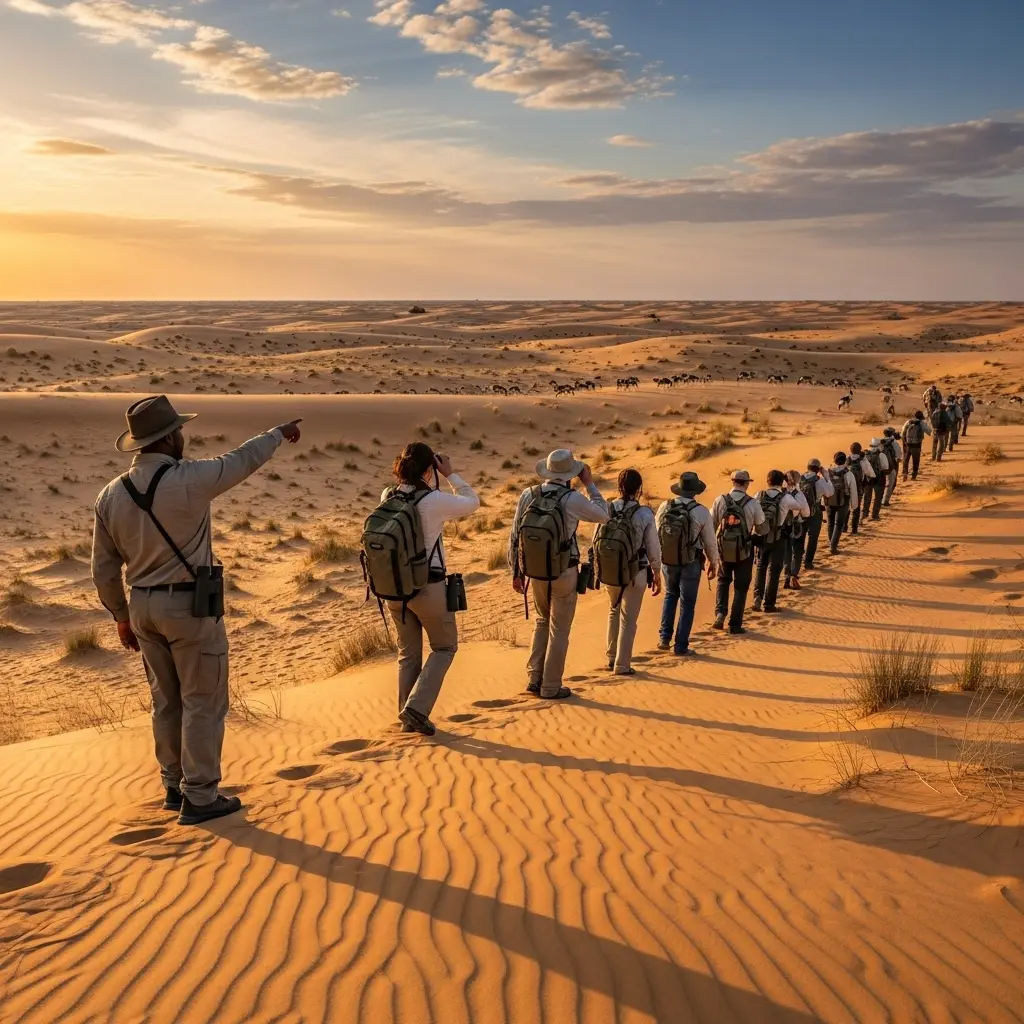
The Desert Walking Safari: A Transformative Journey on Foot
In a world that rushes, the desert offers a profound silence. While the exhilarating speed of a 4×4 vehicle is one way to experience the dunes, there is a quieter, more intimate, and far more sustainable way to connect with the soul of this ancient landscape: a Desert Walking Safari. This is an invitation to slow down, to engage all your senses, and to discover the hidden, intricate world that is invisible to the passing car.
A Desert Walking Safari is the ultimate eco-friendly adventure. It is a journey that leaves no trace but footprints, creates no noise but the crunch of sand underfoot, and offers a connection to the environment that is direct and unfiltered. Led by an expert naturalist guide, this experience transforms you from a mere spectator into an active participant in the desert’s story.
This guide explores the unique magic of exploring the sands on foot. We will delve into the reasons why this slow travel approach is so rewarding, from learning the ancient art of animal tracking to discovering the desert’s micro-ecosystem, and provide you with everything you need to know to embark on your own transformative journey.
What Exactly is a Desert Walking Safari?
A Desert Walking Safari is a guided interpretive walk through a protected area of the desert. Unlike a regular hike, the primary focus is not on covering distance, but on discovery. Your guide is a trained naturalist who will lead you at a gentle pace, stopping frequently to point out the subtle signs of life all around you.
It stands in stark contrast to a vehicle-based safari. The frantic energy of dune bashing is replaced with a meditative calm. The fleeting glimpse of a distant gazelle is replaced by the quiet thrill of identifying its tracks and learning about its behavior. It is an experience that prioritizes education and connection over adrenaline.
The Ultimate “Greener” Choice
From an environmental perspective, a walking safari is unparalleled. Its impact on the fragile desert ecosystem is virtually zero. There are no carbon emissions, no noise pollution to disturb the wildlife, and no vehicles to damage the delicate vegetation that holds the desert together. For the eco-conscious traveler, a Desert Walking Safari is the purest and most responsible way to explore this precious environment.
A Multi-Sensory Connection to the Desert
Walking allows you to engage with the desert with all your senses in a way that is simply not possible from inside a vehicle.
Hearing the True Sound of Silence
The first thing you will notice is the sound—or the lack of it. The profound silence of the desert is an experience in itself, punctuated only by the whisper of the wind over the dunes and the distant call of a bird. You become attuned to a new soundscape, one that is subtle, peaceful, and incredibly powerful.
Seeing the Intricate Micro-World
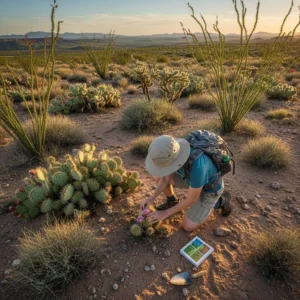
At a walking pace, your focus shifts from the grand landscape to the intricate details at your feet. You will begin to see the desert not as a uniform sea of sand, but as a mosaic of textures and life. You can appreciate the delicate structure of a desert flower, the iridescent shell of a dung beetle, or the complex patterns the wind has etched into the sand.
Becoming a Desert Detective: The Art of Tracking
One of the most exciting aspects of a Desert Walking Safari is that it is a masterclass in the ancient art of tracking. The sand is a blank page on which the desert’s inhabitants write their daily stories, and your guide will teach you how to read them.
Identifying Animal Tracks
You will learn to distinguish the different tracks left in the sand:
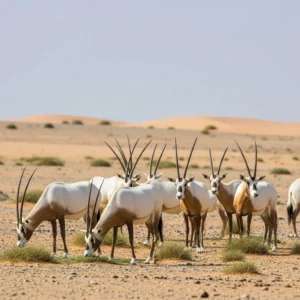
- Arabian Oryx: Look for the distinctive, two-toed hoof prints, a clear sign of this magnificent and rare antelope.
- Gazelle: Their tracks are smaller, more delicate, and heart-shaped, revealing their graceful passage.
- Desert Fox: The small, neat paw prints of a fox tell a story of a nocturnal hunter on the move.
- Lizards and Snakes: The serpentine, S-shaped trails of reptiles are a common and fascinating sight.
Interpreting the Signs
Beyond tracks, your guide will point out other signs of life. You might discover the entrance to a rodent’s burrow, the scat of a fox revealing its diet, or the perfectly camouflaged nest of a Desert Lark. The entire walk becomes an engaging puzzle, a process of piecing together clues to understand the secret lives of the desert’s creatures.
A Close-Up Look at Desert Flora and Fauna
A Desert Walking Safari provides an unparalleled opportunity for close-up encounters with the smaller inhabitants and the resilient plant life of the desert.
You can safely observe the fascinating behavior of desert insects, admire the stunning camouflage of a desert lizard, and learn to identify the key plants that anchor the entire ecosystem, like the life-giving Ghaf tree and the thorny Acacia. This micro-level focus reveals a world of incredible biodiversity that is completely hidden from view on a standard safari.
A Practical Guide to Your First Desert Walking Safari
Proper preparation is key to a safe and enjoyable experience.
What to Wear for the Walk
Your comfort and safety depend on your attire.
- Footwear: Sturdy, broken-in hiking shoes or boots with good ankle support are essential. They will protect your feet and keep the sand out.
- Socks: Wear moisture-wicking hiking socks to prevent blisters.
- Clothing: Dress in lightweight, breathable layers. Long trousers and a long-sleeved shirt will protect you from the sun.
- Headwear: A wide-brimmed hat is non-negotiable for sun protection.
What to Pack in Your Daypack
- Water: Carry more than you think you will need; a minimum of 2-3 liters per person is recommended.
- Snacks: Salty snacks help to replenish the electrolytes you lose through sweat.
- Sun Protection: Sunscreen and sunglasses are essential.
- Binoculars and Camera: To get the most out of your sightings.
Choosing the Right Guide
A Desert Walking Safari is not something to be undertaken on your own. You must go with a licensed operator and a professionally trained naturalist guide. Their expertise is crucial for your safety and for the quality of the experience. Specialized operators, which can sometimes be found on platforms like https://royaldesertadventures.ae/ or by researching on https://dubaidesertsafarie.com/ and https://hafiztourism.com/, are the best choice.
The Best Locations and Times for Your Walk
A true Desert Walking Safari can only take place in a protected area where the ecosystem is pristine and the activity is safely managed. The premier location is the Dubai Desert Conservation Reserve (DDCR).
These tours are also highly dependent on the weather. They are only offered during the cooler winter months, from roughly October to April. Furthermore, to avoid the heat, they take place exclusively in the first few hours after sunrise or the last couple of hours before sunset.
Comparing the Safari Experiences: Vehicle vs. Walking
Frequently Asked Questions (FAQs)
1. How physically fit do I need to be for a desert walk? A Desert Walking Safari is generally conducted at a very gentle pace and covers a relatively short distance (usually 2-4 kilometers or 1-2.5 miles). It is not a strenuous trek. A basic level of fitness is all that is required. However, walking on soft sand can be more tiring than walking on a hard surface, so be prepared for a bit of a workout.
2. Is it safe to walk in the desert? What about snakes or scorpions? Yes, it is extremely safe when you are with a professionally trained guide. Your guide is an expert on desert wildlife and knows how to avoid any potential hazards. Snakes and scorpions are nocturnal and shy, and sightings during a guided walk are incredibly rare. Your guide will teach you to be aware of your surroundings, and following their instructions is the key to a perfectly safe experience.
3. Will I see large animals like Arabian Oryx on a walking safari? While possible, it is less likely than on a vehicle-based nature drive. Large animals like the Oryx have a large flight distance and will usually move away when they detect people on foot. The true magic of a Desert Walking Safari lies in discovering the tracks and signs they leave behind, which tells you a much more detailed story about their lives and behavior.
4. What is a “biological soil crust,” and why is it important? Biological soil crust is a complex, living community of microorganisms, lichens, and mosses that forms a thin, dark crust on the surface of the desert soil. It is incredibly important for the health of the ecosystem, as it helps to prevent erosion and retain moisture. However, it is extremely fragile and can be destroyed by a single footstep, taking decades to recover. Your guide will teach you to identify and avoid these areas.
5. Can children participate in a Desert Walking Safari? This depends on the operator, but generally, these tours are better suited for older children (often 10 and above) who have a genuine interest in nature and the patience to walk slowly and observe quietly. It is not typically recommended for very young children who may get tired or restless.
6. Do I need special hiking boots designed for sand? No, you do not need specialized sand boots. A good pair of standard, over-the-ankle hiking boots is the best choice. They provide the necessary ankle support for walking on uneven terrain and are high enough to prevent sand from getting inside. Gaiters (protective coverings that go over your boots) are also a good option for keeping sand out.
7. How is a guided desert walk different from just hiking on my own? The difference is immense and comes down to two things: safety and interpretation. The desert can be a dangerous place to hike alone if you are not an expert. A guide ensures your safety. More importantly, a guide is an interpreter of the landscape. Without a guide, you would be walking through a seemingly empty environment. With a guide, every track, plant, and burrow becomes a fascinating clue in a larger story.
8. What kind of training does a Desert Walking Safari guide have? Guides who lead walking safaris in protected areas like the DDCR have extensive training. They are expert naturalists with a deep knowledge of the local flora and fauna. They are also trained in desert survival, advanced first aid, and the art of tracking. They are highly skilled professionals dedicated to providing a safe and educational experience.
9. What is the best season for a walking safari? The cooler winter months, from late October to April, are the only time of year when a Desert Walking Safari is offered. Walking in the desert during the extreme heat of the summer is dangerous and is not an option.
10. How long does a typical walking tour last? The walking portion of the safari usually lasts between 60 and 90 minutes. This is typically part of a larger safari package that might include a gentle nature drive to the walking location and refreshments afterward.
11. Will I learn any survival skills on the walk? Yes, this is often a fascinating part of the experience. Your guide will likely share some basic Bedouin survival skills, such as how to find water, how to identify medicinal plants, and how to navigate using the sun and stars. This adds another layer of depth to your understanding of the desert.
12. What is the best way to take photographs on a walking safari? A walking safari is a fantastic opportunity for photography. Focus on the details. Use a macro lens or mode to capture the intricate patterns of insects and flowers. A wide-angle lens is great for capturing the sense of scale in the landscape. Pay attention to the beautiful, low-angled light of the early morning or late afternoon.
13. Why is walking a more “mindful” way to travel? Walking forces you to slow down and be present in your environment. It synchronizes your rhythm with the rhythm of the natural world. This slower pace allows for deeper observation and a more meditative state of mind, making the Desert Walking Safari a truly mindful and restorative experience.
14. Can I combine a walking safari with other desert activities? Yes, many operators offer packages that combine a gentle morning walk with a relaxed breakfast at a beautiful desert location. It’s also possible to book a tour that includes a nature walk in the late afternoon, followed by a visit to a traditional safari camp for the BBQ dinner and cultural entertainment.
15. What is the biggest surprise for people on their first desert walk? The biggest surprise for most people is just how much life there is. They arrive expecting an empty landscape and leave with a profound appreciation for the incredible biodiversity and the complex web of life that the desert supports. They discover that the desert is not empty at all; it’s just very good at keeping its secrets.
16. Are there different types of terrain we will walk on? Yes, a good guide will often lead you through a variety of terrains to showcase the diversity of the ecosystem. You might walk on soft, rolling dunes, across hard, sun-baked clay pans, and through areas with gravel and sparse vegetation, seeing how the flora and fauna change with each landscape.
17. What should I do if I see a snake? In the extremely unlikely event that you see a snake, the rule is simple: stay still, do not approach it, and alert your guide immediately. The snake is far more scared of you than you are of it and will almost always flee if given space. Your professional guide knows exactly how to handle such a rare encounter safely.
18. Why is noise discipline important on a walk? Keeping your voice low and avoiding loud noises is crucial for two reasons. Firstly, it increases your chances of spotting wildlife, which is easily startled. Secondly, it allows you and the rest of your group to fully appreciate the profound silence and natural sounds of the desert, which is a key part of the Desert Walking Safari experience.
19. What is the goal of a conservation-focused walking safari? The goal is to foster a deep and lasting appreciation for the desert ecosystem. The aim is for guests to leave not just with great photos, but with a newfound respect for the fragility and beauty of the desert and a greater understanding of the importance of conservation.
20. How does a Desert Walking Safari change your perspective? It changes your perspective by revealing the unseen. It teaches you to look for the small things, to read the subtle signs, and to appreciate the resilience of life in all its forms. You leave the desert not just having seen it, but having understood it in a much more intimate and personal way.