Emirati Hospitality: The Welcoming Soul of the Desert Safari
Beyond the thrilling dune bashing and the spectacular live entertainment, the true heart of a desert safari experience lies in something more subtle yet far more profound: the genuine warmth of Emirati Hospitality. Known in Arabic as Hafawah, this deep-rooted tradition of generosity and welcome is a cornerstone of the nation’s culture. When you are greeted at a desert camp with a warm smile, offered fragrant Arabic coffee and sweet dates, you are not just a tourist; you are a guest participating in a timeless ritual of honor and respect.
This welcoming spirit is the golden thread that weaves the entire safari experience together. It transforms a commercial tour into a personal and memorable cultural immersion. The concept of Emirati Hospitality is not a modern invention for the tourism industry; its origins are found in the harsh realities of the desert, where the survival of a traveler depended entirely on the generosity of strangers.
To truly appreciate the gestures of welcome you receive, it is essential to understand their deep historical and cultural significance. This guide explores the Bedouin origins of Hafawah, the beautiful rituals it involves, and how this ancient code of conduct is beautifully preserved and shared with the world in the setting of a modern desert safari.
1. The Bedouin Code: Hospitality as a Pillar of Survival
To understand modern Emirati Hospitality, we must journey back to the nomadic life of the Bedouin tribes. In the vast and unforgiving desert, a lone tent was an oasis of life. The rules of hospitality were not mere social niceties; they were a fundamental code of survival.
An Unwritten Law of Generosity
The desert environment was harsh, and travelers were always at the mercy of the elements. The Bedouin code of conduct dictated that any traveler, whether friend or stranger, must be given shelter, food, and water without question. The traditional rule was that a host was obligated to provide for a guest for three days, no matter how limited their own resources were. This act of generosity was a shared responsibility that ensured the collective survival of all who traversed the sands.
Honor and Reputation
A family’s or a tribe’s honor and reputation were intrinsically linked to their level of hospitality. A host who was known for his generosity (karam) was held in the highest esteem. Poets would compose verses praising the hospitality of great sheikhs, and a reputation for being welcoming was more valuable than material wealth. Conversely, a reputation for being inhospitable was a source of great shame. This deep cultural value is the foundation of the warm welcome that defines Emirati Hospitality today.
2. The Ritual of Welcome: Coffee, Dates, and Sincere Greetings
The act of welcoming a guest in Emirati culture is a structured and beautiful ritual, a series of gestures designed to make the visitor feel honored and comfortable. You will experience this firsthand on your desert safari.
The Greeting: Marhaba Al Saa
The experience begins with a warm, verbal welcome. A traditional Emirati greeting like “Marhaba Al Saa” is more than just “hello”; it translates to a broad welcome at any hour and is a way of instantly putting a guest at ease and making them feel valued.
The Gahwa Ritual
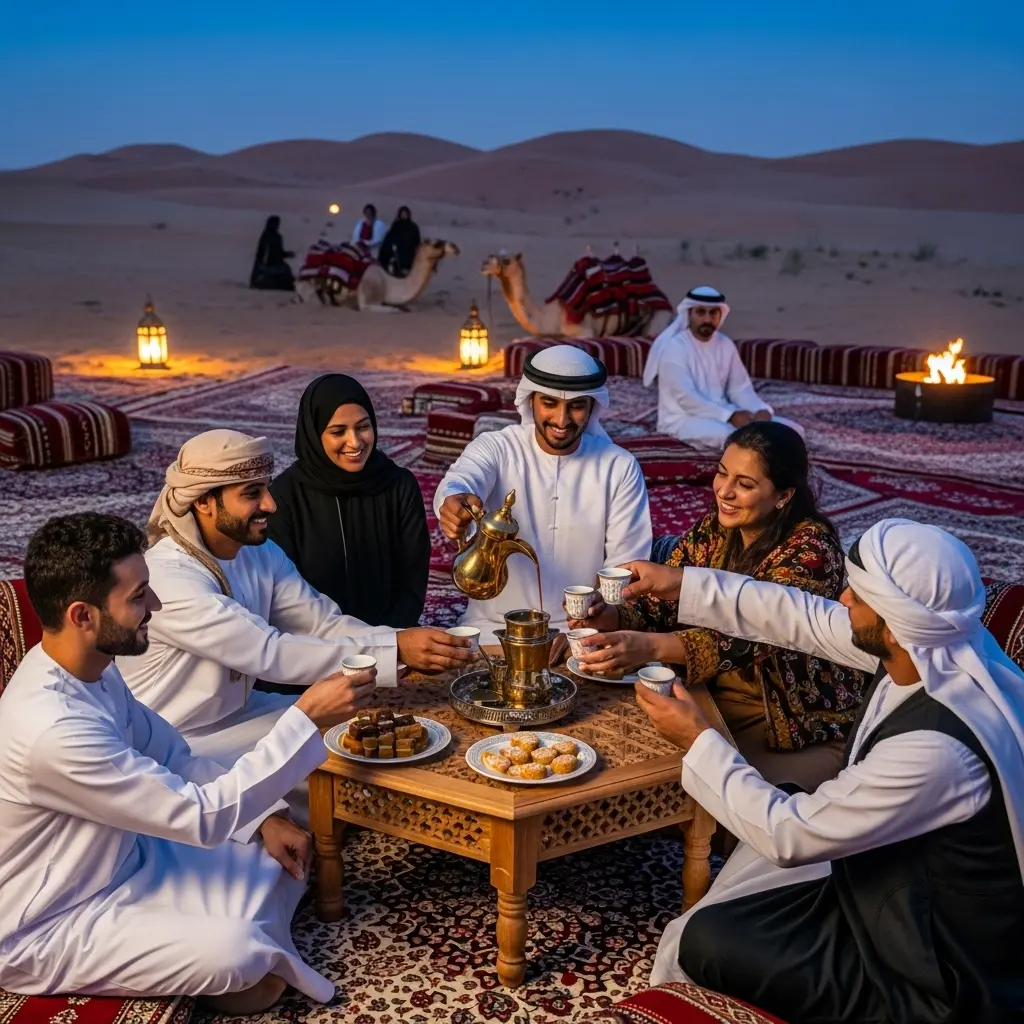
The serving of Arabic coffee, or Gahwa, is perhaps the most important symbol of Emirati Hospitality. This is a highly ritualized process. The coffee is lightly roasted and brewed with cardamom, giving it a distinctive, fragrant, and non-bitter taste. It is served in a traditional long-spouted pot called a dallah and poured into small, handleless cups called finjan.
The etiquette is precise: the server (who is often the host or a person of honor) holds the dallah in their left hand and pours with their right. The cup is only ever filled a small amount as a sign that the host is ready and willing to keep refilling it. The guest must accept the cup with their right hand. To receive more, you simply hold out the cup. To signal that you have had enough, you gently shake the cup from side to side before handing it back.
The Offering of Dates
Alongside the coffee, guests are always offered dates. Dates are a symbol of prosperity and a vital source of energy that has sustained life in this region for millennia. The combination of the slightly bitter, aromatic coffee and the sweet, rich dates is a perfect pairing and the quintessential taste of Arabian welcome.
3. The Generosity of the Feast
The spirit of Emirati Hospitality is most lavishly expressed through food. Honoring a guest with a feast is a way of showing respect and generosity. The grand BBQ dinner at the end of a desert safari is a modern continuation of this tradition.
The sheer abundance and variety of the food on offer is a deliberate act of generosity. A good host always provides more food than their guests can possibly eat to show that their generosity is without limit. The buffet-style meal, with its dozens of salads, grilled meats, rice dishes, and desserts, is a direct reflection of this cultural principle. Sharing this meal together in a communal majlis setting reinforces the sense of fellowship and shared experience.
4. The Majlis: The Heart of Hospitality
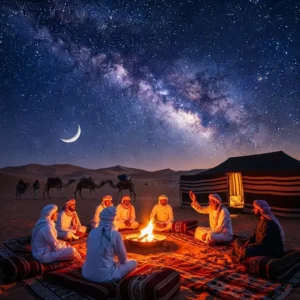
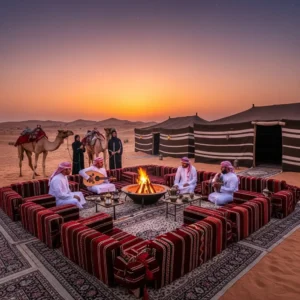
The traditional desert camp is designed to replicate a majlis, which is the heart of social life and Emirati Hospitality. The majlis is a dedicated space for receiving and entertaining guests.
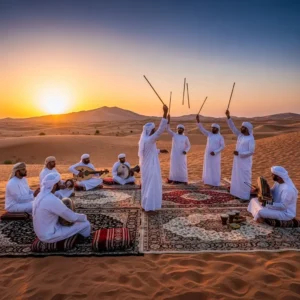
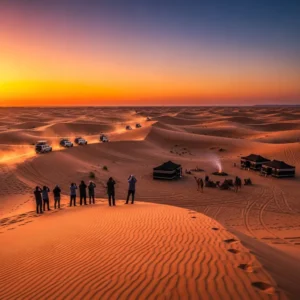
It is a place of comfort, furnished with carpets, cushions, and low tables, designed to make guests feel relaxed and at ease. It is also a place of community, where people gather to socialize, discuss matters, and enjoy entertainment like poetry, music, and storytelling. The safari camp, with its comfortable seating areas and live performances, is a perfect modern interpretation of the traditional majlis, a space created entirely for the comfort and enjoyment of the guest.
5. Experiencing Hospitality in the Modern Safari
The ancient principles of Emirati Hospitality are evident in every aspect of a well-run desert safari, from the moment you are picked up to the moment you are dropped back at your hotel.
A Culture of Service
The safari staff are the modern ambassadors of this tradition. Your safari guide or marshal is not just a driver; they are your host. They are responsible for your safety, comfort, and enjoyment. Their willingness to answer questions, share knowledge about their culture, and ensure you are having a good time is a reflection of Hafawah. This extends to the staff at the camp, from the person who greets you with coffee to the chefs who prepare the meal. You can find tours with exceptionally high service standards on platforms like https://royaldesertadventures.ae/.
Anticipating the Guest’s Needs
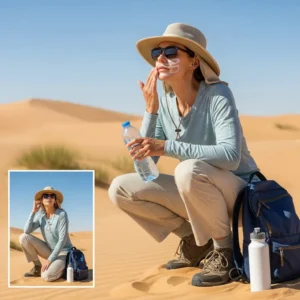
A key element of Emirati Hospitality is anticipating a guest’s needs before they have to ask. This is seen in the unlimited supply of cold water provided after a hot day, the offer to help you take a photograph, or the gentle guidance offered during the camel ride. It is a proactive and thoughtful approach to service that makes you feel genuinely cared for. Comparing reviews of different operators on sites like https://dubaidesertsafarie.com/ or https://hafiztourism.com/ can often highlight which companies excel at this.
A Breakdown of the Arabic Coffee (Gahwa) Ritual
To fully appreciate this core symbol of Emirati Hospitality, here is a step-by-step look at the cultural significance of the coffee ceremony.
Frequently Asked Questions (FAQs)
1. What is the literal meaning of the Arabic word “Hafawah”? Hafawah is an Arabic word that encapsulates the concepts of warm reception, graciousness, and generosity towards guests. It goes beyond the English word “hospitality” and implies a genuine, heartfelt welcome and a celebration of the guest’s presence. It is a core tenet of Emirati Hospitality.
2. Why is Arabic coffee so light in color and not bitter? Arabic coffee, or Gahwa, is made from lightly roasted Arabica coffee beans. The beans are roasted just enough to develop flavor but not long enough to become dark and oily like espresso beans. This light roast, combined with the fragrant addition of crushed cardamom, gives the coffee its characteristic golden color, delicate flavor, and lack of bitterness.
3. What is the significance of the number three in traditional Bedouin hospitality? The number three holds a special significance in the unwritten laws of Bedouin hospitality. A host was traditionally obligated to provide shelter, protection, and food to a guest for three days and three nights, without asking any questions about their identity or purpose. After the third day, the host could politely ask the guest about their plans. This tradition ensured that any traveler in distress had a safe haven.
4. Is it considered rude to refuse the initial offer of coffee and dates? Yes, in the context of traditional Emirati Hospitality, refusing the initial offer of coffee and dates can be seen as impolite. This offer is a symbolic gesture of welcome and friendship. You should always accept at least the first cup of coffee and one date as a sign of respect and appreciation for the host’s gesture, even if you don’t intend to have more.
5. Why is the coffee cup (finjan) so small and handleless? The small size of the finjan is directly related to the ritual of hospitality. It is small so that the host has the honor of refilling it multiple times, demonstrating their generosity. It is handleless, which forces the guest to hold it in a way that means they must focus on the act of drinking and interacting with the host, rather than mindlessly sipping from a large mug.
6. What is Bukhoor and how is it used in hospitality? Bukhoor is a type of traditional incense made from aromatic wood chips (often agarwood) soaked in fragrant oils. As a final act of hospitality, a host will often light the bukhoor on a charcoal disk in a special burner called a mabkhara. They will then pass the fragrant smoke around to the guests, who wave it towards their clothes and hair. It is a gesture of honor and a way of scenting the guests as a parting gift.
7. Is the hospitality on a safari a good reflection of how Emiratis are in their homes? The desert safari experience is a curated, professional showcase of Emirati Hospitality, but it is based on very real cultural values. While the setting is for tourists, the principles of generous welcome, sharing food, and ensuring a guest’s comfort are an accurate reflection of the genuine hospitality you would encounter if you were invited into an Emirati home.
8. How has Emirati hospitality evolved from the Bedouin era? While the core values of generosity and respect remain unchanged, the expression of hospitality has evolved. In the past, it was a matter of survival in a harsh environment. Today, in a modern and prosperous nation, it is a way of preserving cultural identity and showing national pride. The grand hotels, world-class service, and welcoming atmosphere of modern Dubai are all contemporary expressions of the deep-rooted tradition of Hafawah.
9. What is the concept of a “majlis” and is it still important today? The majlis is a traditional “sitting place” where guests are received and entertained. It is the center of social and political life. The concept is still incredibly important in the UAE. Most Emirati homes have a dedicated majlis, and there are public and governmental majlises where citizens can meet with leaders. It remains a powerful symbol of community, dialogue, and Emirati Hospitality.
10. What does the word “Karam” mean? Karam is another important Arabic word related to hospitality. It translates to generosity, but it implies a level of generosity that is selfless and abundant. It is the act of giving freely and happily, without any expectation of receiving something in return. A host who provides a lavish feast is demonstrating karam.
11. Why is the right hand so important in greetings and serving? In Islamic and many other Middle Eastern cultures, the left hand is traditionally reserved for personal hygiene, while the right hand is used for clean tasks like eating, shaking hands, and giving or receiving items. Therefore, using the right hand to serve a guest or accept their offering is a fundamental sign of respect and cleanliness.
12. What is the correct way to shake the coffee cup to refuse more? The gesture is subtle but clear. After finishing the coffee in your cup, you hold the finjan with your thumb and forefinger and gently tilt or wiggle it from side to side two or three times before handing it back to the server. This non-verbal cue is universally understood to mean “thank you, I have had enough.”
13. Do I have to pay for the coffee and dates at the safari camp? No, the welcome serving of coffee and dates is always a complimentary part of the Emirati Hospitality experience. It is a gift from the host to the guest and is included in the price of your desert safari tour.
14. What happens if I don’t shake the cup? If you simply hand the cup back to the server without shaking it, they will assume you would like a refill and will immediately pour you another serving. They will continue to do so every time you hand the cup back until you make the “shaking” gesture.
15. Is it polite to make eye contact during the coffee ritual? Yes, making friendly and respectful eye contact with your host or server is an important part of the interaction. It shows that you are engaged and appreciative of their gesture. A warm smile and a simple “Shukran” (thank you) are also very welcome.
16. Are there different types of Arabic coffee? Yes, the style of Gahwa can vary by region. The Emirati and Saudi style is typically very lightly roasted and golden in color, with a strong cardamom flavor. In the Levant (countries like Lebanon and Jordan), the coffee is often roasted darker and is stronger, more similar to Turkish coffee. The version you experience at a desert safari is the traditional light Gulf style.
17. What is the significance of the “dallah” coffee pot? The dallah is a major cultural symbol. Its image can be found on local currency and in public art. Its historical importance as the vessel for serving coffee—the ultimate symbol of Emirati Hospitality—has elevated it to an icon of national identity. Authentic, ornate dallahs are often passed down through families as heirlooms.
18. Why are dates so important in the Middle East? The date palm tree is one of the few plants that can thrive in the harsh desert climate, and it has been a source of life for millennia. The dates themselves are a high-energy, nutrient-rich food that can be stored for long periods. They are a symbol of the land’s bounty and offering them to a guest is a way of sharing the very best of what the land provides.
19. How is the safari camp experience a modern majlis? The safari camp functions as a modern majlis by bringing together people from all over the world in a comfortable and welcoming space. Just like a traditional majlis, it is a place for social interaction, for sharing food and drink, and for enjoying cultural entertainment. It continues the tradition of creating a space dedicated to the guest’s enjoyment and fellowship.
20. What is the main takeaway of Emirati Hospitality for a visitor? The main takeaway is the genuine warmth and the feeling of being truly welcomed. The experience of Emirati Hospitality teaches a visitor that the culture is built on a deep foundation of respect for guests, generosity, and the importance of human connection. It leaves you with a feeling that you have not just seen a new place, but have been warmly embraced by its people.