Emirati Music and Dance: The Soulful Heartbeat of a Desert Night
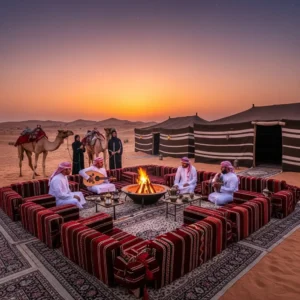
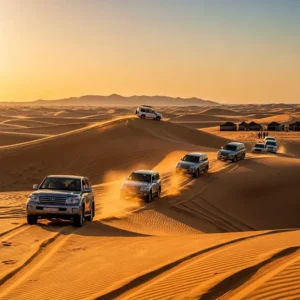
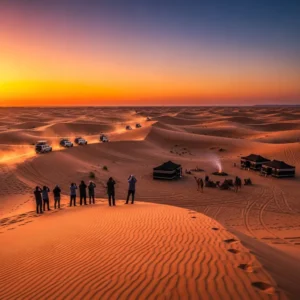
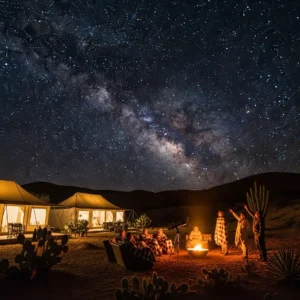
As dusk settles over the Arabian Desert, the landscape transforms. The adrenaline of the dune bashing fades into a serene quiet, and the camp begins to glow with the warm light of lanterns. It is then that a new energy emerges—a rhythmic, soulful pulse that is the very heartbeat of the desert safari experience. The captivating world of traditional Emirati Music and Dance comes to life, offering a vibrant and profound connection to the culture and history of the nation.
This is more than just an after-dinner show. The performances you witness are a living library of stories, traditions, and emotions passed down through generations. From the unified movements of the men’s stick dance to the hypnotic spin of the Tanoura dancer, each performance is a window into the soul of the Bedouin people and the rich history of the Arabian Peninsula.
Understanding the meaning and origins of this powerful Emirati Music and Dance transforms the experience from a simple spectacle into a deep cultural appreciation. This guide will take you on a journey through the sounds, rhythms, and movements that define a desert evening, exploring the history, the instruments, and the famous dances that make the safari’s entertainment so unforgettable.
The Historical Soundscape of the Emirates
The roots of Emirati Music and Dance are deeply embedded in the landscape and the lifestyles of its people. The traditional sounds were shaped by two main environments: the vast, nomadic desert and the bountiful, rhythmic sea.
The Poetry of the Desert
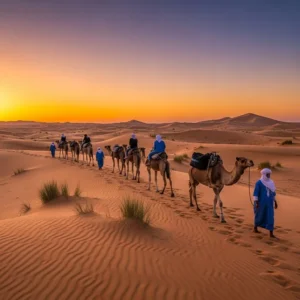
For the Bedouin tribes who roamed the desert, poetry and music were the primary forms of expression and record-keeping. With no written tradition, epic poems and songs were used to recount tales of tribal history, celebrate victories, praise famous leaders, and share stories of love and loss. The rhythm of a camel’s gait often provided the underlying beat for chants known as Al-Taghrooda, a UNESCO-recognized art form that showcases the deep connection between poetry, music, and the desert journey.
The Work Songs of the Sea
Before the discovery of oil, pearl diving was the lifeblood of the coastal communities. This arduous and dangerous work gave rise to a unique and powerful genre of music known as Fidjeri. These were call-and-response work songs, sung by the sailors to synchronize their tasks—pulling up the anchor, hoisting the sails—and to maintain morale during long months at sea. The powerful vocals and rhythmic clapping created a sound that is both haunting and deeply moving.
A Fusion of Cultures
Dubai’s long history as a bustling trade port meant that its culture was never isolated. The traditional soundscape of Emirati Music and Dance has been enriched by influences from Africa, Persia (modern-day Iran), and the Indian subcontinent. This fusion created a unique musical identity that is complex, rhythmic, and incredibly diverse.
The Instruments That Create the Magic
The distinctive sound of Arabic music is brought to life by a range of traditional instruments. When you see a live band at a desert camp, like those at tours found on https://royaldesertadventures.ae/, you’ll likely see and hear some of these classic instruments.
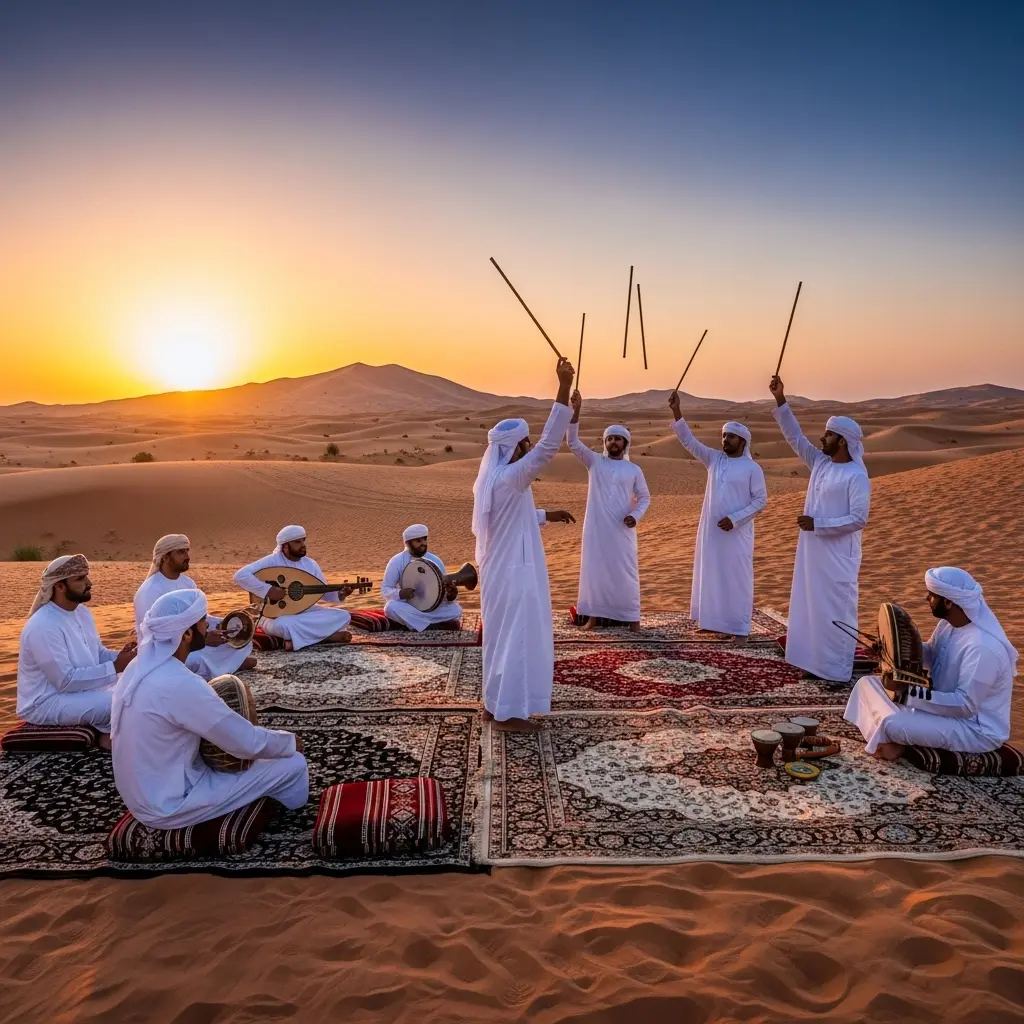
- The Oud: Often called the “king of instruments” in the Arab world, the Oud is a pear-shaped, fretless lute. It has a deep, rich, and melancholic sound that forms the melodic foundation of much traditional music.
- The Tabla: This is the iconic goblet-shaped hand drum that provides the rhythm. An expert Tabla player can create a complex and incredibly fast beat that is the driving force behind the dance performances.
- The Daf: A large frame drum, similar to a tambourine, that is used to create a steady, hypnotic beat, particularly in Sufi and folk music.
- The Rebab: A simple yet evocative single-stringed fiddle, played with a bow. It is one of the oldest string instruments and is known for its soulful, voice-like quality that perfectly captures the mystique of the desert.
A Showcase of Unforgettable Dances
The desert safari is a stage for some of the most famous and visually stunning dances from the region. While some are native to the Emirates, others are beloved pan-Arab traditions that have become a staple of the Dubai entertainment scene.
Al Ayyala: The Dance of Unity and Pride
Often referred to as the “stick dance,” Al Ayyala is one of the most famous and respected forms of Emirati Music and Dance. This traditional performance involves two rows of men standing face-to-face, holding thin bamboo canes that symbolize swords or rifles. As they chant poetic lyrics, they sway back and forth in a unified, rhythmic motion, creating a powerful depiction of a victorious battle scene. It is a dance of tribal unity, pride, and celebration, and it is recognized by UNESCO as an Intangible Cultural Heritage of Humanity.
Al-Yowla: A Display of Acrobatic Skill
Performed by a single male dancer, often during an Ayyala performance, the Yowla is a dynamic and acrobatic display. The performer skillfully spins, throws, and catches a replica rifle in a celebration of victory. It requires incredible dexterity and showmanship and is a thrilling sight to behold. This dance is a vibrant expression of masculine pride and celebratory joy.
The Tanoura Dance: A Hypnotic Spin
The Tanoura dance is one of the most visually mesmerizing performances of the evening. A male performer wears a long, heavy, and incredibly colorful skirt, or ‘tanoura’. To the sound of soulful music, he begins to spin, and continues to do so for many minutes. The skirt fans out into a huge, vibrant circle, and the dancer may even illuminate it with LED lights. This dance has its roots in Egyptian Sufi traditions, where the spinning is a form of active meditation meant to bring the dancer to a state of spiritual ecstasy.
Belly Dance: The Art of Fluid Movement
Perhaps the most famous of all Middle Eastern dances, the belly dance is a captivating display of grace and control. A female performer, dressed in a vibrant, beaded costume, performs fluid and rhythmic movements, primarily isolating different parts of her torso. While its origins are in Egypt and the Levant, it has become a beloved and iconic part of the entertainment at a Dubai Desert Safari.
The Central Role of Poetry
It is impossible to discuss Emirati Music and Dance without acknowledging the central role of poetry. In Bedouin culture, a poet was a highly respected figure, serving as a historian, journalist, and entertainer. The lyrics sung during performances are often verses from famous classical poems or newly composed works that celebrate the nation’s leaders, heritage, and natural beauty. This poetic foundation gives the music a lyrical depth and narrative power that is truly captivating.
Experiencing the Culture in the Modern Day
Today, the desert safari camp serves as a vital cultural stage. It preserves these beautiful traditions and presents them to a global audience. While you may be a tourist, the experience is a genuine showcase of national pride performed by skilled local and regional artists. It is an accessible and incredibly entertaining way to engage with the living heritage of the UAE.
While the safari, which can be explored on sites like https://dubaidesertsafarie.com/ and https://hafiztourism.com/, is the most popular venue, these performances can also be seen at national festivals, heritage villages, and cultural events throughout the country, demonstrating their continued relevance in modern Emirati society.
Comparing the Iconic Desert Dances
To better understand the performances, this table breaks down the key features of the dances you are most likely to see.
Frequently Asked Questions (FAQs)
1. What is the story behind the spinning Tanoura dance? The Tanoura dance originates from the Sufi whirling dervishes of Egypt and Turkey. The continuous spinning is not just a physical feat; it is a profound spiritual practice. The dancer’s spin is meant to represent the movement of the planets and the cycle of life, and the goal is to achieve a state of trance or spiritual ecstasy, where the dancer feels a direct connection with the divine. The shedding of layers of the skirt during some performances symbolizes the shedding of the ego.
2. Are the dances performed at desert safaris authentic? Yes, the performances are authentic representations of the art forms. The artists who perform are professionals who have dedicated their lives to mastering these traditional dances. While the context is for tourist entertainment, the skill, costumes, and music are genuine. Dances like Al Ayyala are performed with great respect for their cultural significance, offering a true taste of Emirati Music and Dance.
3. What are the songs and poems usually about? The themes are rich and varied. Traditional Bedouin poetry and songs, often performed during the Ayyala dance, speak of the desert’s beauty, the importance of tribal loyalty, the courage of warriors, the excitement of a successful hunt, or praise for the nation’s rulers. The music accompanying the Tanoura and belly dance is often more classical or popular Arabic music, with themes of love, longing, and celebration.
4. Is it considered polite to clap along or cheer during the performances? Absolutely! The performers feed off the energy of the audience. Clapping, cheering, and showing your appreciation are highly encouraged. It is a festive and celebratory atmosphere, and your enthusiastic response is a sign of respect for the artists’ incredible skill and hard work.
5. Why do the men use bamboo canes in the Al Ayyala dance? The thin bamboo canes are symbolic. In the historical context of the dance, which re-enacts a victorious battle, the canes represent swords, spears, or rifles. The synchronized movement of the canes is a stylized representation of combat and the unity of the tribe’s warriors. It is a display of strength and cohesion, not aggression.
6. Is belly dancing an original Emirati tradition? No, and this is an important cultural distinction. Belly dancing, or Raqs Sharqi, has its roots in Egypt and the wider Levant region. However, due to Dubai’s cosmopolitan nature and the pan-Arab cultural exchange, it has been wholeheartedly embraced as a popular and beloved form of entertainment. So, while it’s a staple of the safari night, it is not a native form of Emirati Music and Dance.
7. Can guests get up and participate in the dancing? Audience participation is sometimes encouraged, particularly during the belly dance performance. The dancer might invite some female guests to come up and learn a few simple moves in a fun and lighthearted segment. However, the Ayyala and Tanoura dances are highly skilled, traditional performances that do not typically involve audience participation.
8. What is the difference between Al-Yowla and Al Ayyala? Al Ayyala is the group dance performed by two rows of men. Al-Yowla is a solo performance that can be a part of the Ayyala or performed on its own. The Yowla is specifically the part that involves the acrobatic spinning and throwing of a replica rifle, showcasing individual skill and showmanship within the collective celebration.
9. What kind of atmosphere does the music create at the camp? The music is expertly curated to create a journey of moods. Upon arrival at the camp, the music is often soft, instrumental Oud or Nay music, which creates a relaxed and welcoming atmosphere. As the evening progresses, the tempo builds, culminating in the high-energy, rhythmic beats for the dance performances that create a festive and celebratory mood.
10. Are the live performances available on all desert safari tours? Live entertainment is a key feature of the classic evening and overnight desert safaris. However, it is generally not included in the shorter morning or adventure-focused safaris, which end before the camp experience begins. Always check the itinerary of your chosen safari package on a site like https://royaldesertadventures.ae/ to confirm that live shows are included.
11. Is the music very loud? Is it suitable for elderly guests or young children? The music is played at an enjoyable volume that creates a vibrant atmosphere without being overwhelmingly loud. It is perfectly suitable for guests of all ages, including children and the elderly. The camp environment is spacious and open, so the sound is well-distributed.
12. Who are the performers? Are they local Emiratis? The performers are a mix of skilled artists from across the region. Ayyala dancers are often local Emirati groups dedicated to preserving their heritage. Tanoura dancers and belly dancers are typically professional artists from Egypt and other parts of the Middle East where these specific art forms are most prominent. All are experts in their respective fields.
13. What is the historical role of a female dancer in Arabic culture? The role of female dancers has been complex and varied throughout history. In many contexts, professional female dancers were highly respected artists and entertainers, particularly in the sophisticated courts of Egypt and the Levant. The art of belly dancing is a celebrated and challenging discipline that requires years of training, much like ballet.
14. Are there any other musical traditions I might encounter? Yes, besides the main stage performances, you might hear a musician playing a traditional instrument like the Oud or the Rebab during the dinner portion of the evening. This provides a beautiful, ambient soundtrack to your meal. The call to prayer, or Adhan, which can sometimes be heard echoing from a distant mosque, is another beautiful and authentic sound of the region, though not part of the safari itself.
15. Is photography and video recording of the shows allowed? Yes, guests are encouraged to take photos and videos of the wonderful performances. The artists are accustomed to being filmed. Using a flash is generally acceptable, but it is always considerate to be mindful of the people sitting around you and not to obstruct anyone’s view for an extended period.
16. What is the most surprising thing about the Tanoura dance performance? For most first-time viewers, the most surprising element is the sheer duration and speed of the spinning. The dancer spins at a consistent, high speed for many minutes without showing any signs of dizziness. This incredible physical and mental control is a testament to years of dedicated practice and is what makes the performance so hypnotic and awe-inspiring.
17. Do the lyrics of the songs have English translations? The lyrics are sung in Arabic, and translations are not typically provided. However, the emotion and rhythm of the music are universal. Even without understanding the words, you can feel the energy, joy, and soulfulness of the performance. The Emirati Music and Dance experience transcends language barriers through its powerful visual and auditory storytelling.
18. How long does the entire entertainment program last? The entertainment portion of the evening usually lasts for about one to one-and-a-half hours, typically taking place after the BBQ dinner has been served. It is usually structured with three main shows—the Tanoura, the fire show, and the belly dance—with short breaks in between.
19. Is the entertainment the same every night? While the structure (Tanoura, fire show, belly dance) is a standard format for most desert safaris, the individual performers may vary from night to night. Each artist brings their own unique style and flair to their performance, so even if you were to go on multiple safaris, you might see a slightly different show each time.
20. Why is this experience so central to a desert safari? The Emirati Music and Dance segment is central because it provides the cultural heart of the entire safari. The dune bashing provides the thrill, the sunset provides the beauty, and the dinner provides the hospitality, but it is the music and dance that provide the soul. It is the element that elevates the experience from a simple tourist excursion into a memorable and meaningful cultural immersion, leaving you with a deeper appreciation for the rich heritage of the UAE.