Mastering the Dunes: An In-Depth Guide to Desert Sandboarding for Beginners
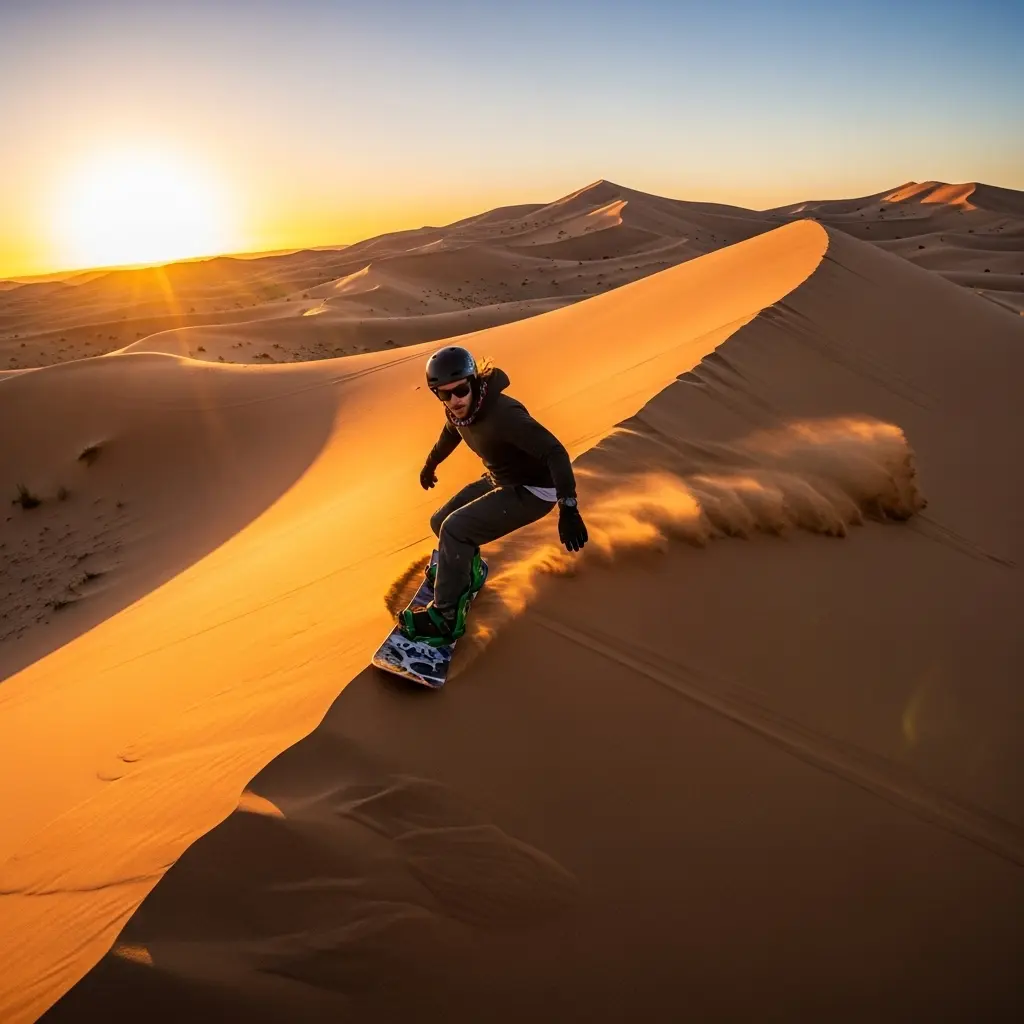
Desert sandboarding is an exhilarating sport that combines the thrill of surfing and snowboarding with the majestic beauty of the Arabian desert. Imagine standing atop a colossal golden dune, the warm sun on your skin, with a vast sea of sand stretching out before you. The only thing between you and an adrenaline-pumping ride to the bottom is a simple board. This is the pure, unadulterated joy of sandboarding.
This activity has become a star attraction on desert safaris, offering a perfect blend of adventure and accessibility. Unlike its snow-based cousin, sandboarding is incredibly beginner-friendly. The soft, forgiving sand makes for a much less intimidating learning environment. It’s a chance to challenge yourself, have a great laugh, and create memories against a truly spectacular backdrop.
This comprehensive guide is designed for the absolute beginner. We will walk you through everything you need to know to make your first desert sandboarding experience a massive success. From the gear you’ll need to the fundamental techniques for gliding down the dunes, we’ve got you covered. Many top-tier safari packages, like those found at https://royaldesertadventures.ae/, include this fantastic activity, making it easy for you to give it a try.
Understanding the Thrill of Desert Sandboarding
At its core, desert sandboarding is the act of riding across or down a sand dune while standing on a board. While it shares visual similarities with snowboarding, the dynamics are quite different. Sand creates more friction than snow, which generally results in slower, more controllable speeds for beginners—a definite plus when you’re just starting out.
The sport has ancient roots, with some evidence suggesting that the ancient Egyptians may have slid down sand dunes on pieces of wood or pottery for transport and fun. The modern sport, however, gained global popularity in recent decades, with enthusiasts finding epic dunes everywhere from Brazil to the United Arab Emirates.
The Appeal of the Dunes: Why Sandboarding is So Popular
The magic of desert sandboarding lies in its unique setting. The vast, silent, and stunningly beautiful desert provides a backdrop that is simply unmatched. It’s an opportunity to disconnect from the noise of the city and connect with a raw, natural environment.
Furthermore, its inclusion in desert safari tours has made it incredibly accessible. You don’t need to be a seasoned athlete to enjoy it. Families with children, groups of friends, and solo travelers can all partake in the fun. The soft landing that the sand provides gives everyone the confidence to let go and enjoy the ride, making it a highlight of any desert adventure.
Gearing Up for Your First Desert Sandboarding Experience
One of the best things about trying desert sandboarding on a guided tour is that all the essential equipment is provided for you. However, understanding the gear will help you feel more prepared and confident before you even step on the sand.
The Sandboard Itself: Types and Materials
The most crucial piece of equipment is, of course, the sandboard. These are specially designed to glide on sand. Most boards provided on safari tours are wooden and have a smooth, laminated base. To reduce friction and increase speed, the base of the board is regularly waxed. Your guide will handle this, ensuring your board is ready for a smooth ride.
You will encounter two main types of boards:
- Boards with Bindings: These have straps to secure your feet, much like a snowboard. They offer greater control for steering and are used for more advanced riding.
- Boards without Bindings: These are simpler and often used by beginners. You can stand on them, but many first-timers prefer to sit or lie on them, using them like a toboggan for a fun, easy slide down the dune.
What to Wear for Maximum Comfort and Safety
Choosing the right attire is crucial for an enjoyable desert sandboarding session. The goal is to stay cool, comfortable, and protected from the sun and sand.
- Clothing: Opt for lightweight, breathable fabrics. While shorts and a t-shirt are tempting in the heat, long-sleeved shirts and light trousers are often recommended. They offer better protection from the powerful UV rays and can prevent minor scrapes from the sand if you take a tumble.
- Footwear: Closed-toe shoes are a must. Sneakers or athletic shoes are perfect. Sandals and flip-flops are a bad idea as they will fill with hot sand and offer no protection.
- Accessories: A good pair of sunglasses is non-negotiable to protect your eyes from the bright glare. A hat or a traditional headscarf (ghutra) can provide extra shade. And, of course, apply a generous amount of high-SPF sunscreen to all exposed skin.
Safety Gear Provided by Tour Operators
For the casual, fun-focused sandboarding offered on most desert safaris, extensive safety gear is usually not required, as the slopes are gentle and the sand is soft. However, some operators, especially those offering more adventurous packages which you can find on sites like https://dubaidesertsafarie.com/, may offer helmets and pads. If you feel more comfortable with extra protection, don’t hesitate to ask your guide.
From Zero to Hero: Step-by-Step Desert Sandboarding Techniques
Now for the exciting part: your first ride. The key to learning is to start slow, be patient, and most importantly, have fun. Don’t worry about looking like a pro on your first try. Embracing the learning process (and the occasional silly fall) is part of the experience.
Choosing the Right Dune
Your safari guide is an expert in the local terrain. They will take you to a dune that is perfect for beginners—one with a gentle, consistent slope and a long, flat area at the bottom to slow down naturally. Avoid the temptation to immediately tackle the biggest dune you see. Starting small will allow you to build confidence and practice the basic techniques safely.
Finding Your Stance: Regular vs. Goofy
If you’re using a board with bindings, you’ll need to figure out your natural stance. This simply means identifying which foot you are more comfortable having in front.
- Regular Stance: Your left foot is forward.
- Goofy Stance: Your right foot is forward.
A simple way to find your stance is to stand with your feet together and have someone give you a gentle push from behind. The foot you instinctively put out first to catch your balance is likely your front foot.
The Basics of Balance: Your Core is Key
Balance is everything in desert sandboarding. The fundamental ready position involves keeping your center of gravity low and stable.
- Bend your knees generously, as if you are about to sit down in a chair.
- Keep your back relatively straight and your shoulders aligned with the board.
- Hold your arms out to the sides, like airplane wings, to help you maintain balance.
Your First Glide: The Seated Approach
The easiest and most foolproof way to experience the thrill of sliding down a dune is to sit down. This method requires no balance and is pure fun.
- Sit on the board with your feet in front of you.
- You can place your hands on the edges of the board for stability.
- Simply lift your feet and give a little push to start sliding.
This is a fantastic way to get a feel for the speed and the sensation of gliding on sand before you attempt to stand up.
Moving to a Standing Glide
Once you’re ready to try standing, follow these simple steps. Don’t start from the very top of the dune; walk just a few feet up the slope for your first attempt.
- Place the board on the sand, pointing straight downhill.
- If you have bindings, strap your front foot in first, then your back foot. If there are no bindings, simply step onto the board.
- Get into your basic “ready” stance with your knees bent and arms out.
- Look ahead towards the bottom of the dune, not down at your feet. Your body will naturally follow your gaze.
- Give a tiny push with your back foot if needed, or simply let gravity take over.
Steering and Controlling Speed (The Basics)
For your first few rides, your goal is simply to go straight. As you get more comfortable, you can start to influence your direction.
- Steering: To turn slightly, apply gentle pressure on your heels (for a “heelside” turn) or your toes (for a “toeside” turn). This will take practice.
- Slowing Down: The most common way for beginners to slow down and stop is to simply sit down on the board behind you. You can also slow your momentum by gently digging the heel-side edge of your board into the sand.
The Art of Falling Safely
Falling is an inevitable part of learning any board sport. The good news is that falling on sand is much softer than falling on snow or pavement. The key is to fall correctly to avoid injury. Try to fall backward, onto your bottom and back. This is the safest way to bail out. Avoid trying to catch yourself with your hands or wrists.
Pro Tips to Elevate Your Experience
Once you have the basics down, a few insider tips can make your desert sandboarding session even more enjoyable and help you progress faster.
- Wax is Your Friend: The friction of the sand will wear away the wax on the board’s base. If you feel your board slowing down, it probably needs another coat of wax. Your guide will have this on hand.
- Look Where You Want to Go: This is a golden rule in all board sports. Stare at a point at the bottom of the dune where you want to end up. Your body and the board will naturally follow your line of sight.
- Stay Hydrated: The desert is a dry environment, and physical activity will make you dehydrate faster. Drink plenty of water before, during, and after your session.
- Choose the Best Time: The sand is coolest and the light is most beautiful in the early morning or late afternoon. This is why safari tours, like those offered by https://hafiztourism.com/, are timed perfectly for these conditions.
- Conquer the Climb: The most physically demanding part of desert sandboarding is walking back up the dune. Take your time, pace yourself, and consider walking in a zig-zag pattern to make the climb less strenuous.
- Listen to Your Guide: Your safari guide has helped hundreds of beginners. Their advice is invaluable. Listen to their tips, ask questions, and follow their safety instructions.
Beyond the Basics
As you become more confident, you can start to explore more of what this exciting sport has to offer. Desert sandboarding isn’t just about sliding straight down a hill. More experienced riders can perform graceful carving turns, ride on much steeper and taller dunes, and even catch some air with small jumps known as “ollies.” While you may not reach this level on your first day, it’s exciting to see the potential and know that there’s always a new challenge waiting on the dunes.
Conclusion
Desert sandboarding is an incredibly rewarding activity that offers the perfect mix of adrenaline, challenge, and fun in a breathtakingly beautiful setting. It is one of the most accessible adventure sports available, welcoming participants of all ages and skill levels. By following the tips in this guide, you can overcome any initial nerves and quickly get to the best part: the pure joy of gliding down a golden dune.
Remember to be patient with yourself, embrace the learning process, and don’t forget to laugh. Your first sandboarding experience is not about perfection; it’s about making incredible memories. So, on your next trip to the desert, be sure to sign up for a safari that includes this unforgettable activity. You can explore a variety of tour options at https://royaldesertadventures.ae/ and get ready to conquer the dunes.
Frequently Asked Questions (FAQs)
1. Is desert sandboarding difficult for a complete beginner to learn? Not at all. Sandboarding is considered one of the easiest board sports to learn. Most beginners can get the hang of sliding down a gentle slope, either sitting or standing, within just a few attempts. The soft sand makes falling painless, which builds confidence quickly.
2. Is sandboarding a safe activity for children? Yes, it is very safe for children. Kids often have a natural advantage due to their lower center of gravity. They can start on very small “bunny” dunes, and most prefer to sit on the board like a sled, which is extremely safe and fun.
3. What is the main difference between sandboarding and snowboarding? The biggest differences are the surface and the gear. Sand creates more friction than snow, making it harder to link turns but easier to control speed. Snowboards are not effective on sand; you need a special sandboard with a waxed base to glide properly.
4. Do I need to bring my own sandboard on a desert safari? No, there is no need to bring your own equipment. All reputable desert safari tours that offer desert sandboarding will provide you with well-maintained boards and any necessary wax as part of the package.
5. Does it hurt when you fall while sandboarding? Generally, no. Falling on soft, warm sand is much more forgiving than falling on hard-packed snow or ice. Most falls result in nothing more than a mouthful of sand and a good laugh. It’s one of the reasons the sport is so beginner-friendly.
6. How fast can you actually go on a sandboard? For beginners on gentle slopes, speeds are quite moderate and easy to control. Professional sandboarders on steep, competition-level dunes can reach speeds of over 80 km/h (50 mph), but you won’t be approaching these speeds on a casual safari tour.
7. Is sandboarding a good workout? While the ride down is powered by gravity, the walk back up the dune is an excellent workout for your legs and cardiovascular system. It’s the most physically challenging part of the sport, so be sure to pace yourself and stay hydrated.
8. What type of desert safari package includes the best sandboarding? Most standard evening desert safari packages include a brief, fun session of sandboarding. For a more in-depth experience, look for adventure-focused or private tours that allocate more time to activities and may take you to larger, more secluded dunes.
9. Can I sandboard anywhere in the desert? It’s not advisable. For safety, you should only sandboard in areas designated by your tour operator. They know the terrain, understand which dunes are stable and safe, and ensure you are away from any potential hazards like desert vegetation or wildlife.
10. What’s the best way to get up after falling? If you fall while your feet are strapped into bindings, the easiest way to get up is to rotate your body so you are facing uphill. You can then plant your hands in the sand and use your heel-side edge to dig in and provide leverage to stand up.
11. Is it better to go in the morning or the evening? Both times are excellent for desert sandboarding. The morning offers cooler temperatures. The late afternoon offers beautiful “golden hour” light for photos and the chance to sandboard as the sun sets, which is a magical experience.
12. Will sand get everywhere? Yes, you should expect to get sand in your shoes, pockets, and hair. It’s an unavoidable and authentic part of the desert experience. Wear sunglasses to protect your eyes and keep your mouth closed on your way down!
13. Do I need lessons to learn how to sandboard? Formal lessons are not necessary for the type of sandboarding done on a safari. Your guide will give you all the basic instructions and tips you need to get started safely. Their on-the-spot coaching is usually more than enough for beginners.
14. Are there bindings on the boards provided? It varies by operator. Many provide simple wooden boards without bindings, which are used for casual standing or sitting. Some may offer boards with simple foot straps that are easy to get in and out of.
15. Can I use my own snowboard on the sand? No, a snowboard will not work on sand. The base material and shape of a snowboard are designed for snow and ice. On sand, it will create too much friction and you will not be able to slide.
16. What is the biggest mistake beginners make? The most common mistake is looking down at the board instead of looking ahead. Your body follows your eyes, so looking down will often cause you to lose balance. Keep your head up and focus on where you want to go.
17. How steep are the dunes used for beginners? Tour operators choose very gentle slopes for first-timers. These dunes have a gradient that is just steep enough to allow for a fun slide but not so steep that you would build up excessive speed, ensuring a safe and controlled experience.
18. Is there a weight limit for sandboarding? Most sandboards are very durable and do not have a specific weight limit for casual use. The activity is accessible to people of various shapes and sizes. If you have concerns, you can always confirm with your tour provider.
19. Can I sandboard barefoot? It is not recommended. The desert sand can get surprisingly hot, especially during the middle of the day, and could burn your feet. Closed-toe shoes are the best and safest option for your desert sandboarding adventure.
20. Is it possible to steer the board effectively as a beginner? Steering takes practice. As a beginner, your main goal should be to maintain balance and ride straight. Gentle steering by applying pressure to your heels or toes will come with a bit more practice and confidence on the board.